



Self-love is one of the most important internal resources of every person’s overall well-being. It is from it that we draw our strength, which helps us develop, achieve success, and simply enjoy life. But how do we find the path to self-love? Learn effective exercises and tools for cultivating self-love daily.
Start with the Emotional Intelligence Test to improve your well-being and build a healthy relationship with yourself and other people.

How to Love Yourself
Self-love isn’t something that happens all at once. It’s built through honest reflection, compassion, and curiosity about who you are. The better you know yourself, the more power you have to shape the life you truly want. So, let’s try some practices to reinforce self-love:
1. Avoid negative self-talk
Try to talk to yourself neutrally or constructively. Avoid using harsh or absolute terms like “always,” “never,” or “worthless” if you want to stop feeling unworthy. Use softer, more realistic language instead.
Avoid blaming yourself for any mistake. Such behavior patterns are demotivating. It is important to learn to admit your mistakes, analyze the reasons, and draw conclusions that will help you find the right solution faster in the future.
Do you often criticize yourself and blame yourself for mistakes?
You can also try positive affirmations for personality development:
- “I deserve support, unconditional love, compassion, and happiness.”
- “I embrace my uniqueness and recognize my inherent worth.”
- “I’m moving in the right direction and have self-trust.”
- “I treat myself with the same kindness as I treat other people.”
- “Other people’s opinions do not define my self-worth.”
Expert Insight
Unresolved emotional pain is best approached with gentleness, self-awareness, and often professional support. Practices like trauma-informed journaling, mindfulness, or Internal Family Systems (IFS) can help individuals explore their internal landscape without judgment. Somatic techniques—like grounding, breathwork, or body scans—may also support regulation. Importantly, working with a licensed therapist ensures that deeper wounds are processed safely and effectively.

Abigail Fernald
Mental health professional
2. Engage in mindfulness exercises to reduce stress
Your focus, mood, and productivity may all be improved by making time for mindfulness activities that increase your awareness of your thoughts, feelings, and environment [5] Marieke Karlijn Van Vugt. “Mindfulness as a Potential Tool for Productivity.” May 2019. . To ground yourself and calm your mind, try yoga, meditation, mindful walking and eating, and deep breathing techniques.
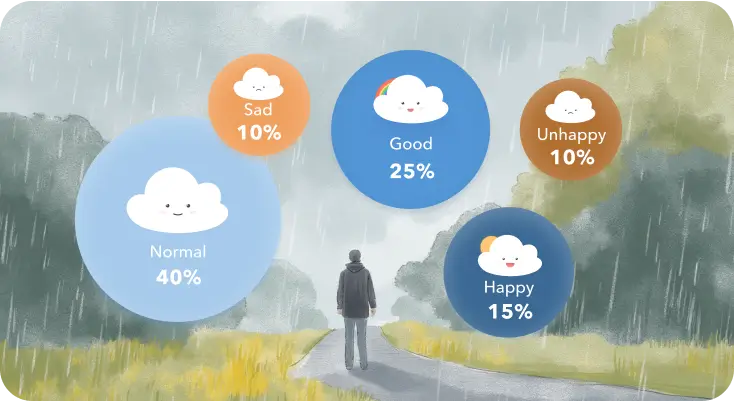
Daily check-ins and mood tracking in the Breeze app may help you see patterns in your emotions and understand your triggers.

3. Take care of yourself through action
One way to show love to yourself is to allow yourself to do what you want. It is important to consciously allocate time for rest, hobbies, and entertainment. Otherwise, all this may forever remain just plans and dreams for the future.
Make time and include in your busy schedule everything that you have been putting off for a long time. For example, go to a concert of your favorite artist, or a country you’ve long dreamed of visiting, or take up a sport you’ve wanted to try.
Self-love may also be expressed through the comfort you create around yourself. Do you have things that you don’t like, but you continue to wear them or keep them in your home? Try to get rid of broken or unnecessary things and arrange your life so that every cup, towel, blanket, curtain, and other small things bring you pleasure and aesthetic enjoyment.
Expert Insight
Practices like setting healthy boundaries, engaging in self-compassion meditations, and spending time with emotionally safe people can be transformative. Even small habits like saying “no” without guilt or celebrating small wins build a foundation of self-trust and self-worth.
Abigail Fernald
Mental health professional
What Does it Mean to Love Yourself?
Here is how you can express genuine self-love [1] Harshad Harshad, Sanjay Ghosh. Self-love: The lesson through which all other lessons are realized. May 2022. :
- Feel worthy of the best.
- Recognize your abilities and talents as unique.
- Respect yourself and feel good about your appearance.
- Communicate with others as equals.
- Take care of your physical health and satisfy your own needs.
- Can silence your inner critic and accept yourself without guilt or shame.
- Allow yourself to enjoy life and live for pleasure.
The main signs that you don’t love yourself:
- You’re constantly focused on negative thoughts and self-criticism.
- You are indifferent to your health, body, and appearance.
- When communicating with other people, you feel insecure.
- You have an in-depth belief that something is wrong with you.
- You struggle with protecting your interests and setting healthy boundaries.
“How I Finally Learned to Love Myself”: Breeze’s User Emily’s Story
“I constantly compared myself to others on social media, at work, and even among friends. On the outside, I seemed fine. But the truth was that, inside, I was exhausted from pretending to be someone I wasn’t.
The turning point came one evening when I broke down in front of my mirror and thought, “Why can’t I just like who I am?” That’s when I stumbled across the Breeze app. I downloaded it out of desperation, not expecting much, but it ended up being the best self-discovery tool I’ve ever had.
The journaling and gentle reminders encouraged me to speak to myself with kindness.
Over time, I noticed I had fewer self-critical thoughts and more self-compassion. I stopped calling myself lazy when I needed rest. I started setting boundaries without guilt and began to celebrate progress instead of perfection. I didn’t change who I was, but I finally started to accept myself.
Now, I dedicate time to self-care and a daily routine customized by Breeze, and make self-awareness a daily habit in my life.
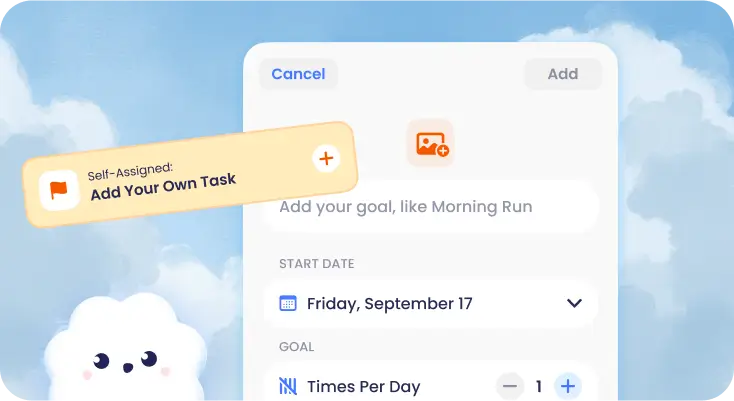
Here’s how you can do it in the app:
- Create a goal within the app, like increasing your self-esteem or becoming more confident around people.
- Breeze offers you a routine with small steps like mindfulness exercises, journaling prompts, or mood-boosting activities.
- Review your daily schedule and cross things off as you complete them.
Learning to love myself wasn’t easy, and I still have days when I struggle. But now, I have a daily practice, a supportive tool, and a mindset that reminds me: I can love myself, exactly as I am”.
Sources
- Harshad Harshad, Sanjay Ghosh. Self-love: The lesson through which all other lessons are realized. May 2022.
- National Library of Medicine. Self-affirmation activates brain systems associated with self-related processing and reward and is reinforced by future orientation. November 2015.
- Melamed DM, Botting J, Lofthouse K, Pass L, Meiser-Stedman R. The Relationship Between Negative Self-Concept, Trauma, and Maltreatment in Children and Adolescents: A Meta-Analysis. March 2024.
- Stanford University. “Growth Mindset and Enhanced Learning”.
- Marieke Karlijn Van Vugt. “Mindfulness as a Potential Tool for Productivity.” May 2019.
Disclaimer
This article is for general informative and self-discovery purposes only. It should not replace expert guidance from professionals.
Any action you take in response to the information in this article, whether directly or indirectly, is solely your responsibility and is done at your own risk. Breeze content team and its mental health experts disclaim any liability, loss, or risk, personal, professional, or otherwise, which may result from the use and/or application of any content.
Always consult your doctor or other certified health practitioner with any medical questions or concerns
Breeze articles exclusively cite trusted sources, such as academic research institutions and medical associations, including research and studies from PubMed, ResearchGate, or similar databases. Examine our subject-matter editors and editorial process to see how we verify facts and maintain the accuracy, reliability, and trustworthiness of our material.
Was this article helpful?