

Borderline Personality Disorder
Uncover your BPD score and learn how to move forward with confidence
By:
Breeze Editorial Team
Clinically Reviewed By:
Rychel Johnson, M.S., LCPC
March 20, 2025
Disclaimer: This online quiz is for informational purposes only and is not a substitute for professional medical advice, diagnosis, or treatment. Only a qualified healthcare professional, such as a doctor or licensed mental health provider, can accurately assess and diagnose medical or psychological conditions. If you have concerns about your mental health, we strongly encourage you to seek guidance from a healthcare professional.
Borderline Personality Disorder Test | BPD Test from Breeze—Check Your Symptoms Now
Take the Breeze Borderline Personality Disorder (BPD) test to assess your symptoms. Get instant results and expert insights. Click to find out more!
Borderline personality disorder (BPD) test
For a better understanding of your symptoms, a suggested healing plan will be available after getting a quick and free borderline personality disorder test from Breeze.
About Borderline Personality Disorder Test From Breeze
This test contains 20 different questions with suggested answers on BPD symptoms. Based on your answers, we can give detailed results on how likely you have BPD symptoms (Low, Moderate, or High likely) on these parameters:
- Emotional Dysregulation: the intensity and frequency of your mood swings, emotional instability, and difficulty managing emotions.
- Interpersonal Relationships: difficulties forming and maintaining stable relationships, often due to fears of abandonment, dependency issues, or distrust.
- Identity Disturbance: fluctuations in self-identity, feelings of emptiness, self-perception, and self-worth.
- Impulsive Behaviors: this section assesses if you have impulsive actions that may be harmful, such as reckless driving, substance abuse, or other risky behaviors.
After receiving your results, you'll have the opportunity to learn more about your symptoms and be offered a personalized Breeze healing plan. This personal plan will help you improve your emotional well-being, gain tools and strategies to manage triggers, regulate emotions, and foster resilience, leading to greater peace and happiness.
Additionally, healing BPD with this plan will help deepen your understanding of your emotions and behaviors, improve communication and empathy, and foster healthier connections with loved ones and greater intimacy.
Who is this BPD test for?
If you feel that something goes wrong, like constant mood swings, you feel hollowness, you are scared to be abandoned, and it lowers your quality of life - this quick free BPD test is for you. Or you may suspect that you're dealing with BPD and want to take an assessment to check it.
Disclaimer: This online screening is not a diagnostic tool. Only a trained medical professional, like a doctor or mental health professional, can determine the diagnosis and the appropriate treatment.
Essential facts about Borderline Personality Disorder
Borderline personality disorder (BPD) is a type of mental health state that severely impacts a person's ability to regulate their emotions. [1] The Diagnostic and Statistical Manual of Mental Disorders, or DSM-5, lists this diagnosis.
Are you wondering, "Do I have BPD?" Statistics show that around 5.9% of people globally display borderline personality disorder (BPD) symptoms. [2] The clinical prevalence of Borderline Personality Disorder (BPD) varies from 11% among adolescents attending outpatient clinics to 78% among suicidal adolescents in emergency departments. Approximately 10% of individuals diagnosed with BPD will die by suicide. [3]
It's common for this condition to experience extreme mood swings, feelings of emptiness, unstable self-image, and difficulty in relationships. Often rooted in childhood trauma and/or genetics, this mental health state can be diagnosed by a licensed mental health professional after a thorough assessment of your symptoms, lifestyle, and health history.
Signs of Borderline Personality Disorder
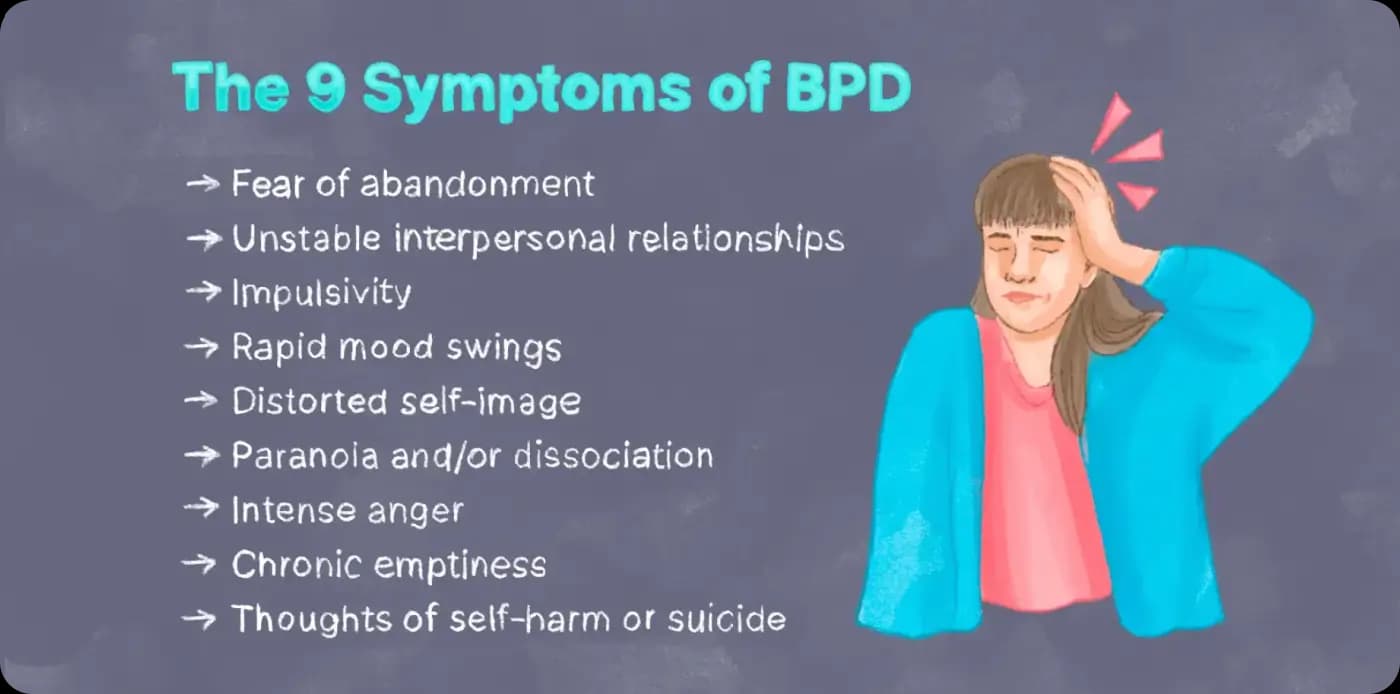
Here are some common signs that might indicate borderline personality disorder:
- Intense mood swings, impulsivity, or recklessness
- Fear of abandonment
- Staying busy to avoid being alone
- The feeling of emptiness and constant loneliness
- Difficulty maintaining stable and healthy relationships
- An unstable sense of self and self-image (from self-loathing and self-criticism to extreme praising yourself)
- Overspending or binge-eating
- Chronic feeling of emptiness
- Anger management issues
- Using recreational drugs, alcohol, or smoking to soothe your emotions
- Sometimes, self-harming or even attempting suicide
The specific symptoms of BPD can differ depending on the person and the type of personality disorder they experienced. The various subtypes of BPD offered by Millon include:
- Impulsive borderline personality disorder
- High-functioning or "quiet" BPD
- Petulant borderline personality disorder
- Self-destructive borderline personality disorder
Causes of Borderline Personality Disorder
The causes of borderline personality disorder are still unclear and can be multifactorial. One of the reasons can be genetic, according to some studies. Genes inherited from parents may increase your risk of getting BPD. [4]
Additionally, changes in the brain's amygdala, hippocampus, and orbitofrontal cortex can be reasons for this mental state, as they help us regulate emotions and control impulses. [5]
But not only genetics and brain differences. Alongside genetic factors, social and environmental reasons also play a huge role. For example, if someone has experienced severe or traumatic childhood events, the chances of being diagnosed with BPD are much higher. [6]
These events, such as losing parents, abandonment trauma, neglectful behavior towards the child, physical/emotional abuse, or growing up with another family member who had a severe mental illness or drink or drug misuse problems, can be a risk factor for borderline disorder in the future.
What do I do if the test shows that I have BPD?
- Get a healing plan from Breeze. This customized plan will help you see triggers, help you regulate emotions, and strengthen relationships to achieve serenity and happiness.
- Learn strategies for managing impulses. Track your feelings and moods in the Breeze app. Start by trying to figure out what you are feeling. Name it and accept it. These small steps can help you with emotional regulation.
- Learn more about therapy options. Cognitive behavioral therapy (CBT) or dialectical behavior therapy (DBT) is effective for managing BPD symptoms. Depending on your needs, you may opt for one of them.
- Try reading books about BPD. They will provide a more comprehensive image of how people live and manage their BPD symptoms and will help you learn more about the disorder.
- Join support groups. Connect with others with similar experiences to share, learn coping strategies, and feel a part of the community.

Emily Mendez, M.S., Ed.S
Emily Mendez is a former therapist and mental health writer. She is one of the leading voices in mental health. Emily has an ED.S. in Mental Health Counseling and a MsED in Counseling from Indiana University in Bloomington, Indiana. She also has a bachelor's degree in psychology from Indiana University, Purdue University in Indianapolis.
Emily Mendez is a former therapist and mental health writer. She is one of the leading voices in mental health. Emily has an ED.S. in Mental Health Counseling and a MsED in Counseling from Indiana University in Bloomington, Indiana. She also has a bachelor's degree in psychology from Indiana University, Purdue University in Indianapolis.
Related articles

08.01.2026

11 min
What Is BPD? Symptoms, Causes, and Treatment of...
According to research, people with borderline personality disorder are constantly s...


02.01.2026
15 min
Difference Between BPD and Bipolar: How to Tell...
Borderline personality disorder (BPD) and bipolar disorder might seem pretty simila...


31.01.2024
10 min
15 Books About Borderline Personality Disorder
Do you feel happy? Anxious? Angry? Depressed? Or everything at once? Mood swings ca...

Frequently Asked Questions