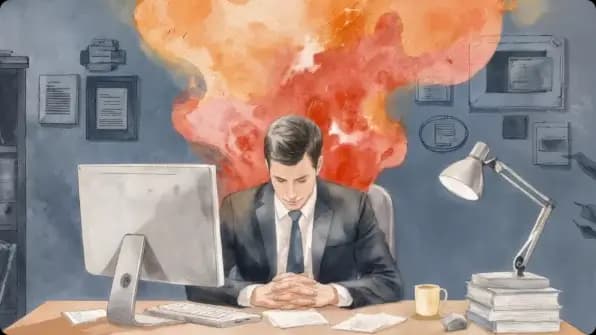


“Why am I always tired? Why do my colleagues finish dozens of tasks while I can only turn on the laptop and make some coffee, and already feel exhausted?”
Do you feel the same? If being tired out is your typical state, this energy level quiz can help you understand why and plan simple steps to feel better.
Why am I always tired? Quick quiz
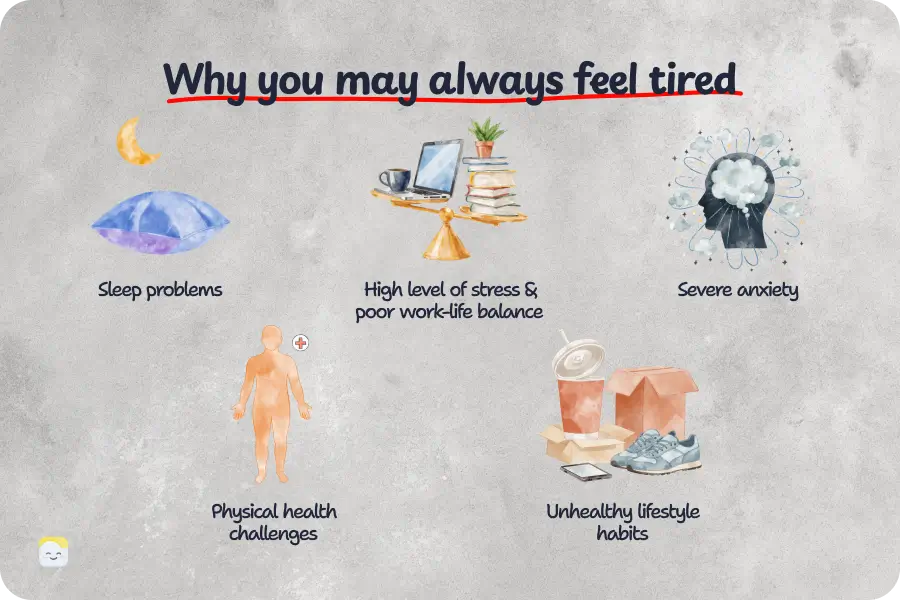
The most common reasons for chronic fatigue + tips on what to do with it
Please pay attention that persistent fatigue may stem from a mix of these reasons. If you feel constantly tired for more than 6 months or notice challenges with mental or sexual health, it’s better to reach out for professional evaluation, as low energy can be the first sign of serious conditions.
Sleep problems
People may say, “You just need some good sleep,” and in some cases, it can help. But if it isn’t, here are other reasons why you wake up tired.
- inconsistent sleeping schedule
- insomnia or persistent lack of sleep
- drinking too much water before bed and waking up a few times at night
- daytime sleep affecting nighttime sleep
But what if counting sheep really helps? You sleep all night and still face the question, “Why am I so tired even after sleeping 8 hours?” Then, maybe you face some of the following:

How to help yourself:
- Review your sleep routine. Caffeine, alcohol, big meals, and exposure to blue light before bed can make it difficult to fall asleep. Opt for relaxing time like reading a book or meditation to sleep like a baby afterward.
- Get moving. Morning fatigue can emerge from a lack of physical activity. So, if you stay active during the day, the chances that you sleep well at night and wake up refreshed are much higher.
- Visit a doctor. If you suspect yourself of having the symptoms of a sleep disorder, please contact your healthcare provider. This may become the first step to a more fulfilling life.
High level of stress & poor work-life balance
Stress and racing against the clock follow you wherever you go. Probably, even before taking the “Why am I so tired?” quiz, you have already noticed how the constant rush affects you.
It can stem from the work-life balance or, rather, imbalance. But stressful situations at home, financial worries, or household responsibilities can affect you as well.
How to help yourself:
- Take some “me” time. When was the last time you watched a movie without hurry? Sometimes, to recharge our batteries, we need to slow down and rest. This is an integral part of self-care.
- Be efficient, not just busy. Excessive productivity might seem like the new “religion.” TikTok, Instagram, LinkedIn — we see people doing stuff and posting about it everywhere. If you start feeling guilty, remember that you do enough. Working smarter, not harder, can help you stop feeling like you’ve run a race every evening.
- Stick to a 28-day well-being plan. Take a free test from Breeze and get personalized recommendations on how to restore your energy and find your inner spark.

Severe anxiety
Anxious thoughts may arise from permanent stress, overwhelming responsibilities, childhood traumas, uncertainty about the future, and fear of failure. All people experience stress from time to time, so there’s nothing wrong with this feeling.
But if you feel burned out all the time without a particular reason, it might be a symptom of a mental health issue:
Here’s what Nicole Arzt, LMFT, states about persistent tiredness: “The mind and body are closely connected. We hold stress and tension within the body, even if we aren’t necessarily aware of it. This means you may ‘feel tired’ and resonate with fatigue long before realizing you’re struggling with other mental health concerns. Therefore, if you feel constantly tired, it’s worth getting a mental health evaluation to rule out any other symptoms.”
How to help yourself:
- Tap into professional support. The “Why am I so tired?” quiz doesn’t aim to identify mental health conditions or diagnose anyone. However, if you feel that something is weighing you down, consulting with a licensed therapist will be the best option.
- Embrace mindfulness and meditation. Whether you live with a mental health condition or just worry about everything, relaxation techniques can help you restore your energy.
Physical health challenges
It feels like your body has no power to continue, and the question, “Why am I so tired lately?” remains unanswered. Pain comes from nowhere, and you feel sick quite often. This is what can drain your emotional and physical battery:
How to help yourself:
- Consult with your healthcare provider. If you really have some health problems, only a doctor can provide a clear diagnosis.
- Embrace the fact that you’re doing enough. When you experience symptoms of the illness, pushing yourself to the boundaries isn’t the best idea. Instead of doing more, try to focus on internally regrouping, as it will help you feel better much faster.
Unhealthy lifestyle habits
And if you have a pretty chaotic lifestyle, it can leave you running on fumes. Here’s what can make you wonder why you’re always tired:
Also, inconsistent meals and low levels of essential nutrients (due to poor diet or restrictive eating) can impact energy production and cause a feeling of exhaustion.
Interestingly, according to studies, high-carbohydrate lunches can significantly increase energy crashes hours after eating. [1] Spring B, Chiodo J, Harden M, Bourgeois MJ, Mason JD, Lutherer L. “Psychobiological effects of carbohydrates.” J Clin Psychiatry. 1989
How to help yourself:
- Think about what makes you feel tired all the time. Listening to your body is key. Go through the list above and check what triggers your fatigue. Then, take a closer look at your daily habits and note what’s impacting your energy.
- Change your lifestyle step by step. To feel better, you may need to switch to healthier habits and turn the page for a brighter chapter. It might be tough at first, but the rewards will be well worth the effort.
“What if none of these causes fit me?” We asked Nicole Arzt, LMFT, “Unfortunately, emotional and physical fatigue are multifaceted issues. You may not ‘fit’ in any one experience, and that’s also typical. It may still be worth evaluating your current sleep schedule and making small lifestyle changes to see what changes. Consult with a mental health provider if you need additional support.”
Frequently asked questions
What medical conditions can cause tiredness?
According to the study, the most common causes of persistent fatigue are:
- Sleep disorders
- Depression
- Excessive psychological distress
- Previously undiagnosed cancer
- Anemia [2] Maisel P, Baum E, Donner-Banzhoff N. “Fatigue as the Chief Complaint–Epidemiology, Causes, Diagnosis, and Treatment.” Dtsch Arztebl Int. 2021
What are three warning signs of fatigue?
Here are three critical signs that fatigue is affecting your body and brain:
- Cognitive slowing (brain fog): persistent trouble concentrating, frequent memory lapses, slowed reactions, and difficulty making simple decisions.
- Irritability and mood swings: increased anxiety, low tolerance for stress, sudden impatience, or feeling overwhelmed by routine tasks.
- Physical exhaustion and heaviness in the limbs: muscle weakness, constant pain, frequent headaches, or a feeling of heaviness and sluggishness in the body even after sleep.
Why can I find it difficult to fall asleep?
According to the research, hyperarousal might be the main reason why you find it challenging to fall asleep. [3] Riemann D, Spiegelhalder K, Feige B, Voderholzer U, Berger M, Perlis M, Nissen C. “The hyperarousal model of insomnia: a review of the concept and its evidence.” Sleep Med Rev. 2010 It’s a state when your body and mind remain on high alert. People might experience it due to:
- Chronic stress and anxiety
- Bedtime anxiety
- Blue light and late screen time
- Heavy meals and late stimulants like coffee or alcohol
- Irregular sleep schedule
I feel tired all the time. How can it influence the overall quality of life in the long run?
Feeling chronically tired can negatively influence your physical and mental health. It can lead to muscle aches and joint pain, a weakened immune system, as well as reduced cognitive function, brain fog, poor memory, and lower concentration.
Sources
- Spring B, Chiodo J, Harden M, Bourgeois MJ, Mason JD, Lutherer L. “Psychobiological effects of carbohydrates.” J Clin Psychiatry. 1989
- Maisel P, Baum E, Donner-Banzhoff N. “Fatigue as the Chief Complaint–Epidemiology, Causes, Diagnosis, and Treatment.” Dtsch Arztebl Int. 2021
- Riemann D, Spiegelhalder K, Feige B, Voderholzer U, Berger M, Perlis M, Nissen C. “The hyperarousal model of insomnia: a review of the concept and its evidence.” Sleep Med Rev. 2010
Disclaimer
This article is for general informative and self-discovery purposes only. It should not replace expert guidance from professionals.
Any action you take in response to the information in this article, whether directly or indirectly, is solely your responsibility and is done at your own risk. Breeze content team and its mental health experts disclaim any liability, loss, or risk, personal, professional, or otherwise, which may result from the use and/or application of any content.
Always consult your doctor or other certified health practitioner with any medical questions or concerns
Breeze articles exclusively cite trusted sources, such as academic research institutions and medical associations, including research and studies from PubMed, ResearchGate, or similar databases. Examine our subject-matter editors and editorial process to see how we verify facts and maintain the accuracy, reliability, and trustworthiness of our material.
Was this article helpful?