


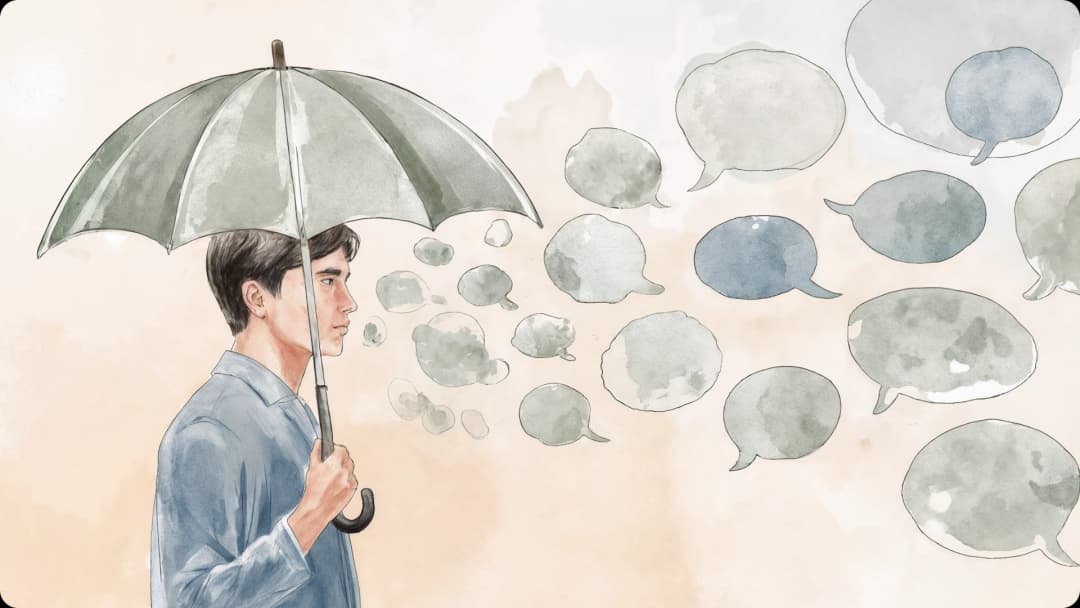
Do you find it difficult to accept criticism, even if it is presented calmly and constructively? Do you often overthink what others say about you? In that case, you can learn how not to take things personally.
Here are some practical, research-backed tips to help you reduce the power that others’ actions have over your emotional state, increase your self-awareness, and finally stop taking things personally.

Why Am I Taking Things So Personally? 5 Possible Reasons
Although taking things personally can feel automatic, several reasons may explain why it happens:
1. Low Self-Esteem
According to Columbia University researchers, having low self-worth can make criticism or rejection feel like a direct attack on you [1] Kathy R. Berenson, Geraldine Downey. Self-esteem and rejection sensitivity in close relationships. January 2006. . For example, imagine you receive constructive feedback about your job. However, instead of seeing it as helpful in fixing your mistake, you think, “I’m just not good enough.”
Another indicator of low self-esteem is projecting your own insecurities onto others. You may assume they see you the way you see yourself. As an illustration, when you’re insecure about your appearance, you might assume that when someone looks at you, they’re thinking you look awful.
If you’re confused about what you’re feeling, in the Breeze app, you’ll find quick and insightful self-discovery tests, self-growth tips, relaxation games, guided journaling, and more tools that can help you learn how to love yourself.
2. Negative Experiences in the Past
Past emotional pain, like betrayal or rejection, can also impact your self-esteem, making you more likely to take things personally, studies on emotional trauma show [2] Cun Li, Peicai Fu, Minghuan Wang, Ye Xia, Caihong Hu, Mao Liu, Han Zhang, Xin Sheng and Yuan Yang. The role of self-esteem and emotion regulation in the associations between childhood trauma and mental health in adulthood: a moderated mediation model. April 2023. . The reason is a lingering fear of being hurt again which makes you wonder how to stop being sensitive or how to stop overthinking after being cheated on.
3. Over-Sensitivity
If you search #highlysensitiveperson on TikTok, you’ll find over 34 million posts, many of which show people crying or looking upset when the weight of life becomes too much to deal with. Some people are more sensitive to external circumstances, according to a study on sensitivity [3] Bianca P Acevedo, Elaine N Aron, Arthur Aron, Matthew-Donald Sangster, Nancy Collins, Lucy L Brown. The highly sensitive brain: an fMRI study of sensory processing sensitivity and response to others’ emotions. June 2014. .
That’s why they may express stronger emotional reactions and take it personally. For instance, a highly sensitive person can immediately feel hurt or anxious in a situation where their friend cancels plans, thinking, “They don’t want to hang out with me anymore,” and wondering how to be a better friend.
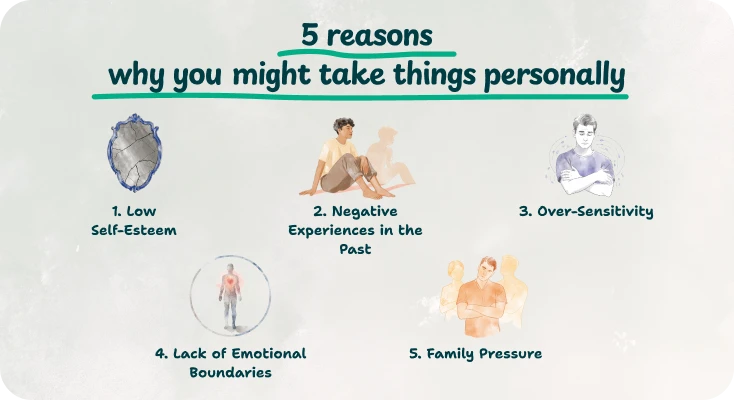
4. Lack of Emotional Boundaries
A study found that without clear emotional boundaries and understanding how to feel their feelings, people may find it hard to separate their thoughts from those of the people around them [4] Peterson, E., Solomon, D. Maintaining healthy boundaries in professional relationships: a balancing act. 1998. . As a result, they may absorb others’ feelings as if they are their own.
For instance, imagine that your friend is upset and snaps at you. Instead of accepting the fact that their reaction is about their personal difficult emotions, you might engage in catastrophic thinking: “I must have done something wrong to make them upset.” As a result, you may take it personally, feeling guilt or self-blame, even when the situation has nothing to do with you.
5. Family Pressure
Naturally, family can shape a person’s tendency to take things personally, especially if they’ve grown up with a narcissistic mother or an abusive dad, feeling the need to seek approval or avoid conflict. Daddy or mommy issues can make you uncomfortable with confrontation.
Expert Insight
A person’s family or early childhood experiences can shape their behavior later in life. A person whose parents were overly critical growing up might be more likely to take things personally as an adult. Also, children learn by watching their parents. If their parents were very sensitive to criticism, they may be, too.

Emily Mendez
Mental health professional
7 Tips on How To Not Take Things Personally
Constantly taking things personally can lead to stress and negative self-talk, making the person feel worthless, according to psychological research [5] Trauma Research UK. Do You Often Take Things Personally. April 2024. . Here are seven tips to stop overthinking and misinterpreting another person’s intention to hurt or criticize you:
1. Reframe Others’ Negative Behavior
When someone says something that stings, your brain immediately starts constructing a story about what it means. “Everyone thinks you’re incompetent.” “They don’t respect you.” “You’ve failed again.”
Although it’s easy to feel attacked when someone acts negatively toward you, research shows that people’s behavior is often more about their internal state than about you. According to Dr. Shad Helmstetter, a behavioral scientist, people’s actions are frequently motivated by their emotions, beliefs, and past experiences, which often have nothing to do with you [6] Shad Helmstetter, Ph.D. “What to Say When You Talk to Yourself”. 1982. .
- Stop and ask yourself, “Do I have all the facts? Could there be another explanation for this behavior?” Your boss’s angry email might mean they’re drowning in their own deadlines, not that your work disappointed them. In the same way, your friend’s canceled plans might mean they’re overwhelmed, not that they find you boring.
- Keep actual examples from your life where you later learned the real reason behind someone’s behavior.
- Practice generating three alternative explanations before settling on the one where nobody cares about you, or nobody likes you.
2. Keep a “They Were Right” Journal
Once a week, write down a criticism you received that actually is useful. For example, “My coworker was right that I interrupted her during the meeting” or “My friend had a point about me checking my phone during dinner.”
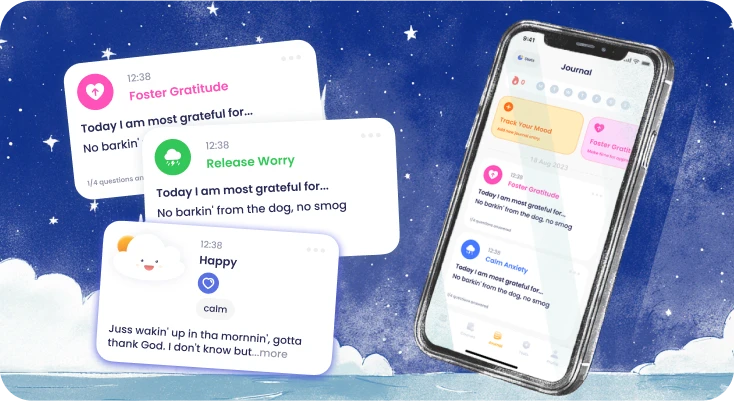
This practice can help you distinguish between constructive criticism that reflects reality and comments that say more about the other person’s issues than yours. Using Breeze journaling can make this process easier and more structured. Breeze offers short, guided reflections that help you identify what’s valid, what’s not, and what you can actually change.
3. Try The Stranger Test
Imagine the exact same words or actions came from a complete stranger on the street. Someone you’ll never see again says you’re dressed inappropriately. How much would you care? Probably not much, because they don’t know you and you don’t value their opinion.
Now apply this to people in your actual life. Think about things that bothered you lately, such as coworkers’ or neighbors’ harsh remarks. These people don’t really know you either and make judgments from their own limited perspective. When you catch yourself spiraling, ask: “Would I care if a stranger said this?” If not, why does this person’s opinion have more weight?
4. Practice Positive Self-Talk
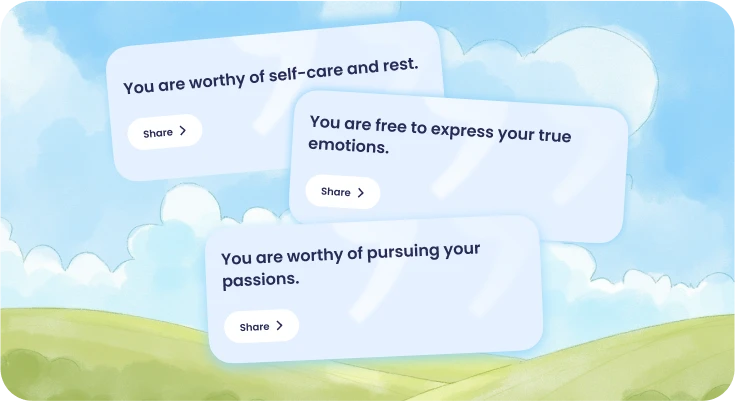
According to recent research, taking things personally may result from low self-worth [7] Chris Foy. How to Take Things Less Personally at Work and in Life. July 2024. . Another study shows that daily positive affirmations can activate brain areas responsible for emotional regulation and self-acceptance [8] Christopher N Cascio, Matthew Brook O’Donnell, Francis J Tinney, Matthew D Lieberman, Shelley E Taylor, Victor J Strecher, Emily B Falk. National Library of Medicine. Self-affirmation activates brain systems associated with self-related processing and reward and is reinforced by future orientation. November 2015. . Thus, the following confidence boosters may help you to stop taking others’ words as personal attacks and change your life for the better:
- I am worthy, and others’ actions do not define me.
- I choose to respond, not react, to situations.
- Other people’s actions are a reflection of them, not me.
- I am in control of my emotions and how I react.
- I let go of what I can’t control and focus on what I can.
- I am enough, just as I am, without needing approval from others.
- Criticism helps me grow, and I can take it in a healthy way.
- I am not responsible for others’ emotions or reactions.
- I can express myself authentically without fear of judgment.
- I forgive myself for any mistakes and grow from them.
Try Breeze personalized affirmations and other mindfulness activities in the app to ground yourself and get out of your head when you start feeling offended.
5. Let Go of the Need for Constant Approval
Social comparison theory, introduced by Leon Festinger, explains why people seek validation from others. It suggests that we often judge ourselves by comparing how well we’re doing to others [9] Leon Festinger. A Theory of Social Comparison Processes. . However, according to the American Psychological Association, this constant drive for approval and fear of criticism can lead to self-doubt [10] Emily Sohn, American Psychological Association. Perfectionism and the high-stakes culture of success. October 2024. . When you don’t meet these expectations or receive negative feedback, it can feel like a personal failure and reinforce the cycle of needing validation.
Expert Insight
The first step in letting go of the need for constant approval is to become more self-aware. Notice when you excessively seek approval from others. What triggers your need for approval? Finally, consider seeking therapy. Therapy can be very helpful for overcoming the constant need for approval. It can help boost your self-esteem and confidence so you don’t feel the need for reassurance from others.
Emily Mendez
Mental health professional
6. Develop EQ To Stop Taking Things Personally
Directing your energy into developing emotional intelligence may help prevent you from taking things personally. Research by the American Psychological Association shows that people with high EQ have better relationships and can handle stress more effectively [11] Dana Ackley. Emotional Intelligence: A Practical Review of Models. Measures and Applications. 2016. .
To improve your EQ, reflect on your emotional responses to situations regularly. The more you understand your emotions, the easier it will be to process negative things without taking them personally.
You can start with self-reflection questions to ask yourself. Try to pause during emotionally intense moments and name what you’re feeling silently. For example, anger, frustration, disappointment, helplessness, or anxiety. This small habit can help you build self-awareness and respond thoughtfully rather than taking things personally by default.
To get new insights and become the best version of yourself, take a simple and informative Emotional Intelligence test.
7. Set Boundaries to Protect Your Emotional Space
Have you ever wondered, “Why do I take things so personally even when I know it’s not about me?” The reason may be the lack of emotional boundaries, which makes it easy to internalize others’ opinions and emotions [4] Peterson, E., Solomon, D. Maintaining healthy boundaries in professional relationships: a balancing act. 1998. .
That’s why you should protect your boundaries firmly without getting angry. You don’t need to explain yourself. Simply saying, “I’m not comfortable with this,” can protect you from getting hurt. You can also turn to AI for help finding calm, respectful phrases that allow you to set boundaries clearly without doubting yourself.
Eventually, setting boundaries allows you to distance yourself emotionally from situations that could trigger personal reactions. For example, if a colleague criticizes your work harshly, you can tell them you prefer constructive feedback rather than negative comments. Thus, you can control how much emotional energy you invest in their criticism, making it easier to avoid taking it personally.
Another example may be when a friend or co-worker constantly makes jokes at your expense. In this case, you may tell them that you got offended by those jokes and ask for more respectful communication. This way, you protect yourself from internalizing and learn how not to take things so personally.
How To Not Take Things Personally in Relationships
In close relationships, it’s especially easy to take things personally. Learning to separate intent from impact can protect both your self-esteem and the relationship itself.
1. Ask Before You Assume
A study by the University of London shows that our immediate emotional reactions often come from jumping to conclusions or interpreting someone’s words or actions in a way that triggers us [12] Royal Holloway, University of London. New study reveals how people can catch a tendency to jump to conclusions. March 2021. .
For example, instead of assuming your partner is upset with you, interrupt this spiral with actual questions like, “You seem quiet tonight. What’s going on?” or “I noticed you’ve been spending more time at work lately. How are you feeling about everything?” Asking for clarification can help you avoid negative emotional reactions and better understand the situation.
2. Separate Behavior From Character
If your partner points out a behavior such as being late or forgetting plans, avoid translating it into “I’m a bad partner.” Focus on the specific action, not your identity. Behavior can change, but self-worth doesn’t need to be questioned.
Practice hearing the literal words. For example, they said you left dishes out. That’s factual. You did leave dishes out. But the interpretation that you can’t do anything right or that they’re looking for reasons to leave you is yours. Try to deal just with the behavior they mentioned, and don’t project their words into your entire identity.
3. Notice Your Sensitivity Triggers
Certain topics may hit harder because of past experiences or insecurities. Recognizing these triggers helps you respond from awareness rather than defensiveness.
Maybe your ex constantly criticized your appearance, so now when your partner mentions you’re wearing sweatpants again, you hear disgust instead of casual observation. Or, your parents were emotionally unavailable, so when your partner needs alone time, you feel abandoned.
Map your triggers. What kinds of comments or behaviors send you into a shame spiral? Where does that sensitivity come from? When you know your emotional baggage, you can catch yourself mid-reaction and think: “Wait, am I responding to what just happened, or to something from my past?” This awareness helps you separate old pain from present reality.
4. Separate Love From Agreement
Your partner can love you deeply and still disagree with you, criticize you, or not want to do something your way. Their disagreement doesn’t mean they don’t value you. In the same way, their criticism doesn’t mean they regret choosing you.
That’s why, when your partner points out something that bothers them, try hearing it as “I love you enough to work on this instead of silently resenting it.”
5. Know When It Actually Is Personal
Learning not to take things personally also means recognizing when feedback isn’t constructive and setting boundaries. If your partner’s “feedback” is really just criticism of who you are rather than what you do, that’s not you taking things too personally.
The difference between healthy personal feedback and taking things personally is this: healthy feedback is specific, about changeable behavior, and delivered with the assumption you care about their experience. Taking things personally is when you hear any feedback as confirmation of your deepest fear that something is wrong with you.
Frequently asked questions
1. Why do I take things too personally?
Taking things personally often stems from low self-esteem, past experiences, or a heightened sensitivity to criticism. It can also happen when we interpret other person’s intentions or actions as reflections of our self-worth rather than their own mindset.
2. Is it bad to take things personally sometimes?
Not necessarily. Feeling hurt or defensive occasionally is normal. The problem arises when it happens constantly, affecting your mood, relationships, and mental health.
3. How can I stop overthinking what others say?
Practice pausing before reacting, questioning your assumptions, and separating your feelings from others’ intentions. Mindfulness techniques can also help you observe thoughts without judgment.
Sources
- Kathy R. Berenson, Geraldine Downey. Self-esteem and rejection sensitivity in close relationships. January 2006.
- Cun Li, Peicai Fu, Minghuan Wang, Ye Xia, Caihong Hu, Mao Liu, Han Zhang, Xin Sheng and Yuan Yang. The role of self-esteem and emotion regulation in the associations between childhood trauma and mental health in adulthood: a moderated mediation model. April 2023.
- Bianca P Acevedo, Elaine N Aron, Arthur Aron, Matthew-Donald Sangster, Nancy Collins, Lucy L Brown. The highly sensitive brain: an fMRI study of sensory processing sensitivity and response to others’ emotions. June 2014.
- Peterson, E., Solomon, D. Maintaining healthy boundaries in professional relationships: a balancing act. 1998.
- Trauma Research UK. Do You Often Take Things Personally. April 2024.
- Shad Helmstetter, Ph.D. “What to Say When You Talk to Yourself”. 1982.
- Chris Foy. How to Take Things Less Personally at Work and in Life. July 2024.
- Christopher N Cascio, Matthew Brook O’Donnell, Francis J Tinney, Matthew D Lieberman, Shelley E Taylor, Victor J Strecher, Emily B Falk. National Library of Medicine. Self-affirmation activates brain systems associated with self-related processing and reward and is reinforced by future orientation. November 2015.
- Leon Festinger. A Theory of Social Comparison Processes.
- Emily Sohn, American Psychological Association. Perfectionism and the high-stakes culture of success. October 2024.
- Dana Ackley. Emotional Intelligence: A Practical Review of Models. Measures and Applications. 2016.
- Royal Holloway, University of London. New study reveals how people can catch a tendency to jump to conclusions. March 2021.
Disclaimer
This article is for general informative and self-discovery purposes only. It should not replace expert guidance from professionals.
Any action you take in response to the information in this article, whether directly or indirectly, is solely your responsibility and is done at your own risk. Breeze content team and its mental health experts disclaim any liability, loss, or risk, personal, professional, or otherwise, which may result from the use and/or application of any content.
Always consult your doctor or other certified health practitioner with any medical questions or concerns
Breeze articles exclusively cite trusted sources, such as academic research institutions and medical associations, including research and studies from PubMed, ResearchGate, or similar databases. Examine our subject-matter editors and editorial process to see how we verify facts and maintain the accuracy, reliability, and trustworthiness of our material.
Was this article helpful?