

Podcast name
Analog lifestyle
Do you sometimes feel tired from the digital world with its endless scrolling through your feeds, getting annoying notifications, looking at perfectly edited photos on social media, or experiencing FOMO? Then, you may like the “analog lifestyle” trend that went viral on TikTok this year. Let’s explore how it can make you happier.

What Is Analog Life?
The “analog lifestyle” trend on TikTok (#analog, #analog2026, #analogliving) focuses on reducing screen time and embracing offline activities to overcome digital fatigue. Popular creators promote a slower, intentional life through hobbies like journaling or baking and using retro or physical devices such as instant cameras, cassette players, or film cameras.
Expert Insight
The reason why you can’t seem to stop scrolling is rooted in science and is similar to gambling, and it’s called variable rewards. As you keep swiping, you have no idea if the next post will be boring or really interesting, which is why you keep going. Every time you stumble across a great meme or video, your brain gets a small hit of dopamine. This feels good, so you keep on scrolling, even when you know you should stop.

Emily Mendez
Mental health professional
How Did The Trend Go Viral?
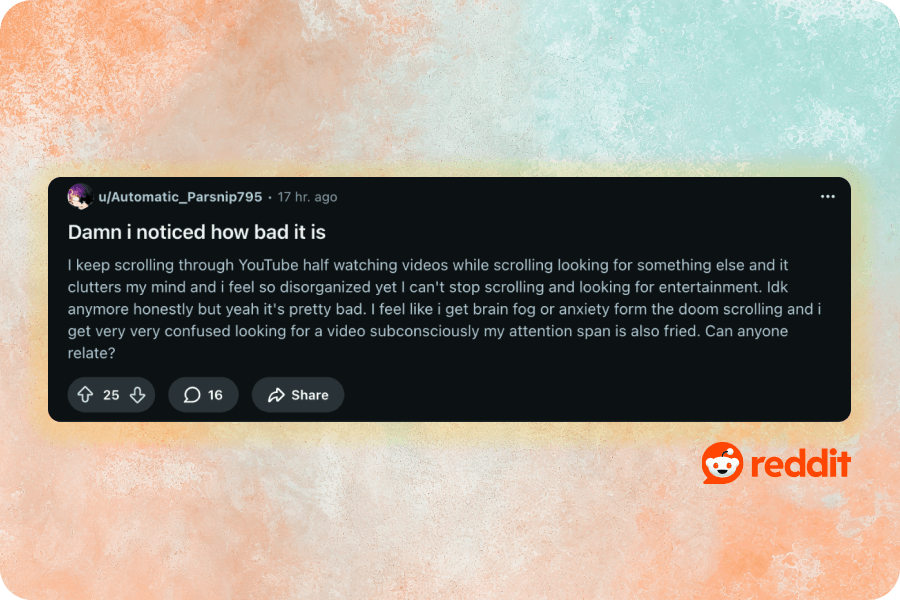
In 2012, a community called r/nosurf appeared on Reddit. Members shared personal experiences of reducing screen time and searching for more intentional ways to use the internet.
Around the same time, researchers were increasingly discussing the connection between digital life and rising levels of stress and anxiety. While smartphones and other digital devices brought convenience, many people began to notice the mental cost of being constantly connected.
The publication of Digital Minimalism by Cal Newport in 2019 transformed the “overstimulation” conversation from a vague feeling of burnout into a structured philosophy of technological intentionality. In the book, Newport encourages young adults to use technology more deliberately and to replace passive screen time with meaningful offline activities.
At the same time, the broader slow living movement was gaining popularity, particularly in Europe. Through blogs and social media, people shared ideas about living more intentionally and engaging in home cooking, handmade crafts, gardening, and a slower daily rhythm.
During the COVID-19 pandemic, interest in reducing screen time intensified. Remote work and online meetings left many people experiencing what became known as “Zoom fatigue.” In response, digital detox challenges began spreading across platforms such as TikTok, while nostalgia for analog life and offline fun grew.
By the mid-2020s, many online communities began referring to this shift as a return to “analog living.” The idea reflects a desire to balance digital convenience with real-world experiences.
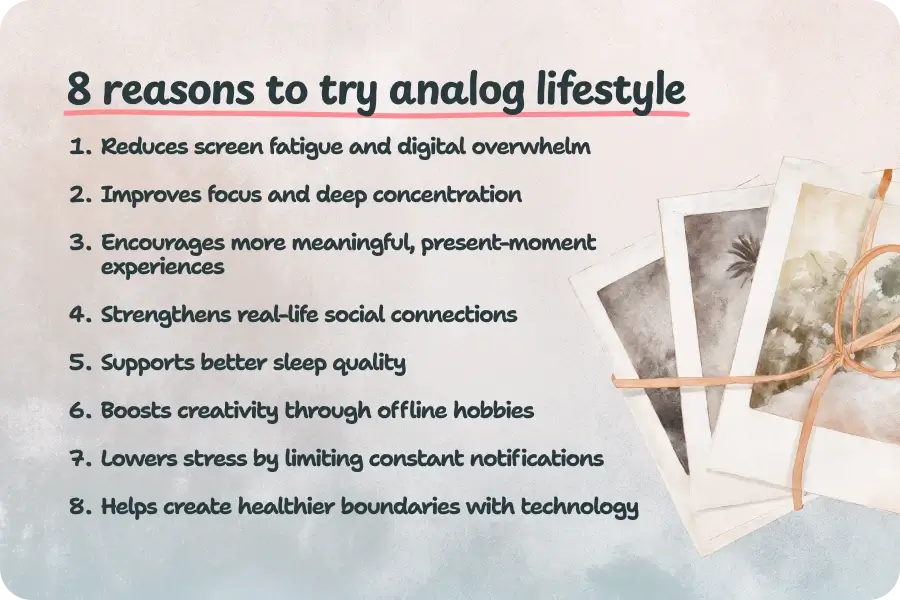
8 Reasons To Try Living a More Analog Life
Analog living brings presence and physical experiences back into daily life. It focuses on real tools, real moments, and real attention. Examples include a notebook instead of a notes app. A long walk instead of endless scrolling. A conversation without phones on the table.
The result? More focus, deeper creativity, calmer days, and a stronger connection to the world around you. Here are 8 science-backed reasons why analog living isn’t just nostalgic but also healthy.
1. Better mental health and reduced stress
The statistics reveal that people spend an average of over 10 hours a day in front of digital screens. At the same time, multiple studies show that reducing overall screen time leads to lower levels of stress, better mood, and fewer symptoms of depression and anxiety. One trial found that cutting daily screen usage to about 2 hours or less reduced stress and improved sleep quality in just three weeks.
Expert Insight
Heavy digital stimulation can fragment attention and make it harder to focus on slower tasks like studying or reading. This is called attention fragmentation, and it’s created by digital habits like endless scrolling and social media apps. You’ve basically trained your brain to keep looking for something entertaining, which can make “slower” activities like reading or studying feel impossible to concentrate on. Digital habits like this can also contribute to forgetfulness and procrastination.
Emily Mendez
Mental health professional
2. Deeper focus and improved productivity
Constant notifications and multitasking make it harder to maintain attention span. Moreover, according to research published by the American Psychological Association, spending too much time on screens may cause emotional and behavioral problems in children, and those problems can lead to even more screen use. Reducing digital noise and focusing on one task at a time trains your brain to concentrate and increase productivity.
3. Better memory through handwriting
Handwriting engages your brain more deeply than typing. Recent studies have shown that writing with a pen and paper activates neural networks associated with memory, motor control, and visual processing more than typing does, which helps with learning and retention. Students who take notes by hand often remember concepts more deeply than those who type them.
4. Stronger sleep and circadian rhythms
Screens emit blue light, which disrupts melatonin production—the hormone that helps you fall asleep. Reducing screen time, especially before bed, can improve sleep quality, help you fall asleep faster, and stabilize your internal clock.
5. Richer real-life social connections
When you unplug and spend more time with other people, the quality of your social bonds strengthens. In-person interaction stimulates the release of:
- Oxytocin, associated with bonding and trust
- Dopamine, associated with reward and motivation
Try replacing some online chats with:
- Coffee meetings
- Walking conversations
- Shared meals
- Community activities

6. Physical health improvements
Less time sitting and scrolling means more time moving. Reducing screen time can lead to:
- better posture
- reduced eye strain and headaches
- more physical activity and strength
- lower risk for obesity and related health problems
7. Nature boosts well-being
Spending time offline outdoors supports what psychologists call attention restoration. Being in nature helps your brain recover from mental fatigue and cognitive overload. Short nature walks can improve your mental health and engagement, research shows. Without the constant pull of alerts, you can get out of your head and be in the present moment.
8. More time for meaningful hobbies
When screens don’t fill every spare moment, you finally have time for hobbies that require skill, patience, and attention. Activities like playing a musical instrument can enrich your life and provide a sense of accomplishment and calm that scrolling rarely delivers.
7 Tips To Make Your Daily Life More Analog
The analog lifestyle doesn’t suggest you reject technology. The idea is to choose more consciously when and how you use it.
1. Wear an analog watch and use an actual alarm clock
Replace constant phone checking with simple mechanical time awareness to reduce micro-distractions throughout the day. An analog watch helps you:
- Reduce the habit of unlocking your phone just to check the time
- Maintain a more stable attention rhythm
- Avoid accidental social media entry
Using a physical alarm clock is also helpful because it removes the temptation to scroll immediately after waking up.
2. Reduce screen time with a “no-phone” morning and evening routine
Your first and last 30–60 minutes of the day strongly influence emotional regulation and sleep quality. Start the day offline by doing slow, grounding activities such as:
- Journaling your thoughts
- Gentle stretching or light exercise without headphones
- Reading physical books
- Preparing coffee or tea slowly and mindfully
In the evening, turn off screens before sleep and try these analog evening habits:
- Prepare tomorrow’s basics physically
- Arrange clothes
- Pack your bag
- Write tomorrow’s main tasks in a notebook
- Read a physical book instead of scrolling, even if you read just a few minutes each day.
- Create a slow wind-down ritual. For example, drink chamomile tea or listen to quiet ambient sounds.
- Do light reflection or journaling. You can write about:
- What went well today
- What you learned
- What you are grateful for
- What you want to improve tomorrow
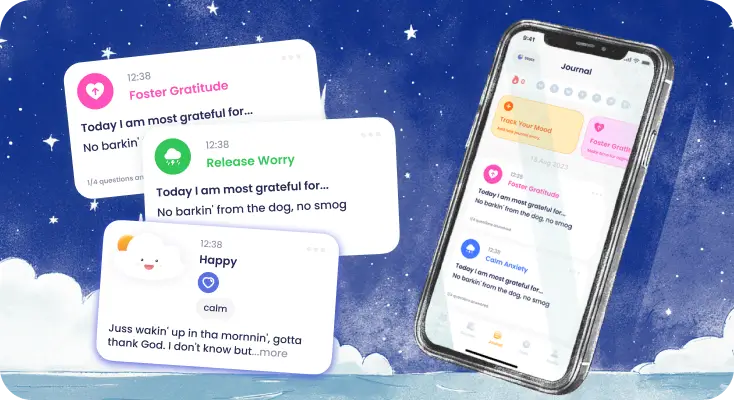
Breeze in-app guided journaling exercises allow you to learn how to express gratitude and let go of anxiety. You can alternate it with analog writing. Regular journaling about your emotions can reduce stress.
3. Read physical media
Make it a habit to read even 10-20 pages of printed text daily. Recent studies have found that readers often recall narrative details better when reading on paper than on screens, possibly because paper provides spatial and tactile memory cues.
4. Use an analog bag for your creative work
An analog bag is a small bag or pouch used to carry tools that you can use offline. These are more traditional things that support your hobby or daily life. Examples include pens or pencils, journals, or a sketchbook.
The philosophy behind the analog bag is simple: carry thinking tools, not distraction machines. If you’re into film photography, you may use a bag for carrying film cameras and rolls, light meters, lenses, cleaning tools, and accessories.
Similarly, if your hobby is creating music, your bag might include tools like a notebook for lyrics, sheet music, tuning devices, a small record player, or other non-digital equipment you use to compose and experiment with ideas. Or, your bag may contain everyday analog tools like notebooks, pens, sketchbooks, printed planners, and physical books.
5. Keep a physical planner
Handwriting forces the brain to process information more deeply. When you write manually:
- Memory encoding becomes stronger
- Abstract ideas become more structured
- You think before you speak or act
Use your notebook to record:
- Daily goals
- Personal reflections
- Grocery lists
- Project ideas
- Life priorities
6. Write letters
Letter writing is a powerful analog communication ritual. Sending postcards or handwritten letters helps create emotional meaning because it requires time, effort, and physical presence.
Many people report feeling a stronger emotional connection when receiving handwritten messages compared to digital texts. You can try:
- Birthday postcards
- Friendship letters
- Travel memory cards
- Gratitude notes
7. Use cash or physical cards for spending
Behavioral economics research shows that digital payment methods can sometimes reduce the psychological pain of spending, which may lead to less controlled consumption. Using physical money increases financial awareness. When you pay with cash:
- You feel the real value of money leaving your hand
- Impulse purchases decrease
- Spending becomes more deliberate
5 Ideas For Analog Hobby
As modern life often keeps us in abstract digital work, try making things with your hands. Cook a meal, fix something broken, paint your furniture, or build something small.
You don’t need a “productive” hobby. Just pick one that brings you back to yourself. Creating physical things provides a sense of completion and reality.
1. Buy paper books and join a book club
Reading physical books is one of the simplest and most rewarding analog hobbies. Unlike digital reading, printed books create a distraction-free environment that allows you to immerse yourself fully in the story or topic.
Joining a book club adds a social dimension to the experience. You can meet regularly with others to discuss ideas, share interpretations, and discover new authors you might not have picked up yourself.
Book clubs also encourage deeper reading because you reflect on themes, characters, and messages rather than just finishing a book quickly.
2. Try film photography or instant cameras
Using a disposable camera, film camera, or instant camera changes how you take photos. Instead of capturing hundreds of images and selecting the best one later, you learn to be more intentional with every shot.
Film photography encourages you to:
- observe lighting and composition carefully
- slow down before pressing the shutter
- appreciate the unpredictability of analog film
Another rewarding aspect is the physical result. Printed photos can be stored in albums, placed in frames, or shared with friends in a tangible way that digital images often lack. The focus shifts from creating content for a feed to simply capturing meaningful moments.
3. Listen to vinyl records
Listening to vinyl transforms music into a ritual. Unlike streaming platforms, where songs are skipped quickly, vinyl encourages you to listen to an album from beginning to end. The physical process, such as taking the record out of its sleeve, placing it on the turntable, and lowering the needle, creates a more intentional listening experience.
Many music enthusiasts say vinyl listening feels more immersive because it demands attention and invites you to sit down and truly hear the music. It’s also a great way to build a small personal collection and explore classic albums.
4. Cook without digital help
Cooking can be one of the most grounding analog activities if you remove digital distractions. It brings flow and satisfaction because it requires patience and attention.
Instead of following recipes on a phone or tablet, try using:
- printed cookbooks
- handwritten family recipes
- recipe cards
This approach encourages you to rely on your senses. Don’t constantly check instructions. Trust your smell, taste, texture, and timing.
Cooking without screens also allows you to be more present and creative in the kitchen. Eventually, you may start experimenting with flavors and techniques instead of simply replicating online recipes.
5. Play board games
Unlike digital games, board games bring people together physically around the same table. They encourage conversation, teamwork, friendly competition, and strategic thinking. You may choose classic games or modern strategy games, or even create a custom quiz for your friends. The experience often becomes more memorable because it involves laughter, storytelling, and shared moments.
Sources
- Gabrielle Asselin, Howard Bilodeau, and Aisha Khalid. Digital well-being: the relationship between technology use, mental health, and interpersonal relationships. January 2024
- Pieh C, Humer E, Hoenigl A, Schwab J, Mayerhofer D, Dale R, Haider K. Smartphone screen time reduction improves mental health: a randomized controlled trial. February 2025
- Michael Noetel, Roberta Vasconcellos. Screen time and emotional problems in kids: A vicious circle? June 2025
- Marano G, Kotzalidis GD, Lisci FM, Anesini MB, Rossi S, Barbonetti S, Cangini A, Ronsisvalle A, Artuso L, Falsini C, Caso R, Mandracchia G, Brisi C, Traversi G, Mazza O, Pola R, Sani G, Mercuri EM, Gaetani E, Mazza M. The Neuroscience Behind Writing: Handwriting vs. Typing-Who Wins the Battle? February 2025
- Verheyen, L.; Vangeneugden, M.; Alfano, R.; Sleurs, H.; Renaers, E.; Nawrot, T.S.; Vanbrabant, K.; Plusquin, M. The Effects of Repeated Short-Duration Nature Walks on Stress and Cognitive Function in College Students. October 2025
- Oxford Learning Centers. Screen vs. Paper: Which One Boosts Reading Comprehension? March 2025
- Faraz, N.; Anjum, A. Spendception: The Psychological Impact of Digital Payments on Consumer Purchase Behavior and Impulse Buying. March 2025
Disclaimer
This article is for general informative and self-discovery purposes only. It should not replace expert guidance from professionals.
Any action you take in response to the information in this article, whether directly or indirectly, is solely your responsibility and is done at your own risk. Breeze content team and its mental health experts disclaim any liability, loss, or risk, personal, professional, or otherwise, which may result from the use and/or application of any content.
Always consult your doctor or other certified health practitioner with any medical questions or concerns
Breeze articles exclusively cite trusted sources, such as academic research institutions and medical associations, including research and studies from PubMed, ResearchGate, or similar databases. Examine our subject-matter editors and editorial process to see how we verify facts and maintain the accuracy, reliability, and trustworthiness of our material.
Was this article helpful?