



People with strong friendships show higher levels of happiness and even better health, according to the American Psychological Association [1] Zara Abrams. The science of why friendships keep us healthy. June 2023. . But do you know how close you really are to your friend? Take our quiz to find out.
True Friendship Quiz: Is Your Best Friend Really There for You?
Looking for More Best Friend Quizzes And Tips for Your Mental Health?
If you’re trying to spot a narcissistic friend or looking for a tool to work on yourself and be emotionally available with close people, Breeze Wellbeing is your support:
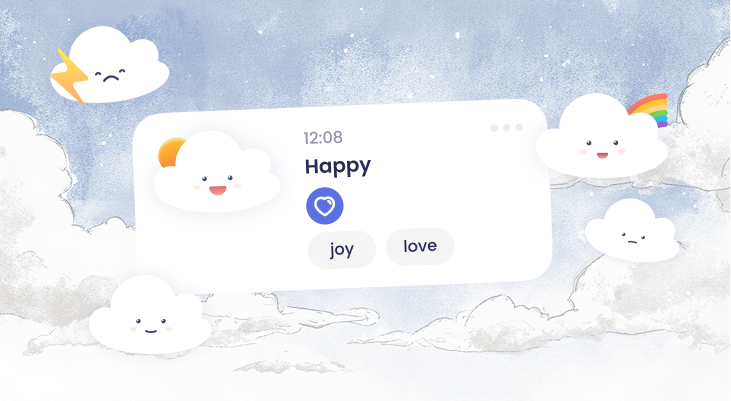
1. Mood tracker to identify what triggers self-doubt or anxiety
In a toxic friendship, people might have difficulties setting boundaries, experiencing feelings of imbalance, and resentment. Among common toxic relationship signs are also a lack of trust, empathy, or respect. Ongoing relationships with such a friend may have a harmful effect on one’s mental health, according to research on toxic friendship [3] Suzanne Degges-White, Judy Pochel Van Tieghem. Toxic Friendships: Knowing the Rules and Dealing with the Friends Who Break Them. June 2015. .
You can try Breeze’s mood tracker to analyze your emotions daily, reflect on triggers of self-doubt, and see how your mood changes depending on the people and situations around you.
2. Guided journaling for exploring negative emotions
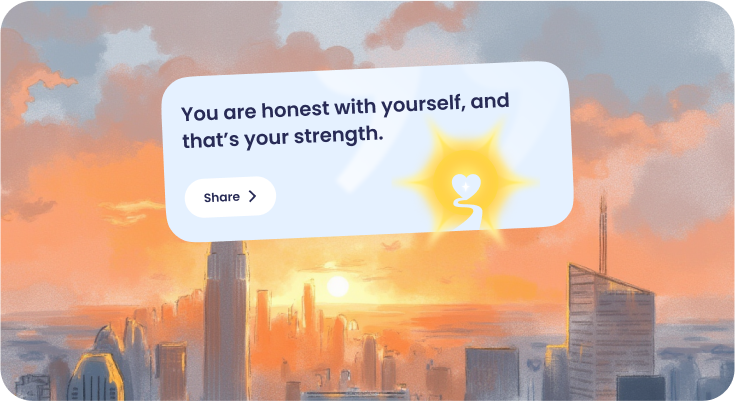
According to research on journaling, expressive writing has been linked to better coping with trauma or emotional difficulties [4] Smyth JM, Johnson JA, Auer BJ, Lehman E, Talamo G, Sciamanna CN. Online Positive Affect Journaling in the Improvement of Mental Distress and Well-Being in General Medical Patients With Elevated Anxiety Symptoms: A Preliminary Randomized Controlled Trial. December 2018. . Guided journaling allows you to describe your emotions and understand how to feel your feelings.
This practice can help you spot patterns, learn how to not take things personally, and better understand your own needs and boundaries.
Using Breeze guided journaling with self-reflection questions, you can structure your reflections, track emotional progress, and gain insights into your behavioral patterns that can help you respond thoughtfully instead of reacting impulsively.
Expert Insight
There are a couple of ways to navigate challenges in a friendship. One would be to have a conversation with your friend to express how you feel and see if there is room to resolve it. Another strategy would be to assess how much you want to give if it’s not being reciprocated and adjust your expectations and output accordingly.

Hannah Schlueter
Mental health professional
3. Daily affirmations to boost your self-esteem
To increase your confidence, try practicing saying good things about yourself. With Breeze positive affirmations, you can build kindness towards yourself and other people.
With regular self-compassion, you may begin to feel worthy of care and love in friendship and romantic relationships. These exercises may also help you become more understanding of others and allow you more flexibility in how you respond to mistakes or other challenges.
4. Insightful tests and fun quizzes
The Breeze app offers a variety of quizzes:
- Your attachment style to understand how you form relationships and treat close people.
- Career test to discover what path is right for you.
- Childhood trauma and how it affects your relationships in adult life.
- Your temperament helps you understand what drives your behavior.
- Your values help you discover the most important things and priorities in your life.
- A quiz to see if you’re ready for relationships and what you might be afraid of.
- How likable you are and many more.
5. Profile summary
The Breeze profile summary gives you an overview of your personality, emotional patterns, habits, and personal growth. It compiles your mood tracking, journaling insights, and quiz results into one easy-to-read dashboard. All this allows you to understand your strengths, identify areas for improvement, and monitor progress.

With this feature, you can spot tendencies in your behavior and lifestyle, and receive personalized recommendations to improve your mental well-being and relationships.
Wondering if you tend to be the toxic friend? Take a test to find out.
6. Personalized routine plans to achieve your goals
Want to make friends as an adult? Or, maybe you wonder how to control your emotions? Breeze personalized routines can help you set goals and track your progress. This feature offers you daily tips specifically for your needs.
For example, the routine might suggest conversation starters to practice social skills to reduce anxiety and ground yourself, or small daily tasks to build confidence. Eventually, these guided steps help you develop healthy habits, boost self-esteem, and move closer to the life and relationships you want.
Expert Insight
Talking with a professional can help you explore aspects of your friendships that are or are not helpful for you, what roles you play, and help you build more meaningful relationships. Therapy is a perfect place to practice and build social skills, such as assertive communication, interpersonal boundaries, conflict resolution, and emotional regulation. Overall, therapy is a huge asset for improving friendships and social skills.
Hannah Schlueter
Mental health professional
Sources
- Zara Abrams. The science of why friendships keep us healthy. June 2023.
- Izard CE. Emotion Theory and Research: Highlights, Unanswered Questions, and Emerging Issues. 2010.
- Suzanne Degges-White, Judy Pochel Van Tieghem. Toxic Friendships: Knowing the Rules and Dealing with the Friends Who Break Them. June 2015.
- Smyth JM, Johnson JA, Auer BJ, Lehman E, Talamo G, Sciamanna CN. Online Positive Affect Journaling in the Improvement of Mental Distress and Well-Being in General Medical Patients With Elevated Anxiety Symptoms: A Preliminary Randomized Controlled Trial. December 2018.
- National Library of Medicine. Self-affirmation activates brain systems associated with self-related processing and reward and is reinforced by future orientation. November 2015.
Disclaimer
This article is for general informative and self-discovery purposes only. It should not replace expert guidance from professionals.
Any action you take in response to the information in this article, whether directly or indirectly, is solely your responsibility and is done at your own risk. Breeze content team and its mental health experts disclaim any liability, loss, or risk, personal, professional, or otherwise, which may result from the use and/or application of any content.
Always consult your doctor or other certified health practitioner with any medical questions or concerns
Breeze articles exclusively cite trusted sources, such as academic research institutions and medical associations, including research and studies from PubMed, ResearchGate, or similar databases. Examine our subject-matter editors and editorial process to see how we verify facts and maintain the accuracy, reliability, and trustworthiness of our material.
Was this article helpful?