


Key numbers
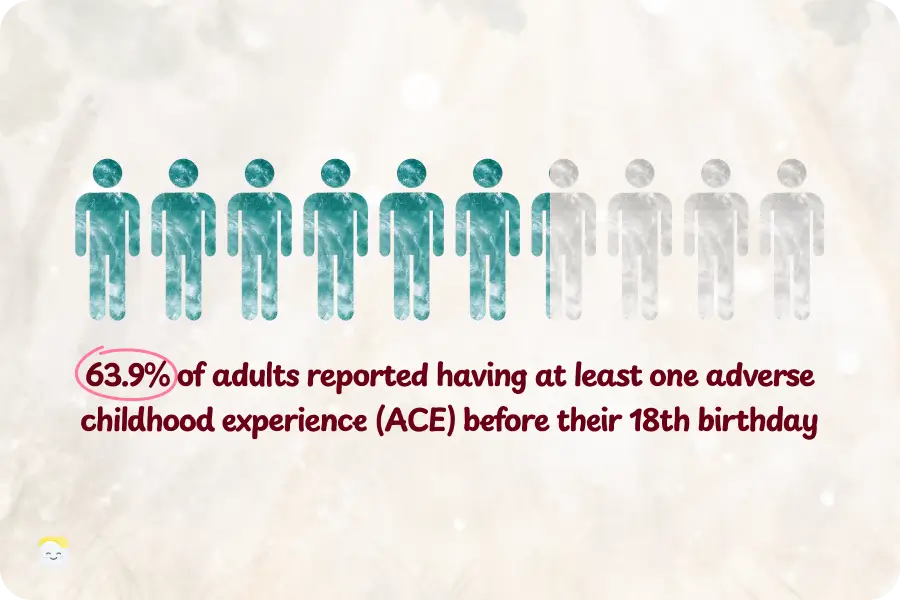
- Childhood trauma is prevalent in the US, with 63.9% of adults reporting having at least one adverse childhood experience (ACE) before their 18th birthday.
- Women tend to have higher ACE scores compared to men, with 19.2% reporting four or more ACEs.
- At least 1 in 7 children has experienced neglect or child abuse and/or neglect in the past year, with neglect being the most common form.
- People who face four or more types of ACE as kids are 12 times more likely to experience mental health issues, particularly anxiety, intrusive thoughts, drug abuse, depression, and suicide attempts.

How common is childhood trauma? (global vs. US statistics)
There is plenty of research on child maltreatment and adverse childhood experiences. Let’s explore the most prominent data from global health organizations, large-scale population studies, and U.S. public health agencies.
General prevalence: How many children experience trauma?
The World Health Organization has found that up to 1 billion children aged 2–17 years have experienced physical, sexual, or emotional violence or neglect in the past year. [1] World Health Organization. “Violence against children.” 2026
At the same time, nearly 400 million children under 5 regularly endure psychological aggression and physical punishment at home. 1 in 6 young people worldwide grow up in conflict zones, and 160 million children still engage in child labor. [2] United Nations. “‘Pivotal moment’ as violence against children reaches unprecedented levels worldwide.” 2024
Trauma statistics in the United States
Studies show that about 15% to 43% of girls and 14% to 43% of boys go through at least one trauma. Of those children and teens who have had a trauma, 3% to 15% of girls and 1% to 6% of boys develop PTSD. [3] U.S. Department of Veterans Affairs. “PTSD: National Center for PTSD”
- 63.9% of US adults experienced ≥1 ACE before age 18 (range: 54.9% in Connecticut to 72.5% in Maine)
- 17.3% of adults endured ≥4 major ACEs [4] Swedo EA, Aslam MV, Dahlberg LL, et al. “Prevalence of Adverse Childhood Experiences Among U.S. Adults — Behavioral Risk Factor Surveillance System, 2011–2020.” MMWR Morb Mortal Wkly Rep 2023;72:707–715.
Childhood trauma statistics by gender
According to other childhood trauma statistics, women tend to have higher ACE scores compared to men. Particularly at the higher end of the scale (three or more ACEs). This suggests that women in this study may experience a greater number or severity of adverse experiences in childhood compared to men.
According to statistics, a significantly higher percentage of women (19.2%) report having four or more ACEs compared to men (15.2%). [4] Swedo EA, Aslam MV, Dahlberg LL, et al. “Prevalence of Adverse Childhood Experiences Among U.S. Adults — Behavioral Risk Factor Surveillance System, 2011–2020.” MMWR Morb Mortal Wkly Rep 2023;72:707–715.
| ACE Type | Females | Males | Difference |
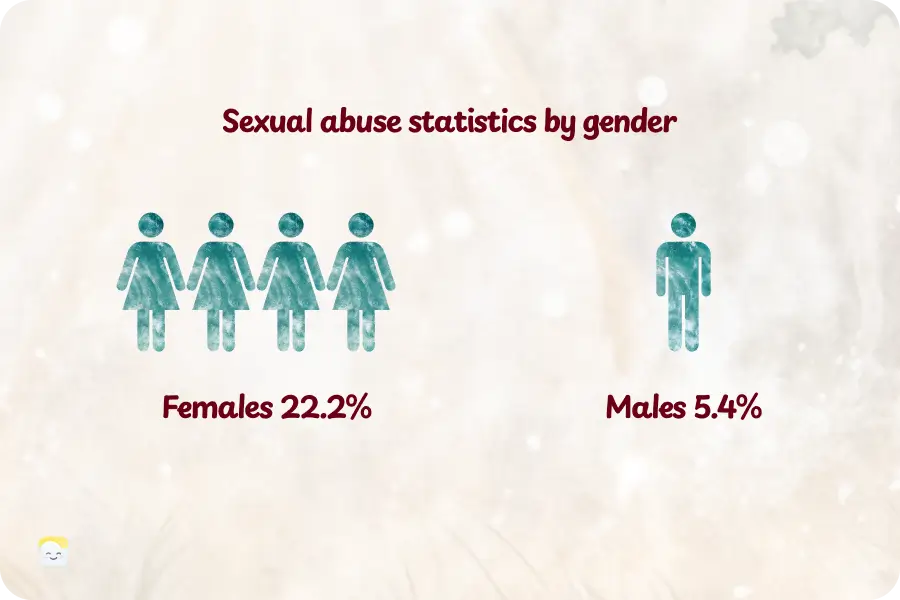
| Sexual abuse | 22.2% | 5.4% | 4× higher [5] Aslam MV, Swedo E, Niolon PH, Peterson C, Bacon S, Florence C. “Adverse Childhood Experiences Among U.S. Adults: National and State Estimates by Adversity Type, 2019-2020.” Am J Prev Med. 2024 |
| ≥4 ACEs | 19.2% | 15.2% | +4% |
| Emotional and physical child abuse | Higher | Lower | All ACEs except physical neglect are higher among females [6] Prevent Connect. “CDC releases new data on Adverse Childhood Experiences (ACE’s) Among High School Students.” 2024 |
Critical facts about childhood trauma types
Child maltreatment, abuse, and neglect statistics
An estimated 532,228 children were victims of abuse and neglect in the U.S. in 2024. Among them, a parent or legal guardian victimized 76% of kids.
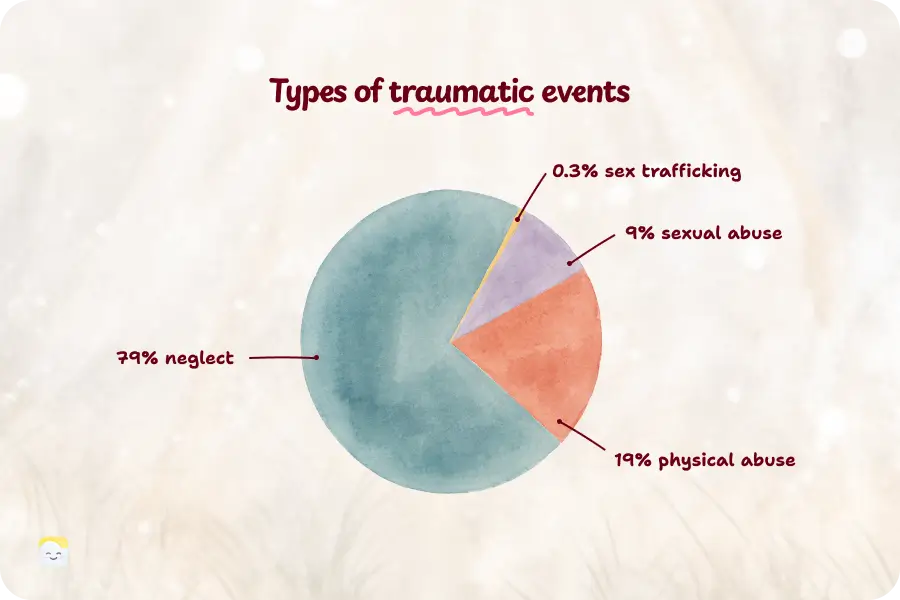
Nationally, neglect is the most common form of abuse. Nearly four-fifths (79%) of victims are neglected, 19% are physically abused, 9% are sexually abused, and 0.3% are sex trafficked. [7] National Children’s Alliance. “National Statistics on Child Abuse.” 2024
Community, accidents, and other types of traumatic events
Natural disasters cause another type of childhood trauma. 48 million children/year worldwide are affected by climate disasters. [8] PreventionWeb. “COP30: About 136,000 children a day still affected by climate disasters despite pledges over 30 years.” 2025
Important statistics on trauma also include household challenges. 10.6% of children live with ACEs because of substance use by a loved one, 15-20% after parental divorce, and 28.4% after a mental illness of a relative. [5] Aslam MV, Swedo E, Niolon PH, Peterson C, Bacon S, Florence C. “Adverse Childhood Experiences Among U.S. Adults: National and State Estimates by Adversity Type, 2019-2020.” Am J Prev Med. 2024
- 34% experienced emotional bullying, while 13% were subjected to physical bullying.
- 25% of the young population fell victim to crimes like robbery, theft, or vandalism.
- 30% of youth witnessed a stabbing, and 26% witnessed a shooting. [9] Compassion Prison Project. “How Common Are Adverse Childhood Experiences (ACEs)?”

Understanding the adverse childhood experiences score statistics
What is the average ACE score?
The ACE score is a tally of stressful events a person faces in their early years. Today, in the USA, approximately:
| Statistic | Percentage |
| U.S. adults with at least 1 ACE | 62.8-63.9% |
| U.S. adults with 4+ ACEs | 17-17.3% |
| The mean ACE score | ~ 2.0 [5] Aslam MV, Swedo E, Niolon PH, Peterson C, Bacon S, Florence C. “Adverse Childhood Experiences Among U.S. Adults: National and State Estimates by Adversity Type, 2019-2020.” Am J Prev Med. 2024 |
| U.S. adults with 0 ACEs | 36.1-37.2% [4] Swedo EA, Aslam MV, Dahlberg LL, et al. “Prevalence of Adverse Childhood Experiences Among U.S. Adults — Behavioral Risk Factor Surveillance System, 2011–2020.” MMWR Morb Mortal Wkly Rep 2023;72:707–715. |
| High school students with 1+ ACE | 75% (3 in 4) |
| High school students with 4+ ACEs | 20% (1 in 5) [6] Prevent Connect. “CDC releases new data on Adverse Childhood Experiences (ACE’s) Among High School Students.” 2024 |
Long-term health consequences: Mental health, physical health, behavioral, and addiction statistics
In the late 1990s, researchers found that having a hard childhood can cause long-term health problems later on. What was most surprising was how common these problems were across all social classes.
Let’s take a look at the most important facts about trauma.
Childhood trauma makes it more likely to develop a mental health or substance use disorder.
The long-term effects of traumatic experiences include increased risk of drug abuse, sexually transmitted diseases, delayed brain development, lower educational attainment, limited employment opportunities, and future victimization and violence.
The correlation between high ACE scores and chronic illness
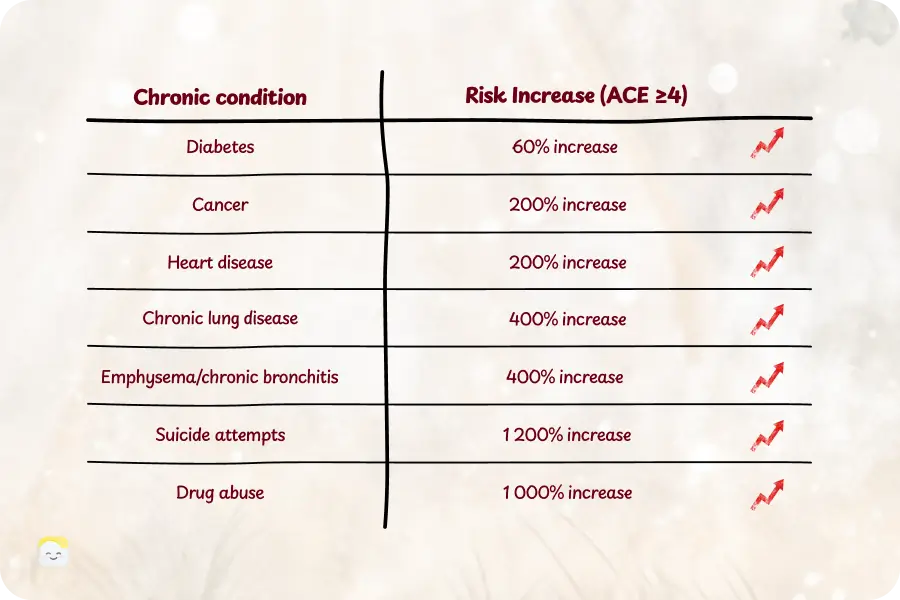
Sources: [10] PACEsConnection. “Adverse Childhood Experiences Increase Risk for Chronic Diseases – It’s Not Psychological.” 2019 , [11] Chronic Illness Trauma Studies. “The 2 Most Common ACEs in Chronic Illness in 3800 ACE Survey Responses.” 2024 , [12] Frontiers in Psychiatry. “Does Childhood Adversity Lead to Drug Addiction in Adulthood? A Study of Serial Mediators Based on Resilience and Depression.” 2022
Childhood trauma and ADHD, depression, and anxiety
Children who have experienced four or more adverse childhood experiences are 3.66 times more likely to suffer from anxiety in adulthood. They are 4.95 times as likely to experience long-lasting depression [13] Matthews TA, Shao H, Forster M, Kim I. “Associations of adverse childhood experiences with depression and anxiety among children in the United States: Racial and ethnic disparities in mental health.” J Affect Disord. 2024 and have 4 times the risk of ADHD. [14] Children’s Hospital of Philadelphia. “ADHD and Adverse Childhood Experiences.” 2017
5 out of 10 leading causes of death can be somehow connected to ACEs. [15] Stop Abuse Campaign. “What does your ACE score mean?” 2020 At the same time, preventing ACEs could reduce suicidal behaviors by 89%. [16] CDC. “About Adverse Childhood Experiences.” 2026
Childhood trauma and income stats
Research shows the correlation between average ACE scores and people’s income. Respondents making less than $15,000 per year had a significantly higher mean ACE score, while the $50,000+ group had significantly lower ACE scores compared to others. [17] Webster EM. “The Impact of Adverse Childhood Experiences on Health and Development in Young Children.” Glob Pediatr Health. 2022
An ACE score of 4 or more can triple the risk of having serious problems working. [15] Stop Abuse Campaign. “What does your ACE score mean?” 2020
Complex trauma and its unique effects on development
CPTSD is more prevalent than PTSD in youth, while 2+ sexual traumas equal a unique predictor of CPTSD class. [18] Redican E, Hyland P, Cloitre M, McBride O, Karatzias T, Murphy J, Bunting L, Shevlin M. “Prevalence and predictors of ICD-11 posttraumatic stress disorder and complex PTSD in young people.” Acta Psychiatr Scand. 2022 Participants with complex trauma had more severe psychopathology and poorer cognitive function at age 18. [19] Lewis SJ, Koenen KC, Ambler A, Arseneault L, Caspi A, Fisher HL, Moffitt TE, Danese A. “Unravelling the contribution of complex trauma to psychopathology and cognitive deficits: a cohort study.” Br J Psychiatry. 2021
Risk factors for complex trauma
A large meta-analysis identified several childhood experiences that significantly increase the likelihood of developing complex trauma-related difficulties:
- Childhood sexual abuse: Odds Ratio (OR) = 2.880, meaning a 188% higher risk.
- Childhood physical abuse: Odds Ratio (OR) = 2.841, meaning a 184% higher risk. [20] Greeson JK, Briggs EC, Kisiel CL, Layne CM, Ake GS 3rd, Ko SJ, Gerrity ET, Steinberg AM, Howard ML, Pynoos RS, Fairbank JA. “Complex trauma and mental health in children and adolescents placed in foster care: findings from the National Child Traumatic Stress Network.” Child Welfare. 2011
Frequently asked questions
Does everyone have childhood trauma?
No, 36.1% of U.S. adults reported no adverse childhood experiences (ACEs), and many people who experienced one or more adverse events do not necessarily develop childhood trauma or long-term psychological difficulties.
Trauma is not defined only by what happened but also by how a person experienced, processed, and adapted to traumatic events.
How common is trauma in adulthood resulting from childhood?
Childhood trauma is unfortunately quite common. Studies show that about 15% to 43% of girls and 14% to 43% of boys experience at least one traumatic event during childhood.
While not everyone experiences long-term effects, childhood trauma can continue to impact mental health outcomes, relationships, emotional regulation, and overall well-being into daily life.
Hope beyond the numbers: Resources for healing and developing coping mechanisms
Healing from childhood trauma is possible, and many people benefit from structured support, evidence-based therapy, and accessible self-help tools.
Professional support (therapy options)
Different therapeutic interventions can help process trauma and build coping skills:
- Trauma-focused CBT (TF-CBT) — helps reframe trauma-related thoughts and reduce emotional distress.
- EMDR (Eye Movement Desensitization and Reprocessing) — widely used for processing traumatic memories.
- Somatic therapy / body-based therapy — focuses on how trauma is stored in the body and nervous system.
- DBT (Dialectical Behavior Therapy) — useful for emotional regulation, impulsivity, and distress tolerance.
- Trauma-informed therapy (general) — ensures care is delivered with safety, stability, and understanding of trauma impact.
Where to find help
- Local licensed psychologists or psychotherapists (look for “trauma-informed” or “PTSD treatment”)
- Psychiatric clinics or mental health centers
- International directories of therapists (online & in-person):
- Crisis support lines (if urgent emotional distress is present):
Books on trauma and recovery
- The Body Keeps the Score: Brain, Mind, and Body in the Healing of Trauma — Bessel van der Kolk
- Complex PTSD: From Surviving to Thriving: A Guide and Map for Recovering from Childhood Trauma — Pete Walker
- Trauma and Recovery — Judith Herman
- Waking the Tiger: Healing Trauma — Peter Levine
Trauma statistics sources
- World Health Organization. “Violence against children.” 2026
- United Nations. “‘Pivotal moment’ as violence against children reaches unprecedented levels worldwide.” 2024
- U.S. Department of Veterans Affairs. “PTSD: National Center for PTSD”
- Swedo EA, Aslam MV, Dahlberg LL, et al. “Prevalence of Adverse Childhood Experiences Among U.S. Adults — Behavioral Risk Factor Surveillance System, 2011–2020.” MMWR Morb Mortal Wkly Rep 2023;72:707–715.
- Aslam MV, Swedo E, Niolon PH, Peterson C, Bacon S, Florence C. “Adverse Childhood Experiences Among U.S. Adults: National and State Estimates by Adversity Type, 2019-2020.” Am J Prev Med. 2024
- Prevent Connect. “CDC releases new data on Adverse Childhood Experiences (ACE’s) Among High School Students.” 2024
- National Children’s Alliance. “National Statistics on Child Abuse.” 2024
- PreventionWeb. “COP30: About 136,000 children a day still affected by climate disasters despite pledges over 30 years.” 2025
- Compassion Prison Project. “How Common Are Adverse Childhood Experiences (ACEs)?”
- PACEsConnection. “Adverse Childhood Experiences Increase Risk for Chronic Diseases – It’s Not Psychological.” 2019
- Chronic Illness Trauma Studies. “The 2 Most Common ACEs in Chronic Illness in 3800 ACE Survey Responses.” 2024
- Frontiers in Psychiatry. “Does Childhood Adversity Lead to Drug Addiction in Adulthood? A Study of Serial Mediators Based on Resilience and Depression.” 2022
- Matthews TA, Shao H, Forster M, Kim I. “Associations of adverse childhood experiences with depression and anxiety among children in the United States: Racial and ethnic disparities in mental health.” J Affect Disord. 2024
- Children’s Hospital of Philadelphia. “ADHD and Adverse Childhood Experiences.” 2017
- Stop Abuse Campaign. “What does your ACE score mean?” 2020
- CDC. “About Adverse Childhood Experiences.” 2026
- Webster EM. “The Impact of Adverse Childhood Experiences on Health and Development in Young Children.” Glob Pediatr Health. 2022
- Redican E, Hyland P, Cloitre M, McBride O, Karatzias T, Murphy J, Bunting L, Shevlin M. “Prevalence and predictors of ICD-11 posttraumatic stress disorder and complex PTSD in young people.” Acta Psychiatr Scand. 2022
- Lewis SJ, Koenen KC, Ambler A, Arseneault L, Caspi A, Fisher HL, Moffitt TE, Danese A. “Unravelling the contribution of complex trauma to psychopathology and cognitive deficits: a cohort study.” Br J Psychiatry. 2021
- Greeson JK, Briggs EC, Kisiel CL, Layne CM, Ake GS 3rd, Ko SJ, Gerrity ET, Steinberg AM, Howard ML, Pynoos RS, Fairbank JA. “Complex trauma and mental health in children and adolescents placed in foster care: findings from the National Child Traumatic Stress Network.” Child Welfare. 2011
Disclaimer
This article is for general informative and self-discovery purposes only. It should not replace expert guidance from professionals.
Any action you take in response to the information in this article, whether directly or indirectly, is solely your responsibility and is done at your own risk. Breeze content team and its mental health experts disclaim any liability, loss, or risk, personal, professional, or otherwise, which may result from the use and/or application of any content.
Always consult your doctor or other certified health practitioner with any medical questions or concerns
Breeze articles exclusively cite trusted sources, such as academic research institutions and medical associations, including research and studies from PubMed, ResearchGate, or similar databases. Examine our subject-matter editors and editorial process to see how we verify facts and maintain the accuracy, reliability, and trustworthiness of our material.
Was this article helpful?