


Podcast name
Do You Have Emotionally Abusive Parents?
Do you often hear criticism, get dismissed, or receive passive-aggressive comments from your parents? These may be signs of emotionally abusive parents. Let’s find out more about childhood emotional abuse and examples of emotionally abusive parenting.

10 Parental Emotional Abuse Signs & Examples
Common signs of emotional abuse include criticism, neglect, manipulation, shaming, maintaining control, and violation of the child’s privacy.
1. Constant criticism
This is one of the most common signs of emotional abuse, involving verbal abuse and name-calling, child-blaming, and demeaning comments. The parent may constantly find fault and make you wonder, “Why am I so dumb and useless?”
2. Emotional neglect
Emotionally abused children may feel ignored because parents fail to meet their needs. Caregivers may dismiss the child’s thoughts and refuse to comfort them when they’re upset or scared.
3. Emotional blackmail and manipulation
One of the forms of emotional abuse by caregivers is when they say, “I won’t talk to you anymore if you don’t listen to me.” They may also withdraw affection: no hugs, kindness, or attention until you obey.
Another form of emotional abuse is the silent treatment. Emotionally abusive parents may say, “If you loved me, you’d do this” or “I do everything for you, and this is how you repay me?” to make you feel guilty. They may also ignore you for days after disagreements, making you feel fear and guilt.
4. Humiliation or shaming
In emotionally abusive homes, parents may embarrass or mock the child in front of others or compare them negatively to siblings or other children, making them feel like a black sheep. For example:
- A parent laughs at your mistake in front of guests and says, “You’re so clumsy, even a little kid could do better.”
- Comparing siblings: “Why can’t you be like your sister? She’s smart and doesn’t cause problems.”
- Publicly pointing out failures, such as saying at a family gathering, “He always messes things up, don’t expect much from him.”
- Mocking appearance or abilities: “Look at how you dress, no wonder people don’t like you.”
- Sharing your personal struggles with others in a humiliating way instead of supporting you privately.
Did you find yourself relating to any of these examples while reading? If you grew up with an abusive parent, you may have learned to hide your own feelings to avoid criticism or rejection. Learning how to feel your feelings is the first step toward a strong sense of self-worth. Take the Emotional Intelligence Test to discover how well you understand and respond to your own emotions.

5. Excessive control and isolation
Parents can try to maintain control by preventing normal social interaction. They may not allow you to have friends or go to birthday parties and school trips without a valid reason.
Emotionally abusive parents may also limit your personal space and freedom, including monitoring or interfering with your private life in unhealthy ways. They may check your phone or personal belongings without permission, or not allow you to close your bedroom door or have any time alone.
Expert Insight
Parental monitoring is meant to promote safety and protection, but it can become harmful when children are no longer given typical, basic privileges or are not able to engage in the opportunities that are developmentally appropriate for them to navigate without valid reasoning or explanation.

Hannah Schlueter
Mental health professional
6. Blaming the child for the parent’s emotions
A parent can repeatedly make the child responsible for their anger, sadness, stress, or happiness. They may say, “You make me so angry,” or “I wouldn’t be this unhappy if it weren’t for you.”
7. Gaslighting and denying the child’s experience
Some emotionally abusive parents may deny events, rewrite what happened, or insist that the child is remembering things incorrectly. They may gaslight a child, saying, “That never happened.” “You’re imagining things,” “You’re making a big deal out of nothing,” or “I was only joking.”
8. Using personal vulnerabilities against the child
A child may eventually stop sharing personal information because the parent repeatedly uses vulnerable moments against them.
Or the child shares a fear about failing at school and later hears, “You were always afraid you weren’t smart enough.” As a result, the child may learn that vulnerability is unsafe.
9. Making the child feel responsible for the family image
Some parents are highly concerned with how their child makes the family look to other people.
Comments may include, “What will people think of us?” “Don’t embarrass this family,” or “You are making me look like a bad parent.”
10. Parentification
Parentification happens when a child is expected to take on responsibilities that are inappropriate for their age or to provide emotional support to a parent.
Or, an abusive parent can make the child responsible for caring for siblings or managing the household without appropriate support. As a consequence, the child may learn, “Other people’s needs come before mine.”
What Is Parental Emotional Abuse?
Parental emotional abuse is a pattern of behavior by a parent or caregiver that harms a child’s healthy development, self-worth, and sense of emotional safety. It doesn’t involve physical harm, but the psychological impact can last well into adulthood.
Psychological abuse usually involves repeated actions that make a child feel unloved, worthless, fearful, or rejected. It is often subtle and hard to recognize, because it may not always look like obvious mistreatment. It can happen through small behaviors such as tone of voice, dismissive comments, silent treatment, or emotional withdrawal. If not addressed, the effects may continue into adulthood and impact relationships, mental health, and overall well-being.
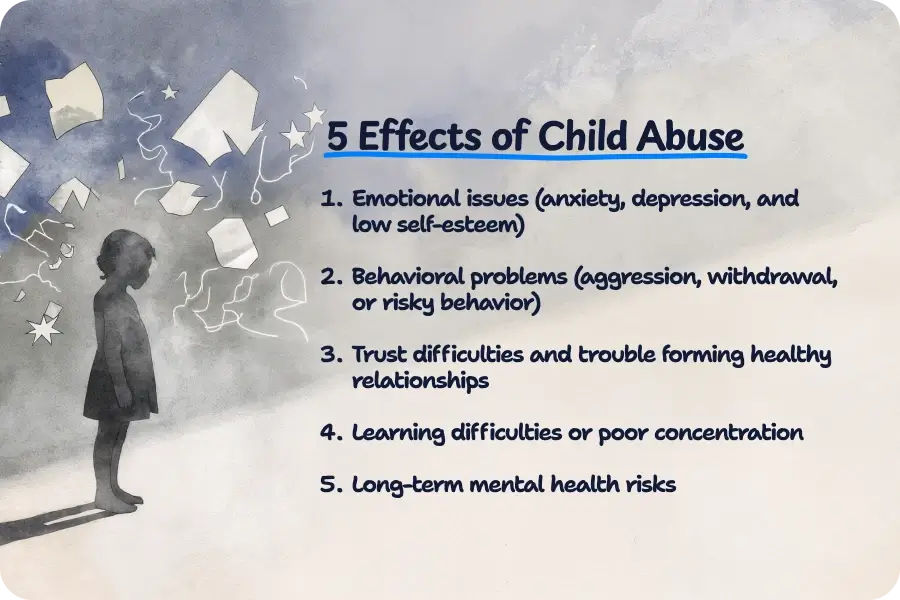
7 Effects of Child Abuse
Emotional abuse can have serious and long-lasting effects on a child’s emotional, mental, physical, and social development. Effects of family trauma may continue into adulthood if the child does not receive professional support or intervention.
1. Emotional and Psychological Effects
First of all, emotional abuse is harmful to a child’s self-esteem. They may feel fear, shame, guilt, anxiety, or a sense of worthlessness. This, in turn, can lead to mental health conditions such as post-traumatic stress disorder (PTSD), eating disorders, depression, or chronic emotional instability [1] National Library of Medicine. Child neglect and emotional abuse. October 2024 .
2. Behavioral Problems
Abused children may show withdrawn or aggressive behavior. Some act out, while others become very quiet. A child might get into frequent fights with classmates or, instead, avoid others and sit alone during breaks.
3. Difficulty Forming Healthy Relationships
Abuse can damage a child’s ability to trust others and build healthy relationships. People who endure emotional abuse may push friends away because they expect to be hurt or become overly attached and afraid of abandonment in romantic relationships.
4. Cognitive and Academic Impact
Stress from abuse affects brain development and concentration, leading to learning difficulties and poor school performance. As a result, emotionally abused children may struggle to focus in class, forget assignments, or see their grades drop despite effort.
5. Physical Health Consequences
Child abuse can cause suicidal thoughts, self-harm, and long-term health problems due to chronic stress. Physical symptoms may include frequent headaches, trouble sleeping, or unexplained stomach aches.
6. Long-Term Mental Health Risks
There is an increased risk of mental health disorders in adulthood, such as depression or anxiety, research shows [2] Iram Rizvi SF, Najam N. Parental Psychological Abuse toward children and Mental Health Problems in adolescence. 2014 March . An adult who was abused as a child may experience panic attacks or ongoing sadness without clear triggers.
7. Social and Life Outcomes
Abuse can affect future stability, including education, work, and relationships. Someone may struggle to keep a job or neglect their own emotional needs and end up in unhealthy relationships because those patterns feel familiar.
How To Deal with Emotional Abuse from Parents & Recover
You cannot control a parent’s behavior, but you can protect your mental health, build a support network, and work toward emotional recovery.
1. Recognize and Name the Abuse
The first step is understanding that it wasn’t “normal strict parenting” if it involved constant criticism, humiliation, manipulation, or control:
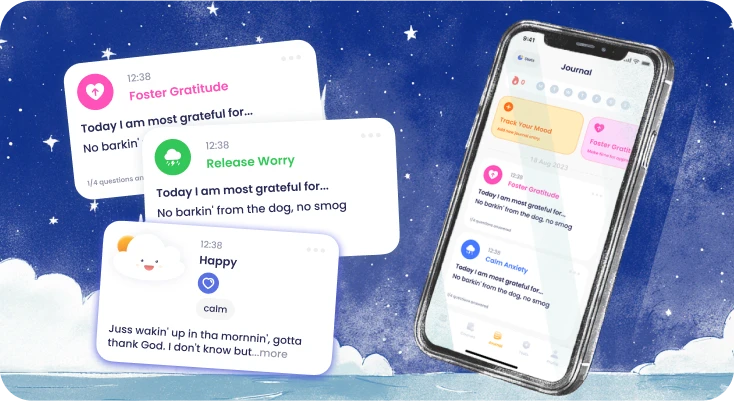
Write down your feelings, triggers, and reactions daily using guided Breeze journaling. Unlike traditional journaling, which can feel time-consuming or formal, Breeze journaling focuses on quick, honest reflections about your thoughts and experiences to help you better understand your feelings and needs.
2. Create Emotional Distance
Reduce emotional impact by limiting how much their words define your self-worth. For this, use “mental filtering”: instead of automatically accepting hurtful comments, try to see them as opinions shaped by someone else’s emotions, biases, or perspective, not as objective facts about you. This creates a small but important distance between the situation and your internal response.
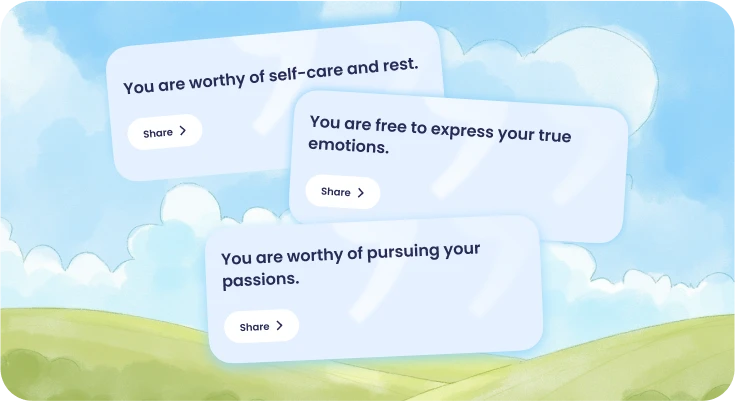
Affirmations in the Breeze app can help you ease anxiety. Their goal isn’t to ignore what you feel, but to balance negative input with a more stable internal voice. When repeated regularly, these phrases can help shift your focus away from external judgment and back to your sense of self.
3. Set Boundaries
- Calmly say: “I will not continue this conversation if I’m being insulted.” This helps you take control of the situation without escalating conflict.
- Walk away when yelling or humiliation starts. Even small boundaries like leaving a room can reduce harm.
- Reduce sharing personal information with the abusive parent if it is used against you. This may include thoughts, feelings, plans, or private details about your relationships and finances that could later be criticized, mocked, or used to manipulate you.
- Set time limits for contact. Control how long calls or visits last. For example, you may say: “I can talk for 10 minutes, then I need to go.”
- Reduce frequency of contact if needed. You might switch from daily calls to weekly or monthly contact, depending on emotional impact.
Here are additional calm, clear responses you can use when dealing with emotionally abusive or controlling parents in adulthood:
When being criticized
- “I hear your opinion, but I’m not open to criticism right now.”
- “I’m confident in my decision, so I’m not discussing it further.”
- “You don’t have to agree with me, but I need respect in this conversation.”
When guilt-tripped
- “I understand you’re upset, but I’m not going to feel guilty for my choices.”
- “I’m choosing what is best for me.”
- “I’m not going to respond to manipulation or pressure.”
When conversations become insulting
- “If the disrespect continues, I’m going to end this call.”
- “We can talk when things are calmer.”
- “I’ll reach out when I’m ready.”
4. Learn to Recognize the Guilt Trigger
Learning to separate responsibility from guilt can make boundary-setting easier. If you were raised to prioritize a parent’s emotions, setting a healthy boundary may initially feel selfish, cruel, or disrespectful.
When guilt appears, ask yourself:
- Did I actually do something wrong?
- Or did I simply disappoint someone?
- Am I responsible for their feelings?
- Would I expect another adult to tolerate this behavior?
- Am I changing my decision because I want to or because I am afraid of their reaction?
Try replacing “I’m a bad child because they’re upset” with “They’re allowed to be upset. I am still allowed to have boundaries.”
Expert Insight
Reducing the feelings of guilt that can come with beginning to set boundaries can be improved with time, practice, and consistency. Oftentimes, people feel guilty when setting boundaries because they have been made to feel responsible for the caregiver’s feelings. Shifting focus to your reasoning for setting the boundary and focusing less on their response or reaction can be a great starting place.
Hannah Schlueter
Mental health professional
5. Create a “Trigger Map”
Spend a week noticing which situations affect you most to recognize the pattern.
6. Use a “Reality Check” After Difficult Conversations
Emotional abuse can leave you questioning whether you overreacted or misunderstood what happened. After a difficult interaction, write two columns:
| What happened? | What am I telling myself about it? |
| “They called me irresponsible because I wouldn’t change my plans.” | “Maybe I really am selfish.” |
Then ask, “What would I tell a friend if their parent treated them this way?” This can help you distinguish between the actual event and the negative interpretation you may have learned to automatically apply to yourself. Keep a record of recurring patterns instead of judging each interaction in isolation.
7. Strengthen Self-Esteem
Abuse may increase self-doubt, so rebuilding your self-esteem is key:
- Keep a “strength list” of achievements and positive qualities. Write down things you’ve done well, moments you handled difficult situations, or qualities others appreciate in you. This could include small wins, like staying calm in a tough conversation or setting a boundary. Revisit this list regularly, especially after negative interactions with parents, to remind yourself of a more balanced and accurate view of who you are.
- Avoid comparing yourself to siblings or others. Comparison often reinforces feelings of “not being enough,” especially in difficult family dynamics.
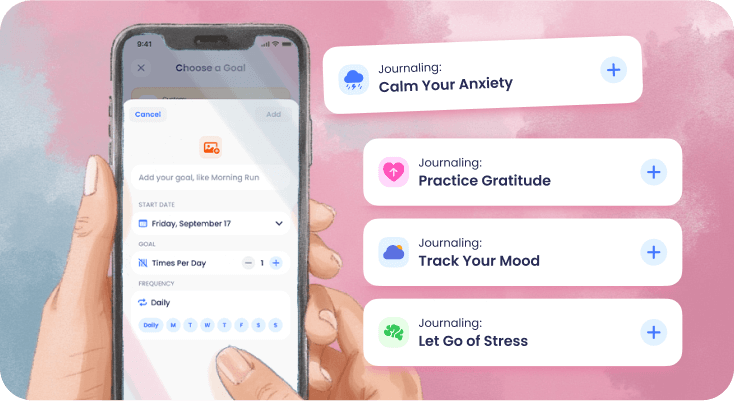
- Set small goals and complete them to rebuild confidence. The Breeze app can help you set up a goal and track your progress. For example, you can create a challenge like “stay calm in one difficult conversation today” and mark off each step as you go.
5. Seek Help from a Licensed Therapist
Individual counseling or group therapy can help process family trauma, understand past experiences, and build healthy coping skills. A therapist offers a confidential, supportive, and structured environment where your feelings are taken seriously and validated.
A therapist can guide you to:
- Recognize your experiences. Therapy helps you clearly understand what happened and why it affected you.
- Process unresolved emotions. You may carry anger, sadness, guilt, or confusion. Therapy helps you work through these safely instead of suppressing them.
- Break negative thought patterns. Abuse often creates beliefs like “Everything is my fault.” You may replace these with more realistic, healthier thoughts during therapy.
- Build emotional regulation skills. Learn how to manage triggers, reduce anxiety, and respond calmly instead of reacting from past trauma.
- Develop boundaries and communication skills. You’ll learn how to say no, protect your space, and interact with your parents in a safer, more controlled way.
- Rebuild identity and self-worth. Therapy supports you in rediscovering who you are outside of the abuse and building confidence.
Resources for People Experiencing Emotional Abuse in a Family
- If you are under 18 or concerned about child abuse, Childhelp National Child Abuse Hotline provides 24/7 support from trained crisis counselors. Call or text 1-800-422-4453 or use their online chat. You can contact Childhelp to talk about what is happening, understand your options, and get help identifying appropriate resources. You do not have to know whether what you are experiencing legally qualifies as abuse before reaching out.
- If you are an adult dealing with an abusive parent, the National Domestic Violence Hotline — Get Help can also provide support when abuse occurs within a family or household. Advocates can help you think through boundaries, safety concerns, housing options, and local resources. Call 1-800-799-SAFE (7233), text START to 88788, or use their online chat.
Frequently asked questions
1. What are emotionally abusive parents?
Emotionally abusive parents are caregivers who consistently use harmful words or behaviors, such as criticism, manipulation, neglect, or control, that damage a child’s self-esteem, emotional well-being, and sense of safety.
2. What are the common signs of emotional abuse by parents?
Common signs include insults, ignoring or dismissing the child’s feelings, guilt-tripping or emotional manipulation, humiliating or shaming the child, and controlling behavior or isolating the child.
3. How does emotional abuse affect a child?
It can lead to low self-esteem, anxiety, depression, trust issues, and difficulty forming relationships. Long-term effects may continue into adulthood without support.
4. Is strict parenting the same as emotional abuse?
No. Strict parenting sets rules and discipline with care and respect, while emotional abuse involves harmful patterns like constant criticism, fear, or control that damage the child emotionally.
5. How can someone recover from emotional abuse by parents?
Recovery involves building self-esteem, setting boundaries, seeking support, and possibly therapy. Healing takes time, but improvement is possible with the right help.
Sources
- National Library of Medicine. Child neglect and emotional abuse. October 2024
- Iram Rizvi SF, Najam N. Parental Psychological Abuse toward children and Mental Health Problems in adolescence. 2014 March
- Young JC, Widom CS. Long-term effects of child abuse and neglect on emotion processing in adulthood. 2014
Disclaimer
This article is for general informative and self-discovery purposes only. It should not replace expert guidance from professionals.
Any action you take in response to the information in this article, whether directly or indirectly, is solely your responsibility and is done at your own risk. Breeze content team and its mental health experts disclaim any liability, loss, or risk, personal, professional, or otherwise, which may result from the use and/or application of any content.
Always consult your doctor or other certified health practitioner with any medical questions or concerns
Breeze articles exclusively cite trusted sources, such as academic research institutions and medical associations, including research and studies from PubMed, ResearchGate, or similar databases. Examine our subject-matter editors and editorial process to see how we verify facts and maintain the accuracy, reliability, and trustworthiness of our material.
Was this article helpful?