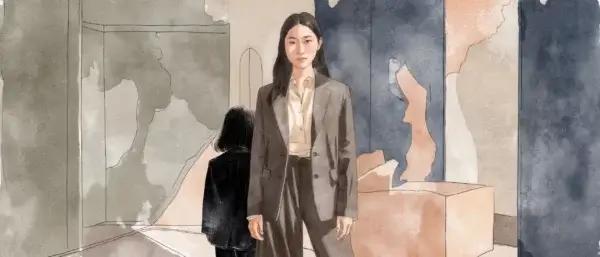


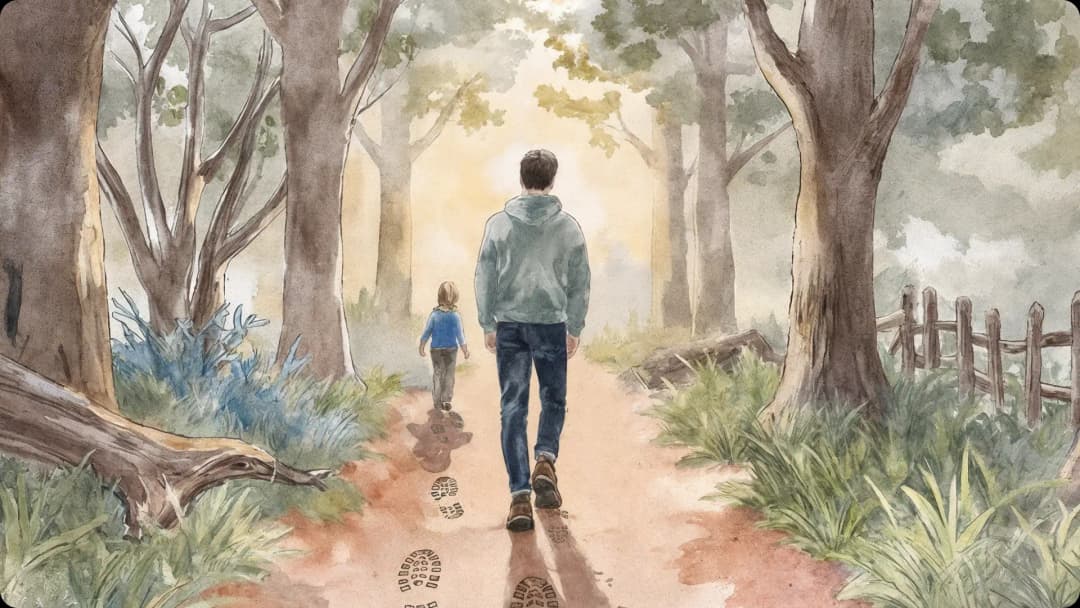
Childhood trauma can significantly influence a person’s life. Exposure to trauma in early years can dramatically increase people’s risk for 7 out of 10 of the leading causes of death in the US — including high blood pressure, heart disease, and cancer. [1] Harvard School of Public Health. “Childhood trauma’s devastating impact on health.” 2015
This doesn’t mean that everyone who has experienced traumatic experiences is destined to face these outcomes. However, if you face the symptoms of childhood trauma, it’s important to understand how they influence your life and how to heal.

12 ways how childhood trauma affects health and behavior across a lifetime
Those who experienced childhood adversity can bring its outcomes over their whole lives. Thus, if you suppose that you might have gone through trauma, it’s worth noticing how it still may show up in your life.
1. Emotional dysregulation and altered emotional responses
Complex trauma can make it hard to handle emotions, and these struggles often affect how a person thinks, feels, and builds relationships, even as an adult. This means that survivors might overreact to small triggers, feel numb, or experience a rollercoaster of emotions. In addition, trauma survivors may:
- have recurrent suicidal thoughts
- engage in self-harming actions
- find it challenging to describe what they feel
- show unpredictable or explosive emotional responses
- be vigilant and guarded in communication
- show a lack of impulse control
2. Challenges in adult relationships
Trauma impacts our sense of self-worth and emotional regulation, which can potentially lead to fear of closeness or difficulty trusting others. Researchers have also found that adults with traumatic experiences are more likely to face problems in romantic and intimate relationships. [2] Dilillo D, Lewis T, Loreto-Colgan AD. “Child maltreatment history and subsequent romantic relationships. J Aggression Maltreatment Trauma.” 2007
Childhood trauma increases the risk of developing insecure attachment styles, which can manifest in completely different ways. While some people may be overly clingy and constantly seek reassurance, others might push people away — even if they secretly crave connection. This not only covers romantic connections but also friendships, family relationships, and even professional communication.
3. Lack of self-worth
According to the European Journal of Trauma & Dissociation, abusive trauma destroys self-worth and self-identity. Children who grew up with trauma histories may hold the message that they aren’t valuable or that their value is conditional. Moreover, they might believe that their needs, choices, and desires aren’t important as well.
They may develop the belief that love and acceptance must be earned, which might lead to perfectionism or people-pleasing habits in adulthood.

4. Pervasive sense of shame
Childhood trauma survivors report shame and anticipation of stigma, which can make them avoid any help. This is because when a child is abused or experiences a traumatizing event at an early age, they may start to think that they deserve it. As such, even in adulthood, they might carry this constant fear of judgment, which can lead to perfectionism and burnout in the workplace.
5. Difficulty planning future
Childhood abuse survivors can experience a “sense of foreshortened future.” Trauma survivors may feel like they won’t live long or believe that good things are simply “not meant” for them. This can make it hard to set goals and long-term plans or imagine a future that feels safe and hopeful.
This is because, from an early age, they may have been surrounded by the feeling of guilt, shame, and powerlessness. All these can make it hard to believe the future will be safe — so planning ahead just doesn’t feel worth it.
6. Brain function challenges (how childhood trauma affects the brain in adulthood)
The research suggests that childhood trauma is associated with worse cognitive performance in young adults. [6] Petkus AJ, Lenze EJ, Butters MA, Twamley EW, Wetherell JL. “Childhood Trauma Is Associated With Poorer Cognitive Performance in Older Adults.” J Clin Psychiatry. 2018 The results of complex trauma may be wide-ranging:
- problems with thinking logically
- problem-solving issues
- memory challenges
- lack of energy, focus, or interest in gaining new skills
- planning and organization issues
When the nervous system is exposed to prolonged stress during childhood, the brain may prioritize survival over learning and emotional regulation. Trauma can affect three key areas:
- Amygdala: may become overactive, increasing anxiety, fear responses, and sensitivity to stress.
- Hippocampus: may be affected, contributing to memory difficulties and stronger reactions to emotional triggers.
- Prefrontal cortex: may have reduced functioning, making decision-making, self-control, and emotional regulation more challenging. [7] De Bellis MD, Zisk A. “The biological effects of childhood trauma. Child Adolesc Psychiatr Clin N Am.” 2014
7. Higher risk of mental health conditions
Childhood trauma is a significant risk factor for developing mental disorders later in life. Among the most common conditions are:
- borderline personality disorder
- depressive disorders
- anxiety disorders
- posttraumatic stress disorder (PTSD)
- eating disorders
- substance use disorders
For instance, a diagnosis of borderline personality disorder is associated with child abuse and neglect more than any other personality disorder, with a range between 30 and 90% in BPD patients. [3] Cattane N, Rossi R, Lanfredi M, Cattaneo A. “Borderline personality disorder and childhood trauma: exploring the affected biological systems and mechanisms.” BMC Psychiatry. 2017 Such mental illnesses may not show up right away, but can surface in young adults or at any other life period, especially when triggered by stressful situations.
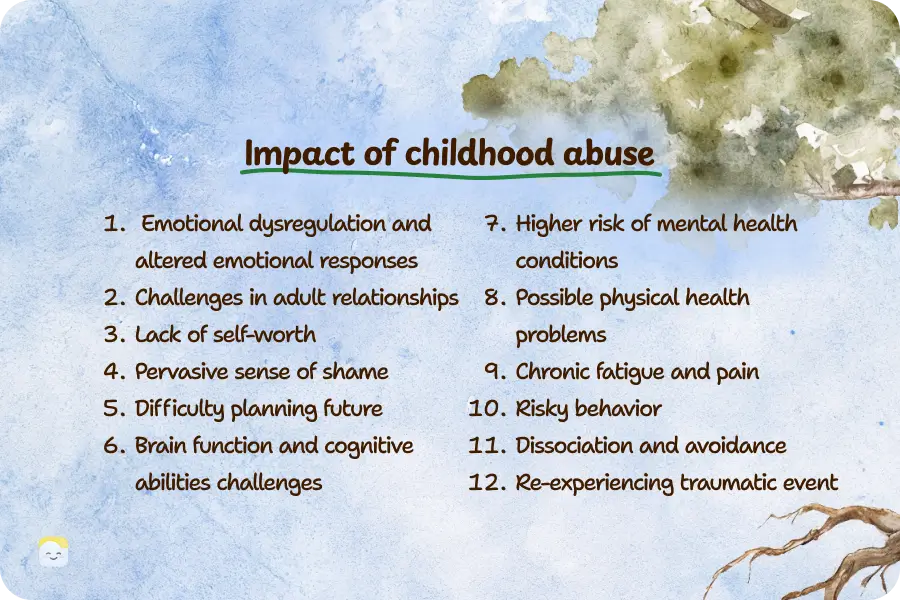
8. Long-term physical health conditions and chronic diseases (how childhood trauma affects health across a lifetime)
Unresolved childhood trauma has been linked to a much higher risk of developing 7 out of the 10 most common causes of death in the US. Among them are heart disease, cancer, and high blood pressure. [4] Harvard T.H. Chan School of Public Health. “Childhood trauma’s devastating impact on health.” 2015
Moreover, those who experienced child maltreatment, sexual abuse, or any other form of traumatic event may live with chronic stress, which can result in physical symptoms. Childhood trauma can affect the immune system and stress response. Among other possible conditions and chronic illnesses that most likely may be developed are:
- diabetes
- obesity
- stroke
- autoimmune disorders
- irritable bowel syndrome
- migraines
- sleep disorders
- hormonal imbalances
This shows that childhood trauma exposure can not only cause mental health conditions; it can also quietly affect the body for years. Thus, if you notice the manifestations of trauma or understand that you might have experienced it, it’s better to contact a mental healthcare provider who can help you manage the long-term effects.
9. Chronic pain and fatigue
Scientists prove that chronic fatigue is one of the commonly reported symptoms after trauma. [9] Mohamed AZ, Lagopoulos J, Nasrallah FA, Shan Z; Department of Defense Alzheimer’s Disease Neuroimaging Initiative. “Self-reported Fatigue was Associated with Increased White-matter Alterations in Long-term Traumatic Brain Injury and Posttraumatic Stress Disorder Patients. Neuroscience.” 2023 This is particularly true for maltreated children and adults who may carry unprocessed stress in their bodies. As a result of nervous system overload, they can experience constant tiredness, muscle tension, and even unexplained physical pain.
10. Risky behavior
Those who have endured adverse childhood experiences are more likely to engage in risky behaviors later in life. [5] Journal of Indian Association for Child and Adolescent Mental Health. “Risk Behavior Among Emerging Adults: The Role of Adverse Childhood Experiences (ACE), Perceived Family and Interpersonal Environment.” 2024 Moreover, they might use such behaviors as coping mechanisms to handle overwhelming emotions and toxic stress. Examples might include:
- substance abuse
- unsafe sexual practices
- reckless driving
- criminal activity
- excessive gambling
- chronic overeating
- impulsive decision-making
- social isolation or withdrawal
11. Dissociation and avoidance
A 2022 study revealed that there is a significant correlation between dissociative symptoms and exposure to trauma, particularly early childhood trauma. [8] Boyer SM, Caplan JE, Edwards LK. “Trauma-Related Dissociation and the Dissociative Disorders: Neglected Symptoms with Severe Public Health Consequences.” Dela J Public Health. 2022 A person who has experienced trauma can start to mentally separate themselves from the experience to cope with overwhelming emotions. They can:
- feel like they’re in a dream
- consider themselves detached from their bodies
- believe that the experience has happened to someone else
- lose all memories of the event or parts of it
- emotionally “numb out” or disconnect from their feelings
12. Re-experiencing traumatic event
The National Center for PTSD states that among children and teens who survived trauma, 3% to 15% of girls and 1% to 6% of boys develop PTSD. While this statistic may not sound significant, people who have experienced trauma may live with certain PTSD manifestations, particularly intrusive memories, nightmares, or sudden flashbacks. These symptoms can suddenly show up when something like a sound, smell, or place reminds them of the trauma, even years following the traumatic event.
Katherine Scott, M.Ed/Ed.S, LMFT, shares the most common obstacles that people living with childhood trauma face when trying to move away from harmful behaviors. “We have to remember that the now-known ‘harmful behaviors’ were methods of survival for someone who faced childhood trauma. It’s important not to villainize methods of coping that helped the person survive while recognizing that the old coping mechanisms do not serve their original purpose any longer. Healing is extremely uncomfortable whether it be physical healing or emotional healing. This discomfort can include the need to process the trauma in a raw and vulnerable way, rewrite core beliefs and self-talk, and set boundaries that break away from generational traumas as well.”
What are childhood trauma and childhood adversity?
The National Child Traumatic Stress Network suggests a definition of childhood trauma as ‘a traumatic, frightening, dangerous, or violent event that poses a threat to a child’s life or bodily integrity.’ Moreover, witnessing an event that threatens a loved one’s life or physical security can also be traumatic.
Adverse childhood experiences (ACEs) are potentially traumatic events that occur in childhood (0-17 years). According to the CDC-Kaiser Permanente ACE Study, around 64% of US adults had experienced at least one type of ACE before age 18.
ACEs can potentially lead to trauma, but the development of childhood trauma itself highly depends on a child’s emotional resources, support system, and the meaning they assign to the event. While two children might experience the same situation, their emotional response and processing of the event can differ dramatically.
Common types of childhood trauma that resurface in adulthood
Here are the most common types of childhood trauma that can resurface later in life:
Violence or child abuse
Research from the National Children’s Alliance suggests that more than 550,000 children are known to US authorities to be abused. It can be childhood sexual abuse, emotional abuse, child maltreatment, or any other kind of violence. In any case, such experiences can deeply affect a child’s sense of safety, self-worth, and ability to form healthy relationships.
Bullying
The study proves that bullying can increase the likelihood of somatization symptoms and sleep problems by 2 times. [10] Health Affairs. “The Effects Of Violence On Health.” 2019 The emotional impact of bullying, whether from classmates, teachers, or family members, can influence stress responses into adulthood.
Parentification
If your primary caregivers, for some reason, such as illness, substance abuse, or emotional immaturity, put too much physical or emotional responsibility on their child, they might have developed parentification trauma. It’s quite different from abuse and neglect — it means a child had to act like an adult when they were still a child, taking care of others instead of being cared for.
Terrorist acts, war, and natural disasters
Any traumatic experiences that are out of someone’s control can lead to deep emotional wounds. Additionally, children might develop post-traumatic stress disorder (PTSD), which can make it hard to feel safe even long after the event is over.
Sudden loss of a close person
Young adults and children who have experienced the violent or early death of a close one may face the outcomes later. A child may feel guilty, ashamed, confused, or even responsible for what happened.
Divorce or parental absence
Different from child abuse and neglect, divorce or parental absence might not involve direct harm. Still, they may result in attachment or abandonment trauma, causing feelings of insecurity and impacted self-worth.
Substance abuse
If a person grew up in an environment where addiction was present, especially if combined with childhood maltreatment, it may lead to emotional instability. As such, a lack of safety can shape coping mechanisms that follow a person into adulthood.
Complex trauma
The National Child Traumatic Stress Network states that complex trauma describes both children’s exposure to multiple traumatic events and the wide-ranging, long-term effects of this exposure. Simply put, it’s the result of facing repeated or ongoing traumatic situations, which can deeply affect a child’s ability to trust others or the world around them.
How to begin healing from childhood trauma impacts
There are several evidence-based treatment approaches that can help trauma survivors take care of their mental health and overcome potential complications. Except for them, you may engage in self-care practices, mindfulness, or meditation, as neuroplasticity allows the brain to reorganize and heal from trauma. Yet, it may be better to combine it with professional treatment for better results.
- Cognitive processing therapy (CPT). This approach teaches people to evaluate and change the upsetting thoughts connected to trauma. Through CPT, trauma survivors learn to shift unhelpful thoughts and develop a healthier understanding of what happened.
- Eye movement desensitization & reprocessing therapy (EMDR). It alters brain structure and function to help trauma survivors handle distressing memories and reduce emotional intensity. While focusing on traumatic memory, people move their eyes in a specific way and follow guided bilateral stimulation, which helps the brain reprocess the memory.
- Trauma-focused cognitive behavioral therapy (TF-CBT). This approach is defined as a conjoint parent-child treatment that uses cognitive-behavioral principles and exposure techniques. It helps process traumatic memories in a safe, structured way and develop healthier coping strategies.
- Dialectical behavioral therapy (DBT). This approach focuses on teaching practical skills to manage overwhelming feelings in the present moment. Instead of diving straight into past trauma, DBT gives you tools to handle intense emotions, cope with stress, and build healthier relationships. It is all about finding a balance between accepting yourself exactly as you are and working to change unhelpful behaviors.
Expert Insight
Any sort of experiential-based therapy, such as art therapy, can be incredibly beneficial for trauma survivors. For example, ‘play’ is a child’s primary language and modality of self-expression until the age of 12. If the trauma occurred during this time, art can be a profound way of accessing deeper processing and healing as it could give an outlet for expression to release the trauma from the body if verbal and cognitive abilities were still immature at the time of the traumatic event. Trauma also carries a heavy physical component, and art can be a way of processing without the need for words.

Katherine Scott
Mental health professional
Conclusion: Your path to resilience
In summary, childhood trauma can impact a person’s life in many ways. Yet, it doesn’t mean that healing isn’t possible. If you reach out to a professional healthcare provider and take small, steady steps toward recovery, you can gradually reduce its impact. Begin your journey today with the Breeze app that provides simple gratitude, worry release, and relaxation practices that help take care of your mental health and support you on the way to resilience.
Sources
- Harvard School of Public Health. “Childhood trauma’s devastating impact on health.” 2015
- Dilillo D, Lewis T, Loreto-Colgan AD. “Child maltreatment history and subsequent romantic relationships. J Aggression Maltreatment Trauma.” 2007
- Cattane N, Rossi R, Lanfredi M, Cattaneo A. “Borderline personality disorder and childhood trauma: exploring the affected biological systems and mechanisms.” BMC Psychiatry. 2017
- Harvard T.H. Chan School of Public Health. “Childhood trauma’s devastating impact on health.” 2015
- Journal of Indian Association for Child and Adolescent Mental Health. “Risk Behavior Among Emerging Adults: The Role of Adverse Childhood Experiences (ACE), Perceived Family and Interpersonal Environment.” 2024
- Petkus AJ, Lenze EJ, Butters MA, Twamley EW, Wetherell JL. “Childhood Trauma Is Associated With Poorer Cognitive Performance in Older Adults.” J Clin Psychiatry. 2018
- De Bellis MD, Zisk A. “The biological effects of childhood trauma. Child Adolesc Psychiatr Clin N Am.” 2014
- Boyer SM, Caplan JE, Edwards LK. “Trauma-Related Dissociation and the Dissociative Disorders: Neglected Symptoms with Severe Public Health Consequences.” Dela J Public Health. 2022
- Mohamed AZ, Lagopoulos J, Nasrallah FA, Shan Z; Department of Defense Alzheimer’s Disease Neuroimaging Initiative. “Self-reported Fatigue was Associated with Increased White-matter Alterations in Long-term Traumatic Brain Injury and Posttraumatic Stress Disorder Patients. Neuroscience.” 2023
- Health Affairs. “The Effects Of Violence On Health.” 2019
Disclaimer
This article is for general informative and self-discovery purposes only. It should not replace expert guidance from professionals.
Any action you take in response to the information in this article, whether directly or indirectly, is solely your responsibility and is done at your own risk. Breeze content team and its mental health experts disclaim any liability, loss, or risk, personal, professional, or otherwise, which may result from the use and/or application of any content.
Always consult your doctor or other certified health practitioner with any medical questions or concerns
Breeze articles exclusively cite trusted sources, such as academic research institutions and medical associations, including research and studies from PubMed, ResearchGate, or similar databases. Examine our subject-matter editors and editorial process to see how we verify facts and maintain the accuracy, reliability, and trustworthiness of our material.
Was this article helpful?