

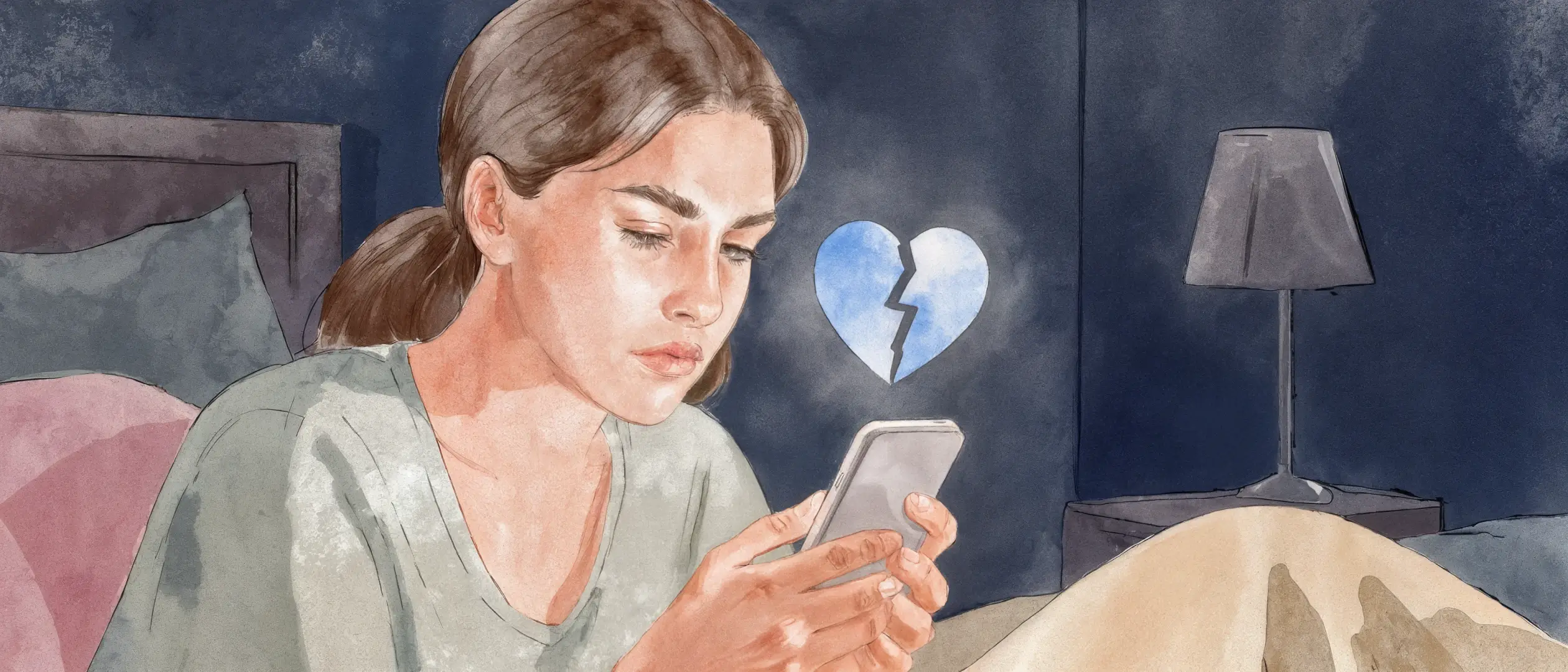
Once upon a time, dating apps promised love at your fingertips and a soulmate a swipe away. However, in real life, many users feel less like romantics and more like exhausted recruiters sorting through an infinite pile of resumes. The paradox is that the more options we have, the harder it becomes to choose and the less satisfied we feel with any potential matches.
Let’s find out whether you’re experiencing dating fatigue and learn how to protect your mental health from total burnout, while finding love and genuine connection.
Wondering about why you might have difficulties in digital dating? Your attachment style plays a huge role in how you approach online dating, handle rejection, set boundaries, and build relationships.
What Is Digital Dating Fatigue?
Dating app fatigue or dating app burnout is the emotional and mental exhaustion that comes from prolonged use of dating apps, where swiping, matching, and chatting start to feel more like an obligation than an exciting way to connect. A study from 2024 shows that this often leads to frustration and a loss of interest in searching and meeting new people.
According to a recent Forbes Health survey, 78% of all users report dating app burnout. You open the app out of habit, scroll without excitement, and close it feeling drained. Conversations start with enthusiasm but end quickly, and profiles blur together. You begin to wonder, “Is it me, or is this whole system broken?”
If it sounds familiar and you wonder whether you’re experiencing swiping fatigue, start by checking your overall well-being.

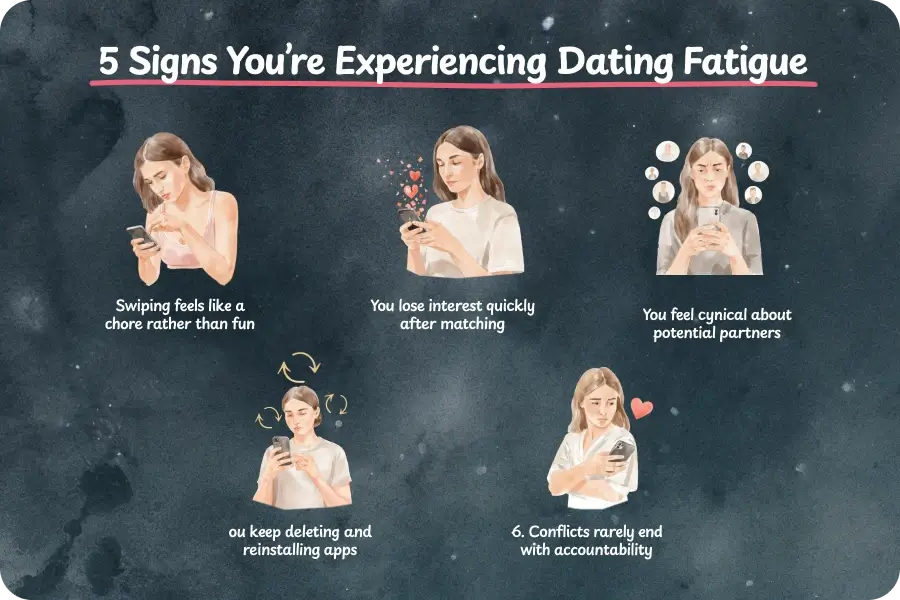
4 Signs You’re Experiencing Dating Fatigue
Here are some signs of burnout with real-life examples that dating app users might recognize:
1. Swiping Feels Like a Chore
What used to feel exciting now feels like mindless scrolling. You open the app out of habit while lying in bed, swipe for a few minutes without really looking, and close it feeling bored or slightly irritated.
2. You Lose Interest Quickly After Matching
You want a relationship but don’t have the energy to build one, and may cancel plans, stop replying, or avoid moving conversations offline. For example, you match with someone attractive and interesting but can’t bring yourself to reply, or you send a generic “hey” and hope the conversation dies. Even if you go on dates, you feel disconnected the entire time, like you’re observing rather than participating.
Expert Insight
Your attachment style can absolutely shape how you engage with dating apps. For example, a secure style tends to look more intentional and paced. Conversely, an anxious attachment may lead to frequent app checking and seeking reassurance through likes and messages. An avoidant style might show up as feeling overwhelmed by connection or keeping interactions more surface-level. Noticing your patterns on the apps can help you engage in a way that feels more grounded and aligned.

Rychel Johnson
Mental health professional
3. You Feel Cynical About People on Apps
You assume the worst before giving someone a chance. You see a profile and immediately think, “They’re probably not serious,” or “This won’t go anywhere anyway.” At the same time, things that didn’t bother you before now hit harder. If someone doesn’t reply, instead of brushing it off, you may question your attractiveness or worth.
4. You Keep Deleting and Reinstalling Dating Apps
You go through cycles of quitting and coming back out. For example, after a disappointing date, you delete all your apps and feel an immediate sense of relief, like you’ve taken back control. But a few days later, during a quiet evening or moment of loneliness, you reinstall them “just to check,” and the cycle starts all over again. Each return is driven less by curiosity and more by habit or boredom.
Why Do You Feel Like Dating Apps Are Exhausting? 7 Reasons
Apps are designed to keep you engaged, not necessarily fulfilled. That means constant notifications, new matches, and the subtle pressure to keep playing the game. Here’s why you may feel dating app burnout:
1. Too Many Options, Too Little Satisfaction
Having endless choices might seem like an advantage, but it often leads to decision fatigue. You keep thinking, “What if there’s someone better one swipe away?” As a result, it becomes harder to commit to one person or feel satisfied with any match. Instead of investing in one connection, dating app users keep choosing and comparing.
2. Constant Judgment
Dating apps turn people into profiles. You spend time choosing the “right” pictures or overthinking your bio, knowing others will decide in seconds. This creates pressure and can slowly harm your self-worth and confidence.
3. Repetitive Conversations
You may feel annoyance because every chat starts to sound the same, and you’re tired of repeating yourself. You’ve answered “What do you do?” or “What are you looking for here?” so many times that you start copying and pasting responses or avoiding conversations.
4. Lack of Real Progress
Dating apps sell a fantasy: that love should be easy and quick. But real relationships rarely work that way. They require patience, vulnerability, and sometimes awkward, imperfect moments. When reality doesn’t match the expectation, users often may blame themselves or lose motivation.
As a result, dating feels like a never-ending audition. You match, chat, and maybe even go on a date, but nothing really moves forward. When conversations fade, plans don’t happen, or dates don’t lead anywhere, it makes the whole process feel pointless.
5. Emotional Rollercoaster
Gen Z created their own vocabulary for modern dating that often reflects inconsistency: ghosting (conversations that vanish without explanation) and breadcrumbing (just enough attention from your potential partner to keep you interested, but never enough to move forward).
For example, a great match gives you a boost, but then disappears, leaving you confused or disappointed. These ups and downs can be mentally exhausting because you go from hopeful to confused and eventually to indifferent, often in the span of a single chat thread.
6. The Pressure to Be “Always On”
There’s an expectation to reply quickly and keep conversations going. You may feel guilty for not replying, even when you’re tired or not in the mood. Eventually, it starts to feel like a responsibility rather than a choice.
7. Validation Becomes Addictive
Each match or like gives a small hit of validation, research shows. It can feel rewarding, but only temporarily, just enough to keep you coming back. As a result, you open the app just to see if you got new matches, not necessarily to connect.
Expert Insight
Scrolling through dating apps can become addictive in a very similar way to TikTok. Both tap into the brain’s reward system through intermittent reinforcement: you don’t know when you’ll see an attractive match, get a like, or receive a message, so you keep swiping for that next hit of dopamine. This unpredictability can create a loop of seeking validation and distraction, shifting from intentional use to more compulsive checking over time.
Rychel Johnson
Mental health professional
7 Tips to Protect Your Mental Health from Dating App Burnout
The solution isn’t necessarily to quit online dating but to use it more intentionally. The following tips may help re-engage with the dating process with clarity and confidence, and find real-world connections or even a life partner:
1. Set Digital Boundaries
Decide in advance how much time you’ll spend on dating apps each day or week. Use timers or app limits to prevent endless scrolling. For example, schedule “dating app hours” in your week, such as 20 minutes in the evening, and resist checking outside that window.
2. Focus on Quality Over Quantity
Recognize when a conversation or match is draining and step back without guilt. Rather than swiping endlessly, identify a smaller number of matches you want to get to know. For example, pick 3–5 matches per week to message thoughtfully. Invest in meaningful conversations instead of chasing validation.
3. Take A Brief Break
Remove apps from your phone for a weekend or temporarily block notifications, and use the time to engage in self-care or analog hobbies.
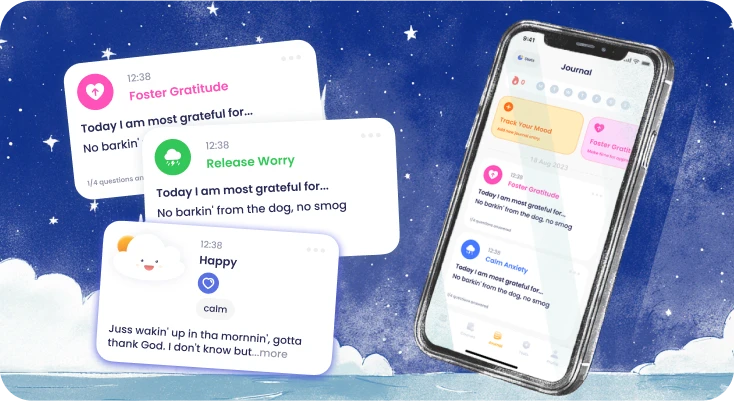
Use Breeze journaling to capture your dating experiences, celebrate small wins, and track personal growth. Even a few sentences daily can help you stay mindful and emotionally balanced. Recognize that these moments build your confidence and social skills.
4. Diversify Your Approach
Dating doesn’t have to be all online. Meeting people through mutual friends, hobbies, classes, or volunteering can lead to more organic and less pressured interactions. Attend events or clubs that genuinely interest you, and treat them as social opportunities first, not just dating opportunities.
5. Limit Judgment and Comparison
Constant comparison is one of the biggest hidden stressors of dating apps. Seeing endless profiles of seemingly perfect people can make you think, “What is wrong with me?” Remember that profiles often show only the best angles, achievements, or hobbies. They rarely capture the full reality of someone’s personality or values that truly matter in a relationship.
To stop negative self-talk and maintain self-esteem, try using daily positive affirmations:
- “I am worthy of love and connection just as I am.”
- “Profiles don’t define my value or the value of others.”
- “Every experience teaches me more about what I want and need.”
- “I focus on meaningful connection, not perfection.”
Apps like Breeze offer guided affirmations to help you stay grounded while dating. Each morning, repeat your customized affirmations out loud.
6. Celebrate Small Wins
Not every conversation or date will lead to a relationship. Try enjoying moments of genuine connection, even if short-lived. After a good chat or enjoyable date, reflect on what went well. Ask yourself questions like:
- “What did I enjoy about this conversation or date?”
- “What did I learn about myself or others?”
- “How did I contribute positively to this interaction?”
7. Reflect on Your Patterns
Understanding your habits, expectations, emotional triggers, and attachment style helps you approach dating intentionally. Self-awareness can prevent repeated burnout cycles. Ask yourself: “Am I swiping out of boredom, loneliness, or genuine interest?”
6 Tips To Actually Find Love on Dating Apps
1. Date with intention, not habit. Before you even open the app, ask yourself: “What am I looking for right now?” If you’re swiping out of boredom or loneliness, you’re more likely to accept mismatches.
2. Look for consistency, not chemistry alone. Attraction is easy to fake short-term, but consistency isn’t. Pay attention to this: Do they follow through? Do they communicate regularly? Do their actions match their words? Consistency is one of the strongest early signs of something real.
3. Don’t overinvest before meeting. It’s easy to build a fantasy through texting. Keep emotional investment proportional to real-life interaction.
4. Move conversations offline sooner. After a few meaningful messages, suggest a coffee meet-up, a walk, or a video chat to see if the connection is real. Transitioning to a phone call or in-person meeting quickly helps prevent endless back-and-forth texting.
5. Watch for emotional availability. Many people are on apps but not truly ready for a relationship. Among major red flags are vague intentions, inconsistent communication, and avoiding meeting in person. Choose people who show up, not just talk.
6. Set a “no endless chatting” rule. Long chats with no action often lead nowhere. If there’s no plan to meet within a week or two, it’s okay to move on. It’s okay to stop replying, unmatch, or say no to a date. Being selective is how you find something real, not by trying harder with everyone.
Frequently asked questions
1. Is it normal to feel exhausted by dating apps?
Yes, it’s completely normal. Many people experience dating app fatigue after prolonged use. Constant swiping, repetitive conversations, and inconsistent interactions can naturally lead to emotional burnout.
2. How do I know if I should take a break from dating apps?
If you feel drained, cynical, unmotivated to reply, or stuck in repetitive patterns like deleting and reinstalling apps, it’s a sign you could take a break.
3. Why do conversations on dating apps rarely go anywhere?
Many users aren’t fully invested, are talking to multiple people at once, or are unsure what they want. This leads to surface-level interactions that often fade before becoming meaningful.
Sources
- Liesel Sharabi, Paige Von Feldt, Thao Ha. Burnt out and still single: Susceptibility to dating app burnout over time. September 2024
- Carley Prendergast. Forbes Health Survey: 78% Of All Users Report Dating App Burnout. July 2025
- Bonilla-Zorita G, Griffiths MD, Kuss DJ. Dating App Use and Wellbeing: An Application-Based Pilot Study Employing Ecological Momentary Assessment and Objective Measures of Use. April 2023
Disclaimer
This article is for general informative and self-discovery purposes only. It should not replace expert guidance from professionals.
Any action you take in response to the information in this article, whether directly or indirectly, is solely your responsibility and is done at your own risk. Breeze content team and its mental health experts disclaim any liability, loss, or risk, personal, professional, or otherwise, which may result from the use and/or application of any content.
Always consult your doctor or other certified health practitioner with any medical questions or concerns
Breeze articles exclusively cite trusted sources, such as academic research institutions and medical associations, including research and studies from PubMed, ResearchGate, or similar databases. Examine our subject-matter editors and editorial process to see how we verify facts and maintain the accuracy, reliability, and trustworthiness of our material.
Was this article helpful?