

Podcast name
Trauma dumping
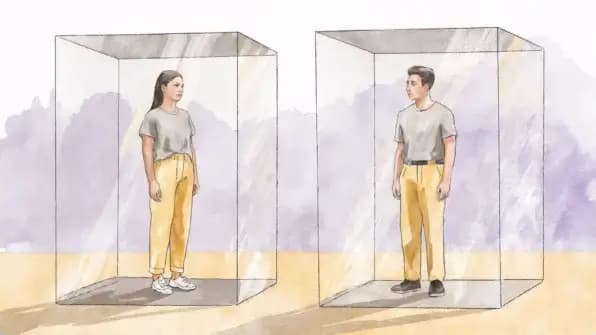
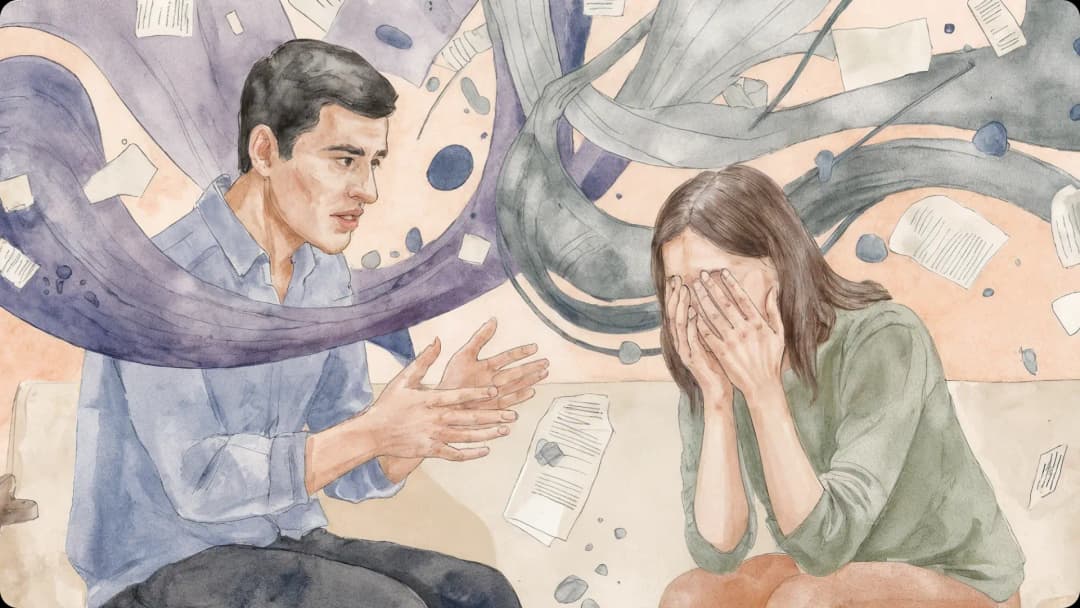
“Trauma dumping” means sharing traumatic or intensely negative experiences with people who may not even want them. A trauma dumper may not think about others’ emotions or feel overwhelmed and seek emotional support from anyone around. Still, constantly unloading heavy emotions onto friends, partners, coworkers, or even strangers can slowly damage relationships.
So, here explore why people may trauma dump on you, how to discuss someone else’s trauma if you don’t want to, and what to do if you’ve found out that you’re a trauma dumper.

What is trauma dumping? Meaning & definition
Trauma dumping is when someone unloads painful stories or tough emotions onto others, even if others are not ready or do not consent to hearing them. This often happens at the wrong moment and without thinking about how it affects everyone around. “Trauma dumping” isn’t a medical definition but rather a term colloquially used.
Trauma dumping vs. venting vs. opening up (healthy sharing)
Is trauma dumping just another word for venting? Not quite. Here’s a difference.
| Trauma dumping | Venting | Healthy sharing | |
| Why people do it | To unload heavy emotions and try to process trauma | To blow off steam and feel lighter | To connect, process emotions, and feel understood |
| Role of a listener | To absorb it all without interfering | To offer feedback, support, and share emotions | To listen with mutual respect and emotional boundaries |
| How it feels afterward | Emotionally draining or overwhelming | Relieving and validating | Supportive, balanced, and emotionally safe |
Remember the last time you chatted about life’s hardships and daily situations with your besties? That’s a perfect healthy sharing and venting example. Trauma dumping, on the other hand, is a one-way street where the listener can’t even catch a breath.
6 key symptoms of trauma dumping
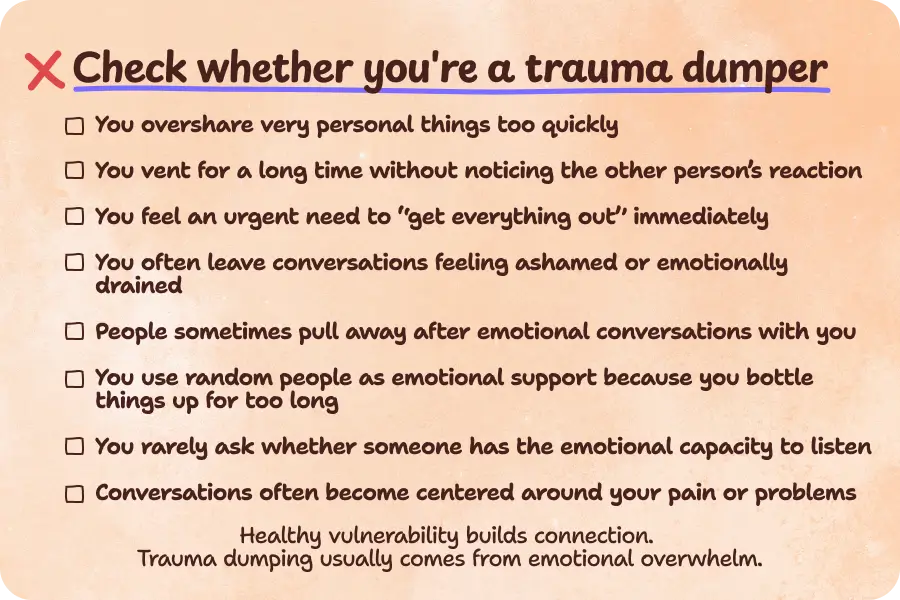
- Bringing up traumatic stories without thinking about how they influence others. Some people may suddenly share very heavy personal stories, even in casual, inappropriate settings. For instance, they may start talking about their childhood traumas when you’re discussing plans for your birthday party.
- Overloading people without asking about their opinions. The conversation can feel more like an emotional flood than a normal talk. A trauma dumper may keep unloading their feelings without checking if the listener is okay with such an intense discussion.
- Spilling emotions while not giving others a chance to have their say. The other person barely gets a chance to speak or respond. Even if they try to change the topic or share their thoughts, the conversation quickly returns to the dumper’s unprocessed trauma.
- Making others feel uncomfortable about the conversation. Some people may confuse trauma dumpers and energy vampires because, after talking to them, they might feel drained. Sometimes they continue listening only because they don’t want to seem rude or uncaring.
- Sharing your experience with people you barely know. Trauma dumping can happen with coworkers, new friends, dates, or even strangers online. A person might start sharing deeply personal details before they really build emotional trust.
- Repeating the same story over and over. The same painful experiences may come up in almost every conversation. Instead of helping the person feel better, it can leave both sides exhausted.

Is trauma dumping bad?
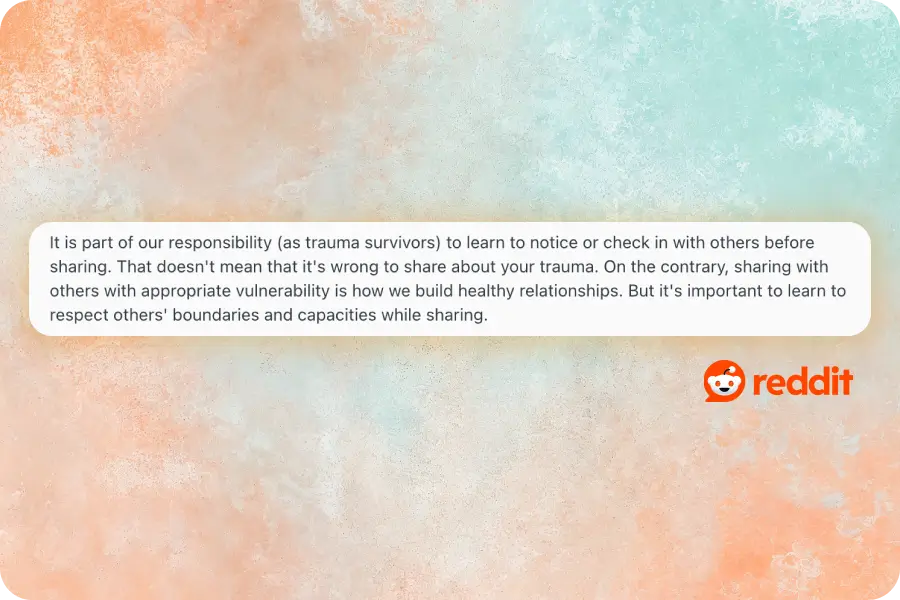
There’s nothing wrong with sharing your emotions and getting support. However, the place, time, and person you talk to play crucial roles. Being vulnerable to a close friend who’s always ready to become a shoulder to lean on is completely OK. But telling the same story to a coworker over lunch might be a bit off-putting.
Why do people trauma dump? 7 underlined causes
Sometimes people share their deepest struggles, turning a casual chat into a full-blown therapy session. Here’s what motivates someone to reveal everything.
1. Unresolved trauma
Trauma dumping may stem from an unprocessed painful experience. In this case, oversharing can be a way to cope with overwhelming emotions. For instance, some people, especially those living with abandonment trauma, may unconsciously seek reassurance and validation. They might trauma dump to fill the void left by their lack of support.
Or if you don’t have a shoulder to lean on, dumping your feelings on strangers can stem from a need for comfort and understanding.
What is trauma dumping a sign of? In some cases, it can originate from post-traumatic stress disorder (PTSD). Intrusive memories might come to a person’s mind repeatedly, and controlling the desire to talk about them can be difficult.
2. Difficulty processing or expressing emotions appropriately
The line between healthy opening up and oversharing can quickly blur without clear limits. Consequently, some people might consider that trauma dumping is not a real problem. They may unload their emotional baggage on others without a second thought — until it starts to weigh everyone down.
3. Desire to get support and attention for their wounds
Why do you trauma dump? Sometimes, it isn’t about the echoes of the past. People might feel unheard today, and talking about painful experiences can become a way to gain attention.
Imagine a young woman on a casual evening with friends. The conversation is light and full of laughter until the topic turns to parents. She suddenly opens up about her parents’ divorce and some painful memories. The mood shifts, and the room goes quiet as she shares more details. She isn’t trying to bring everyone down. She’s simply looking for a connection and feels safe enough to let it out.
If you’re trauma dumping, think about whether you want to build connections or seek validation from others by sharing your experience.
4. Fear of rejection and anxious attachment style
Some people might live with an anxious preoccupied attachment style and fear of rejection. As such, they might unconsciously dump their traumatic experiences on others just to ensure that the connection feels emotionally secure and close. In some cases, oversharing becomes a way to test whether another person will stay, listen, or continue accepting them despite their struggles.
5. Mental health conditions: PTSD, BPD, and trauma dumping
Trauma dumping can be a sign of other underlying challenges, particularly borderline personality disorder and post-traumatic stress disorder. Particularly, studies highlight a strong correlation between trauma-related oversharing and emotional dysregulation among people with BPD. [1] Buckholdt KE, Weiss NH, Young J, Gratz KL. “Exposure to Violence, Posttraumatic Stress Symptoms, and Borderline Personality Pathology Among Adolescents in Residential Psychiatric Treatment: The Influence of Emotion Dysregulation.” Child Psychiatry Hum Dev. 2015
Due to the hyperactivation of the nervous system, people with PTSD or BPD may struggle to regulate intense emotions and process distressing memories internally. As a result, they might repeatedly share traumatic experiences in an attempt to relieve emotional pain.
6. Childhood trauma as a cause of trauma dump
Those with childhood trauma may also develop a habit of oversharing emotional experiences as a way to quickly seek connection in adult relationships. A recent review describes trauma as a major risk factor for later psychological and relational problems, including difficulties in emotion regulation and social functioning. [2] Pasteuning JM, Broeder C, Broeders TAA, Busby RGG, Gathier AW, Kuzminskaite E, Linsen F, Souama CP, Verhoeven JE, Sep MSC, Vinkers CH. “Mechanisms of childhood trauma: an integrative review of a multimodal, transdiagnostic pathway.” Neurobiol Stress. 2025
In particular, dumping may become a trauma response to certain triggers. For example, feeling ignored, rejected, or emotionally distant can trigger memories of earlier painful experiences. In that moment, they may quickly overshare intense feelings or memories to regain closeness and feel safe again.
7. Trauma dumping and narcissism: Is it a sign of manipulation?
Sometimes, people may engage in trauma-related oversharing purposefully. Those with narcissistic personality disorder or significant narcissistic traits can dump negative emotions and experiences from the past as a way to make others feel guilty, obligated, or emotionally responsible for them.
To distinguish manipulative oversharing from real trauma-dumping, remember that people who really need support will still respect your “no” and stop when you set boundaries. Trauma-dumping narcissists, in turn, may push past those limits, try to reframe your refusal as rejection, or use guilt to pull you back into the conversation.
Common examples of trauma dumping
If you still find it difficult to distinguish unhealthy oversharing and healthy venting, here are some trauma dumping examples. All of them are insights from Breeze’s users who have either engaged in trauma dumping themselves or experienced it from close ones.
Trauma dumping in a relationship
Irene shared, “We used to have a date with my ex-boyfriend, and they immediately started unloading all their work-related problems and emotional spirals from the day. Even when I said I’m tired, the conversation kept going because they needed to release everything right now. Nevertheless, when I felt frustrated, they didn’t manage to support me. Actually, this is why we broke up.”
Parent trauma dumping on a child
Matthew started using Breeze to feel empowered between therapy sessions. Here’s what he shares. “My mom used to tell me very personal details about her divorce, money stress, and relationship problems, often saying I was the only one who understood her. I remember feeling like I had to calm her down, even though I was just a child.”
Trauma dumping at work
Jane shared in comments under one of Breeze’s posts, “My coworker often corners people during lunch breaks to talk in detail about their abusive relationship. Even when others try to shift the conversation back to work or look uncomfortable, they keep returning to their personal situation because they say they really need support. I hate it. And, most importantly, our manager doesn’t seem to do anything.”
Trauma dumping on social media
“My friend used to post very emotional updates online during breakups or arguments, sometimes within minutes of them happening. Later, the posts would disappear or change, but in the moment, it felt like urgent emotional sharing without any filter,” shared Ann, Breeze’s user for over 2 years.
Why do people trauma dump on me even when I don’t want to listen to someone else’s trauma?
People’s trauma dumping is always about them, not about you. But why do some of us need to handle the emotional intensity of everyone’s pain while other people don’t? Here are a few reasons.
- You feel safe. People may sense that you are kind, calm, and unlikely to judge them.
- You are emotionally available. If you listen carefully and respond with empathy, others may see you as someone they can unload on.
- You struggle to set boundaries. Some people continue oversharing because they do not hear a clear “I can’t handle this right now.”
- You avoid conflict. If you rarely interrupt or change the subject, others may assume you are comfortable listening.
- You may oversympathize with others. If you quickly absorb other people’s emotions, they may feel encouraged to share even more.
How can I protect myself from emotional dumping?
To protect yourself from intense trauma dumping and sharing without pushing people away, you may need to set clearer boundaries. Here’s how to do it:
- State that you have no emotional capacity to listen right now. You may want to listen to a person, but they choose an extremely inappropriate time. Feel free to suggest talking later instead of forcing yourself to listen while emotionally exhausted.
- Establish time-related limits. Tell a person that you only have 5–10 minutes to listen because you’re busy or mentally tired. This helps create boundaries without completely rejecting the conversation.
- Detach mentally during a trauma dumping or venting session. If you’re extremely empathetic and tend to get emotionally involved when someone is talking about a traumatic event, try to imagine that there’s a wall between you and the other person. Remind yourself that you can listen compassionately without absorbing their emotions as your own.
- Remember that you may be a safe space, not the one who saves a person. If someone is trauma dumping, you can listen (if you’re ready), but you don’t have to solve their problems, calm every crisis, or be available 24/7.
- Interrupt monologue if needed. If you feel overwhelmed, just calmly say something like, “Sorry, but I’m not ready to continue this conversation.” You are not obligated to absorb other people’s trauma.
- Politely suggest going to a trained therapist. A mental health professional can help a person process past pains in a controlled manner instead of relying only on friends, partners, or coworkers for emotional regulation.
How to deal with trauma dumping from others and set healthy boundaries
While you may feel the need to support your loved one, frequent trauma dumping affects relationships in a negative way and can feel like a boundary violation. [3] Nisselle P. “Is self-disclosure a boundary violation?” J Gen Intern Med. 2004
Here’s a tip from Enna Sanghvi, MA, on how to reduce stress and protect yourself from your partner’s oversharing: “This can be a hard balance to maintain — the one between wanting to support your partner while trying to maintain a healthy relationship. It is important to remember you are not their therapist, and thus, all you can do is offer a listening ear. Just because you have decided to be in a committed relationship with someone doesn’t allow them to unload on you whenever they want; you are allowed to tell them you are not in the space to provide support for them without them feeling hurt or threatened — it is important to have an open and honest conversation.”
How to stop trauma dumping: Actionable tips and coping mechanisms for self-regulation
“But what should I do if I tend to engage in trauma dumping?” If you can’t process difficult emotions on your own, try some healthier coping strategies that can help you express your emotions without overwhelming others or yourself.
1. Ask for consent
A simple “Can I vent about something difficult for a few minutes?” gives the other person a choice. If someone isn’t ready, they can calmly say they don’t have the emotional capacity at the moment.
2. Try to identify what you actually need before starting the conversation
Do you want advice, emotional support, reassurance, distraction, or simply to feel heard? This can make conversations more constructive and less emotionally chaotic.
It also helps you avoid unintentionally overwhelming the other person with unresolved emotions. When your need is clear, it becomes easier to choose the right way to express it and to decide whether the feeling is something to share with a friend, a journal, or a therapist.
3. Build self-soothing habits (engage in physical activity, try journaling, or breathing techniques)
Walking, grounding exercises, music, exercise, breathing techniques, or creative hobbies can help regulate intense emotions before they become overwhelming. Learning how to calm yourself without immediately relying on another person can reduce emotional urgency and improve self-regulation.
You can also try journaling from Breeze to release overwhelming emotions in a healthy way.
4. Use a “pause rule” before sharing emotionally intense messages
If you feel the urge to send a long emotional text or call someone immediately, pause for 10–20 minutes first. This short delay helps your nervous system settle and reduces impulsive oversharing that you might later regret or want to take back.
5. Break down emotions instead of unloading everything at once
Try to separate what you’re feeling into smaller parts (what happened, what you felt, what you need). This makes it easier to understand yourself and helps the other person actually follow your thoughts without feeling overwhelmed by a flood of information.
6. Limit repetition of the same story across multiple conversations
If you notice you are retelling the same painful experience to different people without any shift in understanding or relief, it may be a sign that the emotion needs a different processing method rather than repeated external venting. You can reach out to a mental health professional for professional support and trauma-informed care.
“If I trauma dump and overshare because of unawareness of boundaries and social cues, what should I start from to change it? I don’t want to bother others, but sometimes it happens unconsciously.” We asked Enna Sanghvi, MA, how to talk about the past in a healthy way. “It is important for each of us to ask ourselves this question, regardless of the nature of our stressful situation or who we are about to open up to. The best way, I think, would be to simply ask, “Hey, are you in the space for me to open up about something that’s been bothering me?” If they say OK, maybe even tell them what it’s about, “…yeah, it’s about that fight I had with my partner.” Another important thing to know for yourself, as well as something you should clarify to the person you are sharing with, is what is the purpose of your sharing? Are you just venting without the need for advice? Do you need them to say something or emotionally validate you? It could be helpful to know this for yourself before you talk to someone about a stressful situation.”
How to apologize if you realize you’ve been trauma dumping
If you notice that you’ve overshared about a traumatic event and others feel uncomfortable about it, try not to panic or shame yourself. Instead, acknowledge the situation calmly and respectfully. You can say something like, “I’m sorry, I think I shared too much without asking if you had the emotional space for it.” It will help you highlight that you experience difficult feelings, but that you still understand how important it is to discuss them with mutual consent.
After that, engage in self-reflection. Think about why you have decided to express difficult feelings this way, how you can process them differently, and what kind of support you actually need in those moments.
Frequently asked questions
Is trauma dumping always a red flag?
No. For example, there’s a hashtag, #candysalad, on TikTok where people post their traumatizing stories, and there’s nothing wrong with it, as it’s a space for those genuinely interested — everyone else can easily scroll past.
This fits all situations when you want to dump your traumas. The key is to make sure you’re sharing in the right places and with people who actually want to listen.
Can trauma dumping be a manipulation?
Yes, some people may unload their emotional baggage to gain sympathy, avoid responsibility, or shift focus from other problems. It’s important to share your worries about your partner’s trauma dumping openly. Otherwise, the relationship can turn into a one-person show, where the real connection gets lost in the constant drama.
How to deal with trauma dumping?
If someone around you is oversharing about the past, it’s important to set boundaries gently. You can empathetically say you’re not in the right headspace for heavy topics and suggest saving the deeper stuff for another time. This way, you’ll protect your well-being and relationships with others.
How to apologize for trauma dumping?
The most important thing is that you understand the problem and want to fix it. With an open heart, you can approach a listener with something like, “I’m really sorry if I overwhelmed you with my problems. I didn’t mean to dump so much on you all at once. I’ll try to be more mindful of what and when I share. Thanks for understanding.”
What is another word for trauma dumping?
Trauma dumping can also be called “emotional dumping,” oversharing, or “emotional offloading.”
What is social media trauma dumping?
“Social media trauma dumping” means sharing traumatic or deeply personal experiences online, often with strangers through comments, direct messages, posts, or group chats. People may trauma dump on social media as a way to seek emotional support, validation, understanding, or simply an outlet for overwhelming feelings.
Sources
- Buckholdt KE, Weiss NH, Young J, Gratz KL. “Exposure to Violence, Posttraumatic Stress Symptoms, and Borderline Personality Pathology Among Adolescents in Residential Psychiatric Treatment: The Influence of Emotion Dysregulation.” Child Psychiatry Hum Dev. 2015
- Pasteuning JM, Broeder C, Broeders TAA, Busby RGG, Gathier AW, Kuzminskaite E, Linsen F, Souama CP, Verhoeven JE, Sep MSC, Vinkers CH. “Mechanisms of childhood trauma: an integrative review of a multimodal, transdiagnostic pathway.” Neurobiol Stress. 2025
- Nisselle P. “Is self-disclosure a boundary violation?” J Gen Intern Med. 2004
Disclaimer
This article is for general informative and self-discovery purposes only. It should not replace expert guidance from professionals.
Any action you take in response to the information in this article, whether directly or indirectly, is solely your responsibility and is done at your own risk. Breeze content team and its mental health experts disclaim any liability, loss, or risk, personal, professional, or otherwise, which may result from the use and/or application of any content.
Always consult your doctor or other certified health practitioner with any medical questions or concerns
Breeze articles exclusively cite trusted sources, such as academic research institutions and medical associations, including research and studies from PubMed, ResearchGate, or similar databases. Examine our subject-matter editors and editorial process to see how we verify facts and maintain the accuracy, reliability, and trustworthiness of our material.
Was this article helpful?