


Do you often worry about the “next time” with your partner or notice your jaw clenching, shoulders tense, or heart racing as soon as intimacy begins? This body’s stress response may indicate sexual performance anxiety.
Let’s find out why you may experience it and how you can treat sexual performance anxiety and improve your well-being.
First, take a quick anxiety test to identify your triggers and get personalized insights to reclaim confidence.
What Is Sexual Anxiety?
Sexual anxiety is a feeling of fear, worry, or tension related to sexual performance or intimacy. It goes beyond typical pre-intimacy nerves and can become a recurring pattern that disrupts a person’s sexual confidence and overall well-being.
It may show up in different ways:
- Mentally: fear of failure, intrusive thoughts, overthinking
- Emotionally: shame, insecurity, embarrassment
- Physically: tension, rapid heartbeat, or difficulty with sexual arousal
Sexual Anxiety vs. Performance Anxiety
While these terms are often used interchangeably, they are not the same. Sexual anxiety is broader. It can involve fear of intimacy, discomfort with one’s body, anxiety about connection and closeness, or difficulty being vulnerable. It may arise even before any physical interaction and can affect emotional and relational aspects of sex life.
Performance anxiety, on the other hand, is more specific. It focuses on concerns about “doing well” during sexual activity, such as maintaining sexual desire or meeting a partner’s sexual expectations. It is typically task-oriented and tied to perceived success or failure in the moment.
In short, performance anxiety is one possible expression of sexual anxiety, but sexual anxiety can exist even without any focus on performance.
| Sexual Anxiety | Performance Anxiety |
| Emotional, relational, and psychological aspects of sex | Task-oriented concerns about sexual performance |
| Can arise before or without physical interaction | Occurs during sexual activity or in anticipation of it |
| Feeling anxious or panicked about closeness, intimacy, or emotional connection | Worrying about maintaining arousal, satisfying a partner, or achieving orgasm |
| Performance anxiety is one expression of sexual anxiety | Exists as part of sexual anxiety but is more specific to performance |
In this article, we’ll focus on performance anxiety because it directly impacts how people experience intimacy in the moment. Unlike broader sexual anxiety, performance anxiety shows up as specific worries about arousal, pleasing a partner, or meeting expectations, which can be addressed with practical strategies.
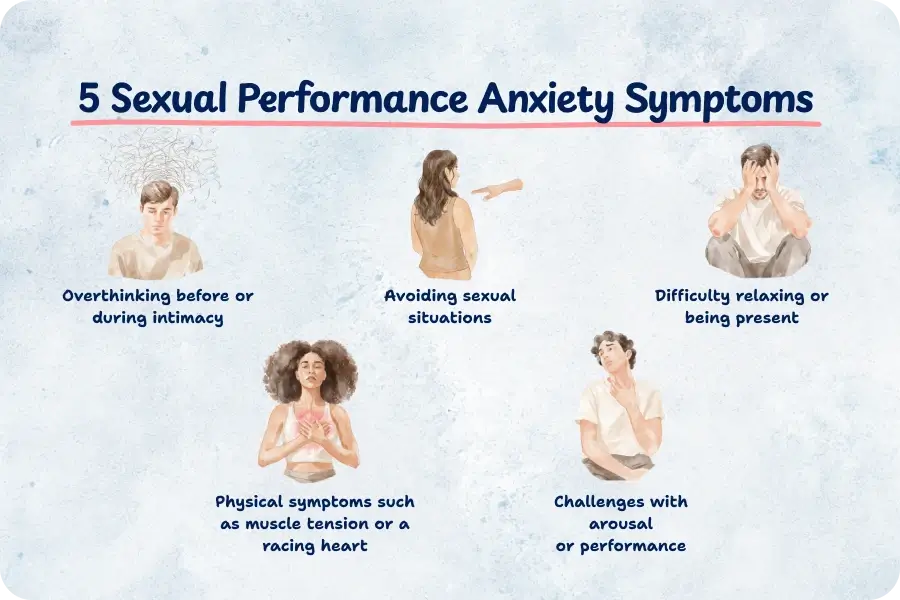
5 Sexual Performance Anxiety Symptoms
Sexual performance anxiety doesn’t look the same for everyone, but common signs include:
1. Overthinking before or during intimacy
Instead of focusing on the moment or connecting with a partner, you may obsess over potential mistakes or your ability to satisfy them. For example, you might think, “What if I have erectile difficulties?” or “Will my partner enjoy this?” Or, you might worry that your partner is silently criticizing your performance or comparing you to past partners. Ruminating thoughts on these subjects can interrupt your ability to be present in the moment with your partner.
2. Avoiding sexual situations
Anxiety can lead to avoidance behaviors, where you delay or completely avoid sexual activity to escape feelings of fear or shame. As a result, you may decline invitations for sexual intimacy, make excuses, or emotionally distance yourself from your partner to avoid confronting your fears.
3. Difficulty relaxing or being present
During intimacy, you might feel “frozen” or unable to enjoy touch or arousal because you are constantly monitoring yourself and anticipating mistakes. Even affectionate gestures can feel stressful rather than pleasurable.
4. Physical symptoms
Anxiety triggers a physiological stress response, and you may feel muscle tension, rapid heartbeat, shortness of breath, sweating, or difficulty maintaining arousal. This physical response reinforces the cycle of worry and fear and can make it harder to respond naturally or enjoy sex.
5. Performance challenges
Performance anxiety often directly affects sexual function. That’s why you may experience premature ejaculation, or difficulty achieving or maintaining arousal, and reaching orgasm.
4 Causes of Sexual Performance Anxiety
Sexual performance anxiety involves deeply rooted thoughts, beliefs, and emotional responses that shape how a person relates to their own sexuality and to others. Below are some of the most common causes of sexual performance anxiety:
1. Low self-esteem
One of the most common roots of sexual anxiety is internal pressure. People may worry about their appearance or their ability to satisfy a sexual partner. Psychological factors like self-consciousness and poor body image can intensify these concerns.
A person may become preoccupied with how their body appears during sex and think about their weight, skin, or specific insecurities, instead of being present. This constant self-monitoring and mental distraction shift focus away from the experience and into self-judgment.
2. Negative past sexual experiences
Whether it’s a previous sexual disappointment or deeper trauma, these memories can trigger anxiety in future situations, research shows [1] O’Driscoll, C. and Flanagan, E. Sexual problems and post-traumatic stress disorder following sexual trauma: A meta-analytic review. October 2015 . Even a single negative experience, such as feeling rejected or unsatisfied with how they’ve performed sexually, can create a pattern of fear.
For example, if a person previously experienced difficulty maintaining arousal and felt ashamed about it, they may enter future encounters already expecting it to happen again. This anticipation increases anxiety, which makes the situation more likely to repeat.
Moreover, negative experiences can sometimes lead to broader beliefs about sexuality or relationships. In extreme cases, unresolved trauma may even generate mistrust or resentment, such as thinking, “I hate women because of what happened before.”
3. Relationship issues
A lack of trust, poor communication, or unresolved conflicts can create emotional distance. When emotional safety is missing, you may feel stressed instead of experiencing sexual satisfaction. This, in turn, can lead to hesitation or avoidance.
One possible reason for your anxious thoughts may be your partner’s behavior. Take the test to find out if you’re experiencing narcissistic abuse in your relationship.

4. Social media influences
The media often portrays unrealistic standards of attractiveness and sexual performance. These images can create distorted expectations about what is “normal” or desirable. As a result, people who consume idealized or scripted sexual content may feel they need to behave or perform similarly. When real-life experiences don’t match those expectations, they may experience self-doubt and feel like something is wrong with them.
How Performance Anxiety Impacts Mental Health and Relationships
Performance anxiety can create a cycle where anticipation of discomfort leads to more anxiety, which then reinforces avoidance or negative experiences. Even when a sexual experience goes well, the memory of past anxiety may cause a person to worry about the “next time,” keeping them trapped in fear. This can result in:
- Increased stress or guilt
- Lower self-confidence
- Feelings of worthlessness and reduced satisfaction in relationships
- Miscommunication and tension between partners
- Mental fatigue, irritability, or even depressive symptoms
Expert Insight
Oftentimes, sexual anxiety is an experience that is internalized and kept isolated from the partner. Due to the shame surrounding the anxiety, there is difficulty in having a vulnerable conversation. This leads to miscommunication from both sides and can contribute to an overall defensive environment around intimacy. The first and most powerful step toward tackling sexual anxiety is developing a safe space with your partner to explore vulnerable topics such as this without the partner taking on blame or fault for your anxiety. Prep for what you need from your partner, and verbalizing these needs prior to having these vulnerable talks can be powerful in helping the conversation have a successful result and fuel closeness.

Katherine Scott
Mental health professional
5 Practical Strategies To Overcome Sexual Performance Anxiety
Here are intentional practices for stress management and overcoming performance anxiety:
1. Challenge negative thought patterns
Becoming aware of intrusive thoughts and actively challenging them can reduce anxiety. Write down recurring worries. Then analyze their accuracy and replace them with balanced statements. For example, replace “I always end up in the friend zone because I’m not good enough as a partner” or “What if I fail?” with “I have had enjoyable experiences before. I can focus on connection, not perfection.”
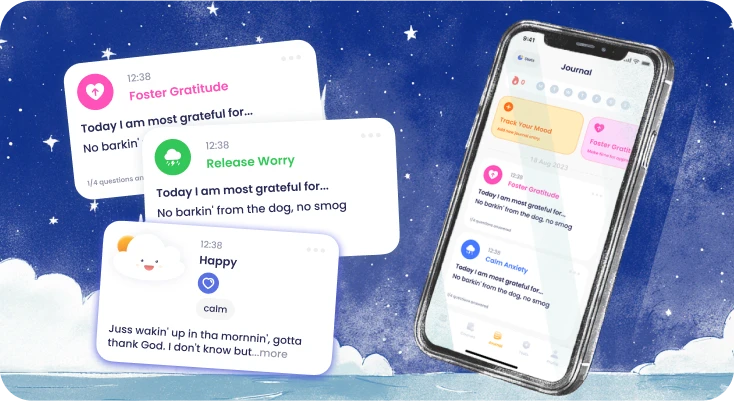
With Breeze guided journaling, you can begin to understand the deeper patterns behind your anxiety and become more aware of unhelpful beliefs.
2. Mindfulness & meditation
Mindfulness practices teach you to stay grounded instead of ruminating on past mistakes or future fears. One effective technique is body scan meditation. Lie down, breathe slowly, and gradually shift your attention through different parts of your body — from your head and shoulders down to your chest, abdomen, hips, and legs. Notice tension or discomfort and allow it to soften.
This practice helps with sexual anxiety in several ways. First, it reduces physical tension, which often builds up in areas like the jaw, shoulders, and pelvic region during anxiety. Second, it trains your mind to stay present and focus on sensations and connection. Finally, it builds a more accepting relationship with your body and helps you shift away from self-criticism and toward awareness and comfort.
3. Sensate focus exercises
Popular in sex therapy, this involves exploring touch without the expectation of sexual performance. Partners focus on sensations, connection, and pleasure rather than orgasm. For example, one partner massages the other while focusing solely on how touch feels, without any pressure for sexual response. Slowing down sexual expectations and pressures can create space for exploration and reidentification of likes and dislikes sexually.
4. Strengthen communication with your partner
Practice pre-sexual conversations to make intimacy feel more supportive, predictable, and enjoyable. Share your fears, expectations, boundaries, and desires before engaging in sexual activity. You may say, “I feel safest when there’s a lot of communication, like asking what feels good,” or “I sometimes get in my head during intimacy, so it really helps when we go slowly.”
5. Build a healthier lifestyle
Changes in your lifestyle can influence sexual performance and anxiety:
- Regular exercise improves blood flow, cardiovascular health, and stamina, all of which are important for sexual performance. Exercise also boosts confidence and self-image, which can reduce anxiety related to physical appearance or capability.
- Adequate sleep reduces fatigue-related anxiety.
- A healthy diet stabilizes energy and hormone levels. Certain nutrients, like zinc, vitamin D, and omega-3 fatty acids, play a role in libido and overall vitality.
- Limiting alcohol and avoiding recreational drugs before intimacy helps focus on natural relaxation techniques and feel connected with your partner. While alcohol or certain substances may temporarily reduce anxiety, they may cause decreased sexual stimulation and difficulty reaching orgasm, research shows.
6. Seek mental health professional advice
Here are some talk-therapy options:
- Working with sex therapists can help you develop coping strategies and provide emotional support.
- Cognitive Behavioral Therapy (CBT) is effective for restructuring anxious thought patterns.
- Couples therapy may guide partners through exercises like sensate focus or communication drills to rebuild comfort and trust.
Expert Insight
When one’s own internal narrative becomes so self-shaming that it interrupts any opportunities for connection. Sometimes sexual anxiety can become so stifling that it interrupts functioning in any social situations out of fear of it leading to sexual expectations. Furthermore, if this sexual anxiety is contributing to stress within a relationship, it can be helpful to utilize a therapist to aid in cultivating a safe space to explore such vulnerable topics more successfully.
Katherine Scott
Mental health professional
3 Actionable Tips You Can Use During Intimacy
- Check-ins with your partner. Ask each other what feels good or needs adjustment. You may say, “I feel nervous right now. Can we slow down and focus on what feels pleasurable?”
- Сognitive reframing. When anxious thoughts appear during intimacy, gently redirect focus from judgment to observation. Notice sensations without labeling them as “good” or “bad.”
- Slowing down. As anxiety often creates urgency and pressure, slowing down helps your nervous system relax. Pause, make eye contact, shift to slower touch, and take a few seconds to breathe together before continuing.
Frequently asked questions
1. Is sexual anxiety normal?
Yes. Many people experience sexual anxiety at some point in their lives, especially in new relationships or during stressful periods. While it’s common, persistent anxiety can affect mental health and relationships, so it is important to deal with performance anxiety.
2. How is sexual anxiety different from performance anxiety?
Performance anxiety is a type of sexual anxiety that focuses specifically on “doing well” during sex, such as maintaining arousal or pleasing a partner. Sexual anxiety is broader and may include fear of intimacy, discomfort with one’s body, or anxiety about emotional closeness, even outside sexual performance.
3. Can partners help with sexual anxiety?
Absolutely. Supportive partners can listen without judgment, communicate openly about desires and concerns, encourage gradual exposure to intimacy and relaxation exercises, and focus on connection rather than performance.
Sources
- O’Driscoll, C. and Flanagan, E. Sexual problems and post-traumatic stress disorder following sexual trauma: A meta-analytic review. October 2015
- Smith, C.S. Taught to be Ashamed: Sexual Shame, Faith, and Moral Incongruence in Men’s Psychosexual Development. January 2026
- Salari N, Hasheminezhad R, Almasi A, Hemmati M, Shohaimi S, Akbari H, Mohammadi M. The risk of sexual dysfunction associated with alcohol consumption in women: a systematic review and meta-analysis. May 2023
Disclaimer
This article is for general informative and self-discovery purposes only. It should not replace expert guidance from professionals.
Any action you take in response to the information in this article, whether directly or indirectly, is solely your responsibility and is done at your own risk. Breeze content team and its mental health experts disclaim any liability, loss, or risk, personal, professional, or otherwise, which may result from the use and/or application of any content.
Always consult your doctor or other certified health practitioner with any medical questions or concerns
Breeze articles exclusively cite trusted sources, such as academic research institutions and medical associations, including research and studies from PubMed, ResearchGate, or similar databases. Examine our subject-matter editors and editorial process to see how we verify facts and maintain the accuracy, reliability, and trustworthiness of our material.
Was this article helpful?