


Most people experience sexual desire from time to time. But while for some, thinking about sex is a normal part of their lives, for others, sexual thoughts or urges can feel unusually frequent, intense, or difficult to control.
In this article, we’ll explore why you may be feeling excessively horny and how to control your sexual desire.

Why am I so horny? The quick answer
People may feel sexually aroused due to numerous reasons, including:
- Hormonal changes
- Lifestyle factors, such as diet changes, exercise, sleep, etc.
- Psychological reasons, like stress, boredom, anxiety, romantic desire, etc.
- Other physical triggers, such as seasonal changes in libido
Is it normal to be horny all the time?
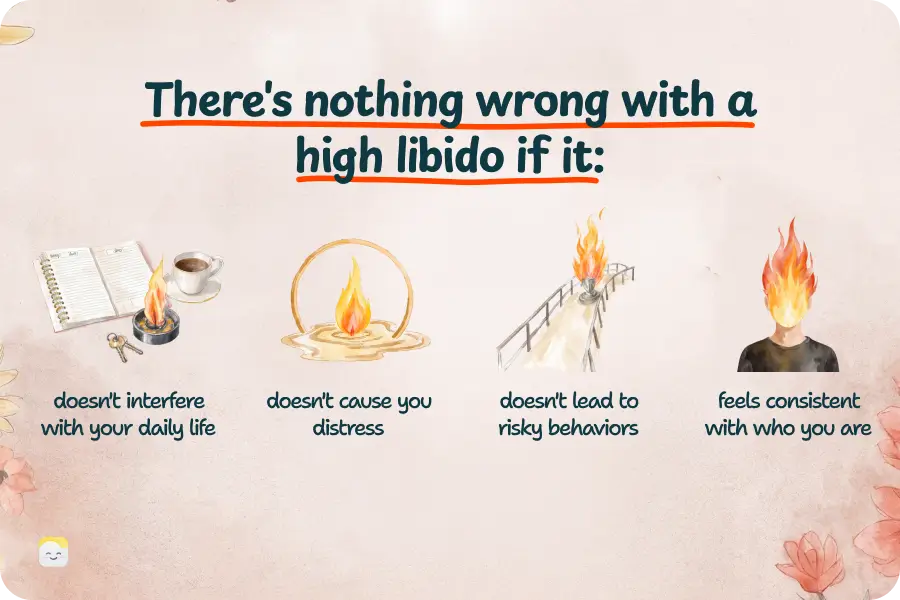
It depends on exactly what you experience and whether it interferes with your daily life. While there’s nothing wrong with having a high libido or experiencing libido fluctuations over life, it can become concerning if sexual thoughts or urges start getting in the way of work, relationships, sleep, or other everyday activities.
What counts as a “high sex drive”?
“High sex drive” or “high sexual desire” means experiencing sexual thoughts, fantasies, or motivation more often or more intensely than is typical for you or your comparison group. As such, there is no specific number of times you should want sex to qualify as having a high sex drive.
For instance, what feels like a high sex drive can vary across different groups: a person in a long-term relationship may consider wanting sex several times a week high compared with their partner, while someone in a sexually active peer group may see the same frequency as completely typical. Similarly, sexual desire can differ across age groups, relationship statuses, and individuals with different levels of baseline libido.
A study found that high sexual desire and problematic sexuality formed two distinct dimensions. [1] Carvalho J, Štulhofer A, Vieira AL, Jurin T. “Hypersexuality and high sexual desire: exploring the structure of problematic sexuality.” J Sex Med. 2015 Having a lot of sexual desire is pretty normal. But it turns into problematic sexuality when your sexual urges start feeling difficult to control.

Why you might feel shame about wanting sex so often
You might think, “Do I have a sex addiction?” and feel ashamed or guilty for thinking about sex so often, but there’s nothing wrong with having a strong sex drive. In turn, negative feelings may stem from:
- Stigma. Beliefs like “men and women should have different levels of sexual interest” or “good people don’t think about sex that much” can make you feel that your libido is somehow inappropriate.
- Past experiences. Negative sexual experiences, rejection, bullying, or being shamed for expressing sexuality can influence how you perceive your desires later in life.
- Relationship dynamics. If your partner has a lower sex drive, you may worry that your desire is “too much” or that something is wrong with you, even though it isn’t.
- Fear of being judged. You might worry that others will see you as promiscuous, needy, or unable to control yourself if they knew how often you think about sex.
Why am I always horny? 16 causes of a high libido
Biological, social, and psychological factors can influence your libido. Let’s explore the most common ones that lead to an increased sex drive, so you can better control them.
Hormonal causes of feeling horny
1. Testosterone and sex drive
Higher testosterone levels are generally associated with increased sexual desire, particularly in men. Testosterone levels also tend to decline gradually with age, dropping by around 1% per year after age 40. [3] Feldman HA, Longcope C, Derby CA, Johannes CB, Araujo AB, Coviello AD, Bremner WJ, McKinlay JB. “Age trends in the level of serum testosterone and other hormones in middle-aged men: longitudinal results from the Massachusetts male aging study.” J Clin Endocrinol Metab. 2002 However, libido is influenced by many factors, so testosterone levels alone don’t determine how strong your sex drive will be.
2. Estrogen, progesterone, and physical arousal
Changes in estrogen and progesterone levels can also affect libido and physical arousal. Hormonal birth control can stabilize or alter these hormone levels, which may increase or decrease libido depending on the person.
3. Your menstrual cycle and ovulation
Women can experience different levels of sexual arousal during periods and ovulation. Menstruation can boost libido, and during the fertile window (before, during, and right after ovulation), sexual desire is the highest. [4] Arslan RC, Schilling KM, Gerlach TM, Penke L. “Using 26,000 diary entries to show ovulatory changes in sexual desire and behavior. J Pers Soc Psychol.” 2021
4. Pregnancy, puberty, and hormonal shifts
People tend to experience intense hormonal fluctuations during puberty and pregnancy. As such, it’s completely natural to feel changes in sexual desire during these periods, including a stronger sex drive or more frequent sexual thoughts.
During puberty, rising sex hormones can contribute to the emergence and intensification of sexual desire, while pregnancy-related hormonal and physical changes can affect libido in different ways. Some people may feel hornier than usual, while others experience a decrease in sexual desire.
Lifestyle factors that increase sexual urges
5. Diet, aphrodisiacs, and libido
Certain foods can serve as aphrodisiacs and temporarily boost your libido. It’s completely normal to feel turned on after a good meal. Some people believe that oysters, chili peppers, and berries can be aphrodisiacs.
6. Alcohol and feeling horny
According to studies, alcohol may increase subjective sexual desire and sexual risk-taking. [5] Markos AR. “Alcohol and sexual behaviour.” Int J STD AIDS. 2005 Even though it might impair physical arousal, you can find it difficult to stop feeling horny after having a few drinks.
7. Exercise and sex drive
After high- or moderate-intensity training, you may experience a rise in testosterone levels, which might enhance libido. Also, regular physical activity can make you feel more confident and improve body image, which may make you feel more comfortable with your body and more interested in sexual activity.
8. Frequent masturbation — Does it make you hornier?
Research about the link between masturbation and feeling horny is limited. However, some people may experience a rise in libido after it, while others can feel stronger sexual desire without masturbating for some time.
9. Sleep, rest, and sexual energy
Lack of sleep might negatively impact your libido and overall sexual energy. However, letting your body recover both physically and mentally may support healthier hormone levels and bring back your horniness.
10. Medications
Certain medications, particularly SSRIs and SNRIs, can also influence your sexual desire. [6] Siladji D, Maletin N, Denda N, Knežević M, Paut Kusturica M, Kuljančić D, Rašković A. “Sexual dysfunction associated with antidepressants and antipsychotics: a structured narrative review of mechanisms, assessment, and personalized management.” Front Psychiatry. 2026 If you feel extremely horny or don’t want sex at all after starting, stopping, or changing the dose of a medication, it’s worth discussing the change with your doctor.
Psychological and situational reasons you’re horny
11. Stress, cortisol, and sex drive
When a person is under stress, the body “turns on” the fight-or-flight mode. If stress is short-term, it can lead to the spike of adrenaline, which, in turn, might promote desire and sexual behaviors. However, if stress becomes permanent, you may find it difficult to become physically aroused, as cortisol can interfere with the body’s normal sexual response. [7] Hamilton LD, Meston CM. “Chronic stress and sexual function in women.” J Sex Med. 2013
12. New relationship energy
When a person is in love and feels excited about new relationships, it may temporarily lead to an increased libido due to novelty and the boost of dopamine. People might feel excited about exploring physical intimacy, which can make sexual urges more frequent.
13. Boredom and wandering thoughts about sex
Feeling bored and frustrated can also make you focus on sexual thoughts. Sometimes, self-pleasure masturbation may be a way to distract you from negative thoughts or simply pass the time.
14. Anxiety, depression, and high libido
Depression and anxiety disorders can also trigger hormone changes and lead to changes in libido. [8] Jensen KHR, Aarestrup MR, Larsen SV, Köhler-Forsberg K, Knudsen GM, Jørgensen MB, Frokjaer VG. “Psychoneuroendocrine profiles of unmedicated men with major depressive disorder and associations to treatment effects and sexual side-effects.” Neurosci Appl. 2024 When you feel bad about yourself, sex or masturbation may sometimes become a way to seek comfort, reassurance, distraction, or temporary relief from difficult emotions.
Other physical triggers
15. Full bladder and arousal
Some people report that a full bladder can sometimes trigger sensations resembling sexual arousal, as it is located near the pelvic organs and can create pressure on surrounding nerves and tissues.
For certain individuals, it can temporarily heighten pelvic sensitivity that resembles arousal. Typically, this sensation subsides after urination and does not necessarily indicate heightened sexual desire.
16. Seasonal changes in libido
If you notice a higher libido at some point, it may just be seasonal changes. Many people can face it in spring when longer days, more sunlight, and warmer weather influence energy levels and, as a result, their desire for sex.
Expert Insight
Certain neurological conditions, like frontotemporal dementia or some seizure disorders, can present with hypersexuality. Dopamine agonists used for Parkinson’s or restless leg syndrome are well known to increase sexual desire and sometimes trigger compulsive sexual behavior as a side effect. Manic or hypomanic episodes in bipolar disorder often include increased libido as a core symptom too. I’d also throw in early substance use recovery and stimulant use, since novelty-seeking states can bump desire up as well. Worth noting these are flags, not just lifestyle variations, so they deserve to be separated out from the diet/exercise/stress causes already on the list.

Grady Shumway
Mental health professional
How to stop being horny all the time (or just take the edge off)
The most important thing you need to remember is that there’s nothing wrong with feeling horny. However, if you feel that it interferes with your daily life, here are some tips that may be helpful.
1. Redirect your focus to other things
Distracting yourself from sexual thoughts can help you redirect horniness and focus on something completely different.
Acknowledge the thought, then set it aside
You can say something like, “Ok, I feel horny, but I can’t act on it right now.” I’ll deal with it in the evening when I meet my partner.” Then, try to start doing something engaging as soon as possible.
You can shift your focus to work, exercise, a hobby, or anything else that requires your attention. The goal isn’t to suppress the feeling, but to acknowledge it without letting it take over your thoughts or dictate what you do next.
Get physical: exercise as an outlet
Physical activity can help you release excessive tension. You can go for a walk, do stretching or yoga exercises, or even go jogging or hit the gym. Try different activities and choose the ones that are most effective for you.
Try mindfulness to quiet sexual thoughts
2. Lean into it instead
If the situation allows, you don’t always have to fight the feeling. You can acknowledge your sexual desire and let yourself enjoy it in a way that’s comfortable for you.
Masturbation as a healthy release
Masturbation is a part of healthy sexuality and a simple way to respond to sexual urges when you don’t want to act on them. It can:
- Improve mood
- Reduce stress
- Help you feel more comfortable and confident in your body
- Let you learn about your sexual preferences
- Allow you to understand what feels pleasurable
For some people, orgasm may also promote relaxation and lead to better sleep quality. If you’re feeling particularly horny or distracted by sexual thoughts, masturbation can be one way to manage those feelings and release sexual tension.
Talking to a partner about feeling horny
You can also talk to your loved one about your feelings and spend time together. Open communication can help you find mutually satisfying ways to connect — whether that means acting on those feelings, exploring new desires, or simply enjoying physical and emotional intimacy together.
3. Lifestyle changes that help regulate sex drive
When to talk to a professional about feeling horny all the time
Having a high sex drive isn’t necessarily a problem. However, if sexual thoughts interfere with your everyday life, it may be worth seeking professional help.
Signs your high sex drive is affecting your life
Consider talking to a professional if your sexual urges:
- Make it difficult to focus at work or affect your job performance
- Interfere with relationships or make it harder to spend quality time with friends
- Take up so much of your attention that other activities become less enjoyable
- Lead you to make decisions you later regret
- Feel increasingly difficult to control despite trying to manage them
How a sex therapist can help
A therapist can help you understand what may be contributing to your increased sex drive and develop healthier ways to manage sexual thoughts and desires.
Grady Shumway, LCSW, explains how professional therapists help people who experience excessive sex drive. “A therapist, ideally one trained in sexual health like an AASECT-certified sex therapist or someone with CSBD experience, usually starts by figuring out whether the increased desire is actually distressing or dysfunctional versus just outside typical norms. From there, they screen for underlying causes: mood episodes, trauma history, relationship dynamics, substance use, and medication effects before treating it as its own issue. Common approaches include CBT for distorted beliefs or shame around sex, ACT-based urge tolerance work, psychoeducation, and couples work if there’s a desire discrepancy. When compulsive or risky behavior shows up, therapists may borrow relapse-prevention frameworks from behavioral addiction treatment, though again the more accurate term now is CSBD, not addiction. Referral to psychiatry is common if a mood or neurological cause is suspected.”
Frequently asked questions
Is being horny all the time a hormone imbalance?
It can stem from a hormonal imbalance, which can also be influenced by other factors. Among other possible reasons for feeling horny all the time are lifestyle factors, like exercise and diet, stress level, new relationships, boredom, and even a full bladder.
Can stress make you hornier?
Yes, short-term stress can trigger a temporary increase in sexual desire and arousal. When you’re under stress, your body can release hormones like adrenaline and cortisol that can make sex seem like an appealing way to relax.
Is it normal to feel horny on your period?
Yes, it’s completely normal to feel horny and want to experience orgasm during your period. Women can face hormonal fluctuations during their cycle, which may affect sexual desire and arousal in different ways.
What's the difference between a high sex drive and being a sex addict?
A person with a high sex drive wants sex pretty often. A sex-addicted person finds it difficult to control their desire, may engage in risky or impulsive behavior, or dwells on sex-related thoughts so much that it starts interfering with their daily life.
Sources
- Carvalho J, Štulhofer A, Vieira AL, Jurin T. “Hypersexuality and high sexual desire: exploring the structure of problematic sexuality.” J Sex Med. 2015
- Raisanen JC, Chadwick SB, Michalak N, van Anders SM. “Average Associations Between Sexual Desire, Testosterone, and Stress in Women and Men Over Time.” Arch Sex Behav. 2018
- Feldman HA, Longcope C, Derby CA, Johannes CB, Araujo AB, Coviello AD, Bremner WJ, McKinlay JB. “Age trends in the level of serum testosterone and other hormones in middle-aged men: longitudinal results from the Massachusetts male aging study.” J Clin Endocrinol Metab. 2002
- Arslan RC, Schilling KM, Gerlach TM, Penke L. “Using 26,000 diary entries to show ovulatory changes in sexual desire and behavior. J Pers Soc Psychol.” 2021
- Markos AR. “Alcohol and sexual behaviour.” Int J STD AIDS. 2005
- Siladji D, Maletin N, Denda N, Knežević M, Paut Kusturica M, Kuljančić D, Rašković A. “Sexual dysfunction associated with antidepressants and antipsychotics: a structured narrative review of mechanisms, assessment, and personalized management.” Front Psychiatry. 2026
- Hamilton LD, Meston CM. “Chronic stress and sexual function in women.” J Sex Med. 2013
- Jensen KHR, Aarestrup MR, Larsen SV, Köhler-Forsberg K, Knudsen GM, Jørgensen MB, Frokjaer VG. “Psychoneuroendocrine profiles of unmedicated men with major depressive disorder and associations to treatment effects and sexual side-effects.” Neurosci Appl. 2024
Disclaimer
This article is for general informative and self-discovery purposes only. It should not replace expert guidance from professionals.
Any action you take in response to the information in this article, whether directly or indirectly, is solely your responsibility and is done at your own risk. Breeze content team and its mental health experts disclaim any liability, loss, or risk, personal, professional, or otherwise, which may result from the use and/or application of any content.
Always consult your doctor or other certified health practitioner with any medical questions or concerns
Breeze articles exclusively cite trusted sources, such as academic research institutions and medical associations, including research and studies from PubMed, ResearchGate, or similar databases. Examine our subject-matter editors and editorial process to see how we verify facts and maintain the accuracy, reliability, and trustworthiness of our material.
Was this article helpful?