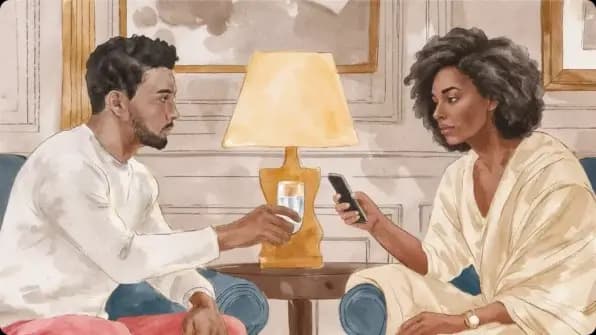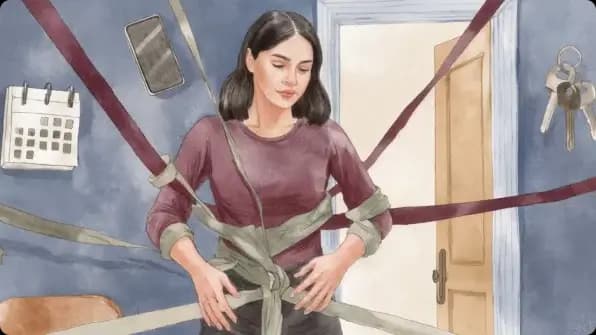


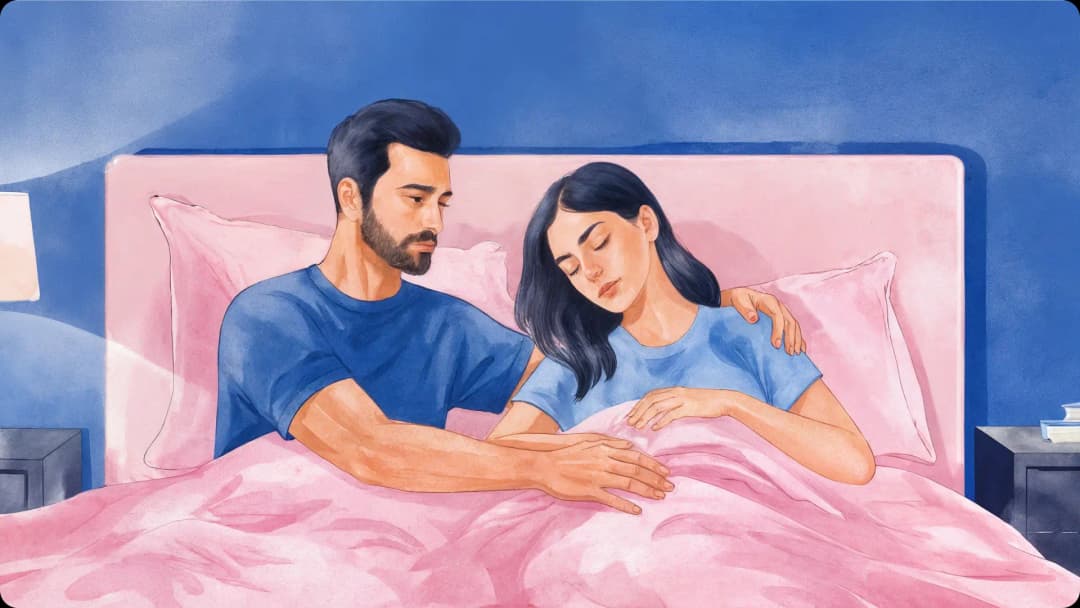
“She doesn’t want me anymore. I feel it, and I see it. Or is it just my imagination, and having less sex is a normal part of relationships?”
If you’re wondering whether your wife has lost sexual attraction to you, we’ve got you covered. In this article, we’ll talk about sexual desire in healthy relationships, why it may fade over time, and how to get that initial spark back.
15 signs my wife is not sexually attracted to me
Let’s explore the signs that your sexual chemistry is decreasing and your loved one may feel no longer attracted to you.
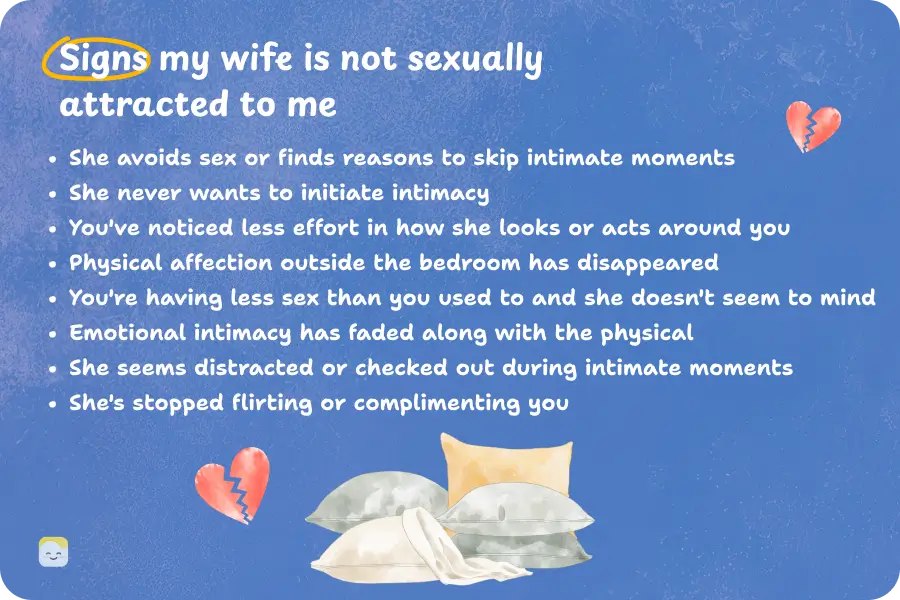
1. She avoids sex or finds reasons to skip intimate moments
First and foremost, if she’s lost interest in you, she’ll likely avoid intimate moments altogether. When you initiate sexual intimacy, she may regularly say she’s too tired, has a headache, or simply doesn’t feel like it. If this happens occasionally, it’s probably just a normal part of everyday life. But if she turns you down 9 times out of 10, it may be a warning sign.
2. She never wants to initiate intimacy
She doesn’t seem to have a sexual interest or initiate any physical contact. Your wife may want to hug you or kiss your cheeks or forehead, but you can’t remember the last time she made the first move toward intimacy.
3. She’s no longer trying to look appealing to you specifically
You still feel physically attracted to her, but you see that she’s changed. Maybe she no longer bothers about how she looks at home, while some time ago she enjoyed dressing up just for you. Or maybe you’ve noticed that she’s stopped doing the small things she once did, like putting on the perfume you love.

4. Physical affection outside the bedroom has disappeared
Casual touch also plays a huge role in building emotional and physical connection. Holding hands in public, hugging when you come home, sitting close on the couch, or giving you a kiss before leaving for work may become less frequent or disappear altogether.
She may temporarily distance herself after an argument or simply due to the stressful period of life. Nevertheless, a lack of affection for no particular reason can make you feel unwanted.
5. You’re having less sex than you used to, and she doesn’t seem to mind
Maybe you’ve already had an honest conversation about it, but nothing changed. She seems perfectly content with less sex than you used to and finds excuses every time you try to initiate intimate contact. As such, even if you have sex, it can feel forced or obligatory rather than something she actually wants.
It doesn’t automatically mean that she’s cheating on you (even though some may interpret a sudden change in sexual behavior this way). A lower sex drive can have many explanations, such as hormonal shifts, postpartum, major life events, etc.
6. Emotional intimacy has faded along with the physical
You no longer experience such a strong emotional connection as you used to. Your wife may not share her worries or dreams, and you find it harder to talk with her about something special. You may find a present pattern of zoning out on your phones in separate corners of the couch every night, versus connecting.
7. She seems distracted or checked out during intimate moments
Imagine that you’re spending time together and things are getting intimate. However, you notice that she’s mentally somewhere else. She may answer you, touch you, or say that she likes everything, but show little enthusiasm or seem eager for the moment to end rather than enjoying it with you.
8. She’s stopped flirting or complimenting you
Romantic connection builds up from daily moments. Some flirting, some foreplay, and some compliments increase physical attraction. Yet, if she isn’t interested in your sex life, she may neglect these small signs of romantic or sexual interest.
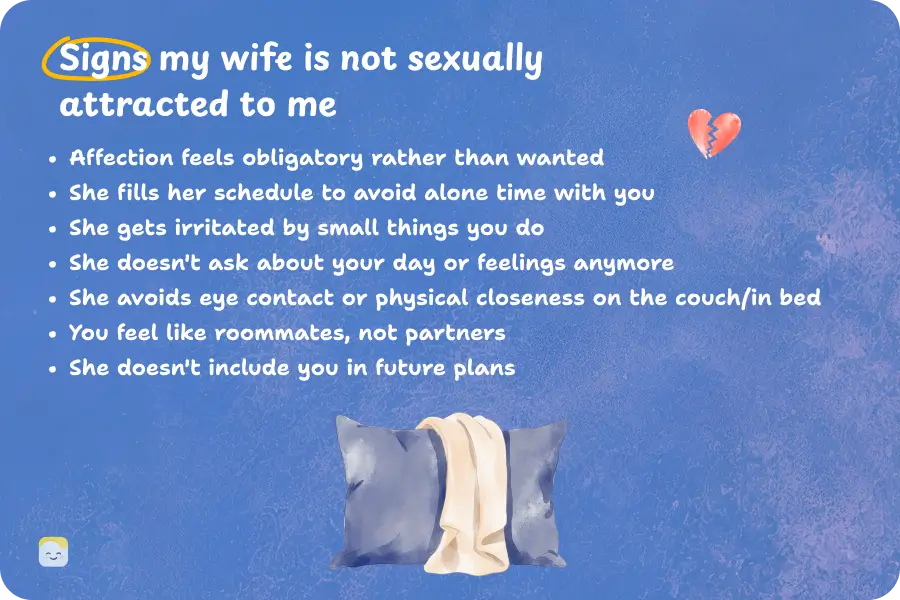
9. Affection feels obligatory rather than wanted
She may engage more in solo activities, start spending more time alone, or behave detached even during daily life. For instance, your wife is cooking dinner, and you come to help her and spend time together. While she used to enjoy your company, she now seems irritated and uninterested in sharing the moment with you.
10. She fills her schedule to avoid alone time with you
You used to spend evenings together, watching movies or talking about everything. And occasionally you had sex after it.
But now she seems to fit everything into her schedule to avoid spending time together. He may start attending evening pilates classes instead of morning ones, even though she has time and hates evening trainings. Or she might make plans with friends, stay late at work, or find other reasons to be away from home.
11. She gets irritated by small things you do
Your wife has never been as irritable as she is now. Of course, one or even two weeks may not mean anything: she might experience hormonal fluctuations, feel overwhelmed by something routine, etc.
Still, if this irritation persists longer and is combined with other problems in sexual and romantic relationships, it may be a warning sign.
12. She doesn’t ask about your day or feelings anymore
It seems like you no longer spend quality time together in general. All talks are functional:
This little curiosity about how you feel can also affect physical intimacy.
13. She avoids eye contact
Not only a lack of physical closeness, but also a lack of eye contact can show that your physical relationship has changed. She may look away when you talk, avoid holding your gaze during affectionate moments, or seem uncomfortable when you try to make eye contact.
14. You feel like roommates, not partners
Your current relationship feels more like you’re old friends or roommates who share space and responsibilities. However, both of you have unmet needs (for you, it might be sexual intimacy, while for your wife, it can be something completely different), and while deep, healthy relationships can cover those needs, yours seem disconnected.
15. She doesn’t include you in future plans
This might be another significant sign of attraction loss (not only physical but emotional as well). Maybe she hasn’t decided to leave yet, but she might be thinking about it. As a result, consciously or unconsciously, she might:
- Start saying “I” instead of “we.”
- Make plans for the coming months without considering you.
- Avoid conversations about vacations, moving, finances, or other shared goals.
- Talk about her future as something separate from your relationship.
Normal ups and downs vs. real attraction issues in long-term relationships
No relationship is perfect, and every couple may experience difficult periods. However, what’s happening beneath the surface is important.
Why do desires dip in long-term relationships naturally?
Sexual desire may change and, for some people, decline in long-term relationships. Yet, it is neither inevitable nor a sign that the relationship is failing. According to studies, the most common reasons may include:
- Partner familiarity and reduced novelty
- Sexual boredom
- Difficult relationship dynamics
- Individual challenges such as stress, health, parenting, and mood [1] Mark KP, Lasslo JA. “Maintaining Sexual Desire in Long-Term Relationships: A Systematic Review and Conceptual Model.” J Sex Res. 2018 , [2] Morton H, Gorzalka BB. “Role of Partner Novelty in Sexual Functioning: A Review.” J Sex Marital Ther. 2015
Nevertheless, it doesn’t mean that physical touch and emotional closeness will completely disappear. Partners can rebuild intimacy and find this sense of novelty together while also improving communication.
How to tell a phase from real attraction issues
Signs you’re not sexually attracted to your partner (it can go both ways)
Maybe it isn’t one partner, but both of you feel physically detached from each other. Check yourself and consider whether you:
- Avoid initiating sex and rarely feel the desire to make more effort than your partner.
- Experience little arousal when your partner touches or kisses you.
- Rarely think about your partner sexually.
- Feel relieved when sex doesn’t happen.
- Avoid situations that could lead to intimacy.
- Make excuses to postpone sex.
- Feel like sex has become a chore rather than something you truly desire.
- Notice that you are more interested in sexual fantasies involving other people than intimacy with your partner.
Katherine Scott, M.Ed/Ed.S, LMFT, provides recommendations to someone who discovers that both they and their wife are less interested in sex than before but want to change that. “It can be helpful to seek couples counseling to cultivate a safe space with a trained third party to help facilitate productive conversations. The topic of sex can be taboo, even in marriage, and it can be difficult to navigate the vulnerabilities and possible pain points. Also, it is important to access this sort of intimate conversation in a space of neutrality, as it is easy to slip into the ‘Well, he stopped doing this, so I stopped doing that’ narrative. Blame and shame are the ignitions for a counterproductive conversation around intimacy and sex.”
Signs that your girlfriend isn’t sexually attracted to you
Some signs can look different when you’re dating but don’t live together and aren’t married. You may not have an established routine, shared household, or long history of relationships, so it’s easier to mistake reduced attraction for simply being busy or having a different communication style.
However, there are some common signs that your girlfriend may really feel less attracted to you than before or isn’t interested in sex with you in general:
These signs may still highlight something different, like a lack of intimate experience, fear of relationship development, avoidant or disorganized attachment style, etc. As such, it’s better to communicate your worries to your partner than to guess on your own.
Why your wife may no longer feel sexually attracted to you
Mental health and low libido
Mental health challenges, such as depression, persistent anxiety, high stress levels, or medication side effects, may affect libido in general. It doesn’t mean that she rejects you specifically. She might simply not want sex at all.
Stress, exhaustion, and life stage
When we go through a difficult life stage and face a lot of daily stress, it can affect our desire for sex. Studies prove that women with high levels of chronic stress show lower levels of genital arousal and higher cortisol levels, and get more easily distracted when predicted to be turned on. [3] Hamilton LD, Meston CM. “Chronic stress and sexual function in women.” J Sex Med. 2013
In particular, your wife may not want intimacy when experiencing:
Resentment and emotional disconnection
It can work both ways: she may not want to have sex and detach emotionally. Or her nervous system may feel unsafe because of your emotional unavailability, so she might refuse intimacy. Think about whether you:
- Have unresolved conflicts or situations that repeat again and again
- Make her feel undervalued
- Seem not to care about her emotional well-being
- Avoid difficult conversations
- Leave problems unresolved
Attraction issues rooted in body image or self-esteem
Maybe the way she looks, or how she sees herself, has changed over time. If your wife has gained or lost some weight, started experiencing self-esteem issues, or faced health-related problems, she may not feel as confident as she used to be. As a result, she might start avoiding sex or any intimate interactions.
When it’s about her, not the relationship
If you always support your wife, make her compliments, and highlight that she’s always valuable and looks good for you, it might be about her confidence, not the relationship in general.
When it’s about the relationship dynamic itself
In contrast, if you compare her to someone else and criticize her appearance, the relationship itself may be contributing to the problem.
Even casual comments can affect how safe and desirable someone feels with their partner. So when you make your wife feel judged or compared, she may become more self-conscious during intimate moments and start avoiding them.
How to rebuild emotional intimacy and desire
To help your wife experience physical attraction again, beyond the surface behaviors may be required. Please note that you can’t force a person to want you, especially if they no longer feel sexually attracted to you. But you can help create the conditions for emotional and physical connection to grow again.
Start with emotional intimacy, not physical intimacy
Explore ways to support her and help your wife feel safe and heard. Desire can follow the connection, not vice versa. For example, you can:
How to help her feel sexually attracted to you again
To rebuild trust and provide her with the feeling of safety and support, you should start spending time together without making sex the expected outcome. Give affection, kiss, hug, and hold hands, but don’t push your wife. If she wants intimacy or initiates contact, support it. But it should stem from your desire rather than your pressure.
Fix the “less effort” pattern on both sides
Maybe this effort has dropped mutually, and you no longer take care of your appearance, the way you spend time together, or how you communicate with your partner. Pay attention to what you can change:
New experiences can trigger dopamine and boost attraction.
When to consider couples therapy
If nothing of the above helps and you both want to change how things are going, it may be necessary to seek professional help.
- Couples therapy can help you talk openly about your partner’s and your own needs. A relationship therapist will serve as a mediator when the discussion becomes defensive and may help you improve emotional connection over time.
- Seeking guidance from a sex therapist may be helpful if the main difficulties are related to sexual desire, attraction, intimacy, or differences in your sexual needs.
- Individual therapy may also be useful if stress, low self-esteem, anxiety, or other personal difficulties are affecting your relationship or sex life.
Expert Insight
Couples therapy can help couples access different ways of talking with one another in a more successful way about difficult topics. By having a neutral and trained third party present, the relationship becomes the client, vs singling anyone out. Partners readily fall into patterns of interaction, which become more solidified as time goes on. Habits of communication can develop which can have elements of dysfunction. A couples therapist can help a couple move away from patterns of dysfunction and toward more ‘productive’ ways of communicating, navigating relationship repair, and cultivating routines of connection.
Couples therapists cannot ‘fix’ people or relationships. They can introduce new patterns of interaction and communication for couples to ‘try on for size’ and see if the patterns benefit their relationship as a whole. It takes two to make change, and if one partner is not fully committed to the therapeutic process then therapy generally does not have the craved effect systemically.

Katherine Scott
Mental health professional
Frequently asked questions
Is it normal for attraction to fade in long-term relationships?
It might be normal if you want sex less often than before because of routine challenges or a lack of novelty. Yet, it can also be changed if you and your partner put in enough effort in building attraction again.
Why is my wife no longer sexually attracted to me?
The most common reasons may include:
- Mental health challenges
- Stress and exhaustion
- Emotional disconnection
- Self-esteem struggles
How do I get my wife attracted to me again?
Building emotional connection can increase sexual desire and physical attraction. You can also focus on taking care of yourself, bringing back flirting and romance, spending quality time together, and addressing unresolved relationship problems. However, you cannot force someone to feel attracted to you, so concentrate on creating a healthier connection rather than trying to make her want you.
Can low libido be about mental health and not the relationship?
Yes, if a person experiences a mental health condition like depression, anxiety disorders, or high levels of chronic stress, it can affect sexual desire and make intimacy feel more difficult.
Should we go to couples therapy if we're avoiding sex?
If both partners feel fine about the amount of sex in the couple, there’s no need to go to couples therapy. Yet, if one or both of you feel unhappy, disconnected, or unable to talk about the issue without conflict, couples therapy may help you understand what is affecting your intimacy and work on it together.
Sources
- Mark KP, Lasslo JA. “Maintaining Sexual Desire in Long-Term Relationships: A Systematic Review and Conceptual Model.” J Sex Res. 2018
- Morton H, Gorzalka BB. “Role of Partner Novelty in Sexual Functioning: A Review.” J Sex Marital Ther. 2015
- Hamilton LD, Meston CM. “Chronic stress and sexual function in women.” J Sex Med. 2013
Disclaimer
This article is for general informative and self-discovery purposes only. It should not replace expert guidance from professionals.
Any action you take in response to the information in this article, whether directly or indirectly, is solely your responsibility and is done at your own risk. Breeze content team and its mental health experts disclaim any liability, loss, or risk, personal, professional, or otherwise, which may result from the use and/or application of any content.
Always consult your doctor or other certified health practitioner with any medical questions or concerns
Breeze articles exclusively cite trusted sources, such as academic research institutions and medical associations, including research and studies from PubMed, ResearchGate, or similar databases. Examine our subject-matter editors and editorial process to see how we verify facts and maintain the accuracy, reliability, and trustworthiness of our material.
Was this article helpful?