


Break free from childhood trauma
Uncover your trauma score and learn how to move forward with confidence
Childhood trauma can have lasting effects on your mental health. Take this quiz to learn if you faced childhood trauma and see how to get help if you’re struggling.
By:
Breeze Wellbeing Team
Reviewed By:
Rychel Johnson
December 13, 2025
Disclaimer: This online quiz is for informational purposes only and is not a substitute for professional medical advice, diagnosis, or treatment. Only a qualified healthcare professional, such as a doctor or licensed mental health provider, can accurately assess and diagnose medical or psychological conditions. If you have concerns about your mental health, we strongly encourage you to seek guidance from a healthcare professional.
Take the Free and Quick Breeze Childhood Trauma (ACE) Test
Unsure about your childhood trauma? Take a free ACE test from Breeze to gain valuable insights into your past and pave the way for healing.
What Is a Childhood Trauma Test?
The Breeze childhood trauma quiz explores a range of experiences you might have had in childhood, like adverse childhood experiences (ACEs), including abuse, neglect, instability, and other challenges before the age of 18.
In short, childhood trauma test for adults it’s a help to unveil if your childhood might have been rough and if it affects your present life.
Statistics on childhood trauma say that about 1 in 6 adults experienced four or more types of ACEs. So, this quiz on childhood emotional trauma can help you figure out what happened in the past that might be affecting you now.
For example, people who face four or more types of ACE as kids are 12 times more likely to experience mental health issues, particularly anxiety, drug abuse, depression, and suicide attempts, according to studies. [1], [2]
What does ACE at ACE Test mean?
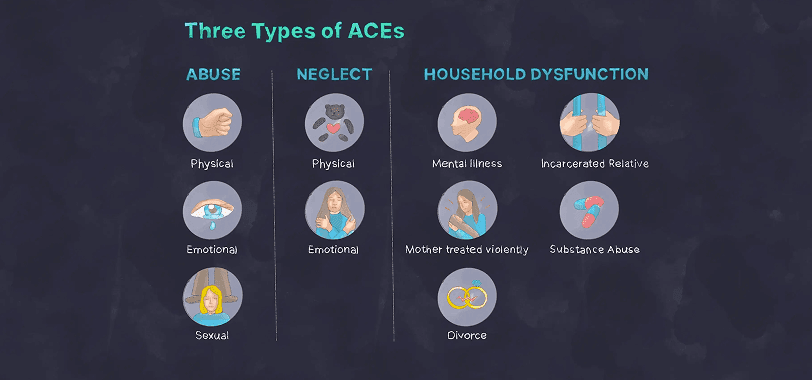
Why it's called the ACE test? Well, ACE stands for Adverse Childhood Experiences, which are tough things that happen to kids before they turn 18, like bullying, abuse, or seeing grown-ups struggle with addiction or mental illness.
There are several main types of ACEs that can really affect a person. When a kid goes through several of these at the same time, it can mess up how they grow and make them more likely to get sick, both physically and mentally.
So, why does all this matter? Understanding ACEs helps us be there for ourselves and for people who've been through tough times, offering help instead of judgment. It also reminds us to work on preventing these things from happening in the first place, so we can protect the next generation from going through rough experiences. If you want to learn more about childhood trauma and how to overcome it, check out our last article.
Structure of Childhood Trauma Test
The quiz explores four key areas:
- Emotional control
- Physical symptoms
- Disturbing thoughts
- Relationship struggles
Answer these deep twenty-two questions about personal struggles, feelings, and family situations to receive a score. A higher score may indicate an increased risk of childhood trauma.
It is important to remember that this quiz does not give "normal" or "abnormal" results. What this quiz really shows is a range of childhood trauma risk levels, from not likely to happened at all to very likely to happened.

What would the results of the childhood trauma test be useful?
By answering honestly to questions from tests, you will receive results that show how likely you are to have childhood trauma and how it influences your life.
Understanding your childhood traumas helps us be there for ourselves and for people who've been through tough times, offering help instead of judgment.
It also reminds us to work on preventing these things from happening in the first place so we can protect the next generation from going through rough experiences.
Reliability of Childhood Trauma Quiz
Breeze quiz based on the ACE test was created by mental health experts and contains 22 deep questions to explore if adults have signs of childhood trauma in a gentle yet profound way.
Important. Though online tests provide helpful insights, they're not a replacement for professional diagnosis. For accurate results, consult a licensed mental health or trauma-informed professional. Sharing your quiz results with your therapist as a starting point for discussion.
Who is This Childhood Trauma Quiz For?
If you've ever faced an adverse childhood experience, or you now have signs of it, this childhood trauma test is for you. It's a quick and confidential way to gain insight into your past and understand how it might be impacting your present.
Symptoms of Childhood Trauma
Childhood trauma doesn't always look the way you might expect it to. Often, its symptoms show up in a way that makes it hard to tell where they come from.
Still, here are some common signs that might indicate you should take the childhood trauma test:
- Chronic anxiety or fear: A heightened sense of threat and persistent worry can stem from early life experiences of instability or abuse.
- Depression: Compounded feelings of sadness, hopelessness, or guilt may be a response to unresolved traumas.
- Difficulty regulating emotions: You may alternate between emotional numbness and intense emotional reactions with little control.
- Unexplained pain: Chronic headaches, stomach issues, or joint pain can sometimes be psychosomatic, linked to unresolved trauma.
- Sleep disturbances: Insomnia, recurring nightmares, or waking up tired are common among those with past trauma.
- Hypervigilance:Feeling constantly “on edge” or a heightened startle response could suggest lingering effects of traumatic stress.
- Avoidance or withdrawalin relationships or life events, as trust and safety feel compromised. Substance misuse to numb emotional pain or discomfort.
- Substance misuse to numb emotional pain or discomfort.
- Perfectionism as a way to control your environment and earn validation.
What Causes Childhood Trauma?
Basically, any event or series of events that a child sees as dangerous, harmful, or beyond their ability to handle can cause trauma. These situations are very different and may include:
Abuse and Neglect
- Emotional, physical, or sexual abuse can profoundly affect self-worth and safety.
- Chronic emotional neglect, such as a lack of emotional support, love, or basic needs, can create feelings of abandonment and fear.
Abuse and Neglect
- Growing up in a household with addiction, mental illness, or domestic violence can create an unstable and harmful environment for children.
- Divorce or separation of parents can make it hard for a child to feel safe and secure in their family.
Bullying and Peer Dynamics
- Bullying, whether it is verbal, physical, or mental, during a person's formative years can leave wounds that last a lifetime.
- When a child feels socially excluded or shunned by their peers, it can seriously damage their self-esteem.
Loss and Grief
- Childhood trauma may result from the unexpected death of a loved one, a serious illness, or frequent moves that cause friendships to break down.
Unrealistic Expectations
- Exposure to high levels of societal or parental pressure to perform can create toxic stress in children and lead to narcissistic trauma.
Tips for Healing Childhood Trauma
Healing childhood trauma is a deeply personal process, but with the right tools and support, progress is absolutely possible. Here are some steps to start on the path toward emotional recovery and resilience:
1. Acknowledge and Understand Your Trauma
Without dealing with it, trauma can not heal. Reflect on your experiences and the symptoms you may be facing. Take a look at Breeze's childhood trauma test. It is a list of questions that professionals often use to find signs of trauma. This can provide helpful insights into patterns in your emotional and physical health.
2. Seek Professional Help
Therapists, counselors, and support groups can be life-changing in processing childhood trauma:
- Cognitive Behavioral Therapy (CBT)can help you understand and rewrite maladaptive thought patterns.
- Eye Movement Desensitization and Reprocessing (EMDR)is particularly effective in processing traumatic memories.
- Community support groupsoffer collective healing by connecting with others who have similar experiences.
3. Develop Coping Strategies
Learn healthy strategies to process and manage intense emotions as they arise:
- Mindfulness exercises like deep breathing, grounding, or yoga can help you stay present and calm.
- Journaling is a powerful outlet to express yourself without judgment and to process difficult emotions privately. For instance, writing about your mental health in a journal on a regular basis has been shown to lower stress, ease the symptoms of anxiety and depression, and improve your overall health.
- Creative expressions like art, music, or dance can provide therapeutic release for feelings tied to trauma.
You may find additional support in our Breeze app. Journal, track all your emotions, and grow beyond your childhood trauma. Regular self-reflection in the Breeze app helps you gain perspective on triggering situations. Download and flourish today!
4. Build a Support System
A trustworthy circle of family, friends, or community members makes a big difference. Isolation feeds emotional pain, but safe connections foster healing.
5. Reclaim Your Routine
Trauma can disrupt sleep patterns, appetite, and personal care routines, researchers say. [5] Reestablishing stable patterns in your life, like a consistent bedtime, regular meals, and a bit of exercise, helps regulate both your mind and body.
In the Breeze app, you can create a personalized routine plan to find daily happiness regardless of trauma and foster useful habits.
6. Practice Self-Compassion
As you remember, healing does not happen in a straight line. Perhaps some days are less challenging than others. Praise and support yourself whenever you achieve a goal, and be gentle with yourself when you fall short.
7. Educate Yourself
Plenty of resources—books on childhood trauma, webinars, and podcasts by trauma specialists—teach you more about your body and brain’s response to trauma. Understanding it scientifically can feel reassuring and empowering.
Wrapping up
In summary, the Breeze childhood trauma test helps you understand how your past might be affecting you. Using your score, you can identify areas that might need attention.
Always remember that only a licensed mental health professional can make an accurate diagnosis.
Your past doesn't control your future. Take the first step, seek help, and know that you're strong enough to overcome challenges. Recovery varies for everyone, but with courage and support, things can improve.
Sources
- Emerging Minds. “Adverse Childhood Experiences (ACEs) and resilience – parent fact sheet.” February 2020
- “Adverse Childhood Experiences (ACEs) in Wales and their Impact on Health in the Adult Population.” November 2016
- Jones CM, Merrick MT, Houry DE. Identifying and Preventing Adverse Childhood Experiences: Implications for Clinical Practice. JAMA. 2020;323(1):25–26. doi:10.1001/jama.2019.18499
- Stapleton, C. M., Zhang, H., & Berman, J. S. (2021). The Event-Specific Benefits of Writing About a Difficult Life Experience. Europe's journal of psychology, 17(1), 53–69. https://doi.org/10.5964/ejop.2089
- Babson, K. A., & Feldner, M. T. (2010). Temporal relations between sleep problems and both traumatic event exposure and PTSD: a critical review of the empirical literature. Journal of anxiety disorders, 24(1), 1–15. https://pubmed.ncbi.nlm.nih.gov/19716676/

Related articles
23.12.2024

7 min
The Anger Iceberg: What’s Really Hiding Beneath...
ANGER. These 5 letters hold so many hidden stories — more than meets the eye. But a...


14.05.2026
13 min
Why Am I So Angry For No Reason? 12 Hidden Cause...
If you find yourself asking, “Why am I so angry for no reason?” you are...


25.07.2025
14 min
Why Do I Hate People?
Have you ever thought, “I hate people”, whether it’s a friend who ghosted you, a fa...

Frequently Asked Questions