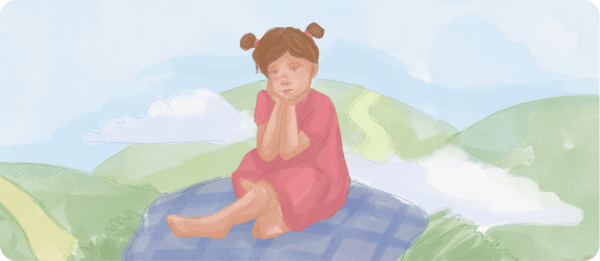



Were you the healthy child in a family where one sibling’s medical condition demanded most of the attention? Were you constantly aware of your parents’ stress and felt responsible for making life easier for other family members?
If it sounds familiar, you may experience glass child syndrome. Take the test to learn whether you’re a glass sibling and identify potentially unhelpful coping skills.
Insights and Strategies for Your Mental Health Based on Your Results
1. Mild-to-Moderate Glass Child Traits
Common experiences
- Difficulty asking for support.
- Tendency to “handle things yourself no matter what.”
- Feeling guilty when needing quality time or extra support from close ones.
- Mild people-pleasing behaviors.
Potential impacts
- Stress and anxiety from carrying problems alone.
- Feeling worthless and underestimating your own needs.
- Loneliness and occasional thoughts like “I hate my family.”
- Feeling disconnected in relationships
Take the insightful Childhood Trauma Test to explore how your family dynamics may still have a profound impact on your life.

Growth opportunities
- Practice asking for small forms of help. You may start with trusted friends or colleagues. Asking for support with everyday tasks, advice, or emotional concerns can help challenge the belief that you must handle everything on your own. Eventually, it can strengthen relationships and reduce isolation.
- Instead of apologizing for asking for help, replace the apology with gratitude.
- Notice when you automatically put yourself last. Building awareness is the first step toward change.
4. Develop healthier boundaries. You may be used to taking responsibility for other people’s emotions or problems. Learning to say “no,” delegate tasks, or step back when something is not your responsibility can protect your emotional energy and prevent burnout.
2. Strong Glass Child Patterns
Common experiences
- Feeling unseen or forgotten.
- Suppressing emotions for years.
- Hyper-independence.
- Deep responsibility for others.
- Difficulty knowing what you actually want or need.
Possible emotional consequences
- Chronic loneliness.
- Anxiety.
- Depression.
- Resentment mixed with guilt.
- Perfectionism.
- Emotional exhaustion.
Relationship patterns
- Becoming the caretaker.
- Staying in unequal relationships.
- Feeling uncomfortable when receiving care.
- Difficulty being vulnerable and trusting others to support you.
Healing may involve:
- Learning to express your needs more openly. If you grew up minimizing your needs, speaking up may feel uncomfortable at first. Start with small requests and honest conversations about your feelings. The more you practice expressing yourself, the easier it becomes to build relationships based on mutual support rather than self-sacrifice.
- Explore what healthy self-prioritization feels like. Prioritizing yourself does not mean being selfish. It means recognizing that your needs, feelings, and goals are just as important as everyone else’s. Practice setting aside time for rest, hobbies, personal growth, and relationships that support your well-being. Notice any guilt that arises and remind yourself that self-care is a healthy part of maintaining balance.
- Practice self-compassion. Many glass children become highly self-critical while extending endless understanding to others. Try treating yourself with the same kindness, patience, and empathy that you naturally offer to the people around you. Small acts of self-compassion can gradually improve your self-esteem.
You can also take a self-discovery test and play a relaxation game in the Breeze app to recharge and spend time learning more about your personality.

What Is Glass Child Syndrome?
Glass child syndrome is the experience of growing up with a sibling who required significant parental attention because of chronic illness, mental health condition, disability, developmental challenges, or other special needs circumstances.
While glass child syndrome is not an official mental health diagnosis, many glass children may experience emotional neglect and even post-traumatic stress disorder. This experience can take an emotional toll and shape healthy siblings’ self-esteem and interpersonal relationships. [2] Hanvey, Imogen & Malovic, Aida & Ntontis, Evangelos. (2022). “Glass children: The lived experiences of siblings of people with a disability or chronic illness.” Journal of Community & Applied Social Psychology. .
Curious about your personality type and how it influences your relationships? Take the Personality Type Test to learn more about yourself and how you connect with others.

Why Take A Glass Child Syndrome Test?
A glass child syndrome test can help you reflect on how growing up alongside a disabled sibling may have affected your emotions and relationships and caused a compromised sense of self. Many glass kids report feeling overlooked, pressured to be independent, or responsible for others’ well-being.
The test can help you:
- Recognize patterns you may not have connected to your childhood experiences.
- Better understand your emotional needs and relationship habits.
- Identify strengths, such as high emotional intelligence and resilience, as well as potential challenges, such as people-pleasing or difficulty asking for help.
- Decide whether further self-reflection, mental health support, or professional counseling might be beneficial.
Expert Insight
It can be helpful to verbally process your experiences with a mental health professional or someone you trust. It’s healing to let words “hit air,” especially surrounding experiences that you repressed out of survival or the role you had to play within your family system. Also, writing a letter to your younger self can aid in reparenting yourself and expressing compassion and validation towards those parts of you that carry the resentment, sadness, and grief.

Katherine Scott
Mental health professional
How Does the Test Work?
This questionnaire is designed to help identify common experiences associated with being a glass child. The test consists of a series of statements about childhood experiences, emotions, relationships, and personal identity. It is a self-reflection screening tool, not a diagnostic test.
Expert Insight
Al-Anon meetings can be a great first step in connecting with a community where ‘glass door children’ are frequently identified within. Also, connecting with a therapist related to this experience can aid in finding local resources in the community. The more present you can be with your experiences, the more healing can happen.
Katherine Scott
Mental health professional
Frequently asked questions
1. How much does a glass child syndrome test cost?
The Breeze Glass Child Syndrome Test is completely free. You can take the assessment, receive your results, and explore your score without paying or providing any payment information.
The test is designed to help you better understand whether your experiences and behaviors align with common glass child patterns, including hyper-independence, emotional suppression, and difficulty prioritizing your own needs.
If your results resonate with you, they can serve as a starting point for further self-reflection, personal growth, or conversations with a mental health professional.
2. Is This Test Scientifically Accurate?
This test is designed as a self-reflection and educational tool. It can help identify experiences and patterns associated with being a glass child, but it cannot:
- Diagnose a person’s mental health condition or prescribe mental health treatment.
- Determine the cause of emotional difficulties.
- Replace evaluation by a licensed mental health professional.
The results should be viewed as a starting point for reflection rather than a definitive psychological assessment.
3. Are the Results Private?
Yes. Results are visible only to you. If you complete the test for personal use and do not share your responses, the results remain private.
Sources
- TEDx Talks. “TEDxSanAntonio – Alicia Maples – Recognizing Glass Children”
- Hanvey, Imogen & Malovic, Aida & Ntontis, Evangelos. (2022). “Glass children: The lived experiences of siblings of people with a disability or chronic illness.” Journal of Community & Applied Social Psychology.
- Thomas PA, Liu H, Umberson D. “Family Relationships and Well-Being.” 2017
Disclaimer
This article is for general informative and self-discovery purposes only. It should not replace expert guidance from professionals.
Any action you take in response to the information in this article, whether directly or indirectly, is solely your responsibility and is done at your own risk. Breeze content team and its mental health experts disclaim any liability, loss, or risk, personal, professional, or otherwise, which may result from the use and/or application of any content.
Always consult your doctor or other certified health practitioner with any medical questions or concerns
Breeze articles exclusively cite trusted sources, such as academic research institutions and medical associations, including research and studies from PubMed, ResearchGate, or similar databases. Examine our subject-matter editors and editorial process to see how we verify facts and maintain the accuracy, reliability, and trustworthiness of our material.
Was this article helpful?