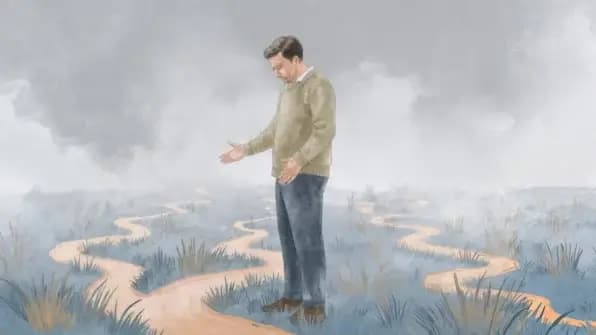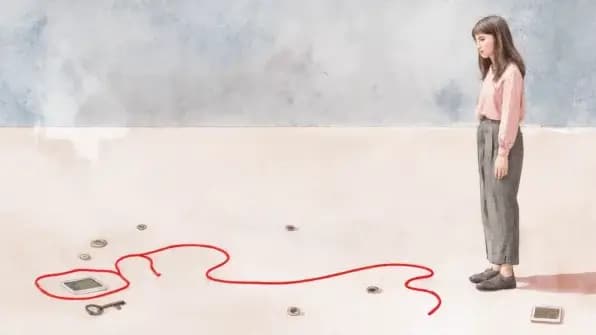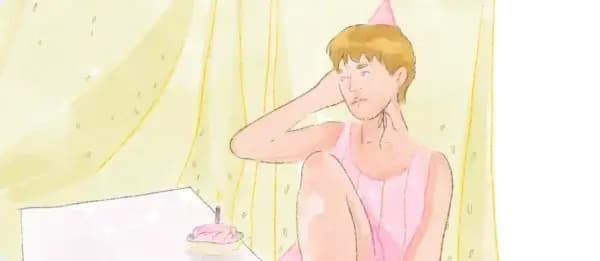



Fear of death is a common feeling that many people can experience at some point in their lives or throughout their lives.
It can stem from a sudden life shift (both positive and negative), like having a baby, moving to another country, or the death and dying of a loved one. It might also be triggered by mental health conditions, particularly anxiety disorders, or be linked to a certain milestone like turning 40 or 50, when you may become more aware of your mortality.

The most common triggers behind a sudden fear of dying
While there are no one-size-fits-all answers to why people may be so scared of death, there are certain situations that tend to spark death anxiety.
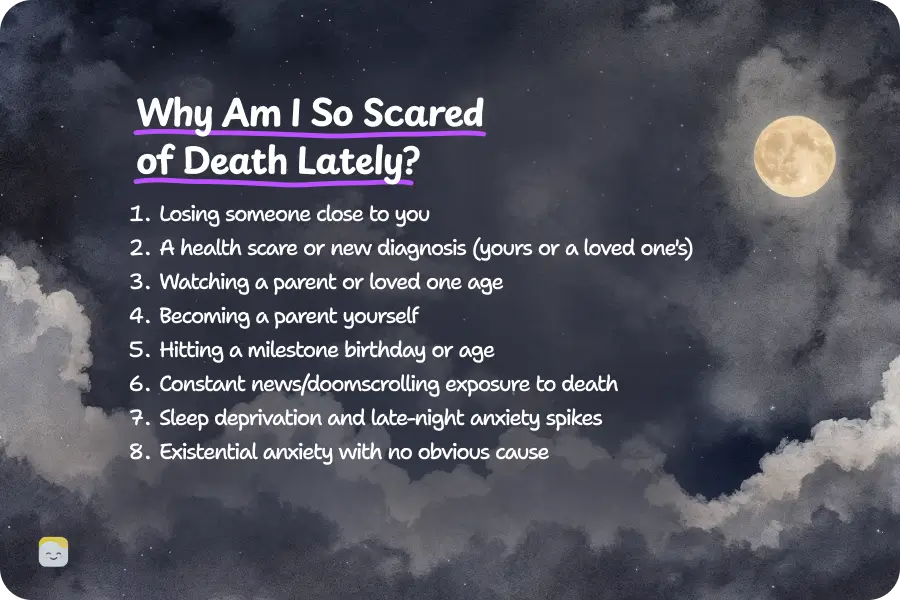
1. Losing someone close to you
Research suggests that traumatic experiences involving the possibility or reality of death may heighten death anxiety and related fears, especially when they lead to post-traumatic stress disorder (PTSD) symptoms. [1] Simske NM, Joseph NM, Rascoe A, Kalina M Jr, Simpson M, Hendrickson SB, Vallier HA. “Did You Think You Would Die?”: Fear of Death and Its Relationship to the Development of Posttraumatic Stress Disorder After Traumatic Injury.” J Am Acad Orthop Surg. 2022
As such, if your close one is experiencing a terminal illness or has died recently, it can trigger intense feelings of fear and anxiety. You may start worrying that something similar could happen to you or another person you love.
2. A health scare or new diagnosis (yours or a loved one’s)
Anxiety about death can include fear of the dying process and fear of your own death or that of a loved one. And if you or someone close to you receives a new diagnosis, even when it is treatable or not life-threatening, it can make death feel suddenly more real.
You may start paying closer attention to your physical health, notice and overthink small symptoms, and worry that they could be signs of something serious.

3. Watching a parent or loved one age
Aging is a natural part of human existence. However, when you notice your parents, relatives, or loved ones experiencing physical changes or challenges they didn’t face before, it can be rather frustrating. You might start thinking, “I’m aging too, and one day I’m going to die,” and this realization might cause intense fear.
4. Becoming a parent yourself
When you become a parent, you start feeling responsible not only for yourself but also for your baby. It can trigger certain thoughts and questions that may be difficult to answer:
All these thoughts, accompanied by increased responsibility and, maybe, the stress of parenthood, can make you fear death.
5. Hitting a milestone birthday or age
One study found that death anxiety peaked during the 20s in both men and women and declined significantly thereafter. [2] Russac, R. J., Gatliff, C., Reece, M., & Spottswood, D. “Death Anxiety across the Adult Years: An Examination of Age and Gender Effects.” Death Studies. 2007 Yet, people may experience extreme fear of death at any age, particularly when reaching a certain milestone that feels overwhelming for them.
For instance, some start feeling “old” at 40, 50, or any other age, even when it isn’t true. Others may start comparing them to their parents at that age, to celebrities, or to people they consider successful.
If you’ve started feeling scared of death lately, it can also be linked to birthday depression. Maybe you simply feel worried before or around your birthday, and this temporary feeling will go away sometime after the celebration.
6. Constant news/doomscrolling exposure to death
In the 2017 Chapman University Survey of American Fears, 20.3% of U.S. adults reportedly said they were afraid or very afraid of dying. At the same time, the 2022 report showed this number had grown to 29%. [3] The Chapman Survey of American Fears, Wave 8. “The Complete List of Fears.” 2022 Intense exposure to social media and worldwide news could have become one of the reasons for this significant change.
When you constantly doomscroll through posts, reels, stories, or news reports about accidents, illnesses, disasters, and deaths, your brain may start to perceive these events as more frequent and immediate than they actually are. After some time, you may start thinking that life is full of death, pain, and catastrophes.
6. Sleep deprivation and late-night anxiety spikes
Some people tend to experience intense fear or even panic attacks due to thoughts about death late at night. “But why am I scared of death at 2 am?” There may be a few reasons:
As a result, the thought of death, which seemed tolerable or unnoticeable during the day, can become much more frightening when you’re tired and unable to sleep at night.
7. No clear trigger at all — existential anxiety with no obvious cause
Both young adults and older people may experience the fear of death without a particular cause at all, especially if it follows them throughout their lives. In existential psychology, death anxiety is about a conflict between the inevitability of mortality and a desire for life.
So, you might simply want to live but struggle with the fact that life is temporary and death is unavoidable. While for some people, denial and avoiding these thoughts can be a way out, others may focus on worrying about death.
What is death anxiety?
“Death anxiety” is a complex term, which may involve different concepts, such as fear of the dying process, fear of one’s death, or fear of others’ death, particularly loved ones’. Both these fears can have other feelings behind them.
- Fear of the dying process might stem from fear of losing control, pain, being alone at the end, or not knowing what to expect.
- Fear of your death may be connected to worries about leaving loved ones behind, unfinished goals, losing the life you have built, or uncertainty about what happens after death.
- Fear of someone else’s death can involve worries about losing an important person, being left alone, or having to cope with grief and major changes in your life.
Death anxiety vs. a diagnosable phobia of death (thanatophobia)
“Thanatophobia” is a term characterizing a phobia of one’s own death or the dying process. Even though it might have similar symptoms, it differs from death-related anxiety by the intensity of the feelings and their permanence.
Clinicians assess levels of distress and impairment to understand whether a person simply experiences an everyday death-related worry or meets the duration criterion for a specific phobia. A mental health professional may assess whether the fear meets the criteria for a specific phobia if it:
However, if your death anxiety involves thoughts that arise from time to time and do not interfere with your daily functioning, it is unlikely to meet the diagnostic criteria.
Is an irrational fear of death actually “irrational”?
Most people may feel frightened of dying, and this fear isn’t irrational. Loss of control, painful experiences, grief about loved ones, and uncertainty about what happens after death can all make mortality feel frightening.
Yet, the fear may become irrational when you start thinking about any life experience as a potential danger. Driving a car, flying planes, or simply going for a walk can start to feel threatening, even when there is no specific reason to believe you are in danger.
Constantly checking for signs of illness or being unable to enjoy the present moment because of worries about death can also indicate that your fear is becoming excessive.
Signs you may have thanatophobia
If your fear of death becomes disturbing or you notice that you can’t find peace even when there is no immediate reason to worry, it may be necessary to check yourself for thanatophobia. Here are other important symptoms you may notice.
Psychological symptoms
Physical symptoms
- Trouble sleeping or insomnia
- Nausea from anxiety
- Shortness of breath
- Rapid heartbeat or heart palpitations that cause even more fear
- Sweating or trembling
- Muscle tension
Behavioral signs
- Avoiding hospitals, funerals, cemeteries, or discussions about death
- Frequent attempts to get reassurance from loved ones or health professionals about your health or safety
- Rechecking symptoms or searching for information about them online
- Avoiding loneliness due to fear that something might happen to you
- Excessive checking on loved ones to ensure their safety
- Difficulty making plans due to concerns that you may not live to enjoy them
Why do we develop a fear of death?
Various cultures and people approach death differently. Let’s explore why it can happen and why some may feel completely fine about the idea of being dead someday, while others feel extremely frightened of it.
Terror management theory: Why humans fear non-existence
The terror management theory was developed in 1986 by psychologists Jeff Greenberg, Tom Pyszczynski, and Sheldon Solomon. It has grown from Ernest Becker’s 1973 book The Denial of Death.
People may cope with this fear by maintaining meaningful worldviews, pursuing self-esteem, forming close relationships, and feeling that they are significant contributors to something larger than themselves. [4] Pyszczynski, Tom & Morgan, Jonathan. “A Terror Management Theory Perspective on the Human Needs for Self-Esteem, Meaning, Close Relationships, and Significance.” 2025
Ego integrity vs. despair: How life stage shapes death fear
Erik Erikson’s psychosocial theory of development suggests that our attitudes toward death can change as we move through different stages of life. In adulthood, people may look back on their lives and question whether they feel meaning, satisfaction, and acceptance. Erikson called this state ego integrity.
When people feel their lives have been meaningful and that they can embrace both their achievements and regrets, they may experience less fear of death. In contrast, looking back with strong feelings of regret or dissatisfaction can make thoughts of mortality more distressing.
Risk factors that make some people more prone to death anxiety
The link between health anxiety and death fear
Obsessive checking of mental health symptoms and fear of death can be connected and fuel each other. When you are constantly monitoring your body for signs of illness, a headache, a change in your heartbeat, or minor discomfort may quickly lead to thoughts about a serious illness or death.
This can create a cycle: anxiety makes you pay closer attention to your body, checking increases your focus on physical sensations, and those sensations then trigger even more anxiety about your mortality.
How death anxiety affects everyday life
Death anxiety and intrusive thoughts can influence your overall quality of life.
How fear of death affects your life
- Sleep problems. Those constantly thinking about death may experience insomnia, recurring nightmares, or wake up at night feeling anxious.
- Difficulty focusing on something unrelated. Thoughts about death can take up too much of your time. As such, it might be difficult to concentrate on work or daily responsibilities.
- Less enjoyment of the present. Worrying about what could happen in the future can make it difficult to stay engaged with experiences that are happening now.
- Relationship strain. Your friends and family may start noticing that you are becoming detached and less present.
How constant worry about death affects loved ones
How to overcome fear of death: In-the-moment relief
Grounding Techniques for Sudden Panic About Dying
If you experience sudden panic about the fact that you’ll die one day, try one or a few of the following techniques.
Box breathing
- Breathe in through your nose for 4 seconds
- Hold your breath for 4 seconds
- Breathe out through your mouth for 4 seconds
- Hold your breath for 4 seconds
- Repeat several times while focusing on sensations in your body
5-4-3-2-1 sensory grounding
- Name 5 things you can see
- Name 4 things you can touch or feel
- Name 3 things you can hear
- Name 2 things you can smell
- Name 1 thing you can taste
Reframing scripts to interrupt the spiral
Focus on rational thoughts rather than irrational death-related fears. You can repeat to yourself something like:
- “I’m having an anxious thought, not experiencing a real danger right now.”
- “This feeling is uncomfortable, but it will pass.”
- “I don’t have to follow every thought that comes to my mind.”
Hannah Schlueter, MA, LAC, provides tips for people who live alone and might experience a sudden fear of death at night. “For those who live alone, it’s common to experience higher anxiety regarding death or health concerns. Using effective regulation skills can help with the cognitive and physical responses of anxiety, but it may also be worth it to include environmental supports, such as friends who reach out consistently or creating a check-in system with a loved one if they haven’t heard from you.”
How to overcome fear of death: Long-term strategies
To overcome the fear of death, it may be necessary to seek professional help and work on your anxiety, thought patterns, and ways of coping with uncertainty. Among the most common therapies and ways to heal are.
Cognitive behavioral therapy (CBT) for death anxiety
Cognitive behavioral therapy (CBT) helps you notice thoughts that make death seem more frightening than it actually is. You can learn to question assumptions about pain, loss of control, or what dying will be like, and replace them with more realistic thoughts.
Exposure therapy: Gradually facing thoughts of death
Exposure therapy helps you face death-related thoughts or situations instead of avoiding them. This might involve:
These steps are introduced gradually and can be done with a therapist’s support.
Radical acceptance and mindfulness-based approaches
Instead of trying to push thoughts about death away, you can learn to acknowledge them without letting them take over. Engage in mindfulness and meditation practices to stay focused on the present rather than getting caught up in worries.
Talking about death openly
Talking about death can make the subject feel less frightening and unfamiliar. Death Cafés and the Death-Positive Movement encourage open conversations about dying without treating death as a taboo subject.
End-of-life planning as an anxiety-reduction tool
Some practical planning can give you a sense of control. Write a will, decide who should handle important matters, document your healthcare wishes, organize important documents, or talk with loved ones about your preferences.
It doesn’t mean expecting the worst, but it helps you know that your wishes are clear if something unexpected happens.
Building meaning and legacy to ease existential fear
Spend less time avoiding thoughts about death and more time thinking about how you want to live your life. Start by asking yourself what’s truly important to you: your relationships, work, creativity, helping others, learning, traveling, or simply spending more time with loved ones.
Then, transform these values into small, concrete actions.
- Call someone you miss
- Make time for a hobby
- Work on a goal you’ve been putting off
- Start a project that feels meaningful
The idea isn’t to constantly be busy so you never think about death. It’s about aligning your daily life with what matters to you, so thoughts of mortality don’t detract from living in the present.
Hannah Schlueter, MA, LAC, explains when self-help strategies might not be enough and a person may need to see a healthcare professional. “If your anxiety about death makes a person unable to go about their day-to-day life successfully, seeing a healthcare professional is a great place to start. That being said, no one has to wait until it disrupts their everyday life to seek help. It is perfectly acceptable to maintain daily responsibilities and still want additional support to manage anxiety.”
Frequently asked questions
Why am I suddenly scared of death after having a baby?
You might start feeling scared of death after having a baby because of the increased responsibility of parenthood. You may want to see them growing and becoming a happy, independent person, which can make the idea of not being there for them feel especially frightening.
Is it normal to think about death every day?
It may be normal if these are just occasional thoughts rather than ones that overwhelm you and distract you from living a complete life.
Can anxiety medication help with the fear of dying?
Anxiety medications can lower the level of your worry and help reduce the number of anxious thoughts that may arise. However, they don’t particularly deal with the fear of dying.
Talking to a mental health professional can help you understand what is driving your fear and whether therapy, medication, or a combination of both may be appropriate. Never start, stop, or change anxiety medication without discussing it with a qualified healthcare professional.
Is fear of death a sign of depression?
Fear of death may signal depression as well as other mental health disorders. If you notice persistent low mood for over 2 weeks, loss of interest in things you usually enjoy, changes in sleep or appetite, low energy, feelings of hopelessness, or difficulty functioning in everyday life, consider talking to a mental health professional.
Sources
- Simske NM, Joseph NM, Rascoe A, Kalina M Jr, Simpson M, Hendrickson SB, Vallier HA. “Did You Think You Would Die?”: Fear of Death and Its Relationship to the Development of Posttraumatic Stress Disorder After Traumatic Injury.” J Am Acad Orthop Surg. 2022
- Russac, R. J., Gatliff, C., Reece, M., & Spottswood, D. “Death Anxiety across the Adult Years: An Examination of Age and Gender Effects.” Death Studies. 2007
- The Chapman Survey of American Fears, Wave 8. “The Complete List of Fears.” 2022
- Pyszczynski, Tom & Morgan, Jonathan. “A Terror Management Theory Perspective on the Human Needs for Self-Esteem, Meaning, Close Relationships, and Significance.” 2025
- Rybarski R, Bartczuk RP, Śliwak J, Zarzycka B. “Religiosity and death anxiety among cancer patients: the mediating role of religious comfort and struggle.” Int J Occup Med Environ Health. 2023
Disclaimer
This article is for general informative and self-discovery purposes only. It should not replace expert guidance from professionals.
Any action you take in response to the information in this article, whether directly or indirectly, is solely your responsibility and is done at your own risk. Breeze content team and its mental health experts disclaim any liability, loss, or risk, personal, professional, or otherwise, which may result from the use and/or application of any content.
Always consult your doctor or other certified health practitioner with any medical questions or concerns
Breeze articles exclusively cite trusted sources, such as academic research institutions and medical associations, including research and studies from PubMed, ResearchGate, or similar databases. Examine our subject-matter editors and editorial process to see how we verify facts and maintain the accuracy, reliability, and trustworthiness of our material.
Was this article helpful?