

Traffic jams, work-related challenges, global crises, and a crucial meeting on Friday may all be daunting. People can face stress everywhere, and our nervous system allows us to handle it successfully.
The nervous system serves as a so-called control center, deciding when you need to accumulate energy and when to relax. But when the nervous system is dysregulated, it can lead to physical and mental health challenges.
In the article, we’ll explore why you can’t constantly live in a fight-or-flight state, what a nervous system reset is, plus 15 tips to regain a sense of control in minutes.

What is the nervous system, and why does it matter?
The nervous system is a complex system of organs that serves as a communication network, allowing people to sense the world and regulate internal processes and actions. It transmits electrical signals through specialized nerve cells that guide vital functions like breathing, moving, and speaking.
It consists of two parts: the central nervous system (the brain and spinal cord) and the peripheral nervous system (nerves throughout the body). They work together to monitor internal conditions and external surroundings, so the body responds to various situations appropriately.
Central & autonomic nervous system
The central nervous system (CNS) processes sensory and motor information from the entire body and is responsible for conscious actions such as walking, talking, and eating. Also, the CNS coordinates memory, learning, making decisions, and controlling emotions.
The autonomic nervous system is a part of the peripheral nervous system. It is a network of nerves that connects the CNS to the rest of the body. It controls involuntary functions like breathing, digestion, and heart rate.
The autonomic nervous system consists of two parts: the sympathetic nervous system and the parasympathetic nervous system. They both cause the processing of certain hormones to maintain the body’s balance, whether in stress or during rest.
Sympathetic vs. parasympathetic systems
The sympathetic nervous system (SNS) activates when the body is under stress, preparing us to react in life-threatening situations. The parasympathetic nervous system (PNS) helps the body to calm down and relax. It engages when there’s no perceived danger nearby.
| Sympathetic nervous system | Parasympathetic nervous system |
| “Fight-or-flight” response | “Rest-and-digest” response |
| Increases blood pressure and heart rate | Decreases blood pressure and heart rate |
| Speeds up breathing | Slows down breathing |
| Slows down digestion | Speeds up digestion |
| Releases stored energy | Saves and stores energy |
| Causes the release of adrenaline, noradrenaline, and cortisol | Causes the release of acetylcholine |
How chronic stress keeps the body stuck in sympathetic mode
People feel fine when the sympathetic and parasympathetic nervous systems are in balance. They accumulate energy in stressful situations and relax afterwards. However, chronic stress can ruin this balance. [1] Brianna Chu, Komal Marwaha, Terrence Sanvictores, Ayoola O. Awosika, Derek Ayers. “Physiology, Stress Reaction.” StatPearls. 2024
As the person lives under constant pressure, the sympathetic nervous system remains active. The body constantly produces stress hormones while the parasympathetic system becomes less effective. And if someone stays under stress for too long, the body can remain “stuck” in sympathetic mode. Even minor stressors can trigger strong physical reactions, making you feel constantly on edge for no apparent reason.
Signs and symptoms of a dysregulated or overactive nervous system
A dysregulated nervous system can constantly stay in the fight-or-flight mode (sympathetic dominance) or rest and digest mode (parasympathetic overdrive). In this article, we’ll focus on sympathetic nervous system overactivity, as there’s growing evidence that it accompanies many disease states. [2] Fisher JP, Young CN, Fadel PJ. “Central sympathetic overactivity: maladies and mechanisms. Auton Neurosci.” 2009
Short-term symptoms
When a person experiences stress, the sympathetic nervous system works harder than usual. It’s created to help people handle immediate danger, and starts causing some challenges if you stay on high alert for a few days or weeks. The most common early symptoms of nervous system dysregulation:
- Irritability
- Insomnia
- Brain fog and difficulty concentrating
- Fatigue
- Overthinking
Long-term signs and challenges
Chronic stress has long been examined as a crucial factor in the development and progression of various medical conditions due to its tendency to elevate cortisol. When cortisol levels are too high, it can lead to:
- Depression
- Alzheimer’s disease
- Parkinson’s disease [3] Knezevic E, Nenic K, Milanovic V, Knezevic NN. “The Role of Cortisol in Chronic Stress, Neurodegenerative Diseases, and Psychological Disorders.” Cells. 2023
Adrenaline allows us to accumulate our energy for immediate action. It causes an increasing heart rate, blood pressure, and glucose availability. But in the long run, adrenaline can lead to:
- Increased heart rate
- High blood pressure
- Higher risk of panic attacks
- Frequent headaches and migraines
- Increased risk of hypertension, heart attack, or stroke
- Changes in cholesterol levels
- Digestive issues
- Lowered libido and erectile issues
- Menstrual irregularities (absent, irregular, or more painful periods)
- Worsened PMS and menopause symptoms [4] American Psychological Association. “Stress effects on the body.” 2024
6 causes of a dysregulated nervous system
The nervous system’s health highly depends on a person’s lifestyle, according to “The Biological Effects of Childhood Trauma.” [5] De Bellis MD, Zisk A. “The biological effects of childhood trauma.” Child Adolesc Psychiatr Clin N Am. 2014 Lack of adequate sleep, constant worries, an unhealthy diet, or traumatic events may keep your body “on edge.”
1. Chronic stress
Ongoing stress doesn’t let the nervous system restore balance. It keeps a person in high alert mode, making them irritable or anxious.
Stress can stem from relationships, work, or daily life pressure. But whatever the cause, it affects the body’s ability to restore energy. Stress can act as a common factor that connects numerous other causes of nervous system dysregulation, such as inadequate sleep, inactivity, excessive stimulation, and weakened social bonds.
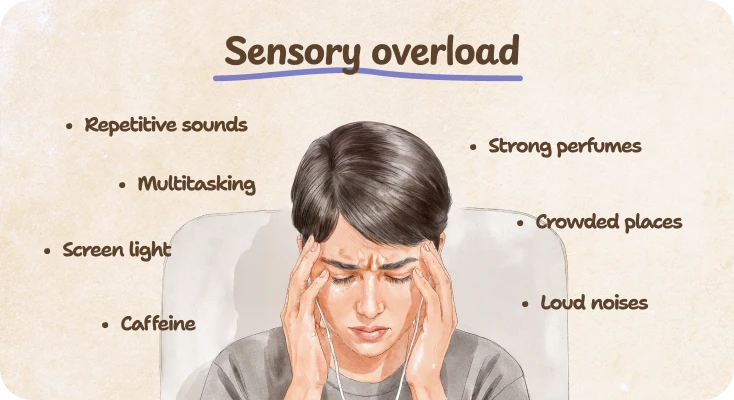
2. Sensory overload
Constant exposure to stimuli like screen light, caffeine, and multitasking can overwhelm the nervous system. This overstimulation keeps the SNS active and makes it difficult to reach inner peace.
3. Childhood trauma and adverse childhood experiences
Research suggests that childhood trauma activates the body’s biological stress response systems, similar to PTSD symptoms. [5] De Bellis MD, Zisk A. “The biological effects of childhood trauma.” Child Adolesc Psychiatr Clin N Am. 2014 If a person lives with an unprocessed childhood trauma, their nervous system might remain in chronic stress. You can have a pretty balanced life and avoid work-related challenges. But if your past wounds remain unhealed, they might still influence your reactions, emotional well-being, and even physical health.
4. Not moving enough
Frontiers in Psychiatry has proven that the absence of PE is related to a 60% higher risk of having elevated stress levels. [10] Silva L.R.B., Seguro C.S., Oliveira C.G.A., Santos P.O.S., Oliveira J.C.M., Souza Filho L.F.M., de Paula Júnior C.A., Gentil P., Rebelo A.C.S. Physical Inactivity Is Associated With Increased Levels of Anxiety, Depression, and Stress in Brazilians During the COVID-19 Pandemic: A Cross-Sectional Study. You don’t need intense gym workouts or long training sessions. Light stretching, yoga, or walking can be enough to feel better.
5. Sleep deficits and dieting problems
Sleep deficits [6] Oliver MD, Baldwin DR, Datta S. “The relationship between sleep and autonomic health.” J Am Coll Health. 2020 and excessive eating of carbohydrates (starch and sugars) [7] W. Kopp. “Chronically increased activity of the sympathetic nervous system: Our diet-related “evolutionary” inheritance.” The Journal of nutrition, health and aging. 2009 cause overactivity in the SNS. While having enough sleep and having a balanced diet may sound obvious, in reality, these are effective ways to take care of your emotional health.
6. Lack of social connection
According to Current Opinion in Neurobiology, threats to social connection, such as being excluded from the social group or rejected by someone, may trigger basic stress responses. If you’re in a conflict with a close one or simply feel lonely and have no one to support you, it might lead to a dysregulated nervous system.
Expert Insight
Nervous system dysregulation is often the result of multiple interacting factors rather than one single cause. Beyond acute stress or trauma, things like chronic inflammation, poor sleep, long-term anxiety patterns, physical pain, overwhelming life transitions, or even sensory overload can keep the system stuck in “high alert.” When these layers build up over time, the body can lose some of its ability to return to baseline, making even small stressors feel amplified.

Rychel Johnson
Mental health professional
15 Tips for Regulating Emotions and Resetting Your Nervous System
To reset your nervous system means to reduce the level of stress your body and mind experience. This process includes calming down the SNS and activating the parasympathetic nervous system.
Let’s explore some of the most effective ways to support this reset.
1. Try a weighted blanket for better nervous system regulation
Weighted blankets can effectively improve sleep quality and alleviate negative emotions, according to studies. [8] Yu J, Yang Z, Sun S, Sun K, Chen W, Zhang L, Xu J, Xu Q, Liu Z, Ke J, Zhang L, Zhu Y. “The effect of weighted blankets on sleep and related disorders: a brief review. Front Psychiatry.” 2024 Thanks to the deep pressure, they activate the parasympathetic nervous system and create a sense of safety. This helps lower heart rate, ease tension, and calm an overactive mind.
Tip: Choose a blanket that’s about 8-12% of your body weight. It will be heavy enough to soothe but not so heavy that it restricts movements.
2. Do deep breathing exercises
Deep breathing is one of the basic grounding techniques that allows people to slow their heart rate, reduce stress, and activate the relaxation response. Some of the most common techniques include.
- A physiological sigh. Take two short inhales through the nose, followed by one long exhale through the mouth.
- 4-7-8 breathing. Take a deep breath for 4 seconds, hold for 7, and exhale for 8.
- Box breathing. Inhale for 4 seconds, hold for 4, exhale for 4, hold for 4, and repeat.
3. Take a cold shower
Cold water from the shower can serve as a short-term stressor and instantly cause the fight-or-flight response that will lead to adrenaline release. But once you step out, the rebound effect activates the parasympathetic nervous system, which helps the body relieve stress and feel much calmer.
You can start small. If a full cold shower feels too intense, finish your regular warm shower with 15-30 seconds of cold water. Gradually increase the duration as your body adapts.
4. Have a cry
Frontiers in Psychology states that crying can serve as a self-soothing behavior, which allows us to release tension, reduce stress, and release endorphins and oxytocin. So next time you’re feeling stressed, it may be reasonable to have a good cry. And if you get support from a trustworthy person, the effect may be even stronger.
5. Go for a mindful walk
Walking is a type of physical activity that fits almost everyone and is beneficial for our overall health. But mindful walking can become a completely new level.
Ensure that nothing distracts you. Don’t listen to podcasts or music. Simply leave your headphones at home. Instead, learn to focus on your feet touching the ground, on the sounds of people walking around, and on the rhythm of your breath. Try to avoid dwelling on your thoughts and what-ifs about tomorrow. Simply observe the world without judgment.
6. Try the Emotional Freedom Technique
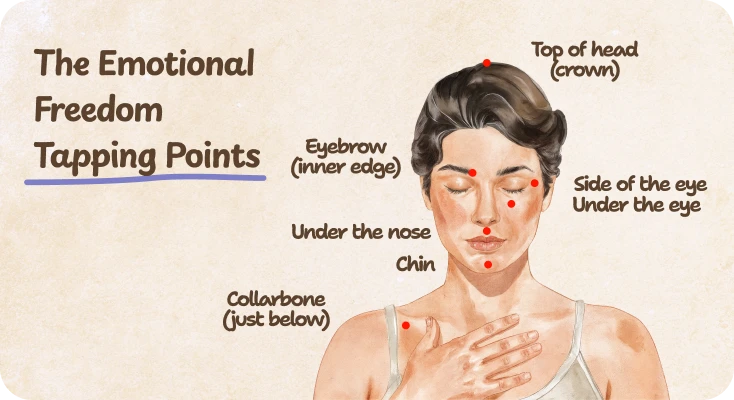
The Emotional Freedom Technique (EFT) is an evidence-based method with over 100 studies demonstrating its efficacy. It involves tapping specific points on our body to calm down. Here’s a step-by-step explanation on how to do it:
Identify the challenge
Choose one specific thing that makes you feel worried, for instance, the upcoming presentation or a family-related stressful event. Rank how worried you are about it from 0 to 10.
Set up statement
This phrase acknowledges that the issue really exists, but you can handle it. It can sound like, “I’m stuck with this task, but I’m doing my best to handle it effectively.”
Follow the tapping sequence
Use two or three fingertips to tap 5-7 times on each point while repeating your statement phrase.
- Top of head (crown)
- Eyebrow (inner edge)
- Side of the eye
- Under the eye
- Under the nose
- Chin
- Collarbone (just below)
- Under the arm
Rate your feelings and repeat if necessary
Analyze how you feel after taking all those steps. Your level of worry can decrease or even reach zero on the scale. If you still feel anxious, repeat the exercise once again.
7. Restore balance with mindfulness and meditation
In a world filled with millions of triggers, staying present may be the best way to reduce stress. Mindfulness teaches you to notice what you feel and do without distraction. Take a few minutes a day to do breathing meditation.
- Sit down on the ground and notice how you inhale and exhale.
- Let the thoughts go without judgment.
- Don’t let yourself dwell on something in particular.
- Notice your breathing and let your body relax with each exhale.
- Gently bring your attention back to your breath whenever your mind wanders.
8. Journal your thoughts
Releasing your worries and not letting them bottle up may prevent nervous system dysregulation. You can spend 5 minutes with Breeze to feel more in control. Notice what you’re grateful for and what emotions you experience at the moment. This, in turn, allows you to process your emotions more effectively and helps prevent increased stress.
9. Walk barefoot on grass to calm your nervous system
Barefoot walking leads to a significant increase in cognitive speed and concentration, as well as a decrease in brain stress. [9] Kim, T., Seo, D. Y., Bae, J. H., & Han, J. “Barefoot walking improves cognitive ability in adolescents.” The Korean Journal of Physiology & Pharmacology: Official Journal of the Korean Physiological Society and the Korean Society of Pharmacology. 2024 Furthermore, visual contact with flowers, green plants, and wooden materials has a positive effect on cerebral and autonomic nervous system activities, according to the International Journal of Environmental Research and Public Health.
10. Spend time with people who make you feel safe
Sharing your worries with the closest people may signal your nervous system that you’re not in danger. If there’s a friend or a family member who accepts you as you are, a short break for a cup of tea together may promote relaxation.
11. Eat mindfully without watching YouTube or scrolling TikTok
A dysregulated nervous system makes us constantly hurry. You may want to eat on the go or skip meals. Instead, eating slowly might help you improve digestion. Always pay attention to the taste, texture, and smell of food, and eat in a calm place where no one can distract you.
12. Take a nap
The parasympathetic nervous system dominates when we fall asleep. This allows people to recover and feel more energetic in the morning. So, if you’re feeling stressed and find it difficult to concentrate, it may be reasonable to put all tasks aside and recharge. Save some tips to make your nap more effective.
- The sleep should last no longer than 20-30 minutes. This will let you feel refreshed, not sleepy, afterwards.
- Don’t nap after 3-5 pm because it can disrupt your nighttime sleep.
- Ensure that you fall asleep in a dark and quiet place so your body can fully relax.
13. Get a massage
A 2025 study proves that massage can significantly reduce symptoms of anxiety and depression. It stimulates the production of oxytocin, endorphins, serotonin, and dopamine, and promotes relaxation.
14. Engage in crafts or creative hobbies
Knitting, embroidery, crocheting, or coloring — it’s only up to you to decide what to choose. Repetitive movements and creative outlets can become powerful tools to manage daily stress and organize thoughts.
15. Use touch to calm down
Touch can quickly help calm your nervous system. When you focus on simple physical sensations, your brain receives a signal that you’re safe. You can try rubbing your hands together, holding a soft object, putting a hand on your chest, or running warm water over your hands.
Expert Insight
I often remind therapy clients that recovering a dysregulated nervous system is about consistency, not perfection. Small, repeated cues of safety help retrain your body to return to baseline. Building emotional regulation skills and setting boundaries that reduce overwhelm play a role. Over time, these practices signal to your system that it’s safe to shift out of threat mode, allowing your body to rebuild resiliency and recover its natural rhythm.
Rychel Johnson
Mental health professional
Frequently asked questions
How do I know if my nervous system is dysregulated?
Your nervous system might be dysregulated if you experience unexplained anger outbursts, brain fog, chronic pain with no clear reason, muscle tension, and anxiety. Headaches, panic attacks, high blood pressure, or digestive issues can signal that you have lived in a stress response mode for a long time.
How can I quickly calm my nervous system?
To calm a dysregulated nervous system quickly, try deep breathing, taking a cold shower, or walking barefoot on the ground. The Emotional Freedom Technique is also a science-based approach that might be helpful to restore inner balance.
How long does it take to reset the nervous system?
Nobody can say how long it may take to restore a healthy nervous system. Some people may need a good night’s sleep and a mindful walk, while others can spend months overcoming emotional and physical symptoms of a hyper-alert stress response.
Is it possible to desensitize my nervous system?
Yes, you can reduce alarm response to stimuli and help your nervous system become less reactive. Yoga, guided meditation, mindful breathing, better sleep, and soft music can gradually teach the body that it’s safe and reduce sensitivity to minor stressors.
Sources
- Brianna Chu, Komal Marwaha, Terrence Sanvictores, Ayoola O. Awosika, Derek Ayers. “Physiology, Stress Reaction.” StatPearls. 2024
- Fisher JP, Young CN, Fadel PJ. “Central sympathetic overactivity: maladies and mechanisms. Auton Neurosci.” 2009
- Knezevic E, Nenic K, Milanovic V, Knezevic NN. “The Role of Cortisol in Chronic Stress, Neurodegenerative Diseases, and Psychological Disorders.” Cells. 2023
- American Psychological Association. “Stress effects on the body.” 2024
- De Bellis MD, Zisk A. “The biological effects of childhood trauma.” Child Adolesc Psychiatr Clin N Am. 2014
- Oliver MD, Baldwin DR, Datta S. “The relationship between sleep and autonomic health.” J Am Coll Health. 2020
- W. Kopp. “Chronically increased activity of the sympathetic nervous system: Our diet-related “evolutionary” inheritance.” The Journal of nutrition, health and aging. 2009
- Yu J, Yang Z, Sun S, Sun K, Chen W, Zhang L, Xu J, Xu Q, Liu Z, Ke J, Zhang L, Zhu Y. “The effect of weighted blankets on sleep and related disorders: a brief review. Front Psychiatry.” 2024
- Kim, T., Seo, D. Y., Bae, J. H., & Han, J. “Barefoot walking improves cognitive ability in adolescents.” The Korean Journal of Physiology & Pharmacology: Official Journal of the Korean Physiological Society and the Korean Society of Pharmacology. 2024
- Silva L.R.B., Seguro C.S., Oliveira C.G.A., Santos P.O.S., Oliveira J.C.M., Souza Filho L.F.M., de Paula Júnior C.A., Gentil P., Rebelo A.C.S. Physical Inactivity Is Associated With Increased Levels of Anxiety, Depression, and Stress in Brazilians During the COVID-19 Pandemic: A Cross-Sectional Study.
Disclaimer
This article is for general informative and self-discovery purposes only. It should not replace expert guidance from professionals.
Any action you take in response to the information in this article, whether directly or indirectly, is solely your responsibility and is done at your own risk. Breeze content team and its mental health experts disclaim any liability, loss, or risk, personal, professional, or otherwise, which may result from the use and/or application of any content.
Always consult your doctor or other certified health practitioner with any medical questions or concerns
Breeze articles exclusively cite trusted sources, such as academic research institutions and medical associations, including research and studies from PubMed, ResearchGate, or similar databases. Examine our subject-matter editors and editorial process to see how we verify facts and maintain the accuracy, reliability, and trustworthiness of our material.
Was this article helpful?