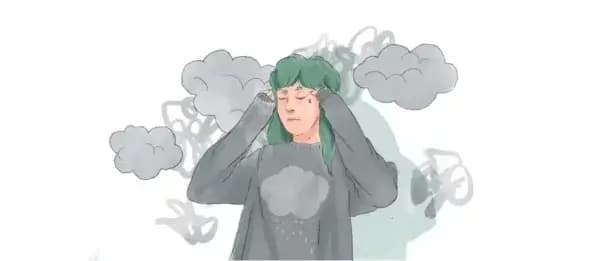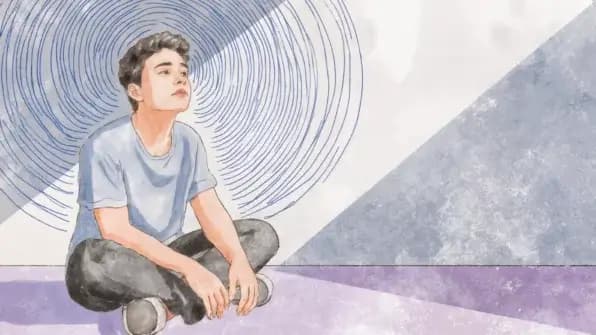


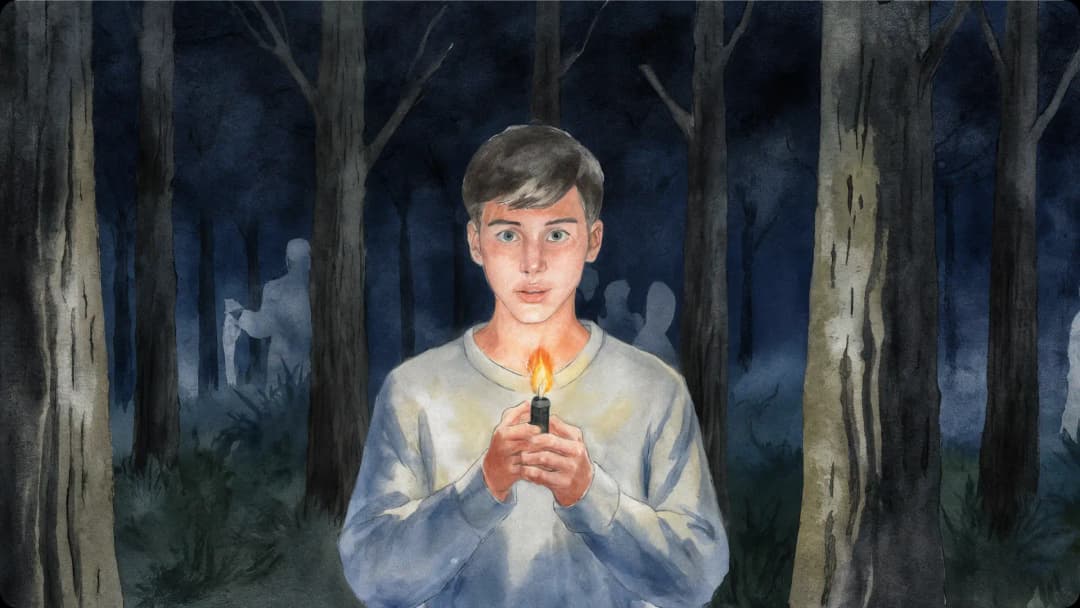
Your daily life is full of pressure: you wake up in the morning and feel afraid of the upcoming work presentation, the need to meet new people, or the possibility that something might go wrong for no clear reason. This fear of everything and constant anxiety make everyday situations feel overwhelming and seem like you’re losing control.
Here, we’ll explore the roots of being scared all the time and provide helpful tips on how to stop being scared.
Identifying the roots: Why am I always scared of everything?
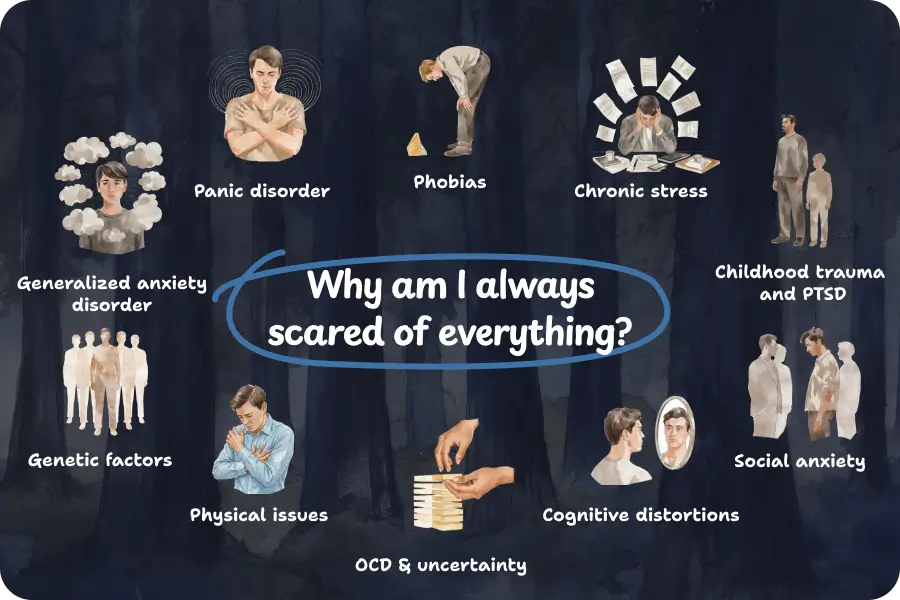
You may be scared of everything due to generalized anxiety disorder, childhood trauma, cognitive distortions, and genetic factors. Let’s explore these and other factors that may cause fear and anxiety in detail.
1. Generalized anxiety disorder (GAD)
GAD is a mental health condition characterized by persistent, excessive worry that exists for the majority of the day, even when there is little reason to worry. It can involve such symptoms as:
- Tachycardia (chest pain)
- Psychomotor restlessness
- Chronic muscle tension, particularly in the neck and shoulders
Unlike situational fear, generalized anxiety disorder functions as a baseline “background noise” that impairs executive function and sleep.
2. Panic disorder
Panic disorder means having recurring panic attacks that seem to come out of nowhere. These are sudden waves of intense fear that build up very quickly, often within minutes.
Those who live with panic disorder may face a “fear of fear” cycle. You start paying close attention to every small bodily sensation, like a slightly faster heartbeat, and may read it as a sign that a panic attack is about to happen. That thought alone can make you feel anxious and keep the cycle going.
3. Social anxiety
Maybe you don’t experience fear of everything but rather feel scared of the social situations you’re in. People with social anxiety may feel afraid to say or do something wrong because they believe that others might make fun of them or quietly judge them.
Imagine that you need to speak in a daily meeting. For many people, it can be something they don’t worry about at all. However, those living with social anxiety may start worrying long before it even begins — thinking about what to say, how they’ll sound, or what others might think. And even after the situation is over, they may replay it again and again, focusing on what they think went wrong.
This constant pressure can lead to negative thoughts about yourself, low self-esteem, and constant fear and anxiety.
Expert Insight
There is a strong relationship between most mental health conditions and anxiety. For example, there is high co-morbidity between depression, PTSD, and eating disorders and anxiety. In many cases, symptoms in one condition can exacerbate symptoms in another condition, and it is also common for symptoms to overlap.

Nicole Arzt
Mental health professional
4. Phobias
A phobia is an intense, irrational fear of a specific object, place, or situation. Some people may be afraid of spiders; others fear heights or things like flying and enclosed spaces.
While most of these phobias don’t interfere much with daily life because you can usually just avoid the trigger, this is not always the case. For example, agoraphobia can be more limiting. It involves fear of situations where escape might feel difficult or help wouldn’t be easily available, such as crowded places, public transport, or being far from home.
Agoraphobia may lead to avoiding everyday activities altogether, making even simple outings feel overwhelming.
5. Chronic stress
Often, the answer to “Why am I scared of everything?” lies in the way you live. If you lack rest and quality sleep and your everyday life is full of challenges (from constant deadlines to ongoing arguments at home), your nervous system doesn’t get a chance to recover.
Several factors can quietly make ongoing feelings of fear and anxiety worse. These may include:
- Too much caffeine
- Lack of physical movement
- Never having true downtime
- Skipping meals
- Irregular routines
- Too much screen time
When this tension builds up, your brain begins to expect stress everywhere. As such, you may feel like you’re scared of everything because your system hasn’t had a chance to reset and feel safe again.

6. Childhood trauma and PTSD
People who faced traumatic events may have their fight-or-flight mode constantly “activated.” [1] Felim Murphy, Anurag Nasa, Dearbhla Cullinane, Kesidha Raajakesary, Areej Gazzaz, Vitallia Sooknarine, Madeline Haines, Elena Roman, Darren William Roddy. “Childhood Trauma, the HPA Axis and Psychiatric Illnesses: A Targeted Literature Synthesis.” Frontiers in Psychiatry. 2022
If a child grows up in an environment of neglect, betrayal, or physical or emotional abuse, they can start to see the world as unsafe by default. Instead of learning that danger is occasional, their brain learns that it’s constant.
This pattern doesn’t just disappear with age. As an adult, you may still react to ordinary situations as if they carry a hidden threat. Small conflicts may seem overwhelming, and your body can stay tense even when nothing is actually wrong.
You may also face subtle triggers like a sound, a smell, or even a thought from the past that brings back the same intense reactions. Because of them, everyday life can start to feel unpredictable and more dangerous.
7. Black-and-white thinking and other cognitive distortions
When the world is only black and white, and everything you do is either right or wrong, it can feel like making a mistake is almost inevitable. This is just one example of what’s known as cognitive distortions — mental habits that make situations seem worse or more threatening than they actually are.
For instance, you might fall into:
- Catastrophizing (imagining the worst possible outcome)
- Mind reading (assuming others think badly of you without proof)
- Overgeneralizing (believing that one mistake means you always fail)
- Personalization (taking things personally, even when they’re not about you)
- Fortune-telling (expecting something to go wrong before it happens)
- Emotional reasoning (“I feel anxious, so something must be wrong”)
That’s when it can start to feel like you’re scared of everything — not because every situation is risky, but because your thinking keeps turning them into one.
Think cognitive distortions might be affecting your mental state? Try journaling with Breeze to spot harmful thought patterns and gradually change them.
8. OCD & uncertainty
People with obsessive-compulsive disorder may live with a strong need for certainty and control. Even small doubts can make them feel nervous and lead to overthinking.
This “need for 100% certainty” might slowly turn into a fear of anything unknown. Since life is often unpredictable, the mind begins treating uncertainty itself as something dangerous. As a result, people might perceive even something pleasant like a trip with loved ones or a friendly gathering out of town as a source of clear danger.
9. Physical issues
Sometimes the feeling of being “scared of everything” can come from what’s happening in your body. When your internal systems are imbalanced, the brain can misinterpret physical signals as danger.
For example, an overactive thyroid, low levels of key nutrients (like magnesium or B vitamins), poor gut health, or drops in blood sugar can create symptoms like a racing heart, weakness, or shakiness. These sensations are uncomfortable, and the brain may interpret them as fear.
Nicole Arzt, LMFT, explains how to understand that the feeling of “fear of everything” stems from physical issues, not psychological challenges. “Because the mind and body are intertwined, physical symptoms can manifest as anxiety or augment anxious symptoms. It can be hard to recognize that the roots are physical, which is why ongoing medical monitoring may be important. Regardless, it’s important to remember that a stressed body can result in an anxious mind.”
10. Genetic factors
Some people are simply born with a more sensitive nervous system. [2] Sawyers C, Ollendick T, Brotman MA, Pine DS, Leibenluft E, Carney DM, Roberson-Nay R, Hettema JM. “The genetic and environmental structure of fear and anxiety in juvenile twins.” Am J Med Genet B Neuropsychiatr Genet. 2019 Genes can affect how quickly your brain “clears” stress chemicals and how strongly your fear system reacts.
For example, some variations make it harder to switch off stress signals, so anxiety can last longer after a stressful moment. Others make the brain’s alarm system more reactive, so it triggers faster and more easily. And if anxiety runs in your family, you may have a higher risk of being more cautious and alert by default.
Why am I suddenly scared of everything? The biology of an ongoing fear
Pervasive fear often comes down to a shift in how your nervous system functions. After experiencing stress, the nervous system struggles to quickly return to its baseline state, known as homeostasis, and instead remains in a state of heightened alertness.
This is a form of biological dysregulation where your fight-or-flight response remains constantly activated. [3] Steimer T. “The biology of fear- and anxiety-related behaviors.” Dialogues Clin Neurosci. 2002
The role of the amygdala
The amygdala is the part of your brain that scans for danger. In a balanced state, the prefrontal cortex helps keep it in check, reminding you when something isn’t actually a threat.
But with ongoing stress, this balance becomes disrupted. The amygdala starts reacting too quickly and too strongly — a reaction often called an amygdala hijack. When that happens, your rational brain can’t step in fast enough, and your body responds as if you’re in danger, even when you’re not. [4] Andolina D, Maran D, Valzania A, Conversi D, Puglisi-Allegra S. “Prefrontal/amygdalar system determines stress coping behavior through 5-HT/GABA connection.” Neuropsychopharmacology. 2013
As a result, things like a presentation or meeting new people can feel as intense as a real threat.
Hyperstimulation
This overreaction influences your brain chemistry. Your nervous system works like a “gas and brake” system, where some signals speed things up, and others slow them down.
- The main “gas” is glutamate — it activates your brain and keeps it alert.
- The “brake” is GABA — it helps you relax and calm down.
When you’re under constant stress, this balance shifts. Glutamate stays too active, while GABA doesn’t do enough to slow things down. As a result, your brain remains in a state of constant firing.
If you face everyday stressors, this creates what’s called sensitization: your system becomes overly reactive. As a result, even small triggers, like a message, a meeting, or even a random thought, can make you feel scared all the time, as if something serious is happening. [5] Xu S, Liu Y, Pu J, Gui S, Zhong X, Tian L, Song X, Qi X, Wang H, Xie P. “Chronic Stress in a Rat Model of Depression Disturbs the Glutamine-Glutamate-GABA Cycle in the Striatum, Hippocampus, and Cerebellum.” Neuropsychiatr Dis Treat. 2020
The threshold effect
This heightened sensitivity typically doesn’t arise spontaneously. It is typically the result of reaching a biological breaking point. Common triggers include:
- Accumulated stress that raises anxiety levels daily.
- Hormonal fluctuations, particularly in cortisol, can make your brain more reactive to stress.
- Blood sugar drops. When glucose levels fall, your body releases epinephrine, which can feel like sudden anxiety.
Common mistakes that make fear and anxiety grow
You live with this constant feeling, “I’m scared,” and try to do everything to make it go away. However, some strategies may be harmful rather than helpful.
Avoidance
You might avoid the party where you don’t know anyone or skip the gym because you feel shy to train around other people. Nevertheless, constant avoidance actually backfires.
The problem is that avoidance teaches your brain that the situation really was dangerous. Each time you step away, your nervous system “learns” that escape was necessary. Because of this, fear may become stronger and more sensitive, and even more situations start to feel unsafe.
Unhealthy coping strategies
You may want to cope with your anxiety by turning to alcohol, overeating, or endlessly scrolling through your phone to distract yourself. These things can numb the feeling for a while, but they don’t solve the problem. They may also worsen your physical symptoms of fear and make the world seem more dangerous.
How to stop being afraid of everything: A step-by-step recovery path from anxiety symptoms
1. Immediate relief for when you feel scared
The first thing you need to know is how to calm down in the moment. Use these techniques.
5-4-3-2-1 grounding technique
This method helps bring your attention back to the present and shift focus from anxious thoughts. Name 5 things you can see, 4 you can touch, 3 you can hear, 2 you can smell, and 1 you can taste. Then take a deep breath and think about something pleasant.
Physiological sighs
Take a deep inhale through your nose, then add a short second inhale, and slowly exhale through your mouth. This type of breathing can be effective for both people experiencing panic attacks and recurring anxiety symptoms.
Talk to a trusted friend or family member
Sharing what you feel can make the fear less intense, and it can offer a sense of separation from the problem at hand. A calm voice and reassurance from someone you trust might help your mind step out of panic mode and feel safer.
2. Rewiring brain chemistry through micro-exposures
Next, you need to teach your mind that the world is safer than you may think. One of the most effective ways to do this is through taking small, manageable steps that expose you to your own fears.
Instead of trying to do the whole thing, aim for just 1/3 of the task. If going to the gym feels scary, simply walk in and stay for a few minutes. If socializing feels hard, say a few words rather than having a long conversation.
These small actions signal to your brain that nothing bad is happening, and over time, your fear response starts to weaken. Step by step, your comfort zone expands without pushing yourself too far.
3. Shifting the narrative when you feel scared
Finally, you need to understand that even if you feel scared all the time, most things are threatening only in your head. Your mind tends to overestimate danger and underestimate your ability to cope. Here’s how to shift the narrative.
Limit “fear input” from your environment
Today, your brain is constantly fed with negative news. Instagram, TikTok, and Threads create what you can think of as algorithmic anxiety: your mind starts to feel like danger is everywhere, even if it’s far away from your real life. Try reducing how much content you consume, as it helps you focus on your life and well-being.
Approach your avoidance differently
You may think that it’s procrastination, but in reality, it’s often survival-based task avoidance. Your brain is trying to protect you from failure, rejection, or discomfort. In contrast, you need to “teach” your brain that nothing dangerous happens, even if past experiences made it feel that way.
Use a “safety anchor”
Instead of forcing yourself to fully face fear, take something that helps you feel grounded. It can be a small object like a ring, a bracelet, or even something in your pocket that you can touch when you feel anxious. It can also be a short phrase you repeat to yourself or a person you know you can reach out to.
Focus on manageable steps, not big outcomes
Your mind gets overwhelmed when it jumps too far ahead. Bring it back to something simple: What’s one small thing I can do right now? This keeps fear from growing into something bigger than it is. It also orients you to focus more on what you can control.
Long-term strategies: How to stop being fearful for good
For pervasive anxiety that doesn’t resolve with lifestyle changes, a more structured clinical approach and a mental health professional’s help may be necessary.
- Cognitive behavioral therapy (CBT) is the gold standard for treating generalized fear. It helps you identify the cognitive distortions and systematically tests them against reality until the fear loses its power.
- Medical evaluation helps rule out an underlying medical condition. Issues like thyroid imbalances or vitamin deficiencies can mimic anxiety or aggravate underlying anxiety symptoms. A simple blood test can reveal if certain physical symptoms need medical attention.
- Anti-anxiety medications may be helpful in cases where panic or anxiety are not as well-managed by therapy or lifestyle interventions alone. They help rebalance the glutamate-GABA ratio, lowering the baseline noise so you can focus on the long-term work of recovery.
Frequently asked questions
Is it normal to be scared every day?
Occasional anxiety is a normal, healthy response to stress or a specific threat. However, feeling excessively scared every day warrants more support. If fear is constant and interferes with your ability to work, sleep, or maintain relationships, it suggests your nervous system is stuck in a state of chronic high alert, and you may need to pay attention to your well-being.
Why might I be feeling afraid all the time?
You might feel frightened and stressed due to:
- Chronic stress
- Childhood trauma and PTSD
- Anxiety disorders
- Cognitive distortions
- Phobias
- Physical and genetic factors
How do I stop being scared of everything?
Recovery involves a complex approach: immediate physical regulation and long-term rewiring.
- Physically. Use relaxation techniques like the “physiological sigh” or the 5-4-3-2-1 grounding technique to calm your body in the moment.
- Psychologically. Practice facing small fears in tiny, manageable steps to prove to your brain that you are safe. These small wins expand your comfort zone and weaken the fear response.
Can anxiety cause chest pain?
Yes. When you are afraid, your body releases adrenaline and cortisol, which tighten muscles and increase your heart rate. This often causes a sharp or tight sensation in the chest. While it is always important to rule out an underlying medical condition with a doctor, chest pain is one of the most common physical symptoms of intense anxiety and panic attacks.
Sources
- Felim Murphy, Anurag Nasa, Dearbhla Cullinane, Kesidha Raajakesary, Areej Gazzaz, Vitallia Sooknarine, Madeline Haines, Elena Roman, Darren William Roddy. “Childhood Trauma, the HPA Axis and Psychiatric Illnesses: A Targeted Literature Synthesis.” Frontiers in Psychiatry. 2022
- Sawyers C, Ollendick T, Brotman MA, Pine DS, Leibenluft E, Carney DM, Roberson-Nay R, Hettema JM. “The genetic and environmental structure of fear and anxiety in juvenile twins.” Am J Med Genet B Neuropsychiatr Genet. 2019
- Steimer T. “The biology of fear- and anxiety-related behaviors.” Dialogues Clin Neurosci. 2002
- Andolina D, Maran D, Valzania A, Conversi D, Puglisi-Allegra S. “Prefrontal/amygdalar system determines stress coping behavior through 5-HT/GABA connection.” Neuropsychopharmacology. 2013
- Xu S, Liu Y, Pu J, Gui S, Zhong X, Tian L, Song X, Qi X, Wang H, Xie P. “Chronic Stress in a Rat Model of Depression Disturbs the Glutamine-Glutamate-GABA Cycle in the Striatum, Hippocampus, and Cerebellum.” Neuropsychiatr Dis Treat. 2020
Disclaimer
This article is for general informative and self-discovery purposes only. It should not replace expert guidance from professionals.
Any action you take in response to the information in this article, whether directly or indirectly, is solely your responsibility and is done at your own risk. Breeze content team and its mental health experts disclaim any liability, loss, or risk, personal, professional, or otherwise, which may result from the use and/or application of any content.
Always consult your doctor or other certified health practitioner with any medical questions or concerns
Breeze articles exclusively cite trusted sources, such as academic research institutions and medical associations, including research and studies from PubMed, ResearchGate, or similar databases. Examine our subject-matter editors and editorial process to see how we verify facts and maintain the accuracy, reliability, and trustworthiness of our material.
Was this article helpful?