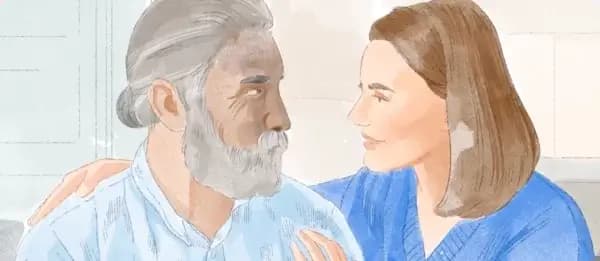


The term “daddy issues” is a common description of a complex emotional experience and unresolved emotional conflicts that are rooted in the relationships with a father or another significant male caregiver in a daughter’s or son’s life.
Can your father’s presence (or absence) continue to affect your feelings, insecurities, and even the people you choose to date today? Take a 5-minute ultimate daddy issues test to find out.
Take the “daddy issues” test
Daddy issues explained: How the relationship with your father figure affects your adult life
Do you find yourself seeking approval, drawn to an emotionally unavailable person, or dealing with trust issues? These patterns might repeat because your relationship with your parents, especially your dad, still plays a role.
A significant number of individuals are raised in households where their fathers are either physically or psychologically absent. For example, 2022 data indicates that one in four children has no father in the household, as per the U.S. Department of Justice. [1] McLanahan, S., Tach, L., & Schneider, D. (2013). The Causal Effects of Father Absence. Annual review of sociology.
Nevertheless, this experience has the potential to impact anyone who has a troubled childhood due to a lack of a father figure, biological father, or other male caregiver. This is similar to an experience with other paternal figures, so-called “mommy issues.”
This issue was the subject of a study published by Sara McLanahan, Laura Tach, and Daniel Schneider. As the authors point out, social and emotional skills are important for adult outcomes like going to college, starting a family, and being successful in the job market and the labor force. [1] McLanahan, S., Tach, L., & Schneider, D. (2013). The Causal Effects of Father Absence. Annual review of sociology.
Another study shows that people with daddy issues are more likely to have depression later in life. [2] U.S. Census Bureau. (2023). “Living arrangements of children under 18 years old: 1960 to present.” Washington, D.C.: U.S. Census Bureau. Additionally, as Dr. Mark Borg Jr., PhD, author of “How We Use Dysfunctional Relationships to Hide From Intimacy,” states, fatherless children often attempt to compensate for the absence of the primary caregiver in their lives.

How to know if you have daddy issues?
Daddy issues typically arise from unhealthy or toxic dynamics in relationships between a father and a child. Here’s a list of the most common manifestations of daddy issues that you can notice in your behavior.
1. You feel anxious when trusting others
Trusting people, especially men, can feel like a big challenge. You may seek constant validation to feel secure in relationships and worry that your partner might leave at any moment or take advantage of your vulnerabilities.
2. You face challenges in building emotional connections
Due to the fear of being left behind, expressing emotions can feel challenging to you. You can seem distant, struggle to show affection, or need a very long time to open up to the person.
3. You question your worth
You might live with a feeling, “something is definitely wrong with me.” Because of this, setting boundaries and protecting your peace may be challenging, as you tend to over-give to “deserve” love and care.

4. You get irritated easily
You might have a short fuse if you grew up feeling that your emotions were difficult to express around your father. As an adult, you may become especially sensitive to rejection, criticism, or situations that make you feel unheard.
5. You are jealous and possessive
Such feelings might stem from the fear that other people might leave you easily or consider you “unimportant” in their lives (even when it isn’t true).
6. You’re looking for someone to replace your father’s figure and trying to get “father’s” approval
People with daddy issues may experience a lack of self-sufficiency and look to others for the validation they feel they missed growing up. You may try to “fix” unresolved problems from childhood through your relationships, seeking approval from older partners to finally feel “good enough.”
7. You live with an insecure attachment
Attachment wounds from childhood can influence the way you form adult relationships and behave with your partners. There are 3 types of insecure attachment styles; each can be formed if a person experiences daddy issues:
Can you have daddy issues even if your father was physically present?
Yes, you might live with daddy issues even if your father was physically present in your childhood. “Daddy issues” may stem from a lack of attention, care, and connection rather than simply the person’s existence. As such, it’s possible to experience daddy issues if your dad was:
Do men have daddy issues, too?
Yes, both men and women might experience daddy issues. Because of them, men may choose emotionally unavailable partners, experience challenges with communication, or struggle to trust others. They may also carry hurt from childhood, experience anxiety or depressive feelings, or feel a strong need to prove themselves and earn their father’s approval through success.
How to get over ultimate daddy issues
Here are some tips from Viviana Greco, PhD, for taking care of yourself if your relationship with your father still affects your life:
- Discover yourself with the Breeze app, which allows you to learn more about your behavior patterns and personality. For instance, take more quizzes about your attachment style, love language, and childhood trauma, and gain valuable insights that will help you know yourself better.
- Build self-compassion and empathy by treating yourself with the same kindness and understanding you would offer a friend.
- Surround yourself with supportive and nurturing relationships.
- Seek support in groups or communities that have a similar experience with you
- Engage in activities that make you feel competent and fulfilled, such as hobbies, fitness, or learning something new.
- Practice mindfulness or journaling, for example, in the Breeze app.
If you can’t handle conflicts or the outcomes of past wounds on your own, seeking professional advice from a licensed therapist is the best option.
Frequently asked questions
Can I have daddy issues even if my father was around?
Yes. Having a father who was physically present doesn’t necessarily mean that this relationship met all of your needs. If you lacked attention, love, or emotional involvement, you might still live with daddy issues.
Does this daddy issues quiz provide a real diagnosis?
No, daddy issues isn’t a formal diagnosis, so neither this test nor other tests on this topic can provide a clinical assessment. The test only aims to clarify how relationships with your father influenced your adulthood, emotional patterns, and ability to build relationships with others.
What's the difference between daddy issues and mommy issues?
Daddy issues usually have to do with feeling like you’re not good enough. This stems from having a dad (or a parent figure) who was distant, critical, or unavailable.
Mommy issues tend to have more to do with how challenging it is to feel safe and emotionally secure. It’s about difficulty getting close to people or vacillating between needing someone and being pushy. This phenomenon usually has to do with a mom who was unpredictable or ignorant.
Do men experience daddy issues differently from women?
There’s no single way men and women might experience daddy issues. Some seek their father’s approval (sometimes trying to get it from other people) while others develop insecure attachment styles or feel excessively focused on achievement and competition.
How do people with daddy issues handle conflicts?
Depending on their experiences, someone might avoid conflict, become overly defensive, try hard to please others, fear rejection, or struggle to handle criticism or disapproval.
Sources:
- McLanahan, S., Tach, L., & Schneider, D. (2013). The Causal Effects of Father Absence. Annual review of sociology.
- U.S. Census Bureau. (2023). “Living arrangements of children under 18 years old: 1960 to present.” Washington, D.C.: U.S. Census Bureau.
- Culpin, I., Heuvelman, H., Rai, D., Pearson, R. M., Joinson, C., Heron, J., Evans, J., & Kwong, A. S. F. (2022). Father absence and trajectories of offspring mental health across adolescence and young adulthood: Findings from a UK-birth cohort. Journal of affective disorders.
Disclaimer
This article is for general informative and self-discovery purposes only. It should not replace expert guidance from professionals.
Any action you take in response to the information in this article, whether directly or indirectly, is solely your responsibility and is done at your own risk. Breeze content team and its mental health experts disclaim any liability, loss, or risk, personal, professional, or otherwise, which may result from the use and/or application of any content.
Always consult your doctor or other certified health practitioner with any medical questions or concerns
Breeze articles exclusively cite trusted sources, such as academic research institutions and medical associations, including research and studies from PubMed, ResearchGate, or similar databases. Examine our subject-matter editors and editorial process to see how we verify facts and maintain the accuracy, reliability, and trustworthiness of our material.
Was this article helpful?