


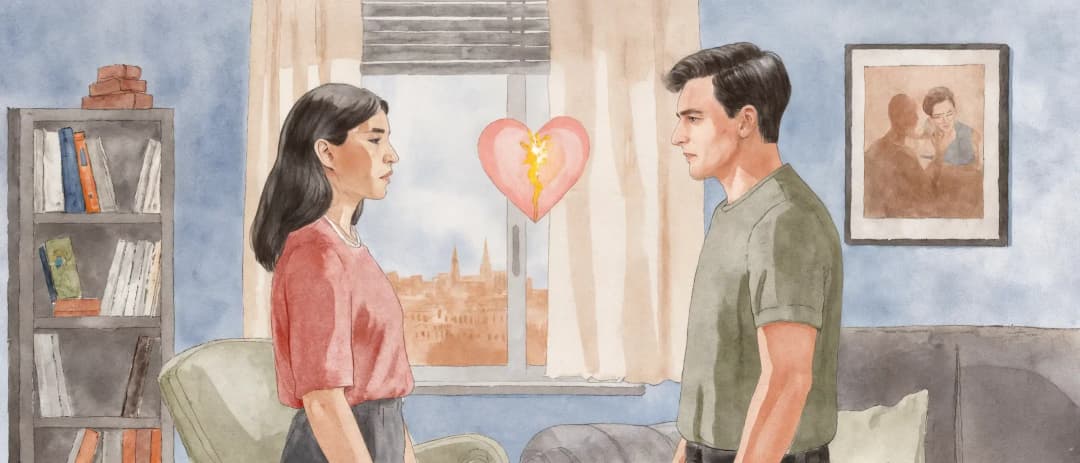
Let’s explore the possible reasons your boyfriend said “I hate you” in an argument and the key questions to ask yourself before deciding what to do next.
7 Possible Explanations Why Your Boyfriend Said “I Hate You” During an Argument
Did he really mean it, or was it just anger talking? Should you forgive him or see it as a warning sign? Looking at the situation from different perspectives may help you better understand what happened and decide how to move forward.
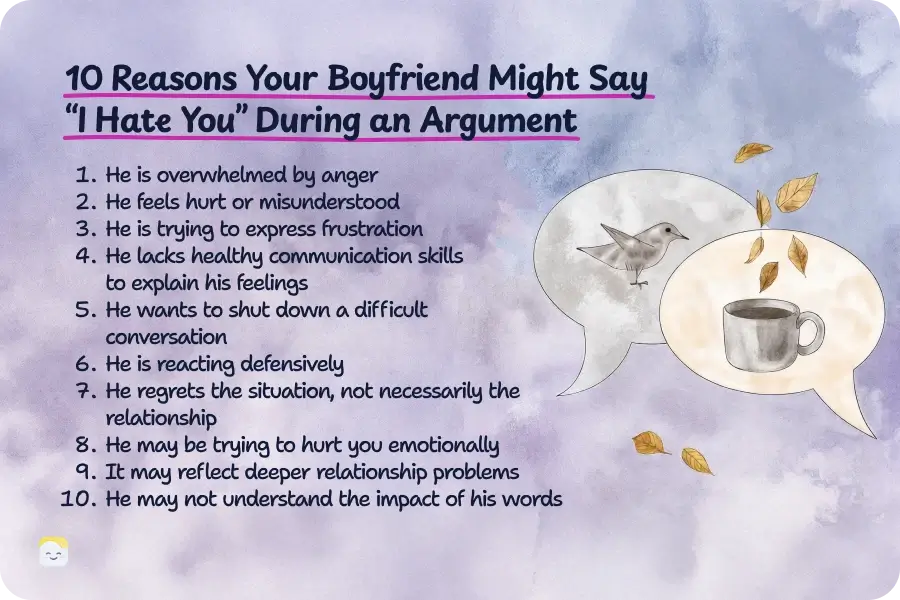
1. The words may come from anger, not true feelings
Anger can make people express emotions in a harsh way. When they feel hurt, overwhelmed, or defensive, they may say things they later regret. In some cases, “I hate you” is not a literal expression of hatred but an emotional outburst meant to communicate frustration, pain, jealousy, or feeling misunderstood [1] Jose I. Navarro. The Psychology of Hatred. April 2013 . However, the impact of those words still matters.
Do you wonder whether your partner is a narcissist and may be trying to harm your self-esteem? Take the test to identify manipulative behavior.

2. He wanted to end the argument quickly
Extreme statements can sometimes be used as a way to shut down a difficult conversation. When an argument feels emotionally exhausting or overwhelming, saying something shocking like, “I hate you,” may be an attempt to end the conversation rather than continue discussing the issue.
This reaction can stem from frustration, emotional fatigue, or an inability to cope with conflict. However, ending an argument this way is not a healthy conflict-resolution strategy. Hurtful words may stop the conversation temporarily, but they often leave lasting emotional pain and create new problems that need to be addressed.
3. He was reacting defensively
Feeling criticized or attacked can cause someone to respond with anger instead of understanding. Telling you, “I hate you,” may be a defensive response intended to protect themselves from feelings of guilt, shame, or vulnerability.
Defensive reactions often occur when a person struggles to handle criticism, even if it is constructive [2] Samantha J. Shebib. Communication killers: how arguing can be lethal. February 2023 . Instead of addressing the issue at hand, they may lash out, shift the focus, or use harsh words to create emotional distance. While feeling defensive is a common human reaction, it does not justify hurtful language.
4. He lacks healthy communication skills
Some people struggle to explain their feelings and resort to hurtful statements during conflict. In reality, this doesn’t necessarily mean he truly hates you. In some cases, it reflects an inability to manage strong emotions or communicate them effectively during conflict.
People who haven’t developed healthy conflict-resolution skills may default to insults, blame, or extreme language because they don’t know how to have productive conversations when tension feels high [3] Aniekan L. Nyarks. Impact of Effective Communication in a Marriage. August, 2023 .
Want to improve your own communication and become a more supportive girlfriend or wife? Take the Emotional Intelligence Test to gain insights into your behavior patterns and learn how to build healthier relationships.
5. He may be trying to hurt you emotionally
In some cases, hurtful words are used intentionally to punish, control, or gain power during a disagreement. If your boyfriend regularly uses insults, cruel remarks, or emotionally damaging statements whenever you disagree, it could be an unhealthy pattern of communication.
Take insightful tests in the Breeze app to spot a narcissist, find out your attachment style, recognize the signs of emotional abuse, and much more.

6. It may reflect deeper relationship problems
Such statements can indicate unresolved resentment, ongoing communication problems, or growing emotional distance between you. Instead of addressing the root causes of conflict, you and your partner may continue to build lasting disappointment and dissatisfaction until you express them in unhealthy ways.
Eventually, arguments may become more frequent and more intense, with both partners showing hostility and resorting to hurtful language.
7. He may not understand the impact of his words
Some people underestimate how deeply hurtful words can affect their partner. In the heat of an argument, your boyfriend may say something like, “I hate you,” without fully realizing the emotional impact it will have or how long those words may stay with you.
This lack of awareness can stem from emotional immaturity, poor communication skills, or growing up in an abusive family where harsh language during conflict was considered normal. He may assume that once the argument is over, everything should go back to normal, without recognizing that trust and emotional safety may have been damaged.
A One-Time Mistake or a Toxic Relationship? 2 Questions to Help You Decide & Protect Your Mental Health
Hearing the words “I hate you” from someone you love can feel deeply painful and can stay in your mind long after the disagreement ends, leaving you questioning the relationship, your worth, and whether your partner truly meant what he said. Here are important things to consider:
1. What happens after the argument?
After the fight has cooled down, it can help to have an honest conversation. Instead of focusing only on the words themselves, try to understand what happened before your boyfriend or husband said them.
- Did he apologize afterward and admit that it was wrong?
- Did he take genuine responsibility for hurting you?
His response after the argument can reveal a lot about his ability to communicate and repair the relationship. If this was a one-time mistake followed by a sincere apology and changed behavior, it may be possible to rebuild the connection. Life partners may feel angry and have disagreements, but they learn to express those emotions without attacking each other.
Expert Insight
Ultimately, trust is defined by how others act, not what they say. Apologies do not carry much weight if someone continues to hurt you. You deserve respectful communication, even during states of conflict. If your partner continues to hurt you emotionally, this is potentially a sign of something more serious, including emotional abuse.

Nicole Arzt
Mental health professional
2. Are there signs of emotional abuse?
One painful comment during a heated moment is different from repeated insults. If he frequently uses hurtful words, puts you down, blames you for his behavior, or makes you feel afraid to express yourself, it may be a sign of abuse.
Pay close attention to his reactions after the conflict, as they make things worse and create even more emotional harm. Warning signs include:
- refusing to take responsibility for his actions
- shifting the blame and saying that it’s all your fault
- bringing up unrelated mistakes and conflicts from the past
- portraying himself as the victim
- minimizing your feelings by saying “it’s not a big deal” or “you’re too sensitive,”
- giving you the silent treatment for days or even weeks, waiting for you to make a first move and to apologize.
Consider the overall pattern of your relationship:
- Are conflicts becoming more common?
- Do you feel heard and respected?
- Can you talk openly after conflicts?
- Are problems being resolved, or do they keep resurfacing?
Expert Insight
Can a relationship recover after someone says, “I hate you”? It depends on the context. If it’s an isolated statement, it’s possible. If it becomes more of a repeated phrase- or if there are other concerning red flags- it’s a sign of serious communication problems that likely need further addressing.
Nicole Arzt
Mental health professional
Final Words
You deserve kindness and respect, even during disagreements. Being told “I hate you” by someone you love can make you feel sad, rejected, and confused. Furthermore, regardless of the context, a loving partner should be willing to recognize when their words cause harm and work toward healthier ways of handling disagreements.
Remember:
- Words spoken in anger can sometimes be repaired, but cruelty should not become normal.
- A healthy relationship is built on understanding, empathy, and care, and requires both partners to learn how to express their feelings respectfully and take responsibility for hurtful behavior.
Frequently asked questions
1. Does my boyfriend really hate me if he said, "I hate you," during an argument?
Not necessarily. People sometimes impulsively say things they don’t truly mean when they are overwhelmed by anger or frustration. However, impact matters, and the words are still hurtful, and what matters most is how your boyfriend responds afterward. A sincere apology and changed behavior are signs that he regrets what he said.
2. Should I forgive my boyfriend for saying "I hate you"?
That depends on the circumstances. If it was an isolated incident and he genuinely apologizes, takes responsibility, and makes an effort to communicate more respectfully, forgiveness may be possible. If he repeatedly uses hurtful language or refuses to acknowledge the impact of his words, the issue may be more serious.
3. Is saying "I hate you" during an argument emotional abuse?
One hurtful comment does not automatically define a relationship, but repeated patterns of disrespect should not be ignored. If your boyfriend regularly insults, belittles, threatens, manipulates, or intentionally says hurtful things to control or punish you, it may be part of an emotionally abusive pattern.
4. How should I respond if my boyfriend says he hates me?
Avoid reacting impulsively while emotions are high. Once both of you have calmed down, tell him how his words affected you and ask whether he truly meant what he said. Pay attention not only to his explanation but also to whether he accepts responsibility and is willing to change.
5. When should I consider ending the relationship?
If your boyfriend treats you poorly and repeatedly uses hurtful language, refuses to take responsibility, minimizes your feelings, or makes you experience anxiety and feel consistently unhappy, disrespected, and emotionally or physically unsafe, it may be time to reconsider the relationship.
Sources
- Jose I. Navarro. The Psychology of Hatred. April 2013
- Samantha J. Shebib. Communication killers: how arguing can be lethal. February 2023
- Aniekan L. Nyarks. Impact of Effective Communication in a Marriage. August, 2023
Disclaimer
This article is for general informative and self-discovery purposes only. It should not replace expert guidance from professionals.
Any action you take in response to the information in this article, whether directly or indirectly, is solely your responsibility and is done at your own risk. Breeze content team and its mental health experts disclaim any liability, loss, or risk, personal, professional, or otherwise, which may result from the use and/or application of any content.
Always consult your doctor or other certified health practitioner with any medical questions or concerns
Breeze articles exclusively cite trusted sources, such as academic research institutions and medical associations, including research and studies from PubMed, ResearchGate, or similar databases. Examine our subject-matter editors and editorial process to see how we verify facts and maintain the accuracy, reliability, and trustworthiness of our material.
Was this article helpful?