

Podcast name
Why do I feel like no one cares about me?
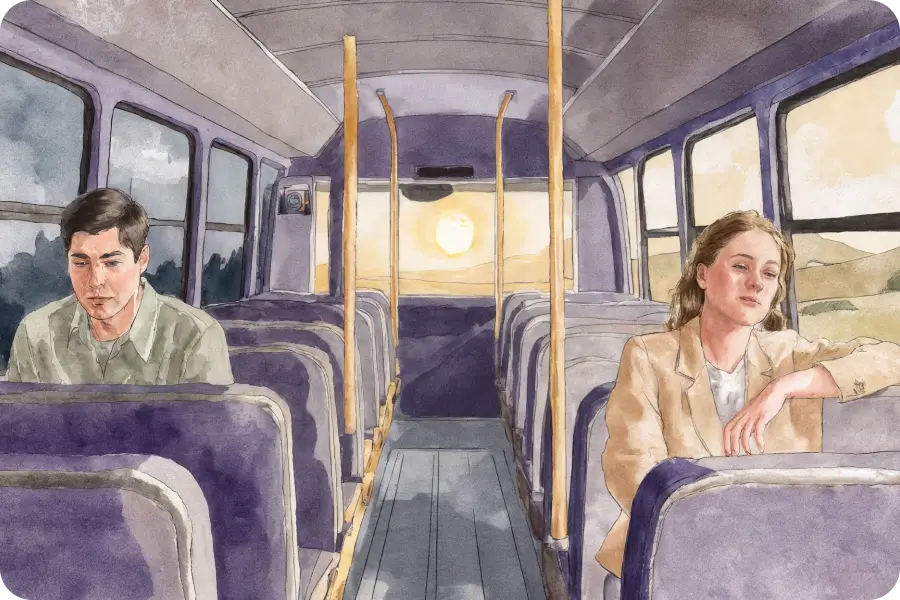
In a room full of people, you are lonely. People talk to you, but you don’t feel seen, maybe because they don’t ask questions or don’t touch on topics important to you. That can make an impression as if nobody cares about you, the real you.
In this article, we’ll explore five reasons why you might feel this way. Here, you will also find a seven-step guide on how to feel better about no one worrying about you. It’s time to learn: you have to stop caring about nobody caring.
5 Potential Reasons You Feel Like Nobody Cares about You
The way we feel loved is shaped by two things: the acts of the people around us and our perception of those acts. You may feel that nobody loves you when you are either mistreated or fail to recognize good things aimed at you.
Why can this happen? The reasons below are an excellent place to start looking for answers.
1. You experienced trauma
Traumatic experiences change the way our brains and psyche work. Trauma, at any age, but especially in childhood, teaches your body that it’s not safe around here. Your brain wants to protect you, so it develops coping strategies that tend to oversimplify things for survival, for example:
- When you did household chores as a child, your mom didn’t get angry as usual. → You learn that you can only be loved for doing something, not for simply existing.
- When you asked your narcissistic partner to plan your birthday, they told you that you asked for too much. → You become scared of your needs and learn to never express them again.
You are a result of your experiences. If you believe that no one cares about you, it could be true at some point in your life. And now you’re sensitive to signs of abandonment and resentment.
The common thing about trauma is that it makes you feel isolated. It doesn’t matter that you have a supportive family or a reliable partner: you can still feel lonely. In this state, it’s easy to start ruminating with thoughts like, “Nothing matters,” or “Nobody cares about me.”

2. You have social anxiety
Social anxiety is a fear or discomfort that occurs in social situations. Some signs that you might have social anxiety include:
- Intense fear of social situations
- Anxiety-related nausea
- Racing heartbeat
- Excessive sweating
- Feeling insecure
Social anxiety can make you overinterpret everything in conversations and social interactions. Here’s how overinterpretation can play out in your mind: “They said that they hate this movie, but the main actor plays in my favorite movie. So, it means that they must hate me.”
When you turn every detail into a catastrophe, one catastrophe you might face is the feeling that nobody cares about you. It doesn’t mean that people who surround you neglect you intentionally. It’s just an anxious thought, but it shouldn’t define you or your relationships or self-worth.
3. You don’t value yourself
You might believe that nobody cares about you because you might doubt that anybody can love you. You might subconsciously sabotage your relationships with loved ones to fit your belief system: “I have no one.”
In psychology, this pattern is called a “victim mindset,” when you believe you are a hostage of circumstances and, hence, justify your lack of change. This position is comfortable because it returns a sense of control: if I’m helpless, I might as well do nothing.
Similarly, you might believe that no one cares about you while doing nothing about this. You might avoid social gatherings or neglect quality time with your family. Feelings of loneliness and negative thoughts about yourself then confirm your belief that you can’t do anything about the situation.
4. Your relationships are unfulfilling
If you feel uncared for, it’s possible that people who surround you actually might not know you. Relationships might not fulfill you for various reasons:
- Your friends don’t share your interests or views, making you feel disconnected.
- People you talk to don’t meet your expectations of intimacy, e.g., they’re too shallow.
- You don’t express your needs and desires for how you’d like to be cared for.
- Your friends are actually toxic and try to take advantage of you.
We asked Rychel Johnson, licensed clinical professional counselor, how to tell the difference between people who care about you and those who just have boundaries,“Look at patterns of respect and accountability in the relationship. People who genuinely care about you—even when they set firm boundaries—tend to communicate their needs clearly and show empathy for your feelings. Their boundaries are about protecting their well-being, not controlling or punishing you. In contrast, toxic dynamics often involve patterns like manipulation, guilt-tripping, dismissing your feelings, or shifting blame so that your needs consistently feel invalidated.”
5. Low-effort relationships are not for you
Believe it or not, most relationships nowadays are low-effort. We live in an individualistic society that values personal freedom and satisfaction more than communal connections.
Most people will prioritize themselves. It’s become normal to meet friends just once a month because “we’re so busy at work.” It’s also normalized to call parents once a week because “there is just no time.”
Maybe you feel like no one genuinely cares because this low-effort system is just not for you. You may yearn for relationships as they used to be: without social media and the obligation to reciprocate.
How It Feels When Nobody Cares about You
Thinking that nobody likes you is painful. People need people. It’s among our primary needs to feel cared for and loved. When we lack this understanding, we might have the experiences described below. Do they sound familiar?
1. Only you make efforts to keep relationships alive
You might feel like you’re the only one responsible for maintaining relationships. It’s only you who initiates meetings; you make efforts to plan and bring loved ones together.
People still enjoy your company. But in a company of best friends, no one focuses on paying attention to you.
If you stop reaching out, they won’t reach out. They won’t ask what happened and might even appear unbothered. You might be tired of these toxic friendships, but you won’t let go of them because of the fear of being left alone.
2. You’re everyone’s support system
You get everybody perfect presents because you actually pay attention when people share their interests. You can understand your best friend just by making eye contact. But your empathy can actually feel like a curse in the absence of reciprocity, which feels like a personal rejection.
3. Nobody asks you questions
People feel cared for when other people show interest in them. It gives us a feeling that we’re not alone and are accepted in our communities.
But now you’re at a social function, and everybody seems to enjoy their time… without you. They didn’t ask for your opinion, or they constantly interrupted you to the point that you take things personally.
4. You don’t think you’re interesting
When we’re constantly left out of social situations, we might start digging in on ourselves, thinking, “Is there something wrong with me?” You might also start overthinking your behavior, competence, looks, beliefs, and ideas, even when one person talks over you.
Why Do We Need to Feel Cared for? Psychology Answers
People have needed other people since the beginning of time. From an evolutionary standpoint, it’s logical that people formed groups. It’s easier to raise children, get food, protect each other, and even deal with boredom.
One in six people admits they need to feel seen and cared for [1] Walther, L., Vogelsang, F., Thom, J., Hölling, H., Grobe, T. G., Frerk, T., Marschall, U., & Peitz, D. Assessing Perceived Need for Mental Healthcare Among Adults in Germany. International Journal of Public Health. June 2025. . Attachment theory claims that attachment to others is a foundation of our psychological well-being. We need other people, not just to feel safe, but to be heard and accepted.
Most people have had something painful in their lives that makes them feel misunderstood or neglected. When we have someone who will say, “It’s okay. I hear and accept you. I will help you get through this,” our confidence that we’ll eventually deal with it strengthens.
We need to feel cared for so much that if we have no one, our physical health is at risk. The study from Aging Clinical and Experimental Research found that loneliness increases all-cause mortality risk by 14%, and social isolation increases this risk by 35%! [2] Nakou, A., Dragioti, E., Bastas, N., Zagorianakou, N., Kakaidi, V., Tsartsalis, D., Mantzoukas, S., Tatsis, F., Veronese, N., Solmi, M., & Gouva, M. Loneliness, social isolation, and living alone: a comprehensive systematic review, meta-analysis, and meta-regression of mortality risks in older adults. Aging Clinical and Experimental Research. January 2025.
As a Roman playwright, Terence said long ago in 165 BCE, “I am human—nothing human should be alien to me.” This quote means that we depend on other people evolutionarily, whether we like it or not.
Feeling Unappreciated is a Thinking Trap
The truth is, you feel like no one cares because you believe in this. This belief forms a vicious self-fulfilling prophecy that constantly plays out in your own mind. Here’s how it may look:
- Oliver believes that nobody loves or needs him.
- He isolates himself and becomes grumpy to protect himself.
- Other people notice this behavior and keep their distance because they believe it’s what Oliver wants.
- Oliver remains alone and convinces himself even more that nobody cares about him.
What you need to do to break the cycle is to stop caring so much. Suppose no one cares about you, so what? You can meet other people; there are plenty of fish in the sea. You have yourself and your self-love matters the most.
The fact that nobody cares about you can be freeing. Below, we explain how you can truly experience the autonomy of being free from the judgment of others.
How to Feel Better about No One Caring in 7 Steps
The goal of these seven recommendations is to refocus on yourself. This means stop caring about other people and bring responsibility and autonomy back into your hands. This new mindset has the potential to improve your self-esteem and self-reliance.
1. Healthy lifestyle as a foundation
A 2023 study found that self-esteem can be improved by balanced eating, physical exercise, and good rest, and decreased by tobacco and alcohol intake [3] Moreno, A. G., & Del Mar Molero Jurado, M. Healthy Lifestyle in Adolescence: Associations with Stress, Self-Esteem and the Roles of School Violence. Healthcare. December 2023. . Study participants didn’t feel better about themselves because they lost weight or had clearer skin. There weren’t, in fact, many changes in body image, but something changed in their mindset.
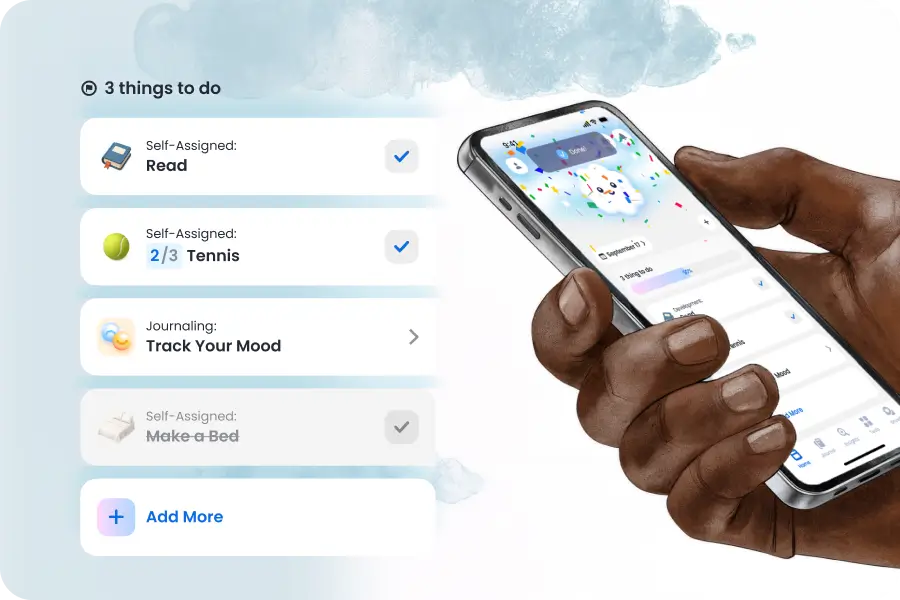
- Participants followed concrete, trackable goals that convinced them that they can rely on themselves. This can play a pivotal role in believing that you can take care of yourself and don’t need other people for this.
- Prioritizing good rest and physical exercise returned the participants’ sense of worth. It can encourage people to think, “I do so much for myself. My mind and body are worth protecting.”
2. Treat yourself with kindness
This is so far the most important step. You may feel like nobody cares because you don’t care about yourself. You know yourself the best, so treat yourself how you’d like other people to treat you.
If you struggle with self-love, here are three exercises that can boost your empathy for yourself:
- Friend technique. When you start to criticize yourself for a mistake or a flaw, imagine if your friend were in your shoes. Would you be as impatient with them? No, you’d support them and normalize their feelings. Now, treat yourself similarly.
- Imperfect perfection. Grab a piece of paper and journal for one minute. You can write, draw, or design it however you want. Maybe it didn’t turn out how you imagined it. It doesn’t matter as long as you enjoyed it and had fun. This exercise is meant to teach you that doing something imperfectly is more enjoyable than doing nothing at all.
- Affirmations. Take a daily affirmation from the Breeze app and write it down. Take a moment to think about how these words describe you. If an affirmation feels especially personal, set it as your device’s wallpaper, or set an alarm that will remind you of these words.
3. Learn about stoicism
Stoicism is a philosophical belief that there are some things in life we can and can’t control. Stoicism teaches that if a matter is within your control, you shouldn’t invest your time and effort in it.
You can’t control other people’s actions. According to stoicism, this means that you shouldn’t worry about them but focus on what you can do.
For example, you want people to care about you. Then, you have to meet different people, make an effort to get to know them, and build deep connections. What you shouldn’t do is suffer when they ghost or abandon you.
Expert Insight
A healthy balance between a Stoic mindset and emotional expression is recognizing that while you can’t control every event, your emotions are still meaningful signals worth acknowledging. Instead of suppressing emotions, you notice them with curiosity, validate them, and then choose how to respond rather than react. In this way, the mindset becomes: “I can’t control this outcome, but I can honor my feelings and decide how I want to move forward.”

Rychel Johnson
Mental health professional
4. Communicate your needs
A harsh truth about life is that other people can’t read your thoughts. An even harsher realization is that our desires are our own responsibility.
Social media romanticized the idea that great friends are the ones who know you from head to toe. The reality is that everybody is way too busy with their own lives, which is normal.
In order to feel cared for, you need to communicate your own needs. It will be uncomfortable and cringy at first. But it’s essential to give your friends and family a chance to take care of you in a way you will enjoy.
5. Try group activities
We recommend group activities not as a way to quickly find new friends who will care for you (it will be nice to have, though). Group activities are a unique way to quickly connect with other people to boost our social well-being.
According to Bessel van der Kolk, group activities, especially theater, help to address a victim mindset [4] van der Kolk B. The Body Keeps the Score: Brain, Mind, and Body in the Healing of Trauma. September 2014. . Moving, singing, and dancing in a group synchronizes us with our environments, leading to the realization that we’re part of something bigger.
Here are some ideas for group activities:
- Taking classes in improvisational theatre
- Participating in bar trivia
- Taking group yoga classes
- Watching or participating in choirs/orchestras
- Playing any team sports
- Attending a concert
- Attending local open mics
6. Meet different people
You might feel unappreciated because you are surrounded by the wrong people. It’s important not to isolate yourself, because you might miss the opportunity to meet someone who will love and accept you just for who you are.
Kevin McCallister from Home Alone 2 provides a surprisingly good analogy with rollerblades for why it’s important to keep your heart open:
“I had a nice pair of rollerblades. I was afraid to wreck them, so I kept them in a box. Do you know what happened? I outgrew them. I never wore them outside.
If you won’t use your heart, who cares if it gets broken? If you just keep it to yourself, maybe it’ll be like my rollerblades. When you do decide to try it, it won’t be any good. You should take a chance. Got nothing to lose.“
7. Consider therapy or counseling
Professional help is sometimes the best solution to rebuild your relationships with yourself and other people. Two modalities that are successful in this direction are:
- Internal Family Systems (IFS) works by viewing the human consciousness as divided into sub-personalities that activate under different circumstances.
- Cognitive-Behavioral Therapy (CBT) creates connections between thoughts, feelings, and behavior and breaks the negative thought cycle on one of these steps.
It’s especially helpful to find a therapist if you have a history of mental health conditions or trauma. To know if you have such a history, you can fill out the mental health assessment attached below.
Sources
- Walther, L., Vogelsang, F., Thom, J., Hölling, H., Grobe, T. G., Frerk, T., Marschall, U., & Peitz, D. Assessing Perceived Need for Mental Healthcare Among Adults in Germany. International Journal of Public Health. June 2025.
- Nakou, A., Dragioti, E., Bastas, N., Zagorianakou, N., Kakaidi, V., Tsartsalis, D., Mantzoukas, S., Tatsis, F., Veronese, N., Solmi, M., & Gouva, M. Loneliness, social isolation, and living alone: a comprehensive systematic review, meta-analysis, and meta-regression of mortality risks in older adults. Aging Clinical and Experimental Research. January 2025.
- Moreno, A. G., & Del Mar Molero Jurado, M. Healthy Lifestyle in Adolescence: Associations with Stress, Self-Esteem and the Roles of School Violence. Healthcare. December 2023.
- van der Kolk B. The Body Keeps the Score: Brain, Mind, and Body in the Healing of Trauma. September 2014.
Disclaimer
This article is for general informative and self-discovery purposes only. It should not replace expert guidance from professionals.
Any action you take in response to the information in this article, whether directly or indirectly, is solely your responsibility and is done at your own risk. Breeze content team and its mental health experts disclaim any liability, loss, or risk, personal, professional, or otherwise, which may result from the use and/or application of any content.
Always consult your doctor or other certified health practitioner with any medical questions or concerns
Breeze articles exclusively cite trusted sources, such as academic research institutions and medical associations, including research and studies from PubMed, ResearchGate, or similar databases. Examine our subject-matter editors and editorial process to see how we verify facts and maintain the accuracy, reliability, and trustworthiness of our material.
Was this article helpful?