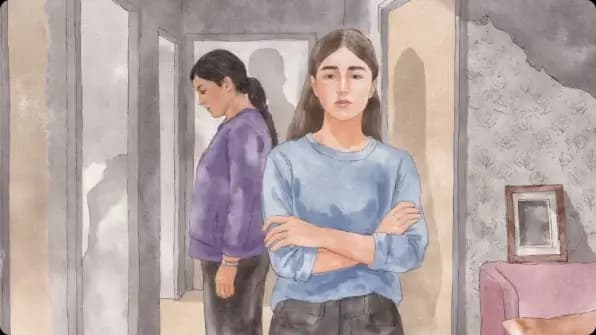


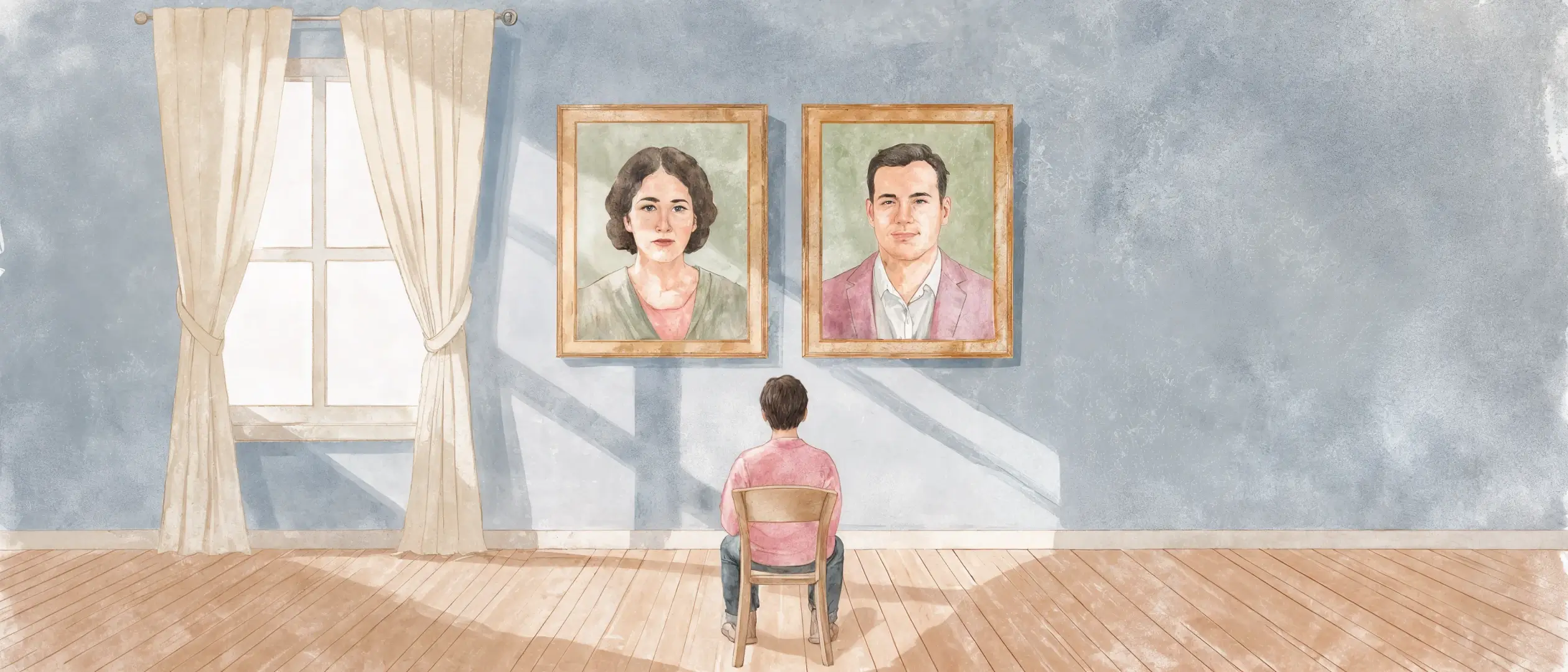
Ever catch yourself wondering, “Why does it feel like my own parents are against me?” or “Why do simple conversations with family turn into arguments?“ If you’ve asked yourself, “Why do my parents hate me?”, here are some insights on this painful realization and helpful tips to protect your emotional well-being.
Take a childhood trauma test to understand whether your parents’ behaviors still negatively affect your life and relationships.

“Do My Parents Hate Me?” Understanding Your Reality
What feels like “my parents hate me” can be a mix of misunderstanding, frustration, stress, or poor communication. But it’s important to separate what it feels like from what’s actually happening.
However, sometimes, family relationships are unhealthy or even harmful, contributing to feelings of loneliness, anxiety, isolation, or depression, according to a study. It may go beyond miscommunication if there is the following:
- Constant belittling, insults, name-calling, or humiliation
- Emotional neglect
- Manipulation or control
- Verbal, emotional, or physical abuse
For deeper reflection, try answering these questions:
- Do they ever try to show care in small ways (even if imperfectly)?
- Are there patterns, or just occasional bad moments?
- How do they respond when I express how I feel?
- Do I feel safe being myself around them?
Your answers can help you understand whether this is a communication gap or if possible abuse is present.
5 Signs of Toxic Parents
Sometimes parents act in ways that look like hate, even if that’s not their intention. You may feel like your parents hate you if you experience the following:
1. Constant criticism
They rarely praise you, focus on mistakes, compare you to siblings or friends, making you a black sheep of the family, or dismiss your creative work, saying, “This is useless, you’re wasting your time.” This parent’s toxic trait can make you feel unloved and believe there’s something wrong with you due to the consistent negative attention you may receive.
2. Emotional neglect or indifference
They ignore your feelings and struggles, minimize them, acting as if they don’t matter. For example, you’re upset about a friend hurting you, and they respond, “Stop whining, it’s not a big deal.” When you try to explain your side of a conflict, they cut you off or walk away. Or, when you express anxiety about school, they respond, “Stop being dramatic. Just do your work.” It may feel like there is no space for you to share your emotional experiences.
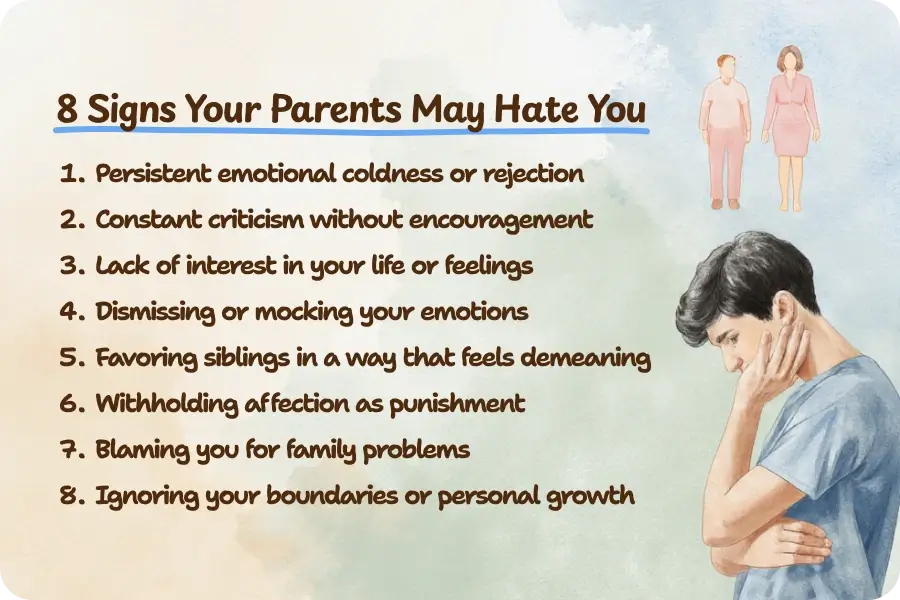
3. Anger or hostility
They react with disproportionate anger, shouting, or hostile behavior over minor issues. You may forget to do a chore, and they yell for hours or slam doors. Every small mistake, like spilling a drink, results in unfair punishment or harsh words.
In extreme cases, there can also be hitting, shoving, destroying your belongings in anger, or name-calling like “worthless” or “stupid.”
4. Manipulation or control
Similarly to narcissistic parents, they may use guilt, shame, or threats to control your choices. They may say, “If you loved me, you would choose to spend time with me over your friends.”
Moreover, they may prevent you from seeing friends, attending social events, or calling relatives to have complete control over you and make you behave exactly how they want with manipulative tactics.
5. Conditional love and attention
Their affection is conditional or absent, which makes you feel invisible or unwanted. Hugs, praise, or verbal affection only appear when you achieve something or obey. They may be physically present but emotionally unavailable and avoid spending time with you entirely, even during meaningful moments.
6 Causes You May Feel Like Your Family Members Hate You
Here are some common causes with examples to help you understand why you think your parents hate you or even feel like you hate your family:
1. Emotionally immature parents
Parents who are emotionally immature may lack emotional awareness or communication skills or struggle to express care in a healthy way, especially if they were raised in environments where emotions weren’t handled well. They rarely say “I love you” or give hugs, and you may interpret the absence of affection as rejection.
According to research, another reason for emotional immaturity in parents can be intergenerational trauma. Trauma experienced by one generation can affect how parents regulate emotions and relate to their children due to the unhealed invisible wounds they may carry from the trauma experienced.
2. High expectations or pressure
They believe being strict or critical = helping you succeed. As a result, they push you to meet standards that feel impossible and constantly criticize you about grades, appearance, or behavior. For you, this repeated criticism can feel personal rather than constructive. Sometimes parents lose sight of the connection due to the desperation their children have different opportunities than they did growing up.
3. Miscommunication
Different communication styles and mismatched personalities can make actions seem hostile. For example, if you’re introverted, and your family is very social, they may criticize your quietness. Or, you’re missing the intended tone and interpret the parent’s joke or sarcastic comment as an insult.

4. Family stress and mental health conditions of parents
According to research, parents’ “hate” and hurtful or distant actions can stem from their own stress or anxiety, or even physical or emotional pain, but it can feel deeply personal. Stress can make people irritable or cold, and when you’re on the receiving end, it may seem like rejection or dislike.
For example, a stressed or depressed parent might snap over minor mistakes, react angrily to small inconveniences, or appear distant or distracted during conversations and family activities.
5. Unresolved past conflicts
Unresolved conflicts may create a cycle where old hurts influence new interactions. Even small disagreements that were never fully resolved can create tension and make it feel like your parents hate you. You may feel like nothing you do can fix the relationship because the “recorded mistakes” keep coming up.
6. Projection of their own issues
Sometimes family members project their own frustrations, insecurities, or disappointments onto you. This is common with parents who struggle with self-esteem or control issues, and it’s especially typical in narcissistic or highly critical parents. They may use you as a mirror for their own feelings and attack or criticize you not because of who you are, but because of their unresolved emotions.
For example, a parent who feels unsuccessful in their career constantly criticizes your job or ambitions, saying things like, “You’ll never succeed in that,” or “I warned you this would happen.” Or, a parent who is unhappy with their marriage or social life may shame you for wanting independence, dating, or spending time with friends.
These criticisms and judgments hit deeply because they target parts of your identity — your choices, ambitions, or personality. It can feel extremely personal, as though you are a failure. In reality, their attacks reflect their own struggles, fears, and unmet expectations, not your worth.
5 Tips To Deal with Emotionally Abusive Parents
You can’t control what your parents say or do, but you can reduce how much it affects you. Here are actionable steps to cope with negative emotions and protect your self-esteem.
1. Name what you feel
When emotions feel overwhelming, try labeling them to gain control. Pause when something upsets you and finish this sentence: “Right now I feel ___ because ___.” Use a feelings list if needed: hurt, ignored, embarrassed, anxious, angry, lonely. Validate these emotional experiences for yourself so when they are challenged by unhealthy familial dynamics, you can rest in your truth.
Make it a daily habit and write 1–2 sentences each night about a moment that affected you. Breeze guided journaling may help you understand yourself before trying to explain it to others.
2. Try a low-conflict conversation if it feels safe
Pick a calm moment (not during an argument) and try to use this formula: “I feel ___ when ___, and I would appreciate ___.” For example, “I feel ignored when I’m interrupted, and I’d like to finish what I’m saying.”
Tips that actually work:
- Keep your tone calm, even if they aren’t
- Say one issue at a time
- If it escalates, pause: “I don’t want this to turn into a fight. Can we talk later?”
3. Set healthy boundaries
Start simple, not dramatic: “I don’t want to be constantly compared to others, it really affects me,” or “I’m going to step away if this turns into yelling.”
If saying it feels unsafe, use action boundaries: leave the room, put on headphones, or end the conversation politely.
Don’t stay stuck in the feeling. When something hurtful is said, ask, “Is this actually true, or just their frustration talking?” and reframe, “This is about their mood, not my value.”
Then, reset your mind after conflict. For example, take a short walk, engage in an analog hobby, or listen to music that matches or shifts your mood.
4. Find emotional support outside your parents
Seek support from family, friends, relatives, or other trusted adults such as a teacher or school counselor. Spend time with people who listen without judging and don’t dismiss your feelings.
Make it your goal to talk to one person per week about something real. Start small: “Hey, can I vent about something?” When you feel seen by someone, it can reduce the pain at home.
Here’s a list of crisis resources that can help with domestic abuse and teen-specific support:
- 988 Suicide & Crisis Lifeline. Available 24/7 for emotional distress, suicidal thoughts, or crisis support.
- National Alliance on Mental Illness (NAMI) HelpLine. 1-800-950-6264. Offers guidance, education, and support for mental health concerns
- National Domestic Violence Hotline. 1-800-799-SAFE (7233) or text LOVEIS to 22522. Provides safety planning, support, and resources for survivors
- Crisis Text Line. Text HOME to 741741. Available 24/7 for teens and adults needing immediate support
- Trevor Project. 1-866-488-7386 or text START to 678678. Support for LGBTQ+ teens and young adults in crisis.
5. Speak to a therapist
If it feels like you need more structured support, individual therapy can be a really helpful next step. Therapy focuses on understanding your emotions, processing family trauma, building coping skills, and finding healthier ways to respond to difficult situations at home. If in-person help isn’t accessible, online therapy is also an option and can be more flexible and private.
Frequently asked questions
1. Why do my parents treat me harshly?
There can be many reasons: pressure about your future, unrealistic expectations, their own complex emotions or unresolved issues, or lack of communication skills. Sometimes control or criticism is mistaken for “guidance,” even when it creates unhealthy dynamics.
2. Is it my fault that my parents or other family members hate me?
No, not in the way it might feel. You are responsible for your actions, but you are not responsible for how your parents manage their emotions or how they choose to treat you.
3. Will it always be like this?
No, it doesn’t have to be always like this. Relationships can change through better communication, resolving family conflict, setting boundaries, or seeking professional counseling. Healing and understanding can improve how you relate to your parents, even if things don’t become perfect.
Sources
- Merav Kalik Lerner, Sabina Lissitsa. “Black sheep”—physical, social, and behavioral diversity as a barrier to STEM educational choice. December 2024
- Leilani Darwin, Stacey Vervoort, Emma Vollert and Shol Blustein. Intergenerational trauma and mental health. 2023
- Salman Shafiq. Hatred is a mindset triggered by stressful external events, negative personal or group interpretations, and unhealthy social environments. June 2023
Disclaimer
This article is for general informative and self-discovery purposes only. It should not replace expert guidance from professionals.
Any action you take in response to the information in this article, whether directly or indirectly, is solely your responsibility and is done at your own risk. Breeze content team and its mental health experts disclaim any liability, loss, or risk, personal, professional, or otherwise, which may result from the use and/or application of any content.
Always consult your doctor or other certified health practitioner with any medical questions or concerns
Breeze articles exclusively cite trusted sources, such as academic research institutions and medical associations, including research and studies from PubMed, ResearchGate, or similar databases. Examine our subject-matter editors and editorial process to see how we verify facts and maintain the accuracy, reliability, and trustworthiness of our material.
Was this article helpful?