

Podcast name
How to remember childhood trauma
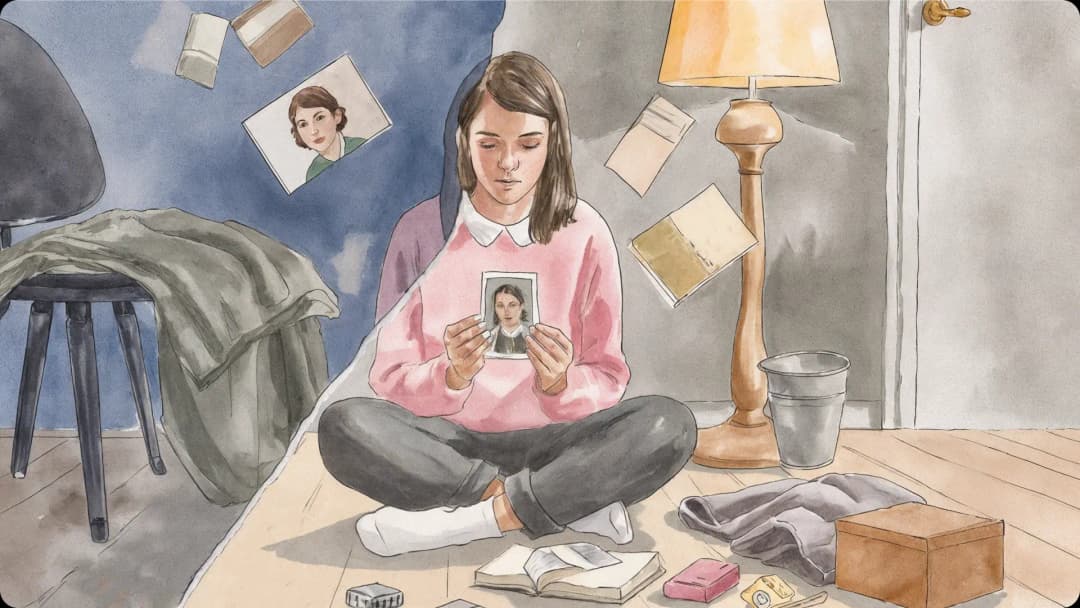
Repressed childhood trauma is believed to be one of the ways the brain aims to protect you: when an experience is too overwhelming to process, the brain can push it out of conscious memory, storing it away — often for years — until something brings it back to the surface.
According to the study, more than 2 out of 3 children and adolescents in the United States experience trauma by age 16. [1] Lawrence-Sidebottom D, Huffman LG, Beam AB, Guerra R, Parikh A, Roots M, Huberty J. “Rates of Trauma Exposure and Posttraumatic Stress in a Pediatric Digital Mental Health Intervention: Retrospective Analysis of Associations With Anxiety and Depressive Symptom Improvement Over Time.” JMIR Pediatr Parent. 2024 While some of them may remember their experiences well, there’s a certain percentage of people who live with repressed childhood trauma and don’t know what some of their symptoms stem from.

Why the brain hides childhood memories
When a childhood experience is too much for a young mind to process, the brain protects you from it. Dissociation and repression are the mind’s way of separating you from pain it can’t yet handle. In the moment of trauma, this response is a survival mechanism. Long after the danger has passed, though, that same protection can leave traumatic memories locked away, out of conscious reach.
Research suggests that intensely stressful experiences may be encoded and later retrieved differently depending on a person’s physiological or emotional state at the time, which makes some memories harder to access outside a similar state. [2] Northwestern Medicine. “How Traumatic Memories Hide In The Brain, and How To Retrieve Them.” 2015
That’s why a smell, a tone of voice, or a particular feeling in your body can suddenly bring a memory or intense physical sensation rushing back. It means your brain is returning to a similar “state” as when the memory was first formed.
The amygdala, which processes fear and emotional intensity, and the hippocampus, which helps organize memories in time and context, are both central to this. Under extreme stress, this partnership can get disrupted: the amygdala registers that something threatening happened, but the hippocampus doesn’t file it away the way it normally would. [3] Zhang X, Ge TT, Yin G, Cui R, Zhao G, Yang W. “Stress-Induced Functional Alterations in Amygdala: Implications for Neuropsychiatric Diseases.” Front Neurosci. 2018
As a result, a traumatic memory from childhood becomes incomplete, disorganized, or simply inaccessible to your conscious mind, even though your body and nervous system still carry its imprint.
Signs you may be carrying repressed childhood trauma
Check yourself for symptoms of repressed childhood trauma. While they don’t automatically mean you’ve experienced childhood trauma, noticing several of them, especially if they affect your relationships, emotions, or daily life, may be a reason to explore your past.
Difficulties with processing emotional pain
Emotional detachment and feeling disconnected can be a coping mechanism for past pains and signal that you live with repressed early memories. You may experience:
- Difficulty identifying or naming your feelings
- Low self-esteem
- Emotional flashbacks and frequent nightmares that disrupt your daily life
- Difficulty regulating emotions and emotional outbursts all of a sudden
- Intrusive thoughts or memories that you can’t explain or get rid of

Mental health challenges
Studies prove that childhood trauma is associated with higher risks of later depression, anxiety, PTSD, and broader mental illness, such as psychotic disorder or bipolar disorder. [4] McKay MT, Cannon M, Chambers D, Conroy RM, Coughlan H, Dodd P, Healy C, O’Donnell L, Clarke MC. “Childhood trauma and adult mental disorder: A systematic review and meta-analysis of longitudinal cohort studies.” Acta Psychiatr Scand. 2021 It can also be among the causes of post-traumatic stress disorder (PTSD). [5] De Bellis MD, Zisk A. “The biological effects of childhood trauma.” Child Adolesc Psychiatr Clin N Am. 2014
Other challenges can include:
- Persistent low mood
- Hypervigilance
- Shame or a pervasive sense of being “bad” or “wrong”
- Disrupted sense of identity due to significant memory gaps
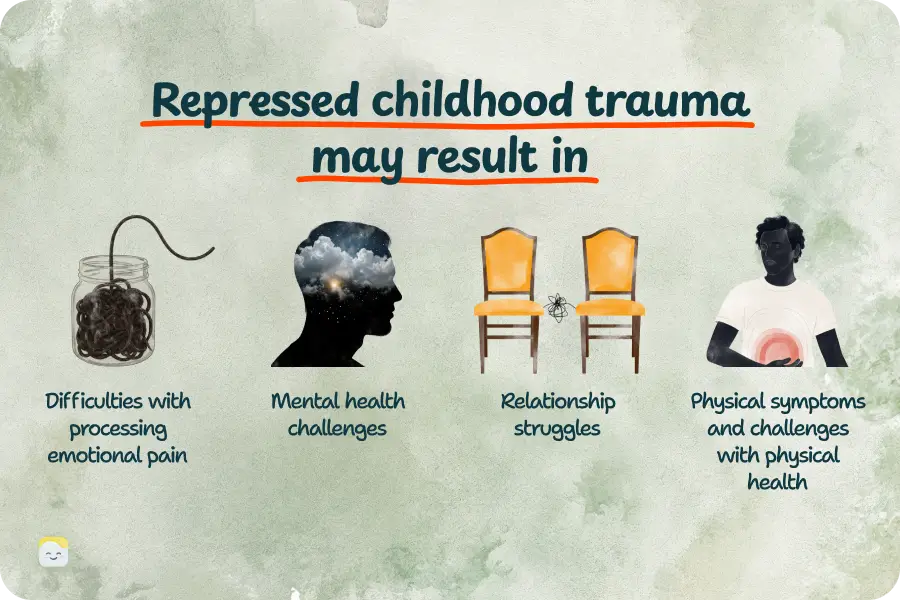
Relationship struggles
Repressed childhood trauma can lead to relationship struggles, especially if a person finds it challenging to control their emotions due to the brain’s ongoing struggle with unprocessed experiences, which may result in frequent conflicts. Among other challenges that traumatic experiences may bring are:
- Difficulty trusting others
- Fear of abandonment
- People-pleasing and difficulty saying no
- Difficulty setting or respecting boundaries
- Overreacting to perceived criticism or conflict
- Feeling responsible for other people’s emotions
In romantic relationships, it can manifest as:
Physical symptoms and challenges with physical health
Traumatic experiences can leave persistent somatic, autonomic, sensory, and memory-related changes in the nervous system and stress-response systems. [6] Kearney BE, Lanius RA. “The brain-body disconnect: A somatic sensory basis for trauma-related disorders.” Front Neurosci. 2022 Painful memories can cause physical tension and lead to chronic health issues, as well as:
- Unexplained pains
- Digestive and gut issues
- Sleep problems
- Persistent fatigue or low energy
- Headaches and migraines
- A racing heart or exaggerated startle response
- Feeling numb or disconnected from your body
- Shallow breathing or a tight chest
- Autoimmune or stress-related health conditions
Is it safe — and is it necessary — to try to remember past events?
Recovering memories isn’t always required for healing. Sometimes, people carry the effects of trauma in their bodies and emotions without remembering exactly what happened, and they can still heal.
A few things to keep in mind:
- Memory isn’t like a video recording. It shifts and changes, especially for things that happened a long time ago or during high stress. This doesn’t mean your memories aren’t real. But trying hard to “recover” exact details can sometimes create memories that aren’t fully accurate, especially with leading questions or certain techniques.
- You don’t need every detail to heal. Therapies like EMDR, somatic experiencing, and IFS can help lower the emotional weight of trauma without needing a full, clear story of what happened.
If you still feel the desire to explore your past hidden memories, it’s essential to reach out for professional help and find a therapist who specializes in childhood trauma.
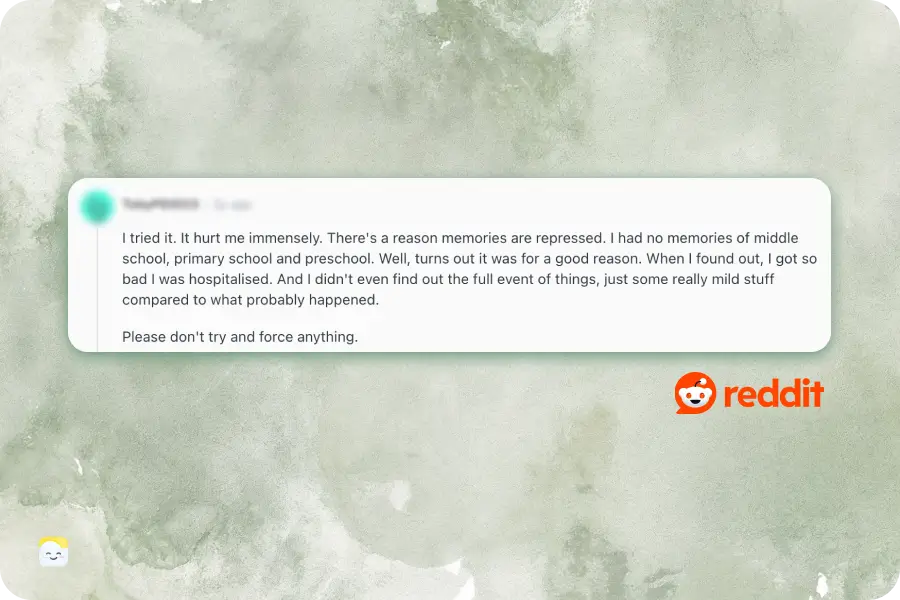
In your opinion, is it worth recalling repressed childhood memories? Nicole Arzt, LMFT, answers, “There is no universal right or wrong way to reflect on your childhood. Memories may or may not come back on their own, but they may also emerge with certain kinds of trauma processing. Regardless of what you remember, the most effective treatment is the one that helps you regulate your here-and-now experiences and feel more grounded in your present moment.”
How to safely work toward healing repressed trauma
To overcome “childhood amnesia,” it may be necessary to use both therapist-guided practices and self-exploration methods (while getting professional guidance).
Before committing to it, note that repressed memories may arise unexpectedly and cause overwhelming emotions. So, having practical tools and a support system is vital to handle memory recall.
1. Therapist-guided methods
There are several therapeutic approaches that can help you handle repressed trauma. It may be helpful to try a few of them and then pick the one that works best for you:
Eye Movement Desensitization and Reprocessing (EMDR)
It’s a well-researched trauma therapy that uses guided eye movements or other forms of bilateral stimulation while you recall distressing experiences. The goal is to help your brain process traumatic memories so they become less emotionally overwhelming.
Non-verbal art therapy
Art therapy uses drawing, painting, sculpting, or other creative activities to help you safely explore emotions, memories, and experiences that may be hard to verbalize.
Guided imagery and visualization techniques
These practices involve imagining calming places, supportive figures, or difficult memories in a controlled way. Under the guidance of a therapist, visualization can help build emotional resilience and gradually process unresolved experiences.
Somatic-based therapies
Trauma isn’t only stored as memories; it can also affect the body. Somatic therapies focus on physical sensations, breathing, posture, and gentle movement to help regulate the nervous system and release physical tension associated with past trauma.
Trauma-focused psychodynamic therapy
This approach explores how early life experiences may continue to influence your thoughts, emotions, and relationships. As trust develops, previously avoided or disconnected memories may gradually come into awareness.
Expert Insight
Group therapy can also be beneficial for being around other like-minded individuals who may be experiencing trauma. You may not realize that certain childhood experiences were problematic, but hearing about them from others can help you make sense of your own experiences.

Nicole Arzt
Mental health professional
2. Journaling and free-writing
There are also practices that can help you handle the outcomes of working with repressed memories and trauma in general. They aren’t designed to directly recover repressed memories, but they may help you recognize emotional patterns, connect with your feelings, and make sense of experiences that gradually come to the surface.
- Use guided prompts (like in the Breeze app) to release your emotions and feel more in balance.
- Engage in free-writing to express your thoughts without worrying about grammar, structure, or making sense. Writing continuously for 10–20 minutes can help you process difficult emotions.
- Track triggers by noting situations, thoughts, or physical sensations that evoke strong emotional reactions. After some time, you may begin to see patterns that provide clues about unresolved experiences.
- Write unsent letters to people connected to your past. It can help you express emotions that may have been suppressed for years.
3. Mindfulness techniques
Mindfulness can bring you back to the present moment and anchor you in what’s happening around instead of dwelling on past trauma. You may try:
- Box breathing. Breathe in for four counts, hold your breath for four counts, exhale for four counts, and hold again for four counts to promote a sense of calm and reduce feelings of stress or anxiety.
- The 5-4-3-2-1 grounding technique. Identify five things you can see, four you can touch, three you can hear, two you can smell, and one you can taste. This exercise helps shift your attention from distressing thoughts to the present moment.
- Body scan meditation. Slowly bring your attention to different parts of your body, noticing areas of tension, discomfort, or relaxation without trying to change them.
- Creative practices like painting or music therapy can help overcome pain from past experiences.
4. Body-based / somatic practices
5. What not to do alone
Some practices are best avoided without the guidance of a qualified mental health professional. Exploring trauma too quickly or using techniques that are not evidence-based can increase emotional distress. Avoid trying to:
- Force yourself to remember, even if nothing helps.
- Use hypnosis or memory recovery techniques on your own, as these can increase suggestibility.
- Interpret dreams as factual memories.
- Expose yourself to overwhelming triggers in hopes of recovering memories.
- Continue exploring if you feel overwhelmed or experience panic attacks, dissociation, severe anxiety, or thoughts of self-harm.
What happens after a memory resurfaces
If a memory resurfaces during a therapeutic practice or after a particular trigger, try to ground yourself in the present instead of immediately analyzing or reliving the experience. Avoid ruminating on the memory alone or pressuring yourself to recall more details.
If possible, discuss what came up with a licensed mental health professional, who can help you process and integrate the experience safely while reducing the risk of becoming emotionally overwhelmed.
Frequently asked questions
How does childhood trauma influence brain development?
Сhildhood trauma can influence brain development, especially certain regions, and make it harder to regulate emotions, remember things, and feel safe. [7] Cross D, Fani N, Powers A, Bradley B. “Neurobiological Development in the Context of Childhood Trauma.” Clin Psychol (New York). 2017
Can trauma be remembered years later?
Yes, traumatic childhood memories may arise years later. Sometimes, a certain smell, sound, or situation is enough to remind you of something you forgot long ago. Sometimes, talking about certain experiences with a licensed mental health professional can help in memory recovery.
Is recovering repressed memories real?
Even experts are mixed on this one. The specific idea that the mind can fully “repress” a memory for years and then accurately recover it, often through therapy, is controversial.
The concern is that it’s possible to create false memories, especially through leading questions or certain techniques, and people can feel just as confident and emotional about those as real ones. This caused real harm in the past, when some recovered memories led to false accusations.
That said, gradual, unprompted remembering is generally seen as more plausible than memories that emerge through hypnosis or leading questions. If a memory surfaces for you, a trauma-informed therapist can help you work with it without needing to resolve every detail on your own.
Do I need to remember to heal?
Not necessarily. While some memories may be recovered accidentally, others may remain inaccessible. Fortunately, recovering from traumatic experiences doesn’t depend on remembering every detail of what happened.
Effective trauma therapies focus on reducing distress, improving emotional regulation, and helping you build healthier coping strategies rather than solely uncovering forgotten memories.
Sources
- Lawrence-Sidebottom D, Huffman LG, Beam AB, Guerra R, Parikh A, Roots M, Huberty J. “Rates of Trauma Exposure and Posttraumatic Stress in a Pediatric Digital Mental Health Intervention: Retrospective Analysis of Associations With Anxiety and Depressive Symptom Improvement Over Time.” JMIR Pediatr Parent. 2024
- Northwestern Medicine. “How Traumatic Memories Hide In The Brain, and How To Retrieve Them.” 2015
- Zhang X, Ge TT, Yin G, Cui R, Zhao G, Yang W. “Stress-Induced Functional Alterations in Amygdala: Implications for Neuropsychiatric Diseases.” Front Neurosci. 2018
- McKay MT, Cannon M, Chambers D, Conroy RM, Coughlan H, Dodd P, Healy C, O’Donnell L, Clarke MC. “Childhood trauma and adult mental disorder: A systematic review and meta-analysis of longitudinal cohort studies.” Acta Psychiatr Scand. 2021
- De Bellis MD, Zisk A. “The biological effects of childhood trauma.” Child Adolesc Psychiatr Clin N Am. 2014
- Kearney BE, Lanius RA. “The brain-body disconnect: A somatic sensory basis for trauma-related disorders.” Front Neurosci. 2022
- Cross D, Fani N, Powers A, Bradley B. “Neurobiological Development in the Context of Childhood Trauma.” Clin Psychol (New York). 2017
Disclaimer
This article is for general informative and self-discovery purposes only. It should not replace expert guidance from professionals.
Any action you take in response to the information in this article, whether directly or indirectly, is solely your responsibility and is done at your own risk. Breeze content team and its mental health experts disclaim any liability, loss, or risk, personal, professional, or otherwise, which may result from the use and/or application of any content.
Always consult your doctor or other certified health practitioner with any medical questions or concerns
Breeze articles exclusively cite trusted sources, such as academic research institutions and medical associations, including research and studies from PubMed, ResearchGate, or similar databases. Examine our subject-matter editors and editorial process to see how we verify facts and maintain the accuracy, reliability, and trustworthiness of our material.
Was this article helpful?