

Podcast name
Why am I hungry but don't want to eat?
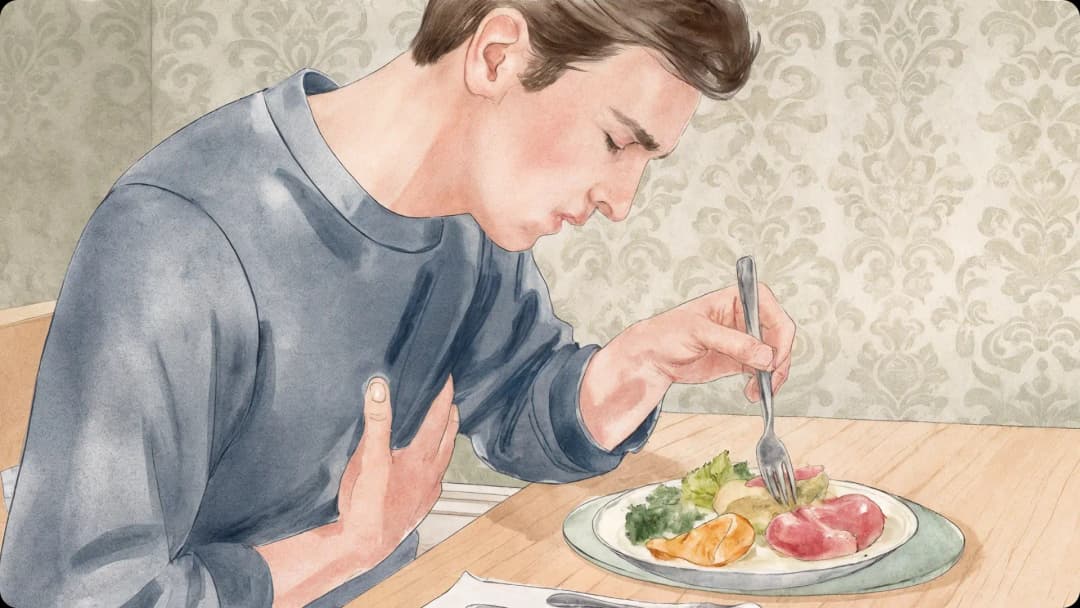
“I’m physically hungry. I understand that I may need to eat now to feel more energetic and fulfilled, but I don’t want to do it at all. And as soon as I start doing it, I feel like I’m chewing it forever, disinterested and nauseated.”
Does it seem relatable? In this article, we’ll explore why physical hunger exists without the desire to eat and how to overcome these appetite changes.

What does it mean to be hungry but have no appetite?
Being hungry but having no appetite means that your body is giving you signals that it needs food, while your mind or stomach isn’t giving you the usual desire to eat. You might notice an empty stomach, weakness, or low energy, but the thought of food doesn’t sound appealing.
Hunger vs. appetite: What’s the difference?
- Hunger is a physical signal that your body needs some food.
- Appetite is a desire to eat.
Typically, these two come together. A person experiences hunger, starts thinking about food, and feels ready to eat. But they don’t always match.
Some people may notice signs of hunger while having a poor appetite. “I understand that I need to eat, but I don’t want to do it.” You may even sit in front of a meal and find that nothing looks appealing or feel full or nauseated after just a few bites.
Loss of appetite (anorexia) vs. anorexia nervosa
In medical terms, loss of appetite can be called “anorexia.” However, it’s essential to note the difference between anorexia as a loss of appetite and anorexia nervosa.
- Anorexia — reduced or complete lack of desire to eat food. It can happen for many reasons, including stress, illness, medications, or digestive problems.
- Anorexia nervosa — a mental health condition in which a person restricts food intake because of an intense fear of gaining weight, a strong desire to lose weight, or a distorted perception of their body.
Even though these two terms sound similar, they describe very different things. As such, you don’t necessarily live with anorexia nervosa if you have little to no appetite.

Why am I hungry but don’t want to eat? Common causes
Low appetite might stem from mental, emotional, and physical factors. Let’s explore the main causes.
Physical and medical causes
Pain or illness
Short-term illnesses like the flu can decrease appetite. Also, if you’re in pain, your body may focus more on dealing with the problem than on eating. Fever, infections, headaches, and general discomfort can make food seem unappealing.
However, the desire to eat tends to return when you feel better.
Dehydration
Studies prove that dehydration can suppress appetite and be an underlying cause of disinterest in eating. [1] McKay NJ, Belous IV, Temple JL. “Increasing water intake influences hunger and food preference, but does not reliably suppress energy intake in adults.” Physiol Behav. 2018 While drinking enough water is important, it’s better to notice how it influences your hunger signals.
Some people might, in turn, confuse feeling hungry and thirsty. In this case, it’s better to drink some water first and wait a little to see how you feel. If the hunger remains, have a meal.
Dental or digestive issues
Dental or digestive health problems can cause pain or discomfort and make eating unappealing. For instance, if you have a toothache, you may avoid chewing because it hurts. A sore throat, mouth ulcers, or dental treatment can have a similar effect.
Bloating, heartburn, nausea, stomach pain, constipation, or diarrhea may make you associate eating with discomfort, even when you still feel physically hungry.
Age-related changes
According to the research, healthy older adults have lower appetites and energy intake than younger adults. [2] Giezenaar C, Chapman I, Luscombe-Marsh N, Feinle-Bisset C, Horowitz M, Soenen S. “Ageing Is Associated with Decreases in Appetite and Energy Intake–A Meta-Analysis in Healthy Adults. Nutrients.” 2016 This means that the older you get, you may feel less hungry or become full more quickly due to hormonal changes.
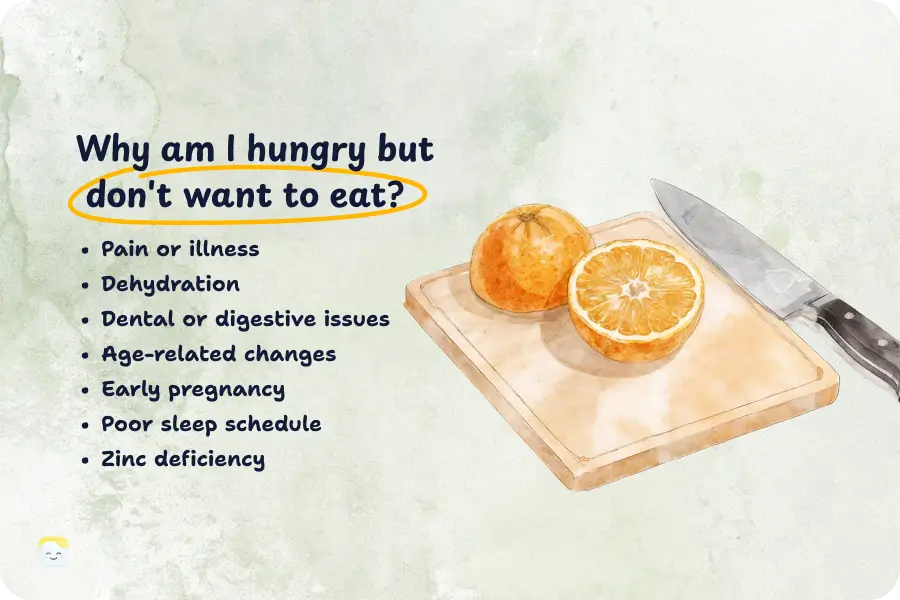
Early pregnancy
Pregnant women who experience morning sickness may experience nausea, food aversions, and a reduced appetite. Changes in hormones during early pregnancy can make certain smells and foods suddenly unpleasant.
Poor sleep schedule
People who lack sleep or have irregular sleep schedules might experience hormonal fluctuations that change appetite as well. Some might need more food to feel full, while others may notice less appetite or simply have little interest in eating.
Zinc deficiency
Zinc deficiency may lead to loss of appetite and weight loss. [3] Pisano M, Hilas O. “Zinc and Taste Disturbances in Older Adults: A Review of the Literature.” Consult Pharm. 2016 It can also affect your sense of taste and smell, which makes food less tasty.
Medications that cause appetite loss
Psychological and emotional causes
Anxiety and stress
When a person is under stress or experiences severe anxiety, they might also face severe appetite loss. Studies prove that short-term anxiety or stress can temporarily reduce your appetite, especially when you’re dealing with something frightening or overwhelming. [4] Nakamura C, Ishii A, Matsuo T, Ishida R, Yamaguchi T, Takada K, Uji M, Yoshikawa T. “Neural effects of acute stress on appetite: A magnetoencephalography study.” PLoS One. 2020 When cortisol is released into the bloodstream, it can elicit the parasympathetic nervous system, which suppresses appetite.
However, long-term anxiety can affect people differently — for some, it may reduce appetite, while for others, it can make it harder to feel full.
Grief
Pretty much like stress, grief can also shift a person’s focus from food to something entirely different and make eating feel unimportant or even unpleasant. After going through a major loss, you may feel hungry but have no desire to eat.
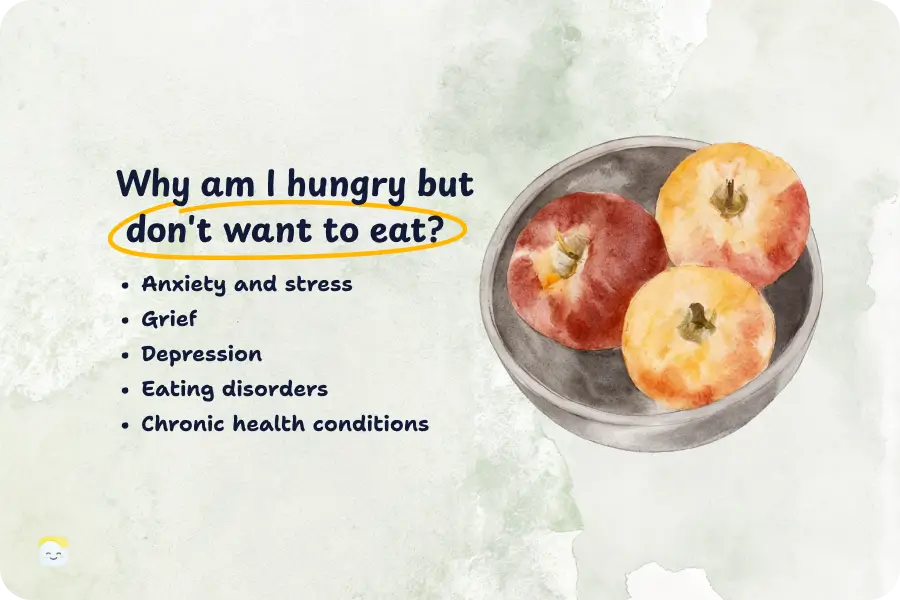
Depression
A person may experience loss of appetite due to depression and its symptoms. [5] Simmons WK, Burrows K, Avery JA, Kerr KL, Bodurka J, Savage CR, Drevets WC. “Depression-Related Increases and Decreases in Appetite: Dissociable Patterns of Aberrant Activity in Reward and Interoceptive Neurocircuitry.” Am J Psychiatry. 2016 Food may stop feeling enjoyable, and you may lack motivation to eat.
Eating disorders
Eating disorders not only change appetite but also influence how you see food and feel about eating.
Avoidant/restrictive food intake disorder (ARFID) was officially introduced in DSM-5 in 2013. It involves avoiding or limiting food intake, particularly due to low levels of ghrelin (a hunger hormone). [6] Kaitlin N. Rozzell-Voss, Kendra R. Becker, Nassim Tabri, Melissa J. Dreier, Shirley B. Wang, Megan Kuhnle, Julia Gydus, Helen Burton-Murray, Lauren Breithaupt, Franziska Plessow, Debra Franko, Kristine Hauser, Elisa Asanza, Madhusmita Misra, Kamryn T. Eddy, Laura Holsen, Nadia Micali, Jennifer J. Thomas, Elizabeth A. Lawson. “Trajectory of ghrelin and PYY around a test meal in males and females with avoidant/restrictive food intake disorder versus healthy controls.” Science Direct. 2023 People with ARFID may avoid certain foods because of their taste, texture, smell, fear of choking or vomiting, or simply a low interest in eating.
Other eating disorders that influence appetite may include:
- Anorexia nervosa
- Bulimia nervosa
- Binge-eating disorder, etc.
Chronic health conditions
Loss of appetite may also be linked to an underlying health condition. If you have a healthy lifestyle and still don’t want to eat on a long-term basis, it may be worth seeking medical attention.
Among the possible causes of low appetite are the following:
Hungry but no appetite: Situational triggers people often overlook
In certain cases, feeling hungry without a desire to eat may be temporary and influenced by situational factors. It may go away once your body recovers or the trigger passes.
During your period
Some people may experience appetite-related changes due to hormonal shifts, digestive changes, pain, or physical discomfort. It’s OK if you feel hungrier before or during your period, but you might also experience nausea, bloating, cramps, or digestive discomfort that makes food less appealing.
After a hangover
Alcohol can irritate your stomach, contribute to dehydration, and cause nausea. As a result, you may experience hunger but feel unwell while even thinking about food. Bland foods and plenty of fluids may be helpful to reduce the physical effects of a hangover.
After poor sleep
Even one night of poor sleep can lead to changes in your appetite. Some people may try to fulfill their energy by eating more, while others can experience reduced appetite and opt for simple meals to get some nutrition without having to eat a full meal. Fatigue can also make cooking and choosing food more difficult.
Post-workout
A few hours after a workout, you may face a temporary lack of appetite, especially if you are overheated, dehydrated, or exercising at high intensity. However, as time passes, you may notice your appetite gradually returning as your body cools down and recovers.
Is it normal to feel hungry but not want to eat?
If you have healthy eating habits and feel well both physically and mentally, short-term appetite loss may be pretty normal. However, prolonged periods of feeling hungry but not wanting to eat may signal that you need professional support.
Short-term vs. long-term appetite loss
What happens if you ignore loss of appetite?
If you ignore loss of appetite and don’t have a balanced diet for a long time, it may come with additional symptoms and health consequences. These may include:
- Anemia
- Unintended weight loss
- Nutrient deficiencies and malnutrition
- Muscle loss
- Fatigue and feeling sick
Expert Insight
A lack of appetite can influence a person’s headspace for many reasons. For example, blood sugar has a direct influence on mood. If our blood sugars are low due to low appetite and food intake, this can depress a person’s mood and/or increase their levels of irritability. Next, low appetite that stretches over a significant span of time can impact the intake of necessary vitamins and minerals needed for not only proper immune and organ function, but also stabilization of biochemicals that influence mood. There is a reason they call it ‘hangry’! Proper food intake is as necessary as proper sleep for support of good mental health.

Katherine Scott
Mental health professional
What to do when you’re hungry but don’t want to eat
If eating a regular-sized meal today feels challenging, you may think, “It’s better to eat nothing than to force myself to eat.” However, your body may still need energy and nutrients even when your appetite is low.
Eat small, frequent meals
Eating 5-6 times a day can stimulate appetite and help you get enough calories without feeling overwhelmed. You can divide your usual meals into smaller portions and eat them throughout the day instead of trying to finish everything at once.
Try liquid nutrition
Smoothies, shakes, and broths will provide nutrition without feeling excessively full if you find it difficult to eat regular meals. Liquid nutrition can be less filling and easier to consume and can help you get some calories, protein, and other nutrients into your diet.
Also, you can add just one tablespoon of almond butter or a high-calorie and nutrient-dense ingredient to a smoothie or shake to increase its nutritional value.
Choose foods high in protein that are easy to digest
This will help you reduce the risk of unwanted weight loss and support muscle maintenance when your appetite is low. Opt for such nutritious foods as:
You can also add protein powder to your meals to make them more nutritious.
Stay hydrated without filling up before meals
Drinking water is super-important for your physical health. However, some people may notice that they no longer want to eat after drinking a glass of water.
If it feels relatable, try sipping fluids throughout the day instead of drinking a large amount right before meals.
Engage in light physical activity to stimulate appetite
Light exercise can stimulate your appetite. It shouldn’t necessarily be something very active (to avoid suppressing hunger cues), but a 30-minute walk, stretching, or yoga may help you feel more ready to eat.
Address the emotional root cause
If you find it difficult to feel satisfied while eating due to an underlying stress, anxiety, grief, or fear of weight gain, it might be necessary to process your feelings. Try journaling and mood tracking to note triggers of your worries and identify patterns between your emotions and appetite. You can also practice relaxation techniques, such as deep breathing or mindfulness, before meals to help reduce tension.
When to see a healthcare provider
If lack of appetite persists for over a week and nothing seems to help, it might indicate that you need a medical evaluation.
Red-flag symptoms not to ignore
- Unintentional weight loss, especially if it occurs rapidly or continues without an obvious cause.
- Persistent nausea, vomiting, or diarrhea.
- Severe abdominal pain.
- Difficulty swallowing or pain while swallowing.
- Extreme weakness, dizziness, or fainting.
- Very dark urine, dry mouth, or unusually little urination.
- Persistent changes in bowel habits or other unexplained digestive symptoms.
- Significant anxiety, depression, or loss of interest in daily activities.
- Intense worry about food, especially if these thoughts interfere with normal eating.
Katherine Scott, M.Ed/Ed.S, LMFT, explains what mental health conditions your doctor might test you for if you experience a lack of appetite. “If you approach your doctor with the symptom of low appetite, they will rule out a variety of physical and mental health conditions. Common mental health conditions they may screen for are depression, anxiety, trauma, and eating disorders. These categories of mental health conditions can have decreased appetite as one of the contributing symptoms, but not the only symptom. Be as open and honest as possible if these mental health screeners are given to you.”
Frequently asked questions
Why am I hungry but don't want to eat?
You may feel hungry but not want to eat due to stress, anxiety, illness, digestive issues, fatigue, medications, or emotional stress. Sometimes your body may continue to send hunger signals even when your appetite is reduced.
Should I force myself to eat with no appetite?
In general, you shouldn’t force yourself to eat large portions, but it’s important to maintain a healthy body. Try eating small, frequent meals, choosing foods you enjoy, and drinking enough water.
What vitamin deficiency causes loss of appetite?
Deficiencies of zinc or certain B vitamins can contribute to changes in taste, digestion, or appetite. However, decreased appetite can have many causes, so don’t automatically assume persistent symptoms are due to vitamin deficiencies.
Is loss of appetite a sign of an eating disorder?
Among the many possible causes, an eating disorder can sometimes contribute to a loss of appetite or changes in eating habits. Nevertheless, eating disorders are also associated with persistent changes in eating behavior, thoughts about food, weight, or body image.
Can anxiety cause you to feel hungry but not want to eat?
Yes, anxiety can be among the reasons why you want to eat small meals or go without food for longer periods.
Sources
- McKay NJ, Belous IV, Temple JL. “Increasing water intake influences hunger and food preference, but does not reliably suppress energy intake in adults.” Physiol Behav. 2018
- Giezenaar C, Chapman I, Luscombe-Marsh N, Feinle-Bisset C, Horowitz M, Soenen S. “Ageing Is Associated with Decreases in Appetite and Energy Intake–A Meta-Analysis in Healthy Adults. Nutrients.” 2016
- Pisano M, Hilas O. “Zinc and Taste Disturbances in Older Adults: A Review of the Literature.” Consult Pharm. 2016
- Nakamura C, Ishii A, Matsuo T, Ishida R, Yamaguchi T, Takada K, Uji M, Yoshikawa T. “Neural effects of acute stress on appetite: A magnetoencephalography study.” PLoS One. 2020
- Simmons WK, Burrows K, Avery JA, Kerr KL, Bodurka J, Savage CR, Drevets WC. “Depression-Related Increases and Decreases in Appetite: Dissociable Patterns of Aberrant Activity in Reward and Interoceptive Neurocircuitry.” Am J Psychiatry. 2016
- Kaitlin N. Rozzell-Voss, Kendra R. Becker, Nassim Tabri, Melissa J. Dreier, Shirley B. Wang, Megan Kuhnle, Julia Gydus, Helen Burton-Murray, Lauren Breithaupt, Franziska Plessow, Debra Franko, Kristine Hauser, Elisa Asanza, Madhusmita Misra, Kamryn T. Eddy, Laura Holsen, Nadia Micali, Jennifer J. Thomas, Elizabeth A. Lawson. “Trajectory of ghrelin and PYY around a test meal in males and females with avoidant/restrictive food intake disorder versus healthy controls.” Science Direct. 2023
Disclaimer
This article is for general informative and self-discovery purposes only. It should not replace expert guidance from professionals.
Any action you take in response to the information in this article, whether directly or indirectly, is solely your responsibility and is done at your own risk. Breeze content team and its mental health experts disclaim any liability, loss, or risk, personal, professional, or otherwise, which may result from the use and/or application of any content.
Always consult your doctor or other certified health practitioner with any medical questions or concerns
Breeze articles exclusively cite trusted sources, such as academic research institutions and medical associations, including research and studies from PubMed, ResearchGate, or similar databases. Examine our subject-matter editors and editorial process to see how we verify facts and maintain the accuracy, reliability, and trustworthiness of our material.
Was this article helpful?