



Have you ever found yourself scrolling through your phone, switching between apps, or staring at the ceiling, wondering, “Why am I always bored?” In this article, we’ll explore why you might feel bored all the time, how boredom can influence your mental health, and practical ways to stay engaged and feel content.

Why Do I Feel Persistent Boredom? 10 Common Reasons
Occasional boredom is a normal part of our lives, especially during repetitive or predictable routines. However, if you’re constantly feeling bored, stuck, and experiencing discomfort in daily functioning, your lifestyle or emotional well-being may need attention.
1. Your Daily Routine Is Too Predictable
Research suggests that the human brain naturally responds to novelty [1] Tapper AR, Molas S. Midbrain circuits of novelty processing. October 2020 . When every day looks the same, your surroundings and activities may stop feeling stimulating. If you wake up, work, eat, watch television, and go to bed at roughly the same times, you may begin to feel as though you’re living on autopilot.
Take the Breeze well-being test to get a complete picture of your emotional wellness and take the next step in your mental health journey.

2. You’re Overstimulated by Technology
It sounds contradictory, but constant entertainment can sometimes make boredom feel worse, research shows [2] Tam KYY, Inzlicht M. People are increasingly bored in our digital age. November 2024 . Social media, short videos, notifications, and endless online content provide rapid bursts of stimulation to the nervous system.
When you become accustomed to switching between highly engaging activities, slower experiences may feel less rewarding. You might notice that reading a book, watching a full movie, or having a quiet conversation requires more patience than it used to.
3. You Lack a Sense of Purpose
You may have a busy schedule but still feel that your days aren’t moving you toward anything important. Without personal goals or a sense of direction, even enjoyable activities can start to feel empty.
4. You’re Not Challenging Yourself Enough
Your brain needs an appropriate level of challenge to remain engaged. Tasks that are too easy can become monotonous, while tasks that are excessively difficult may lead to frustration and avoidance.
If you rarely try activities that encourage learning, creativity, or problem-solving, you may experience frequent boredom.
5. You Have a Low Energy Level
Boredom and mental fatigue can look surprisingly similar. When you’re emotionally or mentally drained, activities that usually interest you may feel like too much effort [3] Salvagioni DAJ, Melanda FN, Mesas AE, González AD, Gabani FL, and Andrade SM. Physical, psychological and occupational consequences of job burnout: A systematic review of prospective studies. October 2017. .
You might want to do something enjoyable but lack the energy to start. This can happen after prolonged stress, demanding work, poor sleep, or extended periods of emotional pressure.
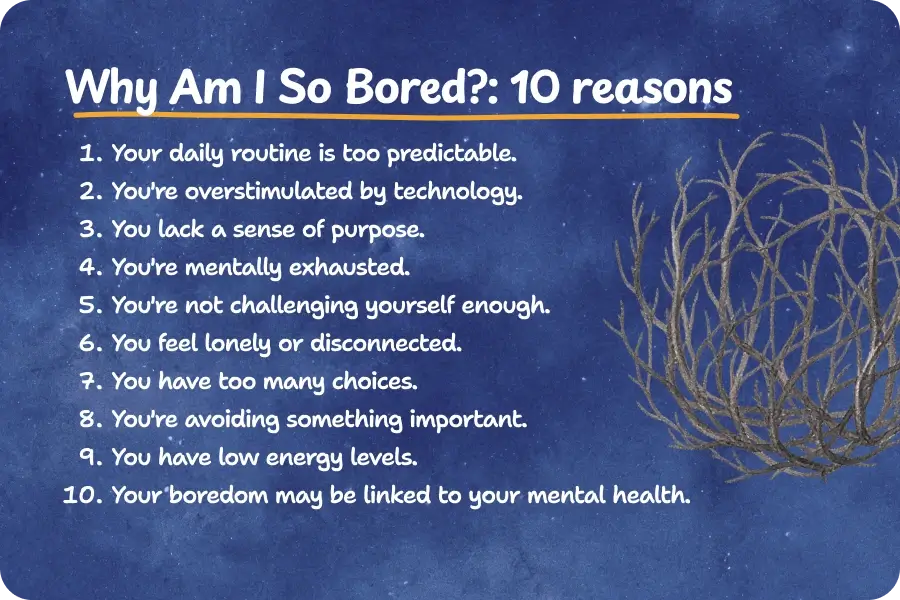
6. You’re Feeling Lonely or Disconnected
You can spend time around other people and still feel bored if your relationships lack depth or genuine connection. Surface-level conversations and limited emotional support may leave you feeling unfulfilled.
Expert Insight
While people may think that being alone or doing nothing is enough to recharge their battery, often times it can leave them feeling more drained. Socializing also requires mental and physical effort, so it’s important to reflect on activities that replenish your energy and prioritize them outside of social engagements.

Hannah Schlueter
Mental health professional
7. You Have Too Many Choices
Having endless options doesn’t always make life more exciting. When you’re faced with hundreds of games, hobbies, or activities, choosing one can become overwhelming. Instead of enjoying something, you may spend your time searching for the perfect option. This is sometimes called choice overload.
8. You’re Avoiding Something Important
Boredom can occasionally act as a distraction from uncomfortable thoughts, emotions, or responsibilities. For example, you might feel restless because you’re postponing a difficult conversation, avoiding an important decision, or feeling dissatisfied with an area of your life.
9. You’re Not Getting Enough Physical Activity
Spending long periods sitting indoors can contribute to low energy and feelings of restlessness. Physical activity supports mood, sleep, and overall mental well-being. Even a short walk outside can provide a change of scenery and help you feel more alert.
10. Your Boredom May Be Connected to Some Mental Health Conditions
Persistent boredom is a common symptom of several underlying conditions:
- depression may involve a loss of interest or pleasure in activities that previously felt enjoyable. This symptom is known as anhedonia;
- attention-deficit/hyperactivity disorder (ADHD) can also involve difficulties regulating attention, particularly during tasks that feel repetitive or insufficiently stimulating.
What Is Boredom?
Boredom is an emotional state that occurs when you want to engage in something meaningful or stimulating but struggle to find an activity that satisfies that desire. It’s not necessarily about having nothing to do. You can feel bored while working, studying, socializing, or even doing something you usually enjoy.
Sometimes, boredom is simply a sign that your brain needs something new. Other times, it can point to deeper issues, such as stress, emotional exhaustion, lack of motivation, or feeling disconnected from your daily life.
There are several ways boredom can manifest:
- Situational boredom. Feeling bored during a repetitive task, long meeting, or uneventful afternoon.
- Chronic boredom. Experiencing boredom frequently, regardless of your activities or surroundings.
- Emotional boredom. Feeling lost, unfulfilled, or uninterested in things that once brought happiness.
- Restless boredom. Wanting to do something exciting but being unable to decide what.
Why Am I Bored Even When I Have Things to Do?
One of the most frustrating forms of boredom happens when your to-do list is full, yet you don’t feel motivated to do anything. This often occurs because being busy and being mentally engaged are not the same thing.
Another possibility is that you’re experiencing decision fatigue. After making choices throughout the day, your brain struggles to decide how to spend your free time.
To overcome this, try separating your activities into three categories:
- Necessary tasks. Responsibilities such as cleaning, working, or paying bills.
- Enjoyable activities. Things you do for pleasure, such as hobbies, games, or socializing.
- Meaningful activities. Experiences that contribute to your goals, values, or personal growth.
8 Practical Strategies To Relieve Boredom
If you’re tired of feeling bored, you don’t need to completely transform your life. Small and consistent quick fixes can help you stop feeling stuck.
1. Identify the Root Cause of Chronic Boredom
Start by identifying what feels missing from your days. Is it excitement, connection, rest, creativity, or a sense of achievement? Or think about the last time you didn’t feel bored. Once you understand what your boredom might be telling you, you can begin making changes that help your life feel more engaging and meaningful.
Expert Insight
If there is nothing you can think of that sounds fun, changing the goal can expand the opportunities available to you. Instead of looking for fun, can you look for things that require creativity, deepen connection, or challenge you? This can be a great place to start.
Hannah Schlueter
Mental health professional
2. Try Something You’ve Never Done Before
Trying new activities can help break the monotony of your daily routine and make life feel more exciting. Instead of asking, “What can entertain me right now?” try asking, “What would make today feel worthwhile?”
It can be something a little unexpected:
- Sign up for an improv comedy class and practice making people laugh
- Visit an escape room and solve puzzles with friends or strangers
- Take a beginner’s aerial yoga, salsa dancing, or rock-climbing class
- Try geocaching, an outdoor treasure hunt using GPS coordinates
- Take a solo trip
- Attend a public lecture on a topic you know absolutely nothing about
3. Reconnect With Old Hobbies
Think about activities you enjoyed as a child or teenager. Drawing, playing sports, writing stories, building things, or playing an instrument may still bring satisfaction.
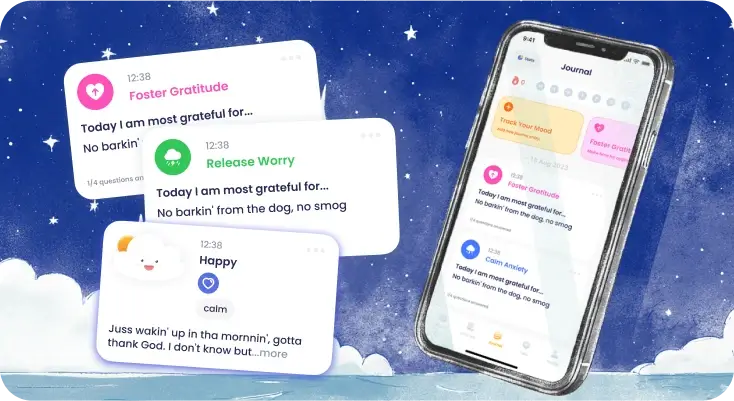
By putting your thoughts and feelings into words, you can learn to recognize, name, and process your emotions instead of ignoring or suppressing them.
4. Create a Personal Challenge
Long-term satisfaction often comes from learning, creativity, and working toward goals that matter to you. Give yourself a goal that feels interesting and achievable.
5. Spend Less Time Mindlessly Scrolling
Instead of automatically reaching for your phone whenever you have free time, pause and ask yourself what you actually want. Sometimes, a short break from digital stimulation can help you rediscover interests that require more attention.
6. Make Plans With Other People
Social activities can introduce spontaneity and variety into your routine. Here are simple ideas to try:
- Arrange a coffee date with your colleague
- Organize a game night with friends
- Join a local book club, hiking group, or creative workshop
7. Change Your Environment
More novelty in casual activities can make everyday moments feel more interesting. Sometimes, a change of scenery is enough to interrupt a boring afternoon.
8. Talk to A Mental Health Professional
A healthcare or mental health professional can help determine whether your experiences are related to stress, burnout, depression, or another concern.
Consider seeking professional support if you notice:
- Little or no enjoyment in activities you previously loved
- Persistent sadness, emptiness, or hopelessness
- Significant changes in sleep, appetite, or energy
- Difficulty concentrating or completing everyday responsibilities
- Withdrawal from friends, family, or social activities
- Feelings of boredom or emotional numbness that continue for weeks
What to Do When You’re Bored Right Now
If you’re looking for immediate inspiration, here are a few effective coping strategies.
| If you feel… | Try this |
| Mentally tired | Take a short walk or rest without screens |
| Restless | Exercise, dance, or explore somewhere new |
| Lonely | Call a friend or arrange a social activity |
| Unmotivated | Complete one small, manageable task |
| Uncreative | Draw, write, cook, or make something |
| Stuck in a routine | Try a new activity or change your surroundings |
| Overwhelmed by choices | Pick one activity and try it for 20 minutes |
Frequently asked questions
1. Why am I bored all the time?
You may feel bored frequently because your daily routine lacks novelty, challenge, meaning, or social connection. Mental exhaustion, excessive screen time, and certain mental health difficulties can also contribute. Identifying when and where boredom occurs can help you understand its cause.
2. Why am I bored with everything in my life?
Feeling bored with everything may indicate that your current activities no longer provide enough stimulation or personal fulfillment. It can also reflect stress, burnout, or emotional exhaustion. If you’ve lost interest in nearly everything you previously enjoyed, consider discussing it with a mental health professional.
3. Why am I bored but don't want to do anything?
This can happen when you’re mentally tired, overwhelmed by choices, or struggling with motivation. You may want stimulation but lack the energy to pursue it. Try resting or starting with a small, low-effort activity rather than forcing yourself into a demanding task.
4. Can ADHD make you feel bored easily?
Some people with ADHD experience frequent boredom, particularly during repetitive or low-stimulation tasks. ADHD can affect attention regulation, motivation, and task initiation. However, boredom alone does not establish an ADHD diagnosis.
5. Can boredom be a good thing?
Yes, occasional boredom may encourage you to reflect on your priorities, explore new interests, rest, or recognize when something in your life needs to change. It may also motivate you to seek more meaningful activities. For some people, quiet periods also create opportunities for creative thinking and problem-solving.
Sources
- Tapper AR, Molas S. Midbrain circuits of novelty processing. October 2020
- Tam KYY, Inzlicht M. People are increasingly bored in our digital age. November 2024
- Salvagioni DAJ, Melanda FN, Mesas AE, González AD, Gabani FL, and Andrade SM. Physical, psychological and occupational consequences of job burnout: A systematic review of prospective studies. October 2017.
Disclaimer
This article is for general informative and self-discovery purposes only. It should not replace expert guidance from professionals.
Any action you take in response to the information in this article, whether directly or indirectly, is solely your responsibility and is done at your own risk. Breeze content team and its mental health experts disclaim any liability, loss, or risk, personal, professional, or otherwise, which may result from the use and/or application of any content.
Always consult your doctor or other certified health practitioner with any medical questions or concerns
Breeze articles exclusively cite trusted sources, such as academic research institutions and medical associations, including research and studies from PubMed, ResearchGate, or similar databases. Examine our subject-matter editors and editorial process to see how we verify facts and maintain the accuracy, reliability, and trustworthiness of our material.
Was this article helpful?