


Podcast name
Combined ADHD in Women
Do you feel like you can’t focus when you need to, but can’t slow your mind down when you finally do? You could be experiencing a pattern of both inattentive and hyperactive-impulsive symptoms, known as the combined presentation of ADHD. Find out whether a hidden diagnosis of ADHD explains what you’re experiencing.

What Is Combined ADHD?
Attention deficit/hyperactivity disorder (ADHD) is commonly described using three presentations [2] NIMH. Attention-Deficit/Hyperactivity Disorder (ADHD). December 2024 :
- Predominantly inattentive presentation
- Predominantly hyperactive-impulsive presentation
- Combined presentation
According to The Diagnostic and Statistical Manual of Mental Disorders, Fifth Edition (DSM-5-TR (Text Revision, 2022), a combined presentation of ADHD requires at least five inattentive symptoms and five hyperactive-impulsive symptoms present for at least six months [1] American Psychiatric Association. Diagnostic and statistical manual of mental disorders (5th ed., text rev.) 2022 . Importantly, “combined” does not mean that a person simply has two separate disorders. It describes a pattern of ADHD symptoms occurring together.
Women may also develop strong compensatory strategies that make their difficulties less visible to other people. As a result, the amount of effort required to function successfully may not be obvious from the outside [3] Quinn PO, Madhoo M. A review of attention-deficit/hyperactivity disorder in women and girls: uncovering this hidden diagnosis. October 2014 .
Wondering whether you might have ADHD? Taking the ADHD quiz for women can help you identify common ADHD symptoms and determine whether it may be worthwhile to seek a professional assessment from a healthcare provider.
Note: This online quiz is intended solely for self-reflection and to facilitate a conversation with a medical provider. It is not to be used as a diagnostic tool.
Combined-Type ADHD Symptoms in Women
Combined ADHD can affect children, teenagers, and adults. Its symptoms may influence school, work, relationships, finances, daily routines, and emotional well-being. Understanding how combined ADHD presents can help women recognize when difficulties may be more than occasional distraction or restlessness.
Symptoms of Inattention
The inattentive presentation can affect a person’s ability to focus, organize information, remember responsibilities, and complete tasks.
Common inattentive symptoms include:
- Making careless mistakes or overlooking details
- Difficulty maintaining attention during conversations, meetings, reading, or other activities
- Appearing not to listen even when someone is speaking directly to them
- Struggling to follow through on instructions or finish tasks
- Difficulty organizing work, schoolwork, or household responsibilities
- Avoiding tasks that require prolonged mental effort
- Frequently losing important belongings
- Becoming easily distracted by external events or unrelated thoughts
- Forgetting appointments, responsibilities, or everyday activities
Symptoms of Hyperactivity and Impulsivity
Hyperactivity does not always mean constantly running around or being physically unable to sit still. In older teenagers and adults with ADHD, it can appear as internal restlessness, difficulty relaxing, or a persistent need to stay busy.
Possible hyperactive impulsive symptoms include:
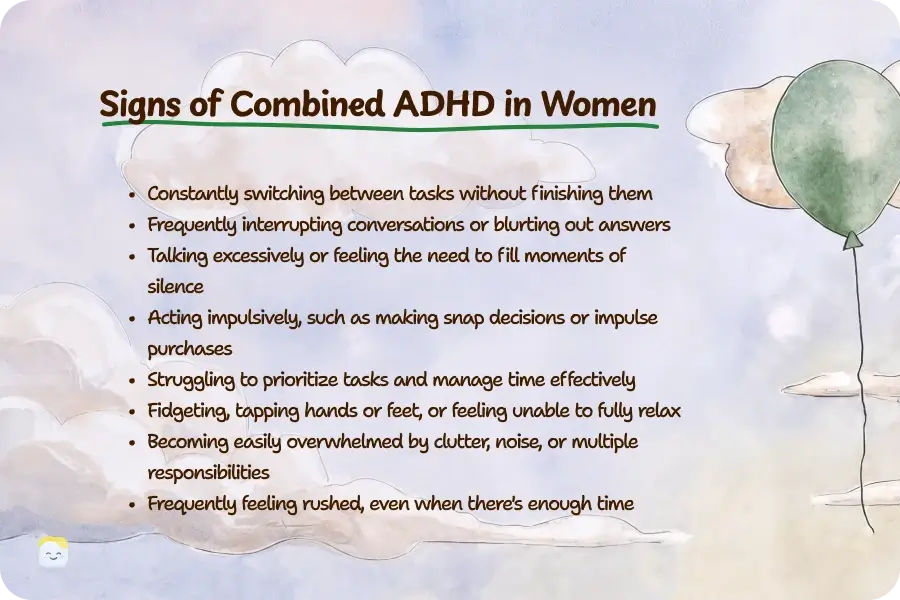
- Fidgeting or frequently moving hands, feet, or the body
- Difficulty remaining seated when expected to do so
- Feeling restless and impatient
- Having difficulty engaging quietly in activities
- Feeling as though you’re constantly “on the go”
- Talking excessively
- Interrupting or answering questions before they have been completed
- Difficulty waiting for your turn
- Intruding on other people’s conversations or activities
- Acting quickly without fully considering the consequences
Discover more about your neurotype through five key brain traits that shape the way you think, focus, learn, and communicate. Understand how your brain processes information, learn how it influences your daily life, and uncover practical ways to support your unique way of thinking and working.

What Does Combined ADHD in Women Look Like in Everyday Life?
Combined ADHD can create a pattern in which a person has difficulty both directing attention and regulating behavior or impulses.
For example, you may begin a task with enthusiasm, become distracted several times, leave the task unfinished, and then suddenly decide to complete it under intense time pressure. During a conversation, you may struggle to stay focused while simultaneously feeling an urge to interrupt because you are afraid you will forget what you want to say.
At work, you might have excellent ideas and periods of intense productivity, but struggle with deadlines, paperwork, meetings, or routine administrative tasks. At home, you may plan to do several chores but get distracted by another activity before finishing the first one.
Why Does Combined ADHD Happen?
Understanding the condition can reduce the tendency to interpret ADHD-related difficulties as personal failures. ADHD is not caused by poor parenting, laziness, or a lack of discipline. Key factors include:
- Genetics. ADHD often runs in families, making genetics an important factor.
- Brain development. Differences in brain structure and how certain brain networks function may contribute to ADHD symptoms [2] NIMH. Attention-Deficit/Hyperactivity Disorder (ADHD). December 2024 .
- Developmental factors. Early developmental factors may influence how ADHD symptoms appear and affect daily life.
Expert Insight
A woman can be diagnosed with ADHD even if she doesn’t have the typical physical hyperactivity that is associated with it. ADHD often presents in women without hyperactivity. Women may be more likely to internalize ADHD symptoms. Sometimes it can present as internal restlessness instead of a feeling of being unable to relax or unwind.

Emily Mendez
Mental health professional
Combined ADHD Diagnosis
There is no single blood test, brain scan, or laboratory test that can diagnose ADHD. A qualified mental health professional typically evaluates the person’s symptoms, developmental history, and functioning across different areas of life. The assessment also considers whether symptoms have been present since childhood and whether they cause impairment.
Women with combined ADHD may also experience other mental health conditions at the same time, such as:
- Anxiety disorders
- Depression
- Sleep disorders
- Learning difficulties
- Eating disorders
- Mood disorders
- Substance abuse disorders
Hormonal Impact on ADHD
Hormonal changes can affect how ADHD symptoms feel and function in women. Changes in estrogen and other hormones during different stages of life may influence attention, mood, energy, and emotional regulation.
- Menstrual cycle. ADHD symptoms may feel stronger for some women before or during their period.
- Pregnancy and the postpartum period. Hormonal changes may affect attention, mood, and how women experience ADHD symptoms.
- Perimenopause and menopause. Declining estrogen levels may contribute to increased difficulties with focus, memory, and executive functioning.
Treatment for Combined ADHD
Depending on a person’s age, symptoms, circumstances, and preferences, management may include medication, behavioral interventions, psychotherapy, organizational strategies, or combinations of these approaches.
ADHD Medications
There are two main types of ADHD medications:
- Stimulant medications. These are commonly used to treat ADHD and can work relatively quickly.
- Non-stimulant medications. These may be an option for people who do not respond well to stimulants or experience unwanted side effects.
Medications can help manage ADHD symptoms and make everyday tasks easier. They may help with:
- Improving focus and attention
- Reducing impulsive behavior
- Improving emotional regulation
- Managing hyperactivity and restlessness
- Improving organization and task completion
Psychotherapy for ADHD
Psychotherapy, particularly cognitive behavioral therapy (CBT), can help women with ADHD balance work, relationships, family responsibilities, and societal expectations while managing ADHD symptoms.
Lifespan Approach: Providing Guidance for Adults with ADHD
A lifespan approach focuses on helping adults with ADHD build practical skills that support work, relationships, health, and everyday responsibilities.
Helpful strategies may include:
1. Breaking large projects into smaller tasks
For example, instead of “finish a work project,” break it down into gather information → create an outline → complete the first section → review the work → submit the final version. This makes the task feel less overwhelming and gives you clear steps to follow.
2. Using calendars, alarms, and reminders
External reminders can reduce the need to rely on memory. Digital calendars, phone alarms, task lists, and reminder apps can help with appointments, deadlines, and daily responsibilities.
3. Creating consistent routines
Having regular routines for waking up, working, eating, exercising, and preparing for bed can reduce decision-making and make important tasks easier to remember.
4. Reducing unnecessary distractions
Turning off nonessential notifications, keeping the workspace organized, using headphones, or working in a quieter environment can make it easier to maintain attention.
5. Keeping frequently used items in designated locations
Giving keys, wallets, phones, medications, and other important items a specific place can reduce the time spent searching for them.
6. Using written instructions
Writing down instructions, important information, or the steps of a task can be more reliable than trying to remember everything. Checklists can be especially useful for repetitive or multi-step tasks.
7. Adding structure around deadlines
Instead of relying on one final deadline, setting smaller deadlines and reminders throughout a project can make it easier to stay on track and avoid last-minute pressure.
8. Pausing before making impulsive decisions
Creating a habit of stopping briefly before responding, spending money, sending a message, or making an important decision can provide time to consider possible consequences.
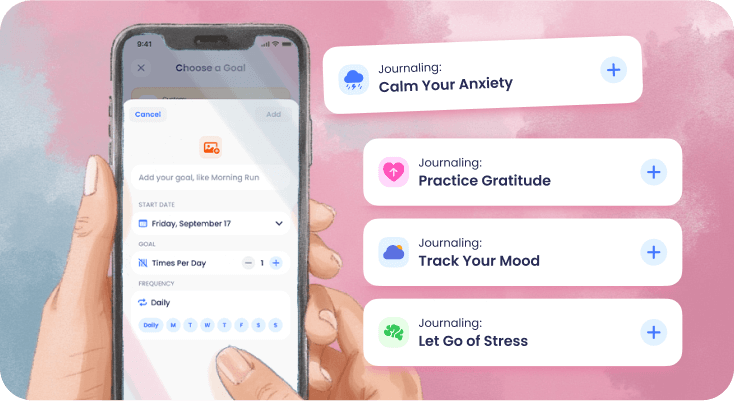
If you’re looking to improve your daily habits and create a more structured routine, the Breeze app can help. It offers practical tools designed to make habit-building feel more manageable and consistent. With easy-to-follow routines and small, achievable steps, Breeze can help you stay on track and turn positive actions into part of your everyday life. Instead of trying to change everything at once, you can focus on small improvements that are easier to maintain.
Final Thoughts
Combined ADHD is a presentation of ADHD characterized by clinically significant symptoms of both inattention and hyperactivity-impulsivity. Hyperactivity in women may sometimes appear as internal restlessness, excessive talking, constant activity, difficulty relaxing, or feeling driven to keep busy. Inattention can simultaneously lead to forgetfulness, disorganization, procrastination, and difficulty managing multiple responsibilities.
With effective treatment, practical strategies, and behavioral therapy, women who experience symptoms of combined ADHD can improve daily functioning and build successful careers, relationships, and lives.
If difficulties with attention, organization, restlessness, or impulsivity are persistent and interfere with work, education, relationships, or everyday responsibilities, discuss them with a qualified healthcare professional.
Frequently asked questions
1. What is combined ADHD?
Combined ADHD, officially called attention deficit/hyperactivity disorder, combined presentation, means a person has significant symptoms of both inattention and hyperactivity-impulsivity.
2. What are the main signs of combined ADHD in women?
Common signs of mixed-type ADHD include difficulty focusing, forgetfulness, disorganization, procrastination, restlessness, excessive talking, interrupting others, difficulty waiting, poor time management, and reduced impulse control. Symptoms in women with ADHD may be overlooked due to societal expectations and coping strategies, making a proper diagnosis more difficult.
3. Does having some of these symptoms mean I have combined ADHD?
Not necessarily. Everyone can experience forgetfulness, trouble focusing, restlessness, or impulsive behavior from time to time. ADHD involves a persistent pattern of symptoms that began during development and causes difficulties in everyday life. A professional mental health assessment is needed for an accurate diagnosis.
4. How is combined ADHD diagnosed?
A licensed mental health professional (psychiatrist, clinical psychologist, or psychiatric nurse practitioner) will typically assess symptoms, developmental history, and how they affect different areas of life while also ruling out other possible causes.
5. What are the treatment options for combined ADHD?
A treatment plan may include medication, behavioral strategies, psychotherapy, education about ADHD, and practical tools for managing attention, organization, and impulsivity.
Sources
- American Psychiatric Association. Diagnostic and statistical manual of mental disorders (5th ed., text rev.) 2022
- NIMH. Attention-Deficit/Hyperactivity Disorder (ADHD). December 2024
- Quinn PO, Madhoo M. A review of attention-deficit/hyperactivity disorder in women and girls: uncovering this hidden diagnosis. October 2014
- Wettstein, R., Navarro Ovando, V., Pirgon, E., Kroesen, J., Wettstein, K., Kroesen, H., Mathôt, R., & Dumont, G. Absent or Hidden? Hyperactivity in Females With ADHD. August 2024
- Substance Abuse and Mental Health Services Administration. Advisory: Adults With Attention Deficit Hyperactivity Disorder and Substance Use Disorders. November 2015
Disclaimer
This article is for general informative and self-discovery purposes only. It should not replace expert guidance from professionals.
Any action you take in response to the information in this article, whether directly or indirectly, is solely your responsibility and is done at your own risk. Breeze content team and its mental health experts disclaim any liability, loss, or risk, personal, professional, or otherwise, which may result from the use and/or application of any content.
Always consult your doctor or other certified health practitioner with any medical questions or concerns
Breeze articles exclusively cite trusted sources, such as academic research institutions and medical associations, including research and studies from PubMed, ResearchGate, or similar databases. Examine our subject-matter editors and editorial process to see how we verify facts and maintain the accuracy, reliability, and trustworthiness of our material.
Was this article helpful?