



Do you often read the same paragraph multiple times or constantly forget why you entered a room? Learn how to recognize inattentive symptoms of ADHD and improve your daily functioning.
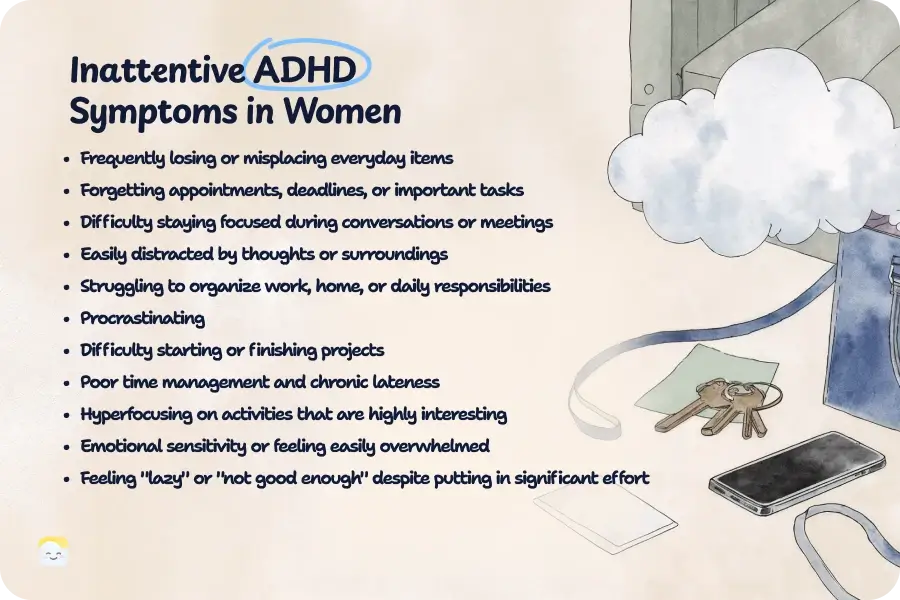
16 Common Inattentive ADHD Symptoms
Symptoms of inattentive ADHD may fluctuate depending on stress, interest, sleep, and hormonal changes.
1. You have difficulties sustaining attention
You may feel it as a constantly busy mind, struggling to focus on routine tasks, forgetting important details, feeling overwhelmed by everyday responsibilities, and always feeling as though you’re falling behind despite trying your best.

2. You frequently lose or misplace items
Constantly searching for keys, phones, glasses, wallets, or important documents is a common experience. These items may be placed in unusual locations or forgotten entirely, which can lead to frustration and wasted time.
3. You’re forgetful
Forgetting appointments, birthdays, deadlines, errands, or even daily tasks is one of the hallmark symptoms for women with ADHD. They may rely heavily on calendars, alarms, sticky notes, or reminder apps to compensate for memory difficulties.
Think you might have ADHD? Taking the ADHD quiz for women can help you identify common ADHD symptoms and determine whether it may be worthwhile to seek a professional assessment from a therapist.
4. You’re always late
Women with inattentive ADHD may underestimate how long tasks will take, struggle to plan their day, or frequently arrive late despite making a sincere effort to be on time. They may also lose track of time when deeply engaged in an activity.
Discover more about your neurotype through five key brain traits that shape the way you think, focus, learn, and communicate. Understand how your brain processes information, learn how it influences your daily life, and uncover practical ways to support your unique way of thinking and working.

5. You procrastinate a lot
Starting tasks can feel mentally overwhelming, even when they are important or urgent. As a result, work is often delayed until the last minute, when the pressure of an approaching deadline finally provides enough motivation to begin.
6. You have difficulties organizing tasks
Planning projects, prioritizing responsibilities, and keeping track of multiple commitments can be challenging. Household chores, work assignments, and personal obligations may quickly become overwhelming without structured systems.
7. You’re easily distracted
Environmental factors like external noises or conversations, as well as phone notifications or even unrelated thoughts, can interrupt concentration. Switching attention between tasks may happen frequently, making it difficult to complete work efficiently.
Expert Insight
There are many misconceptions that women diagnosed with ADHD, predominantly inattentive type, are subjected to, two major ones are being perceived as lazy or unintelligent. In actuality, this is usually the opposite of these women, as they have had to come up with many creative and persistent ways to keep up with the ‘productivity’ pace. These misconceptions have a heavy impact on the self-esteem of those with this type of ADHD. It can be utterly exhausting to have to constantly ‘prove’ yourself to the outside world, even though the only sliver of difference is your brain style.

Katherine Scott
Mental health professional
8. You have trouble completing projects
Women with inattentive ADHD symptoms may enthusiastically begin new hobbies, work projects, or home improvements, but struggle to maintain interest long enough to finish them. Eventually, numerous unfinished tasks can accumulate.
9. You experience mental clutter on a consistent basis
Adult ADHD can leave the mind feeling constantly busy, with multiple thoughts competing for attention and making it difficult to focus on a single task. This mental “noise” can make decision-making, concentration, and relaxation more difficult.
10. You mentally “drift” during conversations routinely
Rather than appearing hyperactive, women with inattentive ADHD may experience daydreaming, zoning out, or drifting into their own thoughts. During conversations or meetings, they may suddenly realize they missed part of what was being said.
11. You experience hyperfocus and do deep dives often
Although ADHD is associated with distractibility, many people also experience hyperfocus—an intense concentration on activities they find highly interesting or rewarding. During these periods, they may lose track of time, skip meals, or ignore other responsibilities because of difficulty switching between tasks.
12. You feel constantly overwhelmed
Simple everyday tasks and responsibilities, such as replying to emails, paying bills, preparing meals, and managing family schedules, can feel mentally exhausting.
13. You experience challenges with emotional regulation
Women with inattentive ADHD may experience strong impatience, emotional reactions, frustration, or sensitivity to criticism. They may become easily overwhelmed by stress or have difficulty regulating emotions after upsetting situations.
14. You often make careless mistakes
Difficulty maintaining attention to detail can lead to frequent mistakes at work or school, such as overlooking instructions, missing important information, or making errors despite understanding the material.
15. It’s difficult for you to follow instructions
Multi-step directions can be difficult to remember, especially when given verbally. Women with inattentive ADHD may need written instructions or repeated explanations to complete tasks accurately.
16. You have low self-esteem
Years of struggling with underlying ADHD can lead women to believe they are lazy, careless, or incapable. These beliefs often become deeply ingrained despite trying harder. Repeated experiences of forgetting appointments, missing deadlines, or struggling with routine tasks can gradually erode self-confidence in women with a hidden diagnosis of inattentive ADHD.
Receiving an ADHD diagnosis often helps explain these lifelong challenges and replace self-doubt with understanding.
What Is an Inattentive ADHD Diagnosis?
ADHD is a neurodevelopmental condition that affects executive functioning—the brain’s ability to plan, prioritize, organize, regulate attention, and manage emotions [1] NIMH. Attention-Deficit/Hyperactivity Disorder (ADHD). December 2024 . The inattentive presentation is characterized less by physical hyperactivity and more by persistent challenges with sustained attention and mental organization.
For decades, attention-deficit/hyperactivity disorder (ADHD) was widely considered a condition that primarily affected hyperactive young boys. As a result, countless women grew up without understanding why they constantly felt overwhelmed, forgetful, emotionally exhausted, or unable to meet the expectations placed upon them.
Today, research suggests a different reality: many women have predominantly inattentive ADHD, a presentation that is quieter, less disruptive, and therefore far more likely to be overlooked [2] Quinn PO, Madhoo M. A review of attention-deficit/hyperactivity disorder in women and girls: uncovering this hidden diagnosis. October 2014 .
ADHD and Hormonal Fluctuations
Female hormones influence dopamine, one of the key neurotransmitters involved in ADHD. Some women notice that ADHD symptoms become significantly worse during:
- The menstrual cycle
- Pregnancy
- Postpartum
- Perimenopause
- Menopause
Expert Insight
Common hormone shifts and imbalances with hormones such as estrogen, progesterone, and testosterone can fluctuate one’s experience of ‘brain fog.’ Pair these fluctuations with a Neurotype that experiences inattentive-type ADHD, and overall functioning and productivity can become extremely impaired. This is an area of women’s health that is underrepresented and lacks support, which greatly impacts those with ADHD, inattentive type.
Katherine Scott
Mental health professional
Why Are Women So Often Misdiagnosed?
Many women receive a diagnosis only in their 30s, 40s, or even later. Some are diagnosed after their child receives an ADHD evaluation, and they recognize the same lifelong patterns in themselves. Here are key factors that contribute to delayed diagnosis:
1. They develop coping mechanisms
Girls are often socialized to be polite, compliant, and responsible. Instead of acting out, many hide their struggles. They may spend hours compensating for disorganization, relying on elaborate reminder systems, perfectionism, or constant anxiety to stay on top of responsibilities. As a result, they may meet deadlines through all-night work sessions or remember appointments through multiple alarms.
From the outside, they appear successful, but inside, they feel like they’re barely holding everything together, putting in extraordinary effort.
2. ADHD symptoms look different
Because of gender differences, symptoms of inattentive ADHD in adult women can be mistaken for personality traits or stress. Instead of obvious hyperactivity, women may experience:
- Racing thoughts
- Chronic overwhelm and overstimulation
- Internal restlessness
- Emotional sensitivity
- Difficulty starting tasks
- Mental fatigue
- Decision paralysis
Common Misdiagnoses
Because inattentive ADHD shares symptoms with several mental health conditions, women can be initially diagnosed with:
- Anxiety disorders
- Depression
- Mood disorders
- Burnout
- Chronic stress
- Bipolar disorder
- Personality disorders
- Central nervous system (CNS) disorders
These conditions can certainly coexist with ADHD, making the diagnosis more complex.
A comprehensive mental health evaluation usually involves:
- A detailed developmental history
- Discussion of childhood symptoms
- Standardized ADHD questionnaires
- Assessment of executive functioning difficulties
- Evaluation for other medical or psychological conditions
How To Treat Inattentive ADHD in Adult Women
Effective ADHD management often involves a combination of medication, behavioral therapy, education, and practical support strategies:
1. Medication
Stimulant and non-stimulant medications can improve memory, attention, and executive functioning for many people. Medication is not a cure, but it can significantly reduce daily struggles and help manage inattentive ADHD.
2. Therapy
One of the most healing moments for many women comes after a proper diagnosis. The lifelong feeling of being lazy, disorganized, or “not trying hard enough” is replaced with something much more accurate: “My brain works differently.”
Cognitive behavioral therapy (CBT) tailored for ADHD can help women develop practical strategies for:
- Time management
- Emotional regulation
- Organization
- Self-compassion
- Reducing perfectionism
3. Lifestyle strategies
The goal is not to become “more disciplined” but to create systems that work with an ADHD brain rather than against it. Helpful approaches include:
- External reminders instead of relying on memory
- Breaking large tasks into smaller steps
- Body doubling (working alongside another person)
- Consistent sleep routines
- Meditation
- Regular physical activity
- Reducing unnecessary decision-making
- Routines of regulation
- Using visual calendars and planners
4. ADHD support groups
Joining a support group can help you connect with others who share similar experiences and reduce feelings of isolation. Support groups may offer:
- A safe, non-judgmental space to share experiences
- Practical tips for managing symptoms effectively
- Emotional support from people who understand ADHD firsthand
- Opportunities to learn about treatment options and coping skills
Support groups are available in many formats, including in-person meetings, virtual groups, peer-led communities, and professionally facilitated programs. Some groups are designed specifically for adults with ADHD, women with ADHD, parents of children with ADHD, or partners and family members.
You may consider these trusted organizations:
- Children and Adults with Attention-Deficit/Hyperactivity Disorder (CHADD): Offers local chapters, virtual support groups, educational webinars, and resources for adults, parents, and caregivers.
- Attention Deficit Disorder Association (ADDA): Focuses exclusively on adults with ADHD and provides online peer support groups, educational events, and coaching resources.
- Attention Deficit Hyperactivity Disorder Foundation (ADHD Foundation): Provides information, community resources, and support services for people with ADHD and their families.
Final Thoughts
Inattentive ADHD in women has long been underrecognized, leaving many to struggle in silence while believing their difficulties reflect personal shortcomings. Recognizing the signs, seeking a mental health assessment, and accessing appropriate treatment can make a profound difference in daily life and well-being.
If you see yourself in these experiences, remember that ADHD is a medical condition, not a character flaw. An accurate diagnosis can provide clarity, effective support, and a renewed sense of confidence in understanding how your mind works.
Frequently asked questions
1. What are the most common symptoms of inattentive ADHD in women?
Common symptoms include forgetfulness, difficulty staying focused, poor organization, chronic procrastination, losing items frequently, trouble managing time, mental overwhelm, and becoming easily distracted. Many women also experience emotional sensitivity and exhaustion from trying to stay organized.
2. Why is inattentive ADHD often missed in women?
Women are more likely to have internalized symptoms rather than obvious hyperactivity. Many learn to mask their struggles by working harder, relying on planners and reminders, or developing perfectionistic habits, making their ADHD less noticeable.
3. At what age is inattentive ADHD usually diagnosed in women?
Many women are diagnosed in adulthood, often in their 30s or 40s. Some only seek an evaluation after their child is diagnosed with ADHD or when increasing responsibilities make their symptoms more difficult to manage.
4. Is inattentive ADHD the same as anxiety?
No. Although the two conditions share symptoms such as difficulty concentrating and feeling overwhelmed, they are different disorders. ADHD and anxiety can also occur together, so a comprehensive evaluation is important for an accurate diagnosis.
5. Can inattentive ADHD be treated?
Yes. Treatment may include medication, cognitive behavioral therapy (CBT), ADHD coaching, lifestyle adjustments, and practical strategies such as using reminders, breaking tasks into smaller steps, and creating structured routines.
Sources
- NIMH. Attention-Deficit/Hyperactivity Disorder (ADHD). December 2024
- Quinn PO, Madhoo M. A review of attention-deficit/hyperactivity disorder in women and girls: uncovering this hidden diagnosis. October 2014
- Substance Abuse and Mental Health Services Administration. Advisory: Adults With Attention Deficit Hyperactivity Disorder and Substance Use Disorders. November 2015
Disclaimer
This article is for general informative and self-discovery purposes only. It should not replace expert guidance from professionals.
Any action you take in response to the information in this article, whether directly or indirectly, is solely your responsibility and is done at your own risk. Breeze content team and its mental health experts disclaim any liability, loss, or risk, personal, professional, or otherwise, which may result from the use and/or application of any content.
Always consult your doctor or other certified health practitioner with any medical questions or concerns
Breeze articles exclusively cite trusted sources, such as academic research institutions and medical associations, including research and studies from PubMed, ResearchGate, or similar databases. Examine our subject-matter editors and editorial process to see how we verify facts and maintain the accuracy, reliability, and trustworthiness of our material.
Was this article helpful?