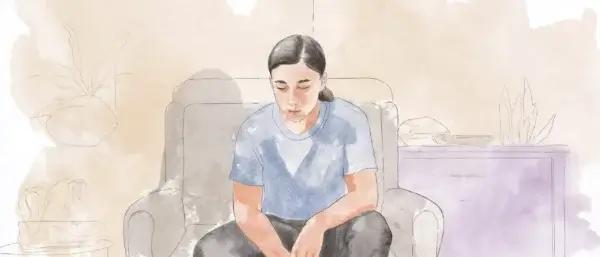



Are you in a relationship and still feel emotionally alone? Emotional neglect in a relationship is a repeated lack of care for a partner’s emotional needs. Here are signs to watch for and what you can do about them.
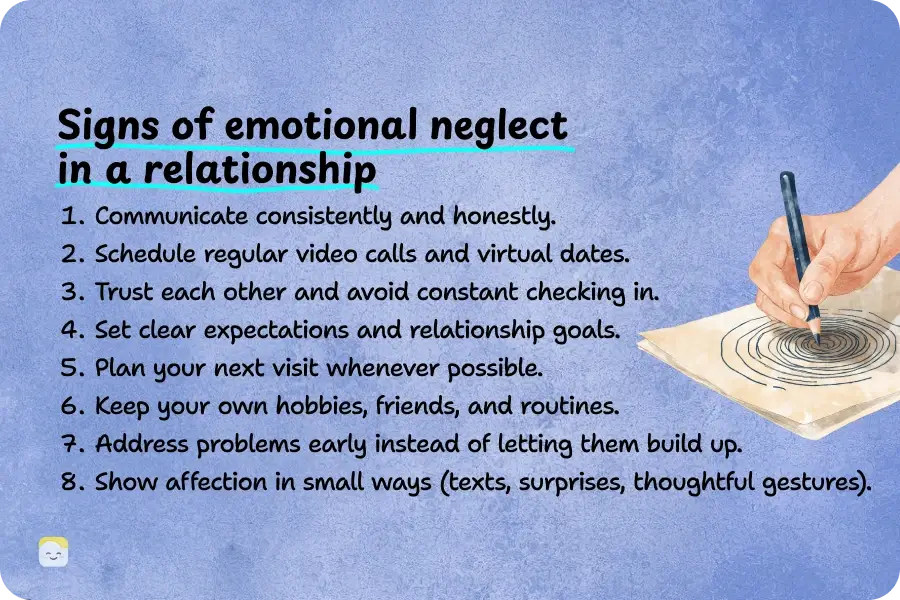
8 Signs of Emotional Neglect in a Relationship
You might recognize emotional neglect in dismissed feelings or in the effort it takes to get a personal conversation going.
1. Your Feelings Become a Debate
You tell your partner their comment hurt you. The reply is a long explanation of why it shouldn’t have hurt. By the end, you’ve defended your reaction without discussing the comment at all.
A partner can remember an event differently and still hear you out. “I thought we were joking. Which part upset you?” leaves room for a conversation. Repeatedly calling you dramatic closes it.
2. Good News Falls Flat
You finally finish the qualification you’ve been working toward. Your partner says “nice” without looking up. Later, a friend asks about the exam, and you realize how much you’d wanted that interest at home.
3. Affection Feels Difficult to Discuss
You miss the warm greeting at the door or a message just to say hello. When you mention it, your partner treats the wish itself as unreasonable. They don’t try to understand why it matters to you. Eventually, you may stop asking for small gestures of affection because you expect to be dismissed, criticized, or made to feel needy for wanting them.
Take an Attachment Style Test to discover your attachment pattern and learn more about how it may shape connection and comfort in relationships.

4. There Is No Follow-Up
You mentioned a job interview on Tuesday. By Friday, your partner still hasn’t asked about it. When you volunteer the news, they seem surprised that it mattered so much.
The concern grows when you regularly have to explain an event, request interest, and then remind your partner to ask. You begin to wonder whether your experiences register at all.
5. Staying Close Has Become Your Job
You suggest the walk, arrange time together, and restart conversations after arguments. When you stop making plans, nothing replaces them.
Partners don’t have to contribute in identical ways. Someone who dislikes arranging dates might regularly check in during the day. Think about whether you can recognize their effort, and whether they take some responsibility when the relationship feels distant.
6. Difficult Conversations Never Resume
“Can we talk later?” ends the discussion. Later keeps moving, and bringing up the subject again makes you the one who “won’t let things go.”
Taking a break can help someone settle down. Agreeing when to return makes the pause useful: “I need an hour. Let’s talk after the kids are asleep.” Notice whether that return actually happens.
7. You Know the Schedule, but Little Else
Your messages cover groceries, school pickup, and who’s using the car. Ask what has been on your partner’s mind lately, and you have to guess.
This can make emotional neglect in marriage easy to miss. The household works. You get through the week. Yet the relationship starts to feel like sharing a flat with an efficient roommate. Personal conversations have gradually disappeared.
8. You Have Stopped Telling the Whole Story
After a rough day, you sit in the car for a few extra minutes before going inside. You expect advice or criticism when you want someone to listen. Eventually, you may stop reaching out altogether and learn to handle difficult emotions on your own.
You tell a colleague about a disappointment before telling your spouse. You type a message, read it back, and delete it because it sounds “too needy.” By the time you do sit down together, you can hardly remember what you wanted to say.
“It was fine” becomes your usual answer, even on days when it wasn’t. You leave out the worry because you don’t have the energy for another disappointing exchange.
What Does Emotional Neglect in Relationships Look Like?
You may manage daily life together while personal conversations keep stalling. Your partner remembers the shopping, yet seems unsure what to do when you’re upset.
Perhaps you mention a difficult call with your sister. “She’s always like that,” they say, and ask whether you’ve paid the electricity bill. You were hoping to talk about why the call upset you. After enough exchanges like this, you learn to keep the story short.
Emotional distance can have many causes, but if you often feel dismissed, you may be wondering whether narcissistic traits are part of the picture. Take a Narcissistic Partner Test to explore common relationship patterns and better understand what you’re experiencing.

Is It Neglect or a Rough Patch?
A rough patch usually has some room for acknowledgment and repair. With ongoing emotional neglect, attempts to address the distance repeatedly lead nowhere. Consider the response as well as the missed moment.
| What happens | A useful question |
| Your partner is overloaded with work or caregiving | Can we agree on a small, realistic way to stay in touch? |
| They offer advice when you want comfort | Do they adjust once I explain what helps? |
| You have raised the same unmet need several times | Does anything change without another reminder? |
| You feel afraid to speak honestly | Who can I contact privately for support? |
Your partner may communicate differently from you. Ask what works for them, as well as explaining what works for you. Neither a personality label nor a count of missed conversations can settle whether your emotional needs are being neglected.
Why Does Emotional Neglect Happen?
Emotional neglect doesn’t always come from a lack of love or caring. Sometimes, it develops from habits, stress, or unresolved issues that make emotional connection harder:
- Old relationship habits. A partner may have learned to avoid emotional conversations, minimize feelings, or focus on practical solutions rather than emotional support. These patterns can become automatic over time.
- Unresolved relationship difficulties. Ongoing resentment, conflict, or emotional disconnection can reduce affection and responsiveness between partners.
- Difficulty with emotional intimacy. Someone who is used to handling everything alone may have little experience expressing vulnerability or offering comfort when a partner is upset.
- Childhood experiences. A history of childhood trauma may affect how someone learns to recognize and respond to emotions in adulthood [1] Kumari V. Emotional abuse and neglect: time to focus on prevention and mental health consequences. November 2020 .
- Stress and burnout. Work pressure, financial worries, caregiving responsibilities, or prolonged stress can leave someone with less emotional energy and attention at home.
Expert Insight
Often, the change is gradual: stress, caregiving, or routine slowly crowd out the small moments of turning toward each other, and neither partner notices until the distance feels large. Withdrawal also feeds itself. When bids for connection are missed a few times, people share less, which gives the other partner fewer chances to respond. It’s worth asking both “what changed in them?” and “what changed in how we reach for each other?”, because the answer is usually some of both. Naming the shift without blame (“I’ve noticed I tell you less than I used to, and I miss that”) is often a better opening than trying to work out who caused it.

Grady Shumway
Mental health professional
How Can Emotional Neglect Affect You?
Feeling emotionally neglected can affect more than your mood in the moment. When your emotional needs are repeatedly overlooked, you may start questioning yourself, your relationship, and even whether your needs are reasonable.
- You may doubt your needs. You might wonder whether you’re asking for too much, especially if your partner regularly treats your requests for affection, reassurance, or attention as excessive.
- Your self-esteem may suffer. Repeatedly feeling unheard or unimportant can make you question your worth or wonder why your needs seem difficult for your partner to meet.
- You may stop asking for support. If previous attempts have ended in dismissal or criticism, you may learn to keep your feelings to yourself rather than risk another disappointing response.
- Resentment can build. When you’ve clearly explained what you need, and nothing seems to change, frustration can turn into anger, disappointment, sexual repression, or emotional distance.
- You may feel lonely despite being together. Emotional neglect can create a particular kind of loneliness: having a partner physically present yet feeling as though you’re carrying your emotional life alone.
- You may become more sensitive to rejection. When the connection feels inconsistent, small moments of distance can feel especially painful or threatening.
- Communication can become harder. You may either repeatedly bring up the same issue in hopes of finally being heard or avoid difficult conversations altogether.
- You may begin questioning the relationship. You might wonder whether the problem is your expectations, your partner’s behavior, or the relationship’s ability to provide the emotional connection you need.
How to Deal With Emotional Neglect in a Relationship
According to the U.S. Centers for Disease Control and Prevention, meaningful talks can relieve stress and promote resilience [2] Centers for Disease Control and Prevention. Conversations Matter. May 2023 . That’s why it’s important to create space for honest, respectful communication about your emotional needs and to pay attention to how your partner responds.
1. Put the Missing Support into Words
Write down a recent moment while you still remember the details.
- What did you say?
- What happened next?
- What were you hoping your partner would do?
Try naming the support you need: “Could you hear me out before we think about solutions?” A willing response may reveal a simple mismatch. If even that request keeps getting brushed aside, you have something more specific to discuss than “we don’t communicate.”
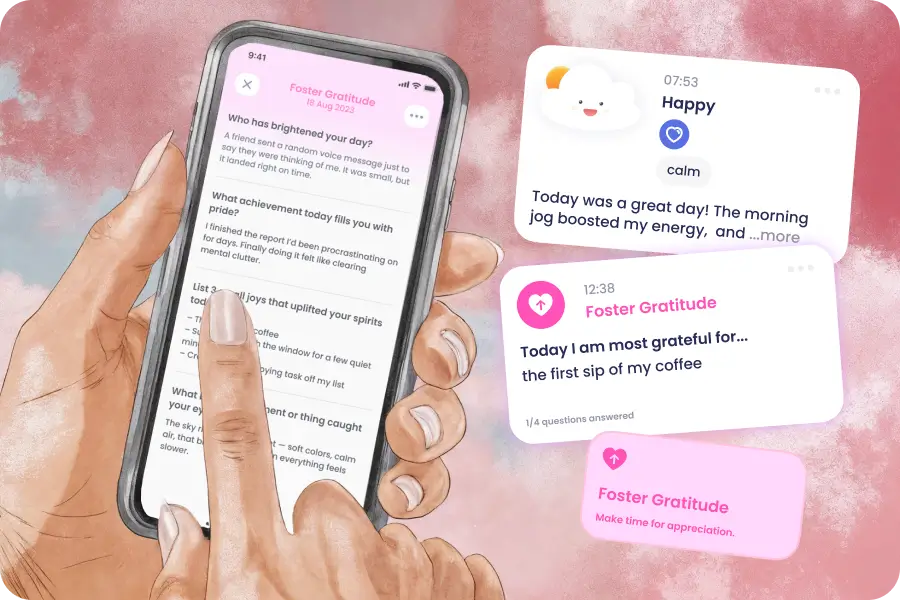
Breeze’s guide to recognizing your feelings can help you prepare. Breeze’s journaling prompts can help you write down the moment before deciding what to share.
2. Choose a Time You Can Both Talk
“We hardly talk after work anymore. Are you exhausted, or is something else going on?” gives your partner a chance to explain. If evenings are the problem, perhaps you could talk over breakfast.
If they reply, “But I do so much for you,” you can acknowledge that care: “I appreciate that you drove me to the appointment. I also wanted to talk about how it felt afterward.”
It’s fine to pause or stumble over the words. If your partner keeps criticizing how you say it while refusing to discuss the problem, take that experience to someone you trust or a therapist.
3. Agree on One Specific Change
Turn “I’ll be more attentive” into an actual plan. If you’ve asked for a follow-up after your appointment, who will start that conversation? When will you have time? Let your partner make suggestions too, so you don’t become the person handing out instructions.
Would you like a hug, a few minutes together, or a call at lunchtime? Say what you miss and ask what feels comfortable for your partner.
You may use these examples to turn a need into a practical request.
| What happened | What I needed | One change to try |
| I mentioned a difficult family visit. We changed the subject. | Time to explain why I was upset. | Ask how the visit went, then listen before suggesting a solution. |
| A disagreement stopped when we got tired. | A chance to finish the discussion. | Choose a time tomorrow, and both return to it. |
4. Check What Happens Afterward
Choose a time to revisit the agreement. That date is a chance to compare experiences, not a deadline for the relationship to recover.
- Has your partner remembered the plan?
- Have they asked about something without a reminder?
- If they missed a moment, could they acknowledge it and try again?
5. Decide What Support You Need Next
Couples therapy may be an option if you both want help and can speak safely. Research suggests that couples therapy can improve relationship satisfaction, communication, emotional intimacy, and other relationship outcomes. A therapist can help you identify recurring patterns, communicate your needs more clearly, and work on rebuilding emotional connection [3] Joseph B, Joseph VK, Rajan SK. Effectiveness of Couple Interventions in Marital Distress: A Systematic Review and Meta-Analysis. January 2025 .
If your partner isn’t willing to participate, individual therapy can still give you space to understand your feelings, clarify your boundaries, and decide what you need from the relationship.
Frequently asked questions
1. Can a Relationship Recover From Emotional Neglect?
Yes, some couples rebuild closeness. A useful sign is that your partner starts noticing the distance too, then does something about it without waiting for you to raise it again.
2. Can Someone Love You and Still Neglect You Emotionally?
Yes. A partner may feel love while struggling to respond to your emotional needs. Their willingness to listen and change matters when deciding what the relationship can offer you. Love doesn’t make ongoing loneliness easier to live with by itself.
3. Is Emotional Neglect the Same as Emotional Abandonment or Abuse?
Emotional abandonment and emotional neglect are often used for similar experiences of being left emotionally alone. Abuse can include deliberate humiliation or attempts to control you. These experiences can overlap. If you feel frightened, describe what is happening to a support professional, even if you’re unsure what to call it.
4. What if My Husband or Wife Refuses to Talk?
Ask whether another time would work. If the answer stays no, you have information to work with. Talk through your options with someone you trust, including what staying would mean for you and what support you’d need to leave. Repeating the request forever isn’t your only choice.
5. How Is Emotional Neglect Different From Emotional Unavailability?
Emotional unavailability refers to difficulty getting close or engaging with feelings. Neglect describes what’s repeatedly missing in the relationship. A partner can struggle to put feelings into words and still make an effort to hear yours. Ask what they are willing to work on, rather than relying on the label alone.
6. What if I Recognize My Own Behavior Here?
Begin by asking, “When did you last feel I wasn’t listening?” Let your partner finish, even if you remember the conversation differently. Tell them what you heard, apologize for the part you recognize, and ask what would have helped. Put a reminder in your calendar if remembering is the problem.
Sources
- Kumari V. Emotional abuse and neglect: time to focus on prevention and mental health consequences. November 2020
- Centers for Disease Control and Prevention. Conversations Matter. May 2023
- Joseph B, Joseph VK, Rajan SK. Effectiveness of Couple Interventions in Marital Distress: A Systematic Review and Meta-Analysis. January 2025
Disclaimer
This article is for general informative and self-discovery purposes only. It should not replace expert guidance from professionals.
Any action you take in response to the information in this article, whether directly or indirectly, is solely your responsibility and is done at your own risk. Breeze content team and its mental health experts disclaim any liability, loss, or risk, personal, professional, or otherwise, which may result from the use and/or application of any content.
Always consult your doctor or other certified health practitioner with any medical questions or concerns
Breeze articles exclusively cite trusted sources, such as academic research institutions and medical associations, including research and studies from PubMed, ResearchGate, or similar databases. Examine our subject-matter editors and editorial process to see how we verify facts and maintain the accuracy, reliability, and trustworthiness of our material.
Was this article helpful?