



Podcast name
Can Trauma Cause ADHD?
Do you struggle with attentional difficulties, staying organized, or impulse control—or have you been diagnosed with ADHD? Have you ever wondered whether past experiences could be the root cause of these symptoms?
In this article, we’ll explore the connection between traumatic events and attention deficit/hyperactivity disorder, examine why trauma can produce ADHD-like symptoms, and discuss how proper diagnosis can help you better understand and manage symptoms effectively.

Understanding ADHD and Trauma
Attention-Deficit/Hyperactivity Disorder (ADHD) is a neurodevelopmental condition that affects attention, impulse control, and executive functioning. It typically begins in childhood and can continue into adulthood [1] NIMH. Attention-Deficit/Hyperactivity Disorder (ADHD). December 2024 .
Research suggests that ADHD has a strong genetic component and is associated with differences in brain regions responsible for self-regulation and executive functioning [1] NIMH. Attention-Deficit/Hyperactivity Disorder (ADHD). December 2024 .
Psychological trauma, on the other hand, occurs when a person experiences or witnesses an event that overwhelms their ability to cope.
These experiences can affect the brain, nervous system, emotions, and behavior, sometimes leading to conditions such as Post-Traumatic Stress Disorder (PTSD), research shows [2] Li Y, Liang Y. The effect of childhood trauma on complex posttraumatic stress disorder: the role of self-esteem. October 2023 .
ADHD and PTSD Symptoms: 4 Key Differences
Although ADHD and post-traumatic stress disorder share some overlapping symptoms, there are important distinctions [3] Gelner H, Karska J, Gawęda Ł, Samochowiec J, Misiak B. Effects of the interaction between PTSD and ADHD symptoms on the level of reporting psychotic-like experiences: findings from a non-clinical population. October 2023 .
| ADHD | PTSD |
| Usually begins in early childhood | Develops after a traumatic experience |
| Symptoms are relatively consistent across situations | Symptoms may include flashbacks, nightmares, and avoidance behaviors |
| Strong genetic component | Often involves heightened fear responses |
| Not necessarily linked to a specific event | Symptoms are directly connected to trauma |
A mental health professional will typically examine the history of symptoms, their timing, and life experiences to provide clarity and gain a full picture.
If you suspect childhood trauma may be influencing your life, take a childhood trauma test to better understand your behavior and begin healing.

Why Trauma May Cause ADHD-Like Symptoms
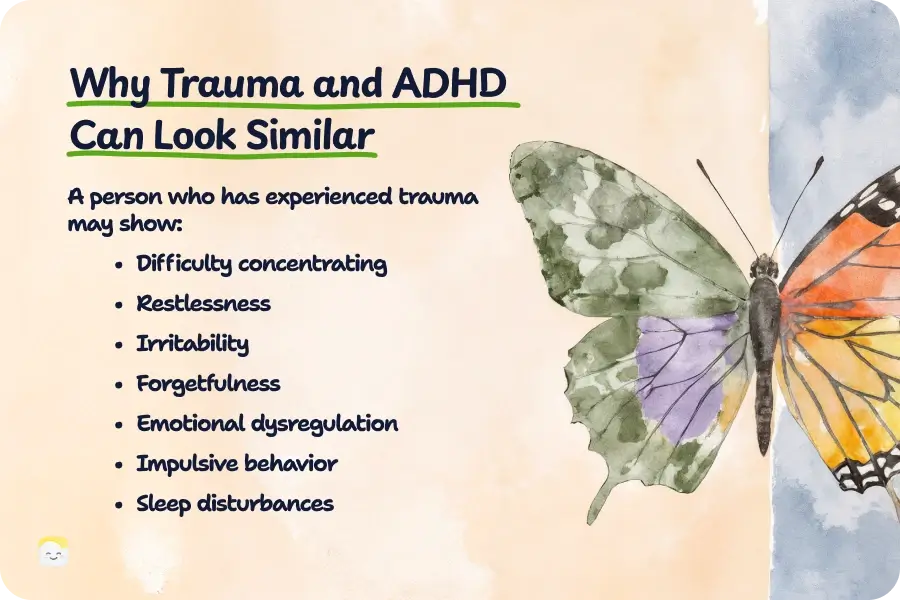
One reason the relationship between trauma and ADHD is often misunderstood is that both conditions can produce similar symptoms. A person who has experienced trauma may show the following:
- Difficulty concentrating
- Restlessness
- Irritability and impatience
- Forgetfulness
- Emotional dysregulation
- Impulsive behavior
- Sleep disturbances
These symptoms can resemble ADHD, making it difficult to distinguish between the two conditions without a thorough assessment. For example, a child who constantly scans their environment for danger may appear distracted in school. In reality, their attention problems may stem from hypervigilance related to trauma rather than ADHD.
Can Trauma Cause ADHD?
Current research does not support the idea that trauma directly causes ADHD. ADHD is generally considered a neurodevelopmental disorder that originates from a combination of genetic and biological factors.
Although ADHD and trauma are distinct conditions, they can affect many of the same cognitive and emotional processes. In some cases, trauma-related difficulties may be mistaken for ADHD.
Researchers have identified three important possibilities [2] Li Y, Liang Y. The effect of childhood trauma on complex posttraumatic stress disorder: the role of self-esteem. October 2023 :
1. Trauma Mimics ADHD
Trauma can create symptoms that look nearly identical to ADHD, especially in children. Concentration problems, impulsivity, and anger outbursts may be responses to chronic stress rather than indicators of ADHD.
Expert Insight
ADHD and trauma commonly co-occur. A person with ADHD may be more vulnerable to experiencing trauma. However, sometimes ADHD can be mistaken for trauma. That is because there is an overlap of symptoms, such as emotional dysregulation, difficulty concentrating, and impulsivity. In trauma, these may be a reaction to chronic stress. It’s important to have a professional assessment by a mental health provider to determine whether the symptoms are due to trauma, ADHD, or both.

Emily Mendez
Mental health professional
2. Trauma Worsens Existing ADHD
A person who already has ADHD may experience more severe symptoms after a traumatic event. Stress can further impair attention, memory, emotional regulation, and executive functioning.
For example, a student with ADHD who experiences the loss of a loved one may find it even harder to concentrate on schoolwork, meet deadlines, or manage emotions. Likewise, an adult with ADHD who goes through a divorce or serious accident may notice increased forgetfulness, impulsivity, and difficulty staying organized.
3. ADHD Increases Vulnerability to Trauma
People with ADHD may be more vulnerable to traumatic experiences because their symptoms can sometimes lead to risky situations, relationship difficulties, or problems at school. This creates a complex relationship between the two conditions.
Trauma and ADHD Diagnosis
Because trauma and ADHD can appear similar, proper assessment is essential. Misdiagnosis may lead to ineffective treatment. A comprehensive evaluation often includes:
- Clinical interviews about a person’s symptoms, daily functioning, emotional well-being, and life experiences. A clinician may ask about attention difficulties, impulsive behaviors, relationships, work or school performance, and any significant stressors or traumatic events.
- Developmental history. Because ADHD is a neurodevelopmental disorder that typically begins in childhood, clinicians often review developmental history to determine when symptoms first appeared. This may include questions about early childhood behavior, academic performance, social interactions, and any developmental challenges.
- Behavioral assessments include standardized questionnaires, rating scales, and observations to evaluate symptoms and their impact on daily life. These tools can help identify patterns consistent with ADHD, trauma-related conditions, or other mental health concerns.
- Family history. ADHD tends to run in families, so clinicians often ask about relatives with ADHD, learning disabilities, anxiety, depression, or other mental health conditions. Family history can provide valuable clues that support an accurate diagnosis.
- Screening for trauma exposure and PTSD symptoms. Clinicians may ask about experiences such as abuse, neglect, violence, accidents, or significant losses, as well as symptoms like flashbacks, nightmares, hypervigilance, and avoidance behaviors. This helps ensure that trauma-related symptoms are not mistaken for ADHD.
Take the ADHD quiz for women to determine whether it may be worthwhile to seek a professional assessment from a therapist.
Looking for more quizzes to understand your emotional patterns? The Breeze app offers insightful tests on your personality, attachment style, anxiety, well-being, and much more.

Trauma and ADHD Treatment
Treatment depends on the underlying cause of symptoms. For ADHD, effective treatment may include:
1. Medications
Stimulant medications, such as methylphenidate and amphetamine-based medications, can help improve attention, focus, and impulse control by affecting neurotransmitters involved in executive functioning. Non-stimulant medications may also be prescribed for people who do not respond well to stimulants or have certain medical considerations.
2. Behavioral Therapy
Therapy helps people develop practical skills to manage ADHD symptoms in daily life. Behavioral therapy may focus on:
- Improving time management
- Reducing procrastination
- Building organizational skills
- Managing impulsive behaviors
- Creating routines and structure
- Developing healthier coping mechanisms
For children, behavioral therapy often involves parents and teachers to create consistent expectations and support systems across different environments.
3. Executive Functioning Coaching
Coaching is particularly helpful for adolescents, college students, and adults who struggle with the practical demands of school, work, or everyday life. It may strengthen skills that are commonly affected by ADHD, including:
- Planning and prioritizing tasks
- Setting realistic goals
- Managing deadlines
- Organizing workspaces
- Following through on responsibilities
- Developing accountability systems
4. Educational Accommodations
Students with ADHD may benefit from accommodations that help reduce barriers to learning. Depending on their needs, accommodations may include the following:
- Extended time on tests and assignments
- Reduced-distraction testing environments
- Note-taking assistance
- Flexible deadlines
- Organizational support
- Additional breaks during class or exams
For trauma-related symptoms, the right treatment may include:
1. Trauma-Focused Cognitive Behavioral Therapy (TF-CBT)
Trauma-focused cognitive behavioral therapy is designed to help children, adolescents, and adults process traumatic experiences in a safe and structured way. The therapy helps people:
- Understand how trauma affects thoughts and emotions
- Develop healthy coping skills
- Reduce anxiety and fear responses
- Challenge unhelpful beliefs related to traumatic events
- Improve emotional regulation
2. Eye Movement Desensitization and Reprocessing (EMDR)
EMDR is a specialized therapy that helps people process distressing memories that may still be affecting their daily lives. During treatment, a person recalls traumatic experiences while engaging in guided eye movements or other forms of bilateral stimulation.
The goal is to help the brain reprocess traumatic memories so they become less emotionally overwhelming. Many people report reductions in anxiety, distress, and trauma-related symptoms after EMDR treatment.
3. Stress-Management Techniques
Because trauma can keep the nervous system in a constant state of alertness, learning stress-management skills is often an important part of recovery. Helpful techniques may include:
- Mindfulness meditation
- Deep breathing exercises
- Progressive muscle relaxation
- Regular physical activity
- Adequate sleep
- Journaling
- Grounding exercises
These strategies can help calm the body’s stress response and improve emotional resilience over time.
4. Psychotherapy Focused on Healing Traumatic Experiences
Individual psychotherapy provides a supportive environment where people can explore the impact of past experiences and develop healthier ways of coping. Depending on the person’s needs, therapy may focus on:
- Processing traumatic memories
- Building self-esteem and self-compassion
- Improving relationships
- Addressing anxiety or depression
- Developing emotional regulation skills
- Creating a greater sense of safety and stability
When ADHD and Trauma Coexist
For some people, ADHD and trauma occur together. In these cases, treatment often works best when both conditions are addressed simultaneously. For example, medication and executive functioning support may help manage ADHD symptoms, while trauma-focused therapy helps process past experiences and reduce emotional distress.
Expert Insight
It’s never too late to seek help for either of these conditions. Many people don’t seek help for trauma until adulthood, as they may not recognize its impact on them until many years later. It’s also not uncommon for people to be diagnosed with ADHD in adulthood. Effective treatments are available at any age. These treatments may include therapy, medications, and more. Seeking help later in life can greatly improve your quality of life moving forward.
Emily Mendez
Mental health professional
Final Word
Trauma can influence attention, behavior, and brain functioning in ways that mimic ADHD symptoms. This overlap is one reason why trauma-related symptoms are sometimes mistaken for ADHD and why understanding the relationship between the two is so important.
If you’re experiencing persistent attention, behavioral, or emotional difficulties, seek an evaluation from a qualified mental health professional who can assess both ADHD and trauma-related factors.
Frequently asked questions
1. Can trauma cause ADHD?
No, current scientific evidence suggests that trauma does not directly cause ADHD in the same way genetic and neurological factors do. However, trauma can create symptoms that closely resemble ADHD, worsen existing ADHD symptoms, and sometimes make the diagnosis more challenging.
2. Can trauma look like ADHD?
Yes. Trauma can affect attention, memory, emotional regulation, and behavior. As a result, people who have experienced trauma may struggle with concentration, impulsivity, restlessness, and forgetfulness—symptoms that can be mistaken for ADHD.
3. What is the difference between ADHD and trauma-related symptoms?
ADHD symptoms typically begin in childhood and are linked to differences in brain development. Trauma-related symptoms develop after stressful or traumatic experiences and may include hypervigilance, flashbacks, nightmares, and avoidance behaviors. A therapist can help determine whether it’s ADHD or trauma.
4. Can childhood trauma be misdiagnosed as ADHD?
Yes. Children who have experienced abuse, neglect, or other traumatic events may display symptoms such as inattention, impulsivity, and emotional outbursts. Without a thorough evaluation, these symptoms may be mistaken for ADHD.
5. Can trauma make ADHD worse?
Yes. Stress and trauma can increase difficulties with attention, memory, emotional regulation, and executive functioning, often making ADHD symptoms more severe and harder to manage.
Sources
- NIMH. Attention-Deficit/Hyperactivity Disorder (ADHD). December 2024
- Li Y, Liang Y. The effect of childhood trauma on complex posttraumatic stress disorder: the role of self-esteem. October 2023
- Gelner H, Karska J, Gawęda Ł, Samochowiec J, Misiak B. Effects of the interaction between PTSD and ADHD symptoms on the level of reporting psychotic-like experiences: findings from a non-clinical population. October 2023
Disclaimer
This article is for general informative and self-discovery purposes only. It should not replace expert guidance from professionals.
Any action you take in response to the information in this article, whether directly or indirectly, is solely your responsibility and is done at your own risk. Breeze content team and its mental health experts disclaim any liability, loss, or risk, personal, professional, or otherwise, which may result from the use and/or application of any content.
Always consult your doctor or other certified health practitioner with any medical questions or concerns
Breeze articles exclusively cite trusted sources, such as academic research institutions and medical associations, including research and studies from PubMed, ResearchGate, or similar databases. Examine our subject-matter editors and editorial process to see how we verify facts and maintain the accuracy, reliability, and trustworthiness of our material.
Was this article helpful?