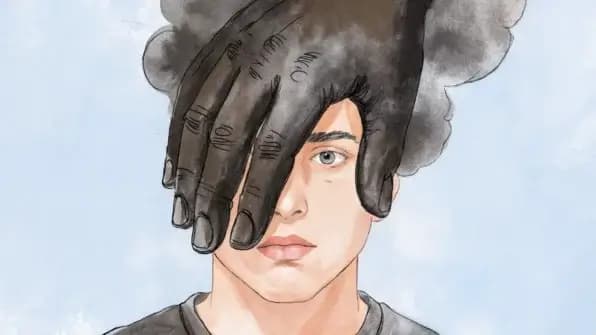


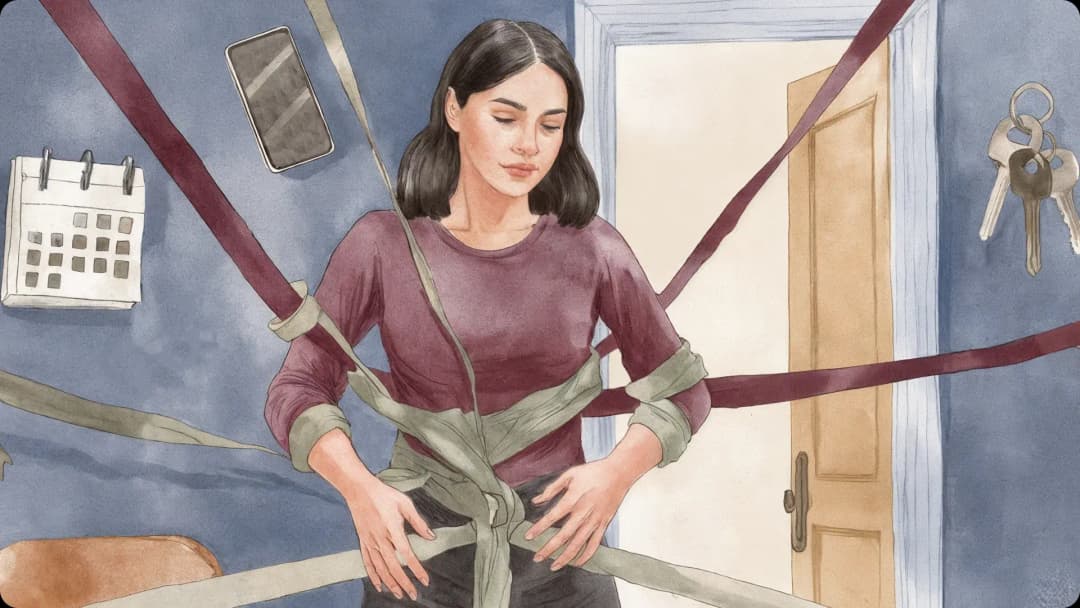
At first, controlling behavior may look like concern, jealousy, or simply wanting to spend more time together. However, it can become a consistent pattern in which one partner uses manipulative tactics to control the other partner’s choices, relationships, time, appearance, or independence. Here’s how to deal with a controlling partner.
Do you think that your partner is a narcissist and may be affecting your mental health? Take the test to identify narcissistic traits or manipulative patterns.

7 Ways to Handle a Controlling Relationship
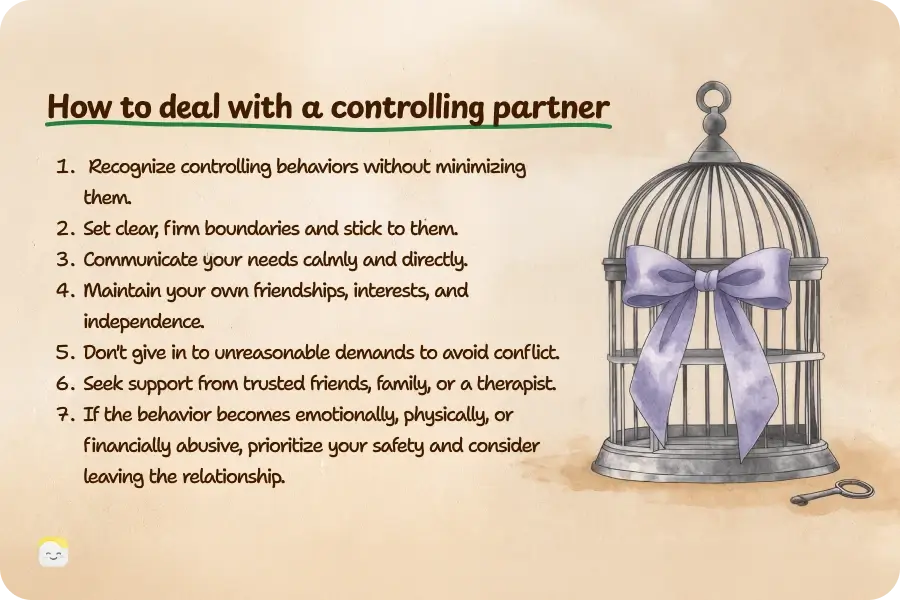
If you are dealing with a controlling partner, the first step is recognizing the behavior. The next is deciding what boundaries you need and how you want to respond.
1. Caring vs. Controlling Person: Spot Constant Scrutiny
It can be difficult to distinguish genuine concern from controlling behavior. The difference lies in choice and respect. A partner can express a concern, ask for reassurance, or communicate a boundary without trying to control your behavior.
For example, a caring partner might say, “Let me know when you get home safely.” A controlling partner might say: “You need to text me every 30 minutes, and if you don’t, I’ll be angry.”
Ask yourself:
- Do I feel like I have to ask permission to do things?
- Am I afraid of how my partner will react?
- Do I avoid certain activities to prevent an argument?
- Do I hide harmless things because I’m worried about their reaction?
- Have I become more isolated from friends and family?
- Do I constantly feel guilty?
- Do I feel responsible for managing my partner’s emotions?
- Do I feel like I’m walking on eggshells?
- Have I changed parts of myself just to keep the peace?
Feeling like your relationships are getting worse and worse? Take this quick test and find out how it influences your well-being and what to do with it.

2. Practice Assertive Communication
Controlling behavior can lead to repeated arguments in which you spend hours defending ordinary choices. Assertiveness and boundaries can prevent you from getting pulled into conflicts about whether your partner’s behavior is justified.
A boundary becomes difficult to maintain when every disagreement turns into a negotiation. You don’t necessarily need to convince your partner that your boundary is reasonable. A clear boundary states what you will accept and what you will do if it is crossed. You can calmly repeat your position without providing new explanations. For example, “I understand that you’re uncomfortable. I’m still going to see my friend.”
3. Don’t Give Up Your Personal Growth And Independence to Keep the Peace
One of the easiest traps in a controlling relationship is gradually giving up small pieces of your independence:
- You stop seeing a certain friend because your partner dislikes them.
- You stop going out because it causes arguments.
- You change your clothes because your partner gets jealous or doesn’t buy them without your partner’s approval.
- You stop expressing your opinions because disagreements are always exhausting.
4. Avoid Constantly Trying to Prove Your Love
Controlling partners may repeatedly demand reassurance. You might find yourself constantly explaining where you were, who you were with, why you didn’t respond immediately, or why you still love them.
You cannot permanently solve another person’s insecurity by giving up your freedom. You don’t need to surrender your privacy to boost their self-esteem or prove your love or loyalty. Healthy couples can choose to share things voluntarily, but pressure, demands, or monitoring are different from mutual respect and open communication.
Expert Insight
Handing over your phone doesn’t actually fix the insecurity behind the request, it just moves the goalposts. Next month, it might be your email, then your location, then who you’re texting. Trust gets built by watching how someone acts over time, not by proving you have nothing to hide today. There’s a real difference between choosing to share something because you want to, and being expected to hand over access because your partner is uneasy. The first is normal. The second tends to invite more of the same. If your partner brings up trust, it can help to say something concrete instead, like offering to talk through what’s actually making them anxious, or agreeing to check in more during the day. That gives them something real without putting your privacy on the table. If the request keeps coming back no matter what you offer, that’s useful information too.

Grady Shumway
Mental health professional
5. Watch for Emotional Manipulation
Controlling tactics can sometimes be disguised as love [1]. For example, the following statements shift responsibility onto you:
- “If you really loved me, you wouldn’t go out without me.”
- “I’m only checking your phone because I care about you.”
- “You made me jealous, so this is your fault.”
6. Seek Couples Therapy
A mental health professional can help both partners understand patterns of controlling behavior and improve honest communication. Therapy may also provide emotional support for someone struggling with low self-esteem or past trauma. Most importantly, it can help you trust your own perceptions if you experience subtle manipulation in a relationship.
Look at what happens after you communicate your boundaries and seek professional guidance:
- Does your partner listen?
- Do they take responsibility?
- Do they respect your decisions?
- Do they make consistent changes?
- Or do they apologize temporarily and then return to the same behavior?
7. Be Careful If the Controlling Behavior Escalates
Take particular care if your partner tries to gain power by:
- Threatening you
- Intimidating you
- Destroying your personal belongings
- Preventing you from leaving
- Controlling your money
- Monitoring your location or devices
- Threatening self-harm to prevent you from leaving
- Threatening to hurt you or someone else
- Expressing physical violence
- Preventing you from contacting friends and family
Expert Insight
Honestly, there’s no clean line where it suddenly becomes time to go. But a few things tend to stand out when I hear this question from clients: things are getting more intense rather than less, apologies keep happening, but the behavior doesn’t actually change, or you’ve noticed you’ve slowly stopped feeling like yourself. If you’re already asking this question, some part of you has probably already picked up on that. A good next step is to talk to someone outside the relationship, a therapist, a trusted friend, or a domestic violence advocate, since it’s hard to see clearly from inside it. And if there’s been any intimidation or violence, please reach out to a hotline or advocate to help build a safety plan first. Leaving can actually be one of the more dangerous points in these situations, so having support in place matters.
Grady Shumway
Mental health professional
Controlling People in Intimate Relationships: 10 Warning Signs
Controlling behavior isn’t always obvious, and it doesn’t always involve yelling or aggression. Here’s how to recognize a controlling person:
1. They demand constant updates
The controlling partner may expect you to tell them where you are, who you are with, what you are doing, and when you will be home. They may repeatedly text or call when you don’t respond immediately and become upset if you go somewhere without telling them first.
Eventually, they can accuse you of hiding something simply because you didn’t provide an update.
2. They show extreme jealousy
They use jealousy to justify restrictions and constantly question your loyalty:
- They become suspicious when you talk to someone they consider attractive.
- They question you about coworkers, friends, or people you interact with.
- They accuse you of flirting or cheating without evidence.
- They use their jealousy as a reason to tell you who you can or cannot see.
3. You experience constant criticism
They regularly criticize your appearance, choices, personality, career path, friends, or the way you do things. They disguise insults as jokes and tell you that you’re “too sensitive” when you’re hurt. As a result, you may find yourself changing your behavior just to avoid being criticized [2].
Take an insightful Emotional Abuse Test to find out whether you experience abusive behavior in relationships.
Looking for more quizzes to boost your gut reactions in relationships? The Breeze app offers science-backed tests on your personality, attachment style, anxiety, childhood trauma, and much more.

4. They use financial control
They use money to limit your independence or influence your decisions [3]:
- They demand access to your bank accounts or financial information.
- They control how much money you are allowed to spend.
- They expect you to justify ordinary purchases.
- They prevent you from having your own money or financial accounts.
- They use financial support as leverage, threatening to withdraw it if you don’t do what they want.
5. They invade your privacy
They treat your personal privacy as something they are entitled to control and expect you to prove you have “nothing to hide.” Occasionally, the controlling partner insists on having access to your phone, passwords, emails, or private messages and reading your conversations without your permission. They may also check your browsing history or social-media activity.
6. They decide who you can spend time with
A controlling person may create conflicts that make it difficult to maintain outside relationships. They may criticize your friends or family members, tell you which friends they think you should stop seeing, or discourage you from attending social events without them. When you make plans without them, they can become upset or angry.
7. They make you feel that you need their permission to do ordinary things
They create the expectation that you must ask before making everyday choices:
- You feel you need permission to see friends or family.
- They expect you to ask before buying something with your own money.
- They question whether you are “allowed” to make plans independently.
- They become angry when you make an ordinary decision without consulting them.
- You start seeking approval automatically because you’re worried about their reaction.
8. They make you feel guilty for spending time on your own
One common sign of controlling behavior is portraying normal independence as selfish or hurtful. Controlling people may expect you to prioritize them over everything else.
They may accuse you of not caring about them when you want time alone or complain whenever you spend time with friends or family. As a result, you can feel guilty every time you pursue hobbies or interests and begin to avoid activities you enjoy because of their reaction.
9. They make important decisions without considering your opinion
They treat their preferences as more important than yours, particularly when decisions affect both of you. In a controlling and abusive relationship, the partner expects you to accept decisions simply because they have already made them.
They can make major financial or household decisions without consulting you, decide where you will go or what you will do together, and dismiss your concerns when you disagree.
10. They manipulate you when you disagree
- They threaten to leave whenever you disagree with them.
- They give you the silent treatment as punishment.
- They blame you for their anger or jealousy.
- They say things like, “You made me act this way.”
- They gaslight you and twist conversations so that you end up apologizing.
- They use threats, guilt-tripping, withdrawal of affection, or emotional pressure to get you to assert control.
What a Healthy Relationship Should Feel Like
A healthy relationship doesn’t mean that partners never feel jealous, insecure, or uncomfortable. However, relationship green flags are:
- Spending time with other people
- Having privacy
- Making your own decisions
- Maintaining your interests
- Saying no
- Asking for space
- Having friendships
- Making mistakes without fearing punishment
- Feeling safe expressing your thoughts and feelings
Final Thoughts
One controlling behavior doesn’t necessarily tell you everything about a relationship. What matters is the overall pattern and whether your partner respects your autonomy.
Dealing with a controlling partner starts with recognizing that control is not the same as love or care. Your partner can have preferences and boundaries, but they cannot decide what you do, who you see, or how you live.
Start by identifying the behaviors that concern you, communicating clear boundaries, and paying attention to your partner’s responses. A willingness to listen and change is very different from repeated attempts to control, manipulate, or isolate you.
And if setting boundaries makes your partner’s behavior more threatening or unsafe, prioritize your safety and reach out for support. A healthy relationship isn’t one where you have to constantly prove that you’re trustworthy.
Frequently asked questions
1. Is jealousy a sign of a controlling partner?
Jealousy itself is a normal emotion, but controlling behavior can develop when someone uses jealousy to restrict your choices, friendships, clothing, activities, or privacy. The important question is how your partner handles the feeling.
2. How do I tell my partner that they are being controlling?
Choose a calm moment and describe specific behaviors. Explain how those controlling tendencies affect you and state what you need to change. For example: “I feel uncomfortable being expected to share my location all the time. I need more privacy.”
3. What if my partner gets angry when I set boundaries?
Their reaction is important information. A partner may feel disappointed or uncomfortable, but they should still be able to respect your boundaries. Anger, intimidation, threats, or punishment in response to reasonable and healthy boundaries can be signs of a controlling and abusive relationship.
4. When is controlling behavior abusive?
Attempts to exert control can be part of emotional, psychological, financial, or physical abuse, particularly when it involves intimidation, isolation, threats, surveillance, coercion, or preventing you from making your own choices. If you feel afraid of your partner or unable to leave safely, seek professional help.
5. Should I stay in relationships with a controlling partner or leave them?
There is no universal answer. Some controlling behaviors may improve if a partner recognizes the problem, takes responsibility, respects boundaries, and makes an effort to change. However, you don’t need to wait until a relationship becomes unbearable before deciding that it harms your overall well-being.
Sources
1. Kearney MS, O’Brien KM. Is It Love or Is It Control? Assessing Warning Signs of Dating Violence. June 2021.
2. Yun, JY., Shim, G. & Jeong, B. Verbal Abuse Related to Self-Esteem Damage and Unjust Blame Harms Mental Health and Social Interaction in College Population. 2019.
3. NNEDV. “About Financial Abuse.” 2026
Disclaimer
This article is for general informative and self-discovery purposes only. It should not replace expert guidance from professionals.
Any action you take in response to the information in this article, whether directly or indirectly, is solely your responsibility and is done at your own risk. Breeze content team and its mental health experts disclaim any liability, loss, or risk, personal, professional, or otherwise, which may result from the use and/or application of any content.
Always consult your doctor or other certified health practitioner with any medical questions or concerns
Breeze articles exclusively cite trusted sources, such as academic research institutions and medical associations, including research and studies from PubMed, ResearchGate, or similar databases. Examine our subject-matter editors and editorial process to see how we verify facts and maintain the accuracy, reliability, and trustworthiness of our material.
Was this article helpful?