



There are 9 potential answers to the question “Why am I so judgy?“:
- Insecurity and low self-esteem.
- Learned behavior from childhood.
- Close-mindedness.
- Lack of empathy.
- Survival mechanism.
- Stereotypes and cognitive shortcuts.
- Need to belong.
- Envy and jealousy.
- Anger.

Why Am I So Judgemental of Myself and Others? 9 Reasons
The tendency to judge others and draw conclusions based on those judgments is an evolutionary mechanism for survival.
Here are 9 reasons why judgmentalism turns into an unhealthy obsession that damages relationships and your self-esteem.
1. Insecurity
Judging others is often a way to protect yourself from your insecurity. When you judge people, a few psychological processes take place:
- Criticizing someone else can give you reassurance that you’re actually “normal” compared to others.
- Feeling superior can make you feel better about yourself and provide a temporary ego boost.
- The judgmental thoughts about others can subconsciously reflect flaws, fears, and behaviors you secretly dislike in yourself.
If you’re hard on yourself, you can extend that same harsh lens to everyone around you. The inner critic that picks you apart simply finds new targets.
2. Learned behavior
When you wonder, “Why am I so judgmental of others?” answer this one question: Did you grow up watching your parents play nice, only to talk trash the second guests left?
Kids copy what they see. Studies show that children can develop negative judgments about others as early as 2-3 years old! [1] Are young children’s preferences and evaluations of moral and conventional transgressors associated with domain distinctions in judgments? J. G. Smetana, C. L. Ball, M. Jambon, H. N. Yoo. Journal of Experimental Child Psychology. September 2018. And where do they get these stereotypes? Not only do parents pass judgments, but so do neighbors, teachers, peers, and the pop media.
Maybe you don’t hold word-for-word negative judgments about “blondes on the road” or “men don’t cry,” but you could’ve preserved the mechanism to judge the unknown or different.
You could’ve learned that judging people was a normal way of talking about the world. But now, having grown up, maybe it started to take a toll on your mental health.

3. Close-mindedness
When you’re close-minded, anything that doesn’t match your ideas can look wrong by default.
If you believe there’s only one right way to raise kids or spend money, of course you will judge people who do it differently instead of just accepting that everyone is free to decide what to do with their lives.
Narrow-mindedness comes from a fear of the unknown. But to you, it may feel like protecting the truth. In reality, when you make snap judgments, you are simply trying to protect yourself. From what, you may ask? From the discomfort of doubting your own opinions.
4. Lack of empathy
You can judge people when you can’t imagine what they’re going through. For example, a friend cancels plans again, and you decide they’re flaky, without knowing they’ve had a rough week at home.
Belief control bias dehumanizes others and makes it harder for us to empathize. Because we believe that this person is so stubborn or “dumb,” why should we even bother trying to understand their perspective?]
Projection makes this trickier. Sometimes you judge others for exactly what you dislike or hide in yourself, or what you secretly wish you had the freedom to do.
For example, if you never let yourself rest, someone napping on a Sunday afternoon may irritate you. But this reaction tells you more about your feelings and desire to take a nap than about the other person.
Is it hard for you to feel empathy for someone if you strongly disagree with their lifestyle or opinion?
5. Survival mechanism
For our ancestors, a fast sense of who might be dangerous was a matter of survival. Evolution works by the rule “better safe than sorry.” So, our brains are biologically wired to over-interpret potential threats, which leads to negative feelings about people we don’t know.
6. Stereotypes and cognitive shortcuts
Stereotypes are cognitive shortcuts too. We, people, cannot approach everything super reflectively. We wouldn’t have time for anything else if we did. So, sometimes we use stereotypes, and there’s no shame in it. Unless they harm others.
One common shortcut that leads to judging others is the fundamental attribution error: the tendency to blame someone’s entire character for their behavior. When a driver cuts you off, your thinking jumps to “What a jerk” instead of “Maybe they’re rushing to the hospital.”
The ironic point is that when you’re the one cutting someone off, you always know exactly why.
7. Need to belong
Since the beginning of time, there was “we” vs. “you.” Another evolutionary legacy for us is that judging people outside your group can make you feel more secure inside your own group.
Belonging is a basic need of human psychology. You know the saying, “The enemy of my enemy is my friend“? Shared opinions about “those people” can be a touchpoint for friends or coworkers.
Putting others down together is an easy way to bond, which is why gossip spreads so fast in tight circles.
Expert Insight
Gossip itself isn’t healthy. In mature relationships, people limit or avoid talking about others behind their backs. That’s because, even if it’s meant to be harmless, it’s a form of judgment and secrecy, which can be cruel.

Nicole Arzt
Mental health professional
8. Envy
You can judge someone because you secretly envy this person. If someone has the career of your dream, you may keep finding flaws in them. But why?
By finding faults in someone who has something you don’t, you try to cheer yourself up, like “Look, their life isn’t as perfect, so you didn’t lose much.”
When you notice you start to feel bad because of envy, look for the disappointment underneath: “Do you actually want what this person has?” Admitting that you actually want something is freeing + you’re building self-awareness by discovering your honest desires and needs.
9. Anger & self-righteousness
Judging can feel so good because anger satisfies a self-righteous need of always being right and better than others, “They’re wrong, and I’m right.” Unlike sadness or fear, anger feels active and powerful, so it gives you a quick sense of control.
Anger is energizing and feels much better than disappointment or frustration. But anger can subconsciously make you feel more empowered or morally superior.
Am I Judgemental? 11 Signs
Judgmentalism is a habit of criticizing and condemning people without trying to understand them. This feels like a steady background negativity both about other people and about yourself.
Do you recognize yourself in these signs? If so, you may be prone to judgmentalism:
- Your first thought about someone new is usually a criticism.
- You have rigid opinions about how people “should” live that also create expectations for others.
- You get irritated/angry about people’s choices, even when they don’t affect you at all.
- You assume the worst before you know someone’s circumstances.
- Most conversations with friends get down to picking someone apart.
- You struggle to say anything positive about people you don’t like.
- You’re just as harsh with yourself as with everyone else.
- People have told you more than once that you’re judgy or critical.
- Sometimes you give advice other people don’t ask for, but you genuinely believe it will be for their good.
- You constantly compare yourself or other people to each other.
- You easily overlook success and notice more failures or mistakes in both yourself and other people.
Is Being Judgemental Bad?
Judgmentalism doesn’t automatically make you a bad person. The habit of judging usually comes from vulnerability, as a means to protect yourself or connect with others.
Most people make snap judgments. However, if you genuinely believe in these judgments and won’t accept their potential wrongness, it can hurt both your relationships and you:
- In relationships, people can sense they’re being judged. They can interpret this negativity as a sign of distrust. So, they may share less and keep their distance, which destroys closeness.
- For you, living with a running commentary of everyone’s flaws, including yours, can feed anxiety and pain and limit you in your life choices.
You may not realize how much energy all that judging takes until you start letting a bit of it go.
Healthy vs. Unhealthy Judgment
Healthy judgment is when you make fair, safe decisions about a situation and accept that those judgments aren’t set in stone. It also means realizing that people can change, and so can your opinions.
Unhealthy judgment condemns the whole person, often without knowing their motives.
There’s a huge difference between “this isn’t right for me, but they can do whatever they want” and “this person is worthless because they don’t live correctly”:
| Healthy judgment | Unhealthy judgment |
| “He’s canceled on me three times, so I won’t count on him for this.” | “He’s a flaky, useless person.” |
| “That outfit isn’t my style.” | “Who would leave the house looking like that?” |
| “I disagree with her decision.” | “She’s an idiot for doing that.” |
| “Yes, I changed my mind because I learned something new.” | “This new information doesn’t matter. I have an opinion, and I will stick to it.” |
How to Be Less Judgmental: 7 Tips
If you’re wondering how to stop being judgmental, there is one thing to consider: You can’t just switch judgmental thoughts off. You can, however, change what you do with them.
These seven tips help with the hard task of stopping judging people.
1. Don’t fight judgmental thoughts
Suppression backfires. A better first step is to notice judgmental thoughts. But don’t fight them or shame yourself for having them.
It helps to picture yourself as the sky and your thoughts as the weather. Clouds and storms pass through, but the sky is still there. Clouds don’t change the sky in the same way judgy thoughts don’t change who you are.
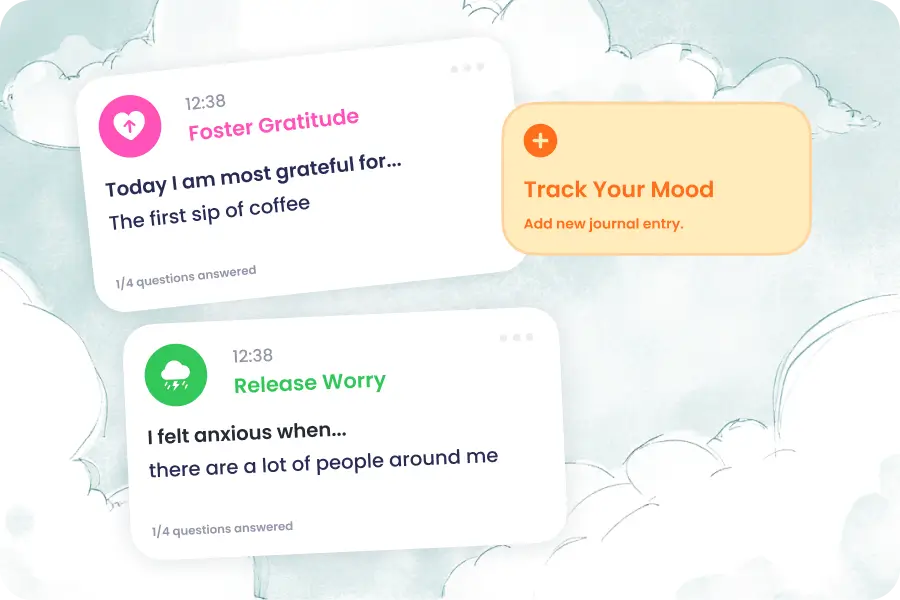
If you’re into journaling, you can also try writing your judgmental thoughts down for a week to become aware of how often they show up and when. A notebook works, or a journaling app like Breeze Self-Discovery, which has guided prompts if you have a blank-page freeze.
2. Judge actions, not people
Separate what someone did from who they are. The problems of labeling people, like “lazy” or “reckless,” include:
- Labels can limit your ability to change your opinion about them.
- Labels ignore the fact that people change and learn.
- Labels don’t include temporary circumstances, like exhaustion or a bad day, that can push people to do things you consider to be a mistake.
People ≠ their actions. They’re not thoughtless. They made a mistake.
The same goes for you. When you mess up, try giving yourself the compassion you’d want from someone else: you did something wrong, but that doesn’t make you a bad person.
3. Focus on what you can control
Wanting others to live by your standards can be a hidden way to control what you can’t.
It isn’t your job to manage someone else’s life or carry the consequences of their decisions. Limit your attention only to things that are yours to decide: your choices and reactions.
The Serenity Prayer sums it up well:
4. Find why you need negative judgments
Judging usually gives you something positive or safe. Otherwise, you wouldn’t have done it if your mind didn’t get anything “useful” out of it.
Ask yourself what it is:
- Does this make me feel better about myself?
- Does it make me feel safer?
- Do I simply want people to live “right,” like me?
- Does it help me fit in with the people around me?
- Is it distracting me from my disappointment?
Once you start thinking about what the judgment gives you, it’s easier to find healthier alternatives.
5. Practice the “let them” mindset
You don’t have to like what they’re doing, but let people be who they are, without needing them to change for you to feel okay.
Everyone you meet has been shaped by countless experiences you know nothing about, so the way they think and act makes sense from where they stand. Reminding yourself of that builds empathy, even for people whose choices you’d never make.
Expert Insight
Accepting people for who they are is not the same as passively tolerating their behavior. You are allowed to have limits in place to protect yourself. You can distance yourself or set boundaries around actions that negatively impact you. That said, you don’t have the right to fully control how others live their lives- that is their agenda.
Nicole Arzt
Mental health professional
6. Accept your flaws
The more you accept your imperfections, the easier it becomes to accept other people’s.
The impossible standards you hold for other people most likely come from you. You believe that if you can hold them, others should do. But should they? And an even better question—should you?
Attempts to control everything usually end up in chronic stress. What’s more: even the most rigid plans and highest standards don’t protect you from the unexpected. Chaos is woven into the fabric of our universe.
So, let the chaos be. Allow yourself to make mistakes. Say “yes” even if you believe you’ll fail.
When you stop expecting perfection from yourself, you stop holding everyone else to that impossible standard too.
7. Invest in yourself
The more energy you put into your life, the less you have left for judging others. Every minute spent being annoyed by someone’s lifestyle is a minute taken from your own goals.
Put that focus into something that’s yours: learn a skill, start a project, or create something you’ve been putting off.
Frequently asked questions
What does it mean to be judgemental?
Being judgmental means forming quick, harsh opinions about people without trying to understand their motives. Judgmentalism also doesn’t allow for change: once an opinion is formed, you cannot change it. It also rarely comes from a pure desire to degrade a person but rather to feel better about yourself at the expense of others.
What to say to a judgemental person?
Stay calm, and set a boundary. Don’t try to argue or convince them because they most likely won’t accept your arguments. When someone keeps speaking badly about you or others, use short lines like:
- “I see it differently.”
- “Let’s not talk about them when they’re not here.”
- “I’m good the way I am,” if the judgment is about you.
How do we judge others?
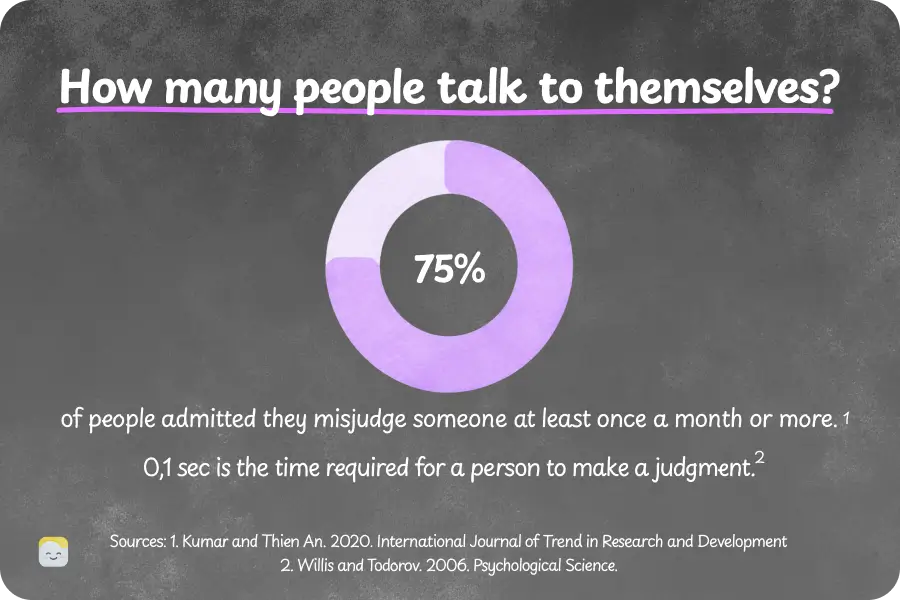
Studies show that we judge others in a matter of 100 milliseconds [4] First impressions: making up your mind after a 100-ms exposure to a face. J. Willis and A. Todorov. Psychological Science. July 2006. . These first impressions come from the appearance of behaviors. The brain fills in the rest with assumptions, which come from your past experiences and the stereotypes you’ve picked up along the way.
Sources
- Are young children’s preferences and evaluations of moral and conventional transgressors associated with domain distinctions in judgments? J. G. Smetana, C. L. Ball, M. Jambon, H. N. Yoo. Journal of Experimental Child Psychology. September 2018.
- People judge others to have more voluntary control over beliefs than they themselves do. C. Cusimano and G. P. Goodwin. Journal of Personality and Social Psychology. November 2020.
- The Illusion of Moral Superiority. B. M. Tappin and R. T. McKay. Social, Psychological, and Personality Science. October 2016.
- First impressions: making up your mind after a 100-ms exposure to a face. J. Willis and A. Todorov. Psychological Science. July 2006.
Disclaimer
This article is for general informative and self-discovery purposes only. It should not replace expert guidance from professionals.
Any action you take in response to the information in this article, whether directly or indirectly, is solely your responsibility and is done at your own risk. Breeze content team and its mental health experts disclaim any liability, loss, or risk, personal, professional, or otherwise, which may result from the use and/or application of any content.
Always consult your doctor or other certified health practitioner with any medical questions or concerns
Breeze articles exclusively cite trusted sources, such as academic research institutions and medical associations, including research and studies from PubMed, ResearchGate, or similar databases. Examine our subject-matter editors and editorial process to see how we verify facts and maintain the accuracy, reliability, and trustworthiness of our material.
Was this article helpful?