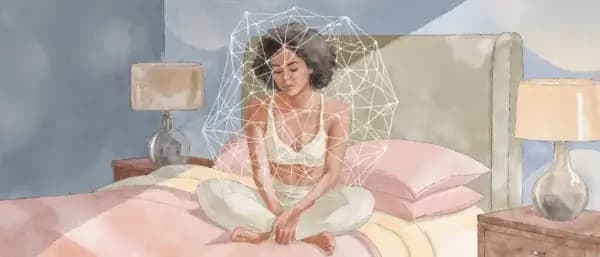


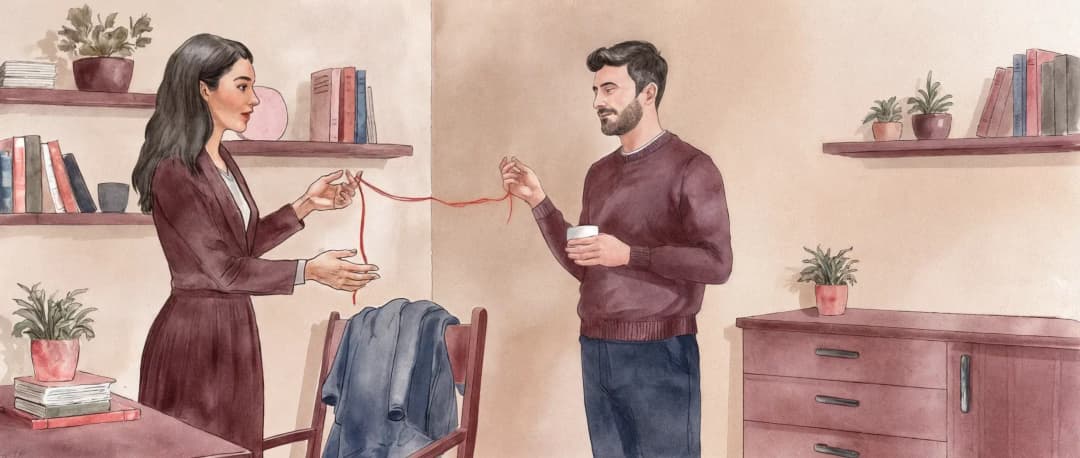
Feeling your partner is no longer attracted to you can bring up rejection, insecurity, anger, sadness, or fear about the future of the relationship. If you notice several of these signs of sexual rejection consistently, it may be worth having an honest conversation.
7 Signs Your Partner May Not Be Attracted to You Sexually Anymore
You may recognize the following patterns:
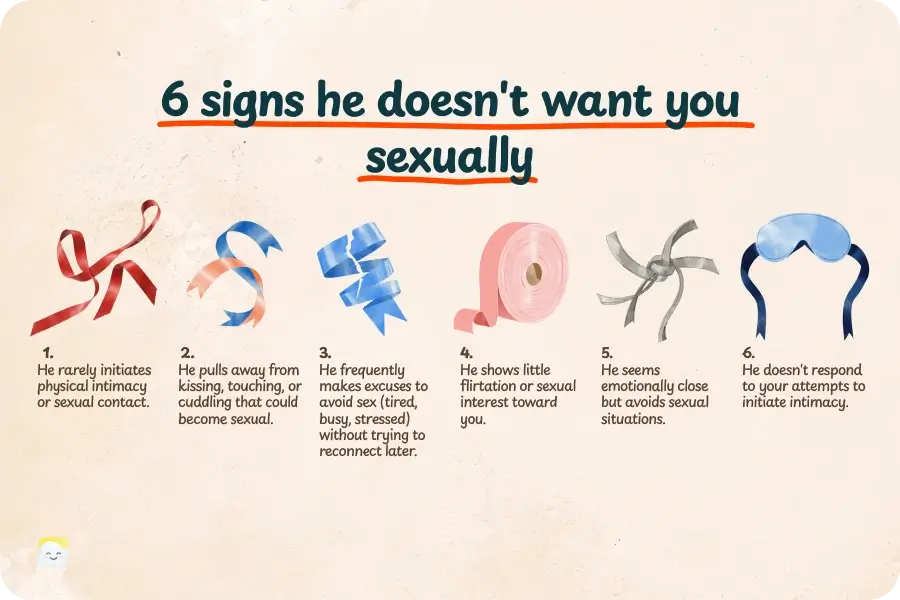
1. He Rarely Initiates Sex
One of the clearest signs is a consistent lack of sexual initiation. If you’re almost always the one making the first move and he rarely shows interest in starting something himself, his desire may have changed. Occasional differences in libido are normal. It’s the ongoing pattern that matters.
Curious about your emotional patterns? Take a quick and insightful attachment style test to see whether you feel emotional safety in relationships.
2. He Avoids Other Forms of Physical Intimacy
Pay attention to how he responds to kissing, cuddling, hand-holding, or other forms of physical touch. If he regularly pulls away or avoids situations that could become intimate, he may be experiencing reduced sexual desire.
Take a sexual personality test to explore how you define physical and emotional connection, connect with your partner, and communicate your needs.
3. He Doesn’t Flirt With You Anymore
Or, when you try to flirt, he may seem awkward or uninterested. Flirting, playful touching, compliments, suggestive messages, and sexual chemistry often naturally appear in relationships where sexual desire is strong. If these behaviors have stopped altogether, particularly after being a regular part of your relationship, it may indicate a change in sexual interest.
4. He Avoids Talking About Your Sex Life
Another possible sign is refusing to discuss the issue. If you express that you miss the sexual connection and he shows no interest in discussing it, consistently shuts down, or changes the subject, the lack of communication can become a bigger problem than the difference in desire itself [1].
Do you think that your partner is a narcissist and may be affecting your well-being? Take the test to identify red flags and hurtful behavior.

5. He Makes Frequent Excuses To Avoid Sexual Interactions
He may often say he’s tired, busy, stressed, or simply not in the mood. Of course, everyone has nights when they don’t feel like having sex, and an occasional rejection doesn’t necessarily mean anything is wrong. But if you experience emotional neglect and your attempts at physical closeness are repeatedly rejected without any effort to reconnect later, it can be a strong indicator that something has changed.
6. He Seems Emotionally Close, but There Is Sexual Disconnection
Sometimes a partner remains loving, supportive, and affectionate while becoming distant sexually. This can be especially confusing because the relationship may seem fine in every other area.
Expert Insight
Lack of sex can mean so many different things in a relationship, and it doesn’t inherently mean your dynamic is doomed. However, sudden changes or defensiveness around the topic may be worth addressing. Physical intimacy is just one way partners can stay connected, and it’s important to have an ongoing, shared understanding of one another’s needs.

Nicole Arzt
Mental health professional
7. He Doesn’t Show Curiosity About Your Sexual Needs
Sexual intimacy is a two-way experience. It isn’t only about whether he wants sex; it’s also about whether he cares about your experience, comfort, pleasure, and emotional connection [2].
For example, he may rarely ask what you want, rush through physical affection, or show little interest in discovering what helps you feel connected to him. You might tell him that you miss feeling desired, yet he doesn’t seem curious about why or what could help.
10 Reasons for Decreased Sexual Connection in Long-Term Relationships
A change in sexual relationship doesn’t automatically mean your partner isn’t attracted to you. Stress, unresolved arguments, emotional distance, low libido, medication, or personal issues can all affect desire. Understanding the reason is the first step toward deciding what to do next.
1. Stress and Exhaustion
Financial worries, work pressure, family responsibilities, and lack of sleep can reduce someone’s interest in sex. When a person is mentally or physically exhausted, physical intimacy may simply fall lower on their list of priorities.
2. Relationship Problems
Poor communication and emotional distance can affect sexual desire. For some people, feeling emotionally disconnected makes it difficult to feel sexually connected as well.
3. Changes in Libido
Sex drive may naturally change over time or due to certain circumstances. Someone who once wanted sex frequently may experience periods of lower desire without having stopped loving or finding their partner attractive.
4. Mental Health and Emotional Difficulties
Anxiety, depression, chronic stress, low self-esteem, or other emotional struggles can affect both desire and sexual functioning. Someone may withdraw from intimacy because they don’t feel emotionally well.
5. Medication or Physical Health Conditions
Certain medications and health conditions can affect libido, energy, hormones, or sexual functioning. If the change is sudden or persistent, discussing it with a healthcare professional may be appropriate.
6. Sexual Performance Concerns
Fear of not being able to maintain an erection, reach orgasm, or satisfy a partner can make someone avoid initiating intimacy altogether. These concerns may be more chronic or acute depending on the situation.
7. Different Sexual Needs
Partners don’t always have the same level of desire. One person may want sex several times a week, while the other prefers it less often. A libido mismatch can feel like personal rejection even when neither partner is doing anything wrong.
8. Loss of Attraction
Sometimes sexual attraction does change. If he consistently avoids intimacy, no longer shows sexual interest, and openly communicates that his attraction has decreased, it may be part of what is happening. This can be painful, but knowing the truth is healthier than constantly guessing.
9. Routine and Lack of Novelty
Long-term relationships can become predictable. When work, chores, responsibilities, and routines dominate everyday life, couples may stop creating opportunities for romance and sexual connection.
10. He May Be Struggling With Something He Hasn’t Shared
People don’t always explain changes in desire immediately. He may be dealing with insecurity, stress, relationship concerns, or another personal issue that he’s uncomfortable discussing.
10 Strategies To Stop Feeling Sexually Rejected
The goal isn’t to convince your partner to want physical intimacy. It’s to understand what’s happening, practice honest communication, and determine whether the two of you can rebuild an emotional bond in a way that feels good for both of you. Here’s what you may try when your boyfriend or husband doesn’t want you sexually.
1. Separate the Facts From Your Fears
When you’re hurt, it’s easy to turn a change in your partner’s behavior into a conclusion about your worth. You may start wondering, “What’s wrong with me?“, comparing yourself with other people, scrutinizing your body, changing your appearance, or seeking constant reassurance.
Try to resist this spiral. Take a piece of paper and create two columns:
| What I know | What I’m afraid it means |
| He rarely initiates intimacy. | He’s no longer attracted to me. |
| He has rejected me several times. | He doesn’t want me at all. |
| We haven’t talked about it. | Our relationship is ending. |
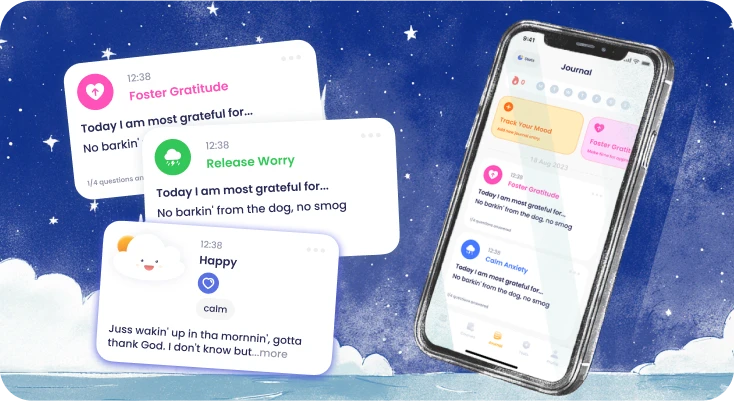
This exercise can help you approach the situation with curiosity instead of immediately assuming the worst. You may also try journaling in the Breeze app for deeper self-reflection and releasing pain.
2. Choose the Right Moment to Talk
Instead of trying to guess what he’s thinking, have a direct but non-accusatory conversation. You might say, “I’ve noticed that we’ve become less physically intimate lately, and I’m feeling disconnected. I’d like to understand how you’re feeling about our sex life.” Focus on the change you’ve noticed rather than accusing him of not being attracted to you.
3. Talk About Your Feelings Without Blaming Him
Use “I” statements to describe your experience to express your feelings without turning them into accusations.
4. Ask Open Questions
Once you’ve explained how you feel, give your partner room to explain his experience.
You could ask:
- “Have you noticed the change too?”
- “Has anything been affecting your desire lately?”
- “Do you still feel physically connected to me?”
- “Is there anything happening between us that is affecting your desire?”
- “What would help you feel more comfortable with intimacy?”
Then listen to the answer rather than immediately preparing your response. You may hear something you don’t expect.
Expert Insight
This is where honesty really matters. You want to convey your genuine feelings without projecting any assumptions onto your partner. This might sound like, “I am feeling sad about how infrequently we’re having sex,” or “the changes in our sex life have me feeling worried because physical affection is how I feel close to you.” You can also acknowledge that you feel uncomfortable even addressing the topic to address your vulnerability.
Nicole Arzt
Mental health professional
5. Don’t Pressure Him Into Sex
It’s understandable to want reassurance when you’re feeling rejected. However, repeatedly asking for sex, demanding proof of attraction, or making your partner feel guilty is not okay and can be a form of sexual abuse. It also does not address the underlying concern within the dynamic.
If both of you want to reconnect, temporarily taking pressure off sex can help [3].
7. Try the “10-Minute Connection Exercise”
Set aside 10 minutes a few times a week:
- For five minutes, one partner answers: “What has been making me feel close to you lately?”
- Then switch.
- For the next five minutes, answer the question, “What could help me feel more connected to you?”
Don’t interrupt, defend yourself, or try to solve everything immediately. The purpose is simply to understand each other.
8. Decide What You Need, Too
You also don’t have to pretend that a lack of intimacy doesn’t matter to you. Don’t make the entire conversation about figuring out what he wants. Your needs matter just as much as his.
9. Don’t Chase Constant Reassurance
When you’re afraid that your partner doesn’t want you, you may feel tempted to repeatedly ask: “Do you still love me?” or “Do you think I’m beautiful?”
10. Consider Couples Therapy
If you’ve tried talking but keep having the same argument, a couples therapist can provide a neutral but supportive space to discuss resentment and needs without turning the conversation into blame and self-protection. This can be especially helpful when one partner feels unwanted while the other feels pressured or misunderstood.
If the issue is primarily about sexual desire, a certified sex therapist may also be worth considering. They can help couples explore differences in libido, communication around sex, intimacy, and expectations in a structured way.
Frequently asked questions
1. How do you know if his sexual desire wanes?
Possible signs include rarely initiating sexual intimacy, frequently rejecting your advances, avoiding physical affection, and showing little sexual interest. However, these behaviors can also be caused by stress, low libido, relationship problems, or other personal circumstances.
2. Can a man love you but not be sexually attracted to you?
Yes. Emotional love and sexual attraction are related but not identical. Someone can deeply care about their partner while having a low sex drive.
3. Why doesn't my partner want sex anymore?
There can be many reasons, including stress, exhaustion, anxiety, relationship tension, changes in libido, medication, hormonal changes, health problems, or other underlying issues. It’s best not to assume the reason without talking to him.
4. Should I ask him if he is still attracted to me?
Yes. An honest, calm conversation can be more helpful than trying to interpret every change in his behavior. Explain what you’ve noticed and how it makes you feel without turning the conversation into an accusation.
5. What should I do if he says he isn't sexually attracted to me anymore?
Give yourself time to process what you’ve heard. Ask whether the loss of physical attraction is temporary or permanent and whether he wants to work on the relationship. You deserve honesty, respect, and a relationship in which your needs are taken seriously.
Sources
1. Johnson MD, Lavner JA, Mund M, Zemp M, Stanley SM, Neyer FJ, Impett EA, Rhoades GK, Bodenmann G, Weidmann R, Bühler JL, Burriss RP, Wünsche J, Grob A. Within-Couple Associations Between Communication and Relationship Satisfaction Over Time. April 2022.
2. The Journal of Sexual Medicine. “Does Sexual Creativity Enhance Sexual Satisfaction? Examining the Effect of Weekly Creative Sexual Tasks in Monogamous Long-Term Heterosexual Couples.” 2022
3. Kevin Shafer, Todd M. Jensen, Jeffry H. Larson. Relationship Effort, Satisfaction, and Stability: Differences Across Union Type. April 2014.
Disclaimer
This article is for general informative and self-discovery purposes only. It should not replace expert guidance from professionals.
Any action you take in response to the information in this article, whether directly or indirectly, is solely your responsibility and is done at your own risk. Breeze content team and its mental health experts disclaim any liability, loss, or risk, personal, professional, or otherwise, which may result from the use and/or application of any content.
Always consult your doctor or other certified health practitioner with any medical questions or concerns
Breeze articles exclusively cite trusted sources, such as academic research institutions and medical associations, including research and studies from PubMed, ResearchGate, or similar databases. Examine our subject-matter editors and editorial process to see how we verify facts and maintain the accuracy, reliability, and trustworthiness of our material.
Was this article helpful?