


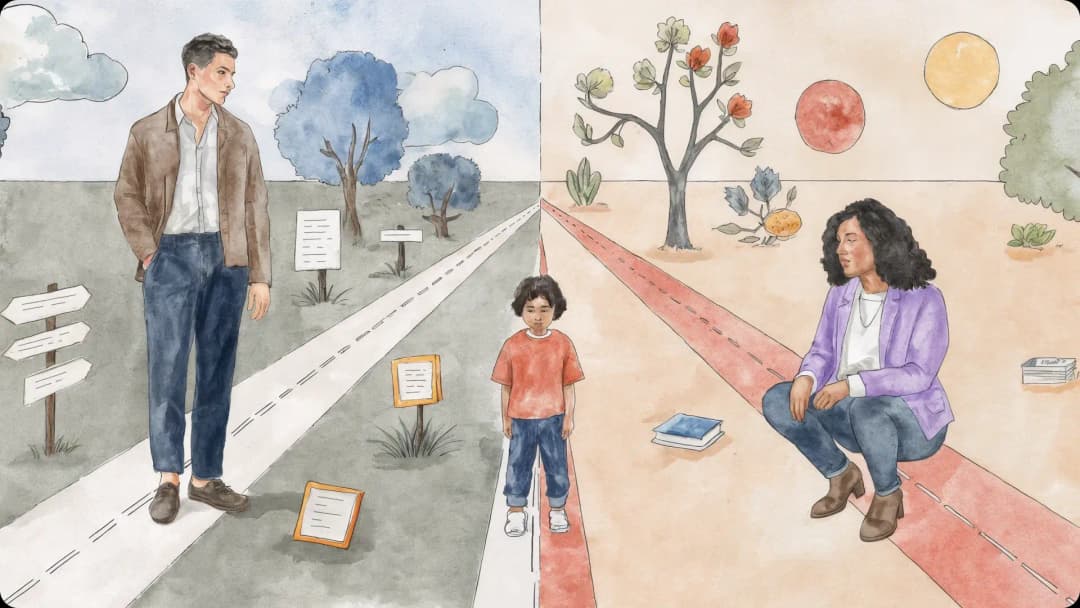
For previous generations, childhood often came with strict rules and discipline, and negotiating with adults wasn’t an option. Today, good parents discuss emotions, monitor screen time, research child development, and worry about things from social media to mental health.
So, has parenting actually improved? Are children better prepared for life than earlier generations? Let’s take a closer look at modern-day parenting and how it compares with traditional parenting.
How did having authoritarian or neglectful parents influence your own childhood? Take this insightful test to identify lingering effects and take the first step toward breaking the cycle.

Modern Parenting vs Traditional Parenting: 7 Things Our Parents Did Differently
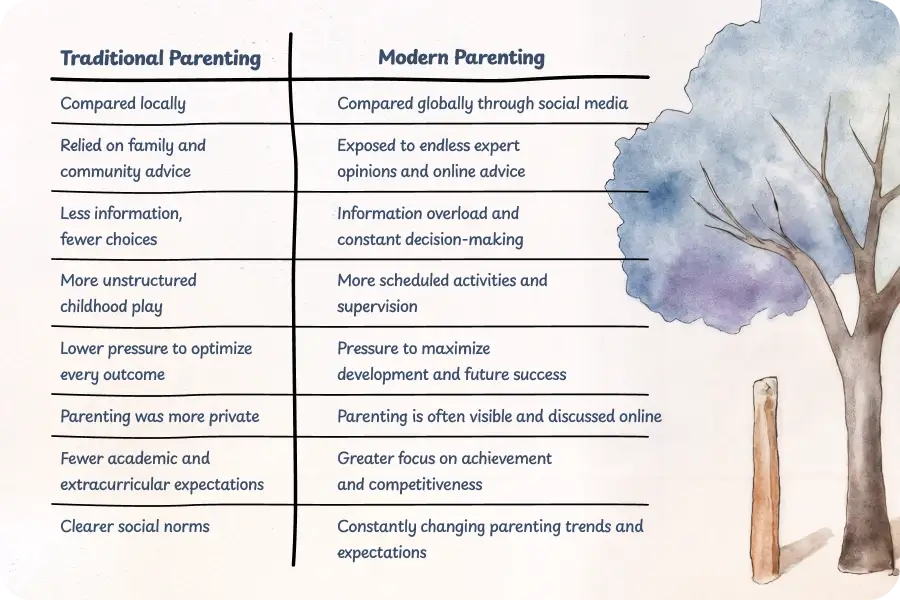
Modern parenting looks very different from what many parents experienced in their own childhood. Technology and shifts in social values have transformed how parents approach raising children. While previous generations often relied on experience and tradition, parents today have access to endless information, expert advice, and countless opinions.
1. Discipline First vs. Emotional Understanding
Traditional parenting frequently focused on correcting behavior through discipline. Parents demanded respect, and consequences were often immediate and non-negotiable.
This shift reflects growing awareness of child psychology, though research suggests that children still benefit from clear boundaries and consistent expectations [1] Lavrič M, Naterer A. The power of authoritative parenting: A cross-national study of effects of exposure to different parenting styles on life satisfaction. September 2020 .
Are you emotionally available to your loved ones? Take a quick Emotional Intelligence test to see whether you express your feelings in healthy ways.
2. “Because I Said So” vs. Explaining the Why
Many adults remember hearing the phrase, “Because I said so,” when they questioned a rule. Parents were authority figures, and children were expected to obey without debate.
Today, parents are more likely to explain the reasoning behind rules. Instead of simply enforcing boundaries, they tend to encourage discussion, empathize, and help children understand the consequences of their actions. The goal is not to eliminate authority but to teach critical thinking, emotional regulation, and decision-making skills.
3. The Pressure to Manage School Life
For many parents in the past, success was measured by responsibility, good behavior, and the ability to become a self-sufficient adult. Modern parents feel pressure to help their children excel from an early age. Extracurricular activities, tutoring, sports, and advanced learning programs have become common parts of today’s parenting. As a result, parenting can feel more demanding than ever. Many parents worry about making the right choices, even when there is no clear answer.
This shift has encouraged parents to take a broader view of success, focusing not only on grades but also on helping children develop the skills needed to thrive in an unpredictable future.
4. The Growing Focus on Emotional Regulation
One of the most significant changes in parenting is the increased awareness of mental health. Previous generations often discussed emotional struggles less openly, and children were expected to “toughen up” when facing difficulties.
Today, many parents actively teach emotional regulation and encourage children to express their feelings. Conversations about anxiety, stress, self-worth, and emotional well-being are becoming more common in families and schools alike.
This approach does not mean lowering standards or avoiding discipline. Instead, it recognizes that emotional health plays an important role in children’s lives and their ability to learn and build relationships.
Take a parenting style test to discover whether you’re an authoritarian, permissive, authoritative, or uninvolved parent. Breeze’s self-discovery tests may help you build self-awareness, uncover your strengths, and better understand your emotions and decisions. You’ll find quizzes on personal growth, relationships, career, and more. All of them are grounded in psychology and approved by mental health professionals.

5. More Independence vs. More Supervision
Years ago, many children spent hours playing outside without constant adult oversight. They rode bikes around the neighborhood, visited friends unannounced, and learned how to solve problems on their own.
Today’s kids grow up in a digital environment filled with smartphones, streaming platforms, video games, and social media. As a result, parenting today often involves managing a child’s virtual world in addition to their physical one. The challenge is no longer just knowing where your child is, but also understanding what they are seeing, sharing, and experiencing online. Screen time, online safety, cyberbullying, and digital content have become major parenting concerns.
The goal is to find a balance between protecting children and allowing them to develop confidence and competencies through real-world experiences.
Expert Insight
A child’s independence is based on a lot of different components, like parenting and attachment styles, their level of confidence, and more. While there are many differences in how older generations displayed independence, it is important to recognize that in today’s world, children are just as capable of learning how to be independent.

Hannah Schlueter
Mental health professional
6. The Impact of Technology on Family Time
Technology has transformed the way families spend time together. In previous generations, family activities often centered around shared experiences such as eating dinner together, playing board games, watching a single television program, or simply talking about the day. With fewer distractions, family members were more likely to engage face-to-face.
At the same time, technology isn’t entirely negative. Video calls help families stay connected across long distances, educational apps support learning, and digital tools can create new opportunities for shared experiences. The key is using technology intentionally and making room for regular device-free family time that encourages conversation, fosters important social skills, and strengthens relationships.
7. Becoming Parents Later in Life
One of the biggest shifts in modern parenting is that many people are having children later than previous generations. Older parents often bring valuable strengths to parenting, including greater emotional maturity, financial stability, and life experience. However, parenting later in life can also come with unique challenges.
There may also be added pressure to “get parenting right.” After waiting years to become a parent, some people place extremely high expectations on themselves and feel guilty when reality doesn’t match their ideal vision. They may worry that they have less time, energy, or patience than younger parents, even when they are doing a great job.
At the same time, older parents often find themselves balancing multiple responsibilities, such as caring for young children while also supporting aging parents. This “sandwich generation” effect can increase stress and make parenting feel more overwhelming.
What Our Parents Got Right: 4 Parenting Advice That Still Works
These “old-school” practices are still effective and supported by research:
1. Eat dinner together
Surveys show that two-thirds (66%) of children aged eight to 16 said they would rather eat in front of a TV or computer than with a parent, and 51% said they actively used their devices while eating [3] Jessica Murray. Just one in three British families eats together each day, survey finds. May 2025 .
At the same time, a large umbrella review of 41 systematic reviews found that children and teens who regularly eat meals with their families tend to have healthier diets, better mental well-being, and stronger academic performance, and are less likely to engage in risky behaviors [4] Snuggs S, Harvey K. Family Mealtimes: A Systematic Umbrella Review of Characteristics, Correlates, Outcomes and Interventions. June 2023 .
2. Go outside and play
Recent research shows that free, unstructured play supports children’s cognitive, social, emotional, and motor development [5] Yuanyuan Yang, Yuan Shen, Tianchen Sun, Yangbin Xie. Validating the Effectiveness of a Large Language Model-based Approach for Identifying Children’s Development across Various Free Play Settings in Kindergarten. May 2025 . Studies have also linked unstructured play in early childhood to stronger self-regulation skills years later.
3. Rules matter
Research shows that the authoritative parenting style—high warmth combined with clear expectations and consistent boundaries—is associated with better academic, social, and emotional outcomes than either overly permissive or overly harsh approaches [1] Lavrič M, Naterer A. The power of authoritative parenting: A cross-national study of effects of exposure to different parenting styles on life satisfaction. September 2020 .
4. Help around the house
While direct experimental evidence is more limited, child-development experts consistently argue that chores and age-appropriate responsibilities help children develop competence, responsibility, and life skills.
Expert Insight
Some benefits of giving children chores include fostering a sense of responsibility and independence. When children know they can accomplish things on their own, it creates more confidence and shows them that they can overcome obstacles, and both are extremely important for overall social-emotional development.
Hannah Schlueter
Mental health professional
What Can We Learn From Both Approaches?
The debate between modern and traditional parenting is often presented as a choice between old and new. In reality, the strongest parenting approaches usually borrow from both.
Although parenting methods have evolved, many traditional values remain relevant. Clear rules help children understand boundaries. Consistent discipline teaches consequences. Respect for others supports healthy relationships.
At the same time, modern parenting highlights the importance of communication, emotional awareness, and mental well-being. Many successful parents today combine modern ideas about communication and emotional support with traditional expectations around responsibility and behavior.
After all, every generation of parents is trying to do the same thing: raise children who are confident, capable, and prepared for the future.
Final Thought
Traditional parenting often emphasized obedience, rigidity, and respect for authority figures. Many parents from earlier generations believed that clear boundaries and strict rules helped a child learn responsibility. In many homes, authority figures such as grandparents, a mother, or a dad played an active role in guiding a child’s behavior.
Years ago, children were generally given more independence outside the house. Many experienced a free-range lifestyle, spending hours outdoors with friends, exploring, and creating their own games. While traditional parenting sometimes focused more on discipline than discussion, it also encouraged resilience and practical problem-solving skills.
Many parents today still admire certain aspects of traditional approaches, especially the emphasis on responsibility, respect, and understanding the consequences of actions. Research shows that the most balanced approach includes clear rules and expectations alongside empathy, communication, and emotional support. Children benefit from both structure and understanding.
However, one of the biggest features of parenting today is the focus on mental health, communication, and building a strong connection with a child. Many parents want their kids to develop self-confidence, healthy relationships, and the ability to handle life’s challenges. As a result, modern approaches often encourage discussion rather than simply enforcing commands.
At the same time, modern-day parenting comes with unique pressures. Social media, a competitive global market, and growing concerns about a child’s future can create high expectations for both parents and kids.
Frequently asked questions
1. Is modern parenting better than traditional parenting?
Not necessarily. Both approaches have strengths and weaknesses. Traditional parenting often emphasized discipline, responsibility, and respect, while modern parenting focuses more on communication, emotional awareness, and mental health. The most effective parenting styles typically balance a combination of both.
2. Why were parents stricter in the past?
Previous generations often viewed parents as authority figures whose decisions were not meant to be questioned. Cultural norms, family structures, and social expectations encouraged obedience and discipline, which many believed prepared children for adult life.
3. What is the biggest difference between parenting today and in the past?
One of the biggest differences is communication. While traditional parenting often relied on rules and authority, modern parents are more likely to explain decisions, discuss emotions, and involve children in conversations about behavior and consequences.
4. What can previous generations learn from modern parenting?
Modern parenting has increased awareness of child development, mental health, and emotional regulation. Encouraging children to express their feelings and understand their emotions can help build confidence, healthy relationships, and long-term well-being.
5. Why do many parents feel more pressure today?
Modern parents face constant advice from experts, social media, schools, and online communities. In addition to supporting a child’s education, many feel responsible for their emotional well-being, social development, and future success, which can make parenting feel more demanding.
Sources
- Lavrič M, Naterer A. The power of authoritative parenting: A cross-national study of effects of exposure to different parenting styles on life satisfaction. September 2020
- Irina Shapovalenko. Modern parenthood: new research approaches. January 2022
- Jessica Murray. Just one in three British families eats together each day, survey finds. May 2025
- Snuggs S, Harvey K. Family Mealtimes: A Systematic Umbrella Review of Characteristics, Correlates, Outcomes and Interventions. June 2023
- Yuanyuan Yang, Yuan Shen, Tianchen Sun, Yangbin Xie. Validating the Effectiveness of a Large Language Model-based Approach for Identifying Children’s Development across Various Free Play Settings in Kindergarten. May 2025
Disclaimer
This article is for general informative and self-discovery purposes only. It should not replace expert guidance from professionals.
Any action you take in response to the information in this article, whether directly or indirectly, is solely your responsibility and is done at your own risk. Breeze content team and its mental health experts disclaim any liability, loss, or risk, personal, professional, or otherwise, which may result from the use and/or application of any content.
Always consult your doctor or other certified health practitioner with any medical questions or concerns
Breeze articles exclusively cite trusted sources, such as academic research institutions and medical associations, including research and studies from PubMed, ResearchGate, or similar databases. Examine our subject-matter editors and editorial process to see how we verify facts and maintain the accuracy, reliability, and trustworthiness of our material.
Was this article helpful?