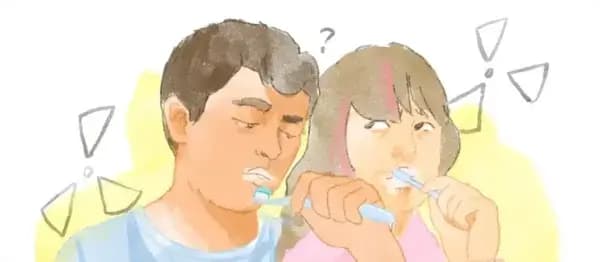



Have you ever heard “One day, we’re going to get married” or “Once I get through this difficult period, everything will change”? But when this future never becomes reality, you may begin to wonder whether you were being manipulated. Let’s find out how to stop future faking and recognize false promises in relationships.
7 Examples of Future Faking
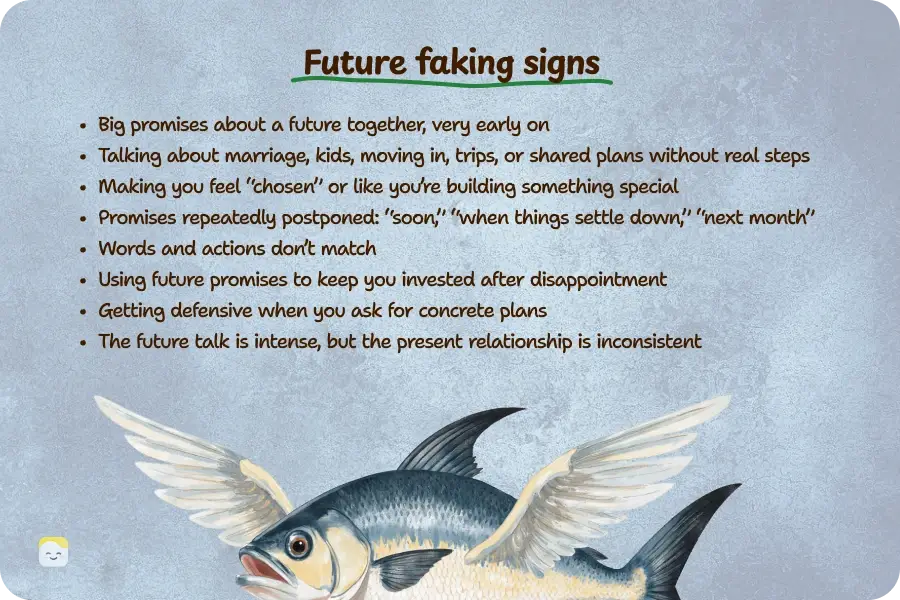
The key issue with future faking is overwhelming someone with empty promises of a shared future to gain something in the present or maintain control [1] Grapsas S, Brummelman E, Back MD, Denissen JJA. The “Why” and “How” of Narcissism: A Process Model of Narcissistic Status Pursuit. January 2020 . Here are red flag examples:
1. The Marriage Promise
A partner repeatedly talks about marriage: “You’re the person I want to marry. I can see us growing old together.” You become emotionally invested in that future. Months or years pass, but whenever you ask about getting engaged or making plans, there’s always another reason to wait.
Wondering whether you’re experiencing manipulation and grand promises that are too good to be true? If you feel like a victim hooked by the relationship, take a test to spot narcissistic traits in your partner’s behavior.

2. “We’ll Move in Together Soon”
They may use financial future faking, saying, “Once my lease is up, we’ll get a place together.” You begin planning your life around that possibility. But when the lease ends, they suddenly have another reason why it can’t happen. A new deadline appears: “Let’s do it next year.” Next year arrives, and the cycle repeats.
3. “You’ll Meet My Family Soon”
Another manipulative tactic is saying, “My family is going to love you. I’ll introduce you soon.” But months go by, and the introduction never happens. Every time you ask, there’s a different excuse.
4. The Dream Vacation
“I’m going to take you to Italy. We’re going to have the most amazing time,” they say. But no dates are chosen, and no plans are made. Moreover, they may use the trip to reassure you after a conflict or their bad behavior. The vacation exists as something to look forward to rather than something they’re actually working toward.
5. Promising Commitment to Prevent a Breakup
Imagine telling your partner, “I don’t think I can continue like this. I need a committed relationship.” They respond, “You’re right. I’m ready. I’ll give you everything you want. Just don’t leave me.”
You decide to stay, but once the immediate threat of losing you disappears, nothing changes. When you raise the issue again, they give you another future promise. This creates a cycle in which the promise of a future together is used to prevent separation.
Wondering how your attachment style may influence the way you respond to your partner’s promises? Take an attachment style test to better understand your patterns of relationship formation.

6. Future Faking in a Situationship
Someone you’re casually seeing might say, “I’m not ready for a relationship right now, but when I am, you’re exactly who I’ll want,” or “Eventually we’ll be together properly. I just need to figure some things out first.”
These statements can keep you emotionally unavailable to other possibilities and allow the other person to avoid making a commitment in the present.
7. Future Faking After an Argument
After a serious argument, your partner may suddenly make big promises: “I’ll change. I’m going to treat you differently from now on.”
The relationship improves temporarily, but the promised changes don’t happen. The next major conflict brings another round of promises. Eventually, you may become attached not to the relationship as it currently exists, but to the relationship you keep being promised [2] Evita March, Cameron S. Kay, Bojana Dinić, Danielle Leigh Wagstaff. “It’s All in Your Head”: Personality Traits and Gaslighting Tactics in Intimate Relationships. June 2023 .
Signs Your Partner Is Future Faking: Quiz
Why Do People Future Fake?
Someone may make unrealistic promises because they’re impulsive, emotionally immature, conflict-avoidant, afraid of losing you, or genuinely convinced that they’ll change.
1. They Want to Keep the Relationship
A person may use promises about the future to prevent a breakup or reassure a partner during a difficult period. Saying “I’ll change” or “we’ll have the life you want” can temporarily restore hope without actually dealing with the problems in the relationship.
2. They Want to Avoid Conflict
Some people make promises because they don’t know how to handle difficult conversations. Agreeing to a future commitment can feel easier than honestly saying, “I’m not ready,” “I don’t want that,” or “I don’t know what I want.”
3. They Enjoy the Intensity of New Relationships
During the early stages of relationships, emotions can be intense. Someone may feel excited and make future plans without considering whether they are realistic.
4. They Want Something in the Present
Future promises can sometimes be used to obtain something immediately, such as attention, affection, forgiveness, sex, financial support, or loyalty.
5. They Struggle With Commitment
A person may enjoy imagining a committed future while feeling uncomfortable with the responsibility and vulnerability that come with actually building one. Talking about marriage, children, or living together can feel easier than taking steps toward those goals.
6. They Believe Their Own Promises
Future faking isn’t always a deliberate manipulation and lying. Some people genuinely believe what they are saying when they say it.
Thinking you might be in an abusive relationship that makes you experience self-doubt? Take an emotional abuse test to protect your mental health.
Why False Promises Can Feel So Powerful
The reason future faking hurts so much is that the imagined future can become emotionally real long before anything has actually happened.
When someone describes an exciting future with you, you’re not just hearing words. You’re imagining the fulfillment of your deepest desires:
- waking up beside them,
- building a home,
- traveling together,
- getting married,
- raising children,
- growing old together,
- finally receiving the love and security you’ve wanted.
Future Faking vs. Future Planning
Future faking can happen in romantic relationships, friendships, family relationships, and even professional situations.
It’s important not to label every broken promise as future faking. People naturally talk about their hopes and plans. They can intend to do something and later change their minds. Life circumstances can interfere with plans. Financial problems, family issues, career, uncertainty, or personal growth can change someone’s priorities.
Healthy future planning usually has some connection between words and behavior.
Expert Insight
Consistent effort is the best way to tell if you’re with someone actually motivated to work on themselves. That doesn’t mean they respond or cope perfectly to everything. However, it does mean you can see them make genuine attempts to take in your feedback and grow.

Nicole Arzt
Mental health professional
How to Respond to Future Faking To Protect Your Mental Health
When you’re trying to determine whether you’re being future faked, don’t focus on what someone says they will do. Talk is cheap, and someone can describe an extraordinary future with you while giving you very little in the present.
- Look at what they consistently do now. “Do they really love me?” → “Does their behavior consistently reflect the future they’re describing?”
- You can also ask for concrete information:
- Instead of accepting: “We’ll live together someday.” → ask: “What would need to happen for us to actually do that, and what steps are we taking?”
- Instead of: “I’ll change.” → Ask: “What specifically are you going to do differently?”
- Instead of: “We’ll get married eventually.” → Ask: “Do you actually want marriage, and what timeline feels realistic to you?”
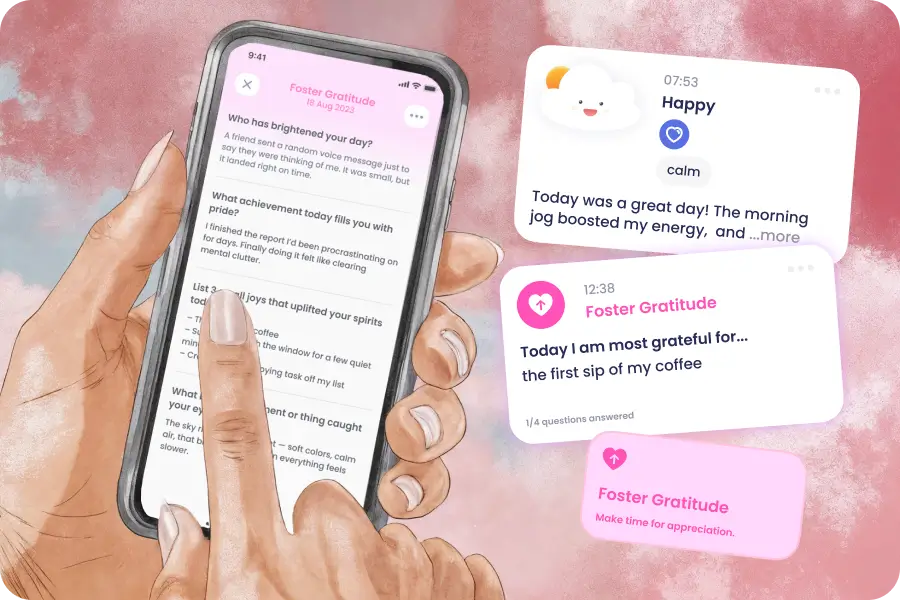
This is where the Breeze app can also help. It offers guided science-backed tools to help you track your emotions. Use Breeze’s journaling to learn how to feel your feelings and recognize narcissistic tendencies in people.
Frequently asked questions
1. What is future faking?
Future faking is a relationship behavior in which someone routinely makes exciting promises about the future, such as marriage, living together, children, travel, or a long-term commitment, without having the intention of following through.
2. What are common examples of future faking?
Common examples include promising marriage without taking steps toward commitment, saying you’ll move in together “soon” while continually postponing it, promising to change after an argument, or describing a perfect future whenever you consider ending the relationship. Future faking is generally vague and may sound like, “When things settle down, I’ll make you a priority,” “Next year, we’ll finally take that trip we’ve always talked about,” or “Just give me a little more time. Then we’ll be together properly.”
3. Is future-faking always intentional?
No. Someone can make false promises because they are emotionally immature, impulsive, afraid of losing you, or genuinely believe they will follow through. However, repeated promises without meaningful action can still harm another partner’s self-esteem, regardless of the real intention behind them [3] Nevicka B, De Hoogh AHB, Den Hartog DN, Belschak FD. Narcissistic Leaders and Their Victims: Followers Low on Self-Esteem and Low on Core Self-Evaluations Suffer Most. March 2018 .
4. How can you tell if someone is future-faking?
Look for a consistent gap between partners’ promises and what they actually do. Warning signs can include constantly changing timelines, grand promises during relationship conflicts, vague plans with no concrete steps, and repeated excuses when the promised future gets closer.
5. Can future-faking happen in a healthy relationship?
People in healthy relationships can make plans that don’t work out. The important distinction is whether there is honest communication, realistic planning, and consistent effort. A broken plan isn’t automatically future-faking. However, it can become a manipulation tactic when there is a repeated pattern of promises without major commitments.
Sources
- Grapsas S, Brummelman E, Back MD, Denissen JJA. The “Why” and “How” of Narcissism: A Process Model of Narcissistic Status Pursuit. January 2020
- Evita March, Cameron S. Kay, Bojana Dinić, Danielle Leigh Wagstaff. “It’s All in Your Head”: Personality Traits and Gaslighting Tactics in Intimate Relationships. June 2023
- Nevicka B, De Hoogh AHB, Den Hartog DN, Belschak FD. Narcissistic Leaders and Their Victims: Followers Low on Self-Esteem and Low on Core Self-Evaluations Suffer Most. March 2018
Disclaimer
This article is for general informative and self-discovery purposes only. It should not replace expert guidance from professionals.
Any action you take in response to the information in this article, whether directly or indirectly, is solely your responsibility and is done at your own risk. Breeze content team and its mental health experts disclaim any liability, loss, or risk, personal, professional, or otherwise, which may result from the use and/or application of any content.
Always consult your doctor or other certified health practitioner with any medical questions or concerns
Breeze articles exclusively cite trusted sources, such as academic research institutions and medical associations, including research and studies from PubMed, ResearchGate, or similar databases. Examine our subject-matter editors and editorial process to see how we verify facts and maintain the accuracy, reliability, and trustworthiness of our material.
Was this article helpful?