


When everything around you keeps falling apart, it’s hard not to ask yourself, “Is it me? Am I the problem?” It’s a valid question because no person will always be right. Self-reflection is a healthy step to take if you want to get your life together.
This “Am I the problem?” quiz will help you to identify whether your worries are justified or if you were gaslighted into believing there’s something wrong with you.
Podcast name
Am I the Problem? Podcast
How Do I Know if I’m the Problem? Signs You’re The Problem
TW: In this article, we’ll use the word “problem” to describe toxic traits and negative self-perception. This doesn’t mean that you’re a bad person. We use this word, as many people choose it to generalize the complex nature of human personality.
You’ll be surprised how many people walk around, wondering, “Maybe I am the problem.” A study published in Psychiatric Services found that 29% of people admitted they feel useless, while 10% said they feel like a failure [1] Bruce G. Link, Elmer L. Struening, Sheree Neese-Todd, Sara Asmussen, Jo C. Phelan. Stigma as a Barrier to Recovery: The Consequences of Stigma for the Self-Esteem of People With Mental Illnesses. Psychiatric Services. December 2001. .
And let’s be honest: people who wonder, “Why am I always the problem?” are least likely to actually be the problem because they are capable of self-reflection.
Still, it’s totally normal to re-evaluate your behavior occasionally. These signs are here exactly for this.

Am I the Problem in My Relationship? 5 Signs
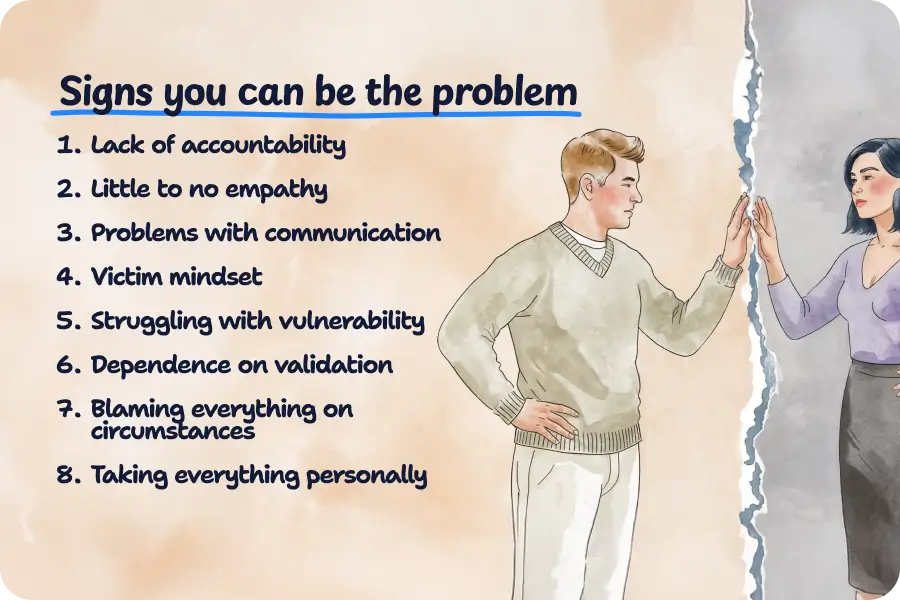
1. You Lack Accountability
Accountability means taking responsibility for your actions without immediately blaming circumstances, other people, or bad luck.
Not taking accountability means that you may not have the ability to reflect on your behaviors. Without self-reflection, it’s hard to grow and build healthy relationships.
2. You Don’t Understand Feelings of Others
Lack of empathy means that you can’t feel with other people. You may neglect their problems as “not significant” or rationalize them by providing a solution.
But empathy doesn’t mean agreeing with someone’s emotions or reactions. It just means being curious about another person’s feelings and always seeing them from a more positive perspective.
For example, not getting annoyed that your partner “seeks” attention, but sympathizing with them and thinking about how hard it must be for them to feel abandoned constantly.
3. It’s Hard for You to Communicate
Poor communication doesn’t come down to crafting sophisticated sentences or describing your feelings with metaphors. Poor communication means your previous negative experience distorts your ability to talk to others. Signs that your communication style can be toxic are:
- Silent treatment: Refusing to talk to someone with whom you are angry or upset.
- Mind-reading: Expecting others to know/predict your desires and not telling them directly. This also works the other way around: You try to guess the other person’s thoughts and reactions without giving them space to articulate themselves.
- Withholding affection: Deliberately denying affection as a way to punish someone.
- Passive aggression: Being angry or upset with someone but expressing it indirectly by using hints, sarcasm, backhanded compliments, ironic tones, etc.
- Resisting closeness: Intentionally not engaging in deep conversations to avoid difficult feelings.
- “Winning” arguments: Turning every conflict into a power struggle and not an opportunity to grow together.

4. You Always Feel Misunderstood/Victimlike
Look, it’s okay to feel misunderstood sometimes, especially if you’re neurodivergent or have a mental health condition like anxiety or depression. Society judges people with differences, even though many don’t have control over their conditions.
However, if you believe that everyone treats you unfairly or “doesn’t fully know you to judge,” you may have something called a victim mindset. This position is comfortable because it justifies a lack of change.
In reality, a victim mindset takes away your sense of agency. Yes, life has treated you unfairly. But maybe it’s worth admitting that you are responsible for open and honest communication in your relationships, not your mom, who messed up your perception of relationships.
5. Vulnerability Is Hard for You
Many people would rather appear angry, sarcastic, or indifferent than admit they feel hurt. If vulnerability feels uncomfortable to you, perhaps your true emotions seem hard or inappropriate to express.
Rychel Johnson, clinical counselor, adds that people who come across as “toxic” are actually protecting themselves from feeling vulnerable,“Vulnerability involves risking rejection or emotional pain, and for some people, those experiences feel overwhelming. As a result, they may rely on defensiveness, control, blame, criticism, anger, or emotional withdrawal to avoid feeling exposed. While this doesn’t excuse harmful behavior, it can help explain why emotional intimacy often feel threatening to them.”
Am I the Problem in My Life? 3 Signs
1. You Take Everything Personally
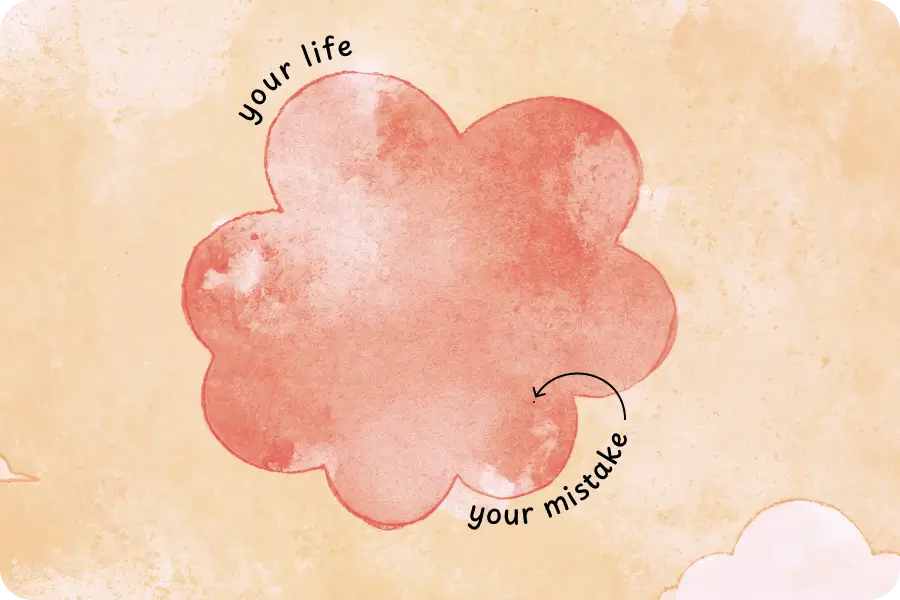
A message for all self-conscious people: not every awkward interaction or mistake is about you. If you constantly assume people are judging or thinking about you, you may be overestimating your role in their lives.
Taking personal responsibility for everything doesn’t give you control; it just burdens you. Because of this, you also keep repeating the same mistakes. You just can’t see past the importance of winning the argument.
2. Your Self-Perception Depends on the Opinions of Others
When you keep using the opinions of others as a navigator in your life, it can feel like something’s not right in your life. This happens when you feel a lot of pressure and do not live according to your values.
With healthy self-esteem, you won’t be feeling “I’m always the problem.” And healthy self-esteem comes from knowing who you are, even when others disagree with your perception of self and the world.
3. It’s Hard for You to Take Responsibility
The same victim mindset, which can make you feel misunderstood, also takes away your responsibility for your life. Yes, responsibility can feel uncomfortable because it forces us to confront our mistakes.
Lack of responsibility not only makes you a passive observer of life but also can harm your mental health. A recent study found that people who believed their lives happened to them were more likely to feel depressed and anxious. 64% of respondents had symptoms of depression, almost 56% were stressed, and 74.1% had anxiety [2] Guerrero Castillo M, Martinez Gonzalez MF, Escalera Jasso AA, Alvarez Lozada LA, Torres Pérez AL, Quiroga Garza A, Guzman Avilan RI, Escamilla Magaña D, Bravo Garcia R, Pérez Sosa ML, Márquez González YM, Elizondo Omaña RE, Jacobo Baca G. Locus of Control and Its Association with Depression, Anxiety, and Stress Among Mexican University Students: A Cross-Sectional Study. January 2026. .
Why Am I the Problem?
There are a few explanations in clinical psychology why you could feel like a problem in your relationship and life:
1. You Experienced Emotional Trauma
When a person is abused emotionally, they stop believing in their own agency. They can think, “If I can’t do anything right, I can’t trust myself.” Their bodies pick it up and start reacting to perceived criticism as physical threats.
Abuse survivors also internalize shame and blame themselves. This is a cycle.
Thoughts like “What’s wrong with me?” “I’m always a problem,” “Why am I so insecure?” feed the negativity → The negativity grows and forces you to self-deprecate → Negative self-talk shows in feeling like you’re always the problem.
2. You Fear Losing Control
This is a direct consequence of abuse: Repeated abuse → Victim tries to make sense of it → “If I’m the problem, I can fix it” → False sense of control.
A person who believes they are the problem develops intermittent reinforcement, which is a dependency on validation. What’s most surprising is that you can actually grow dependent not only on positive things like affection but also on negative ones like criticism and fights [3] Jakob Linnet. Neurobiological underpinnings of reward anticipation and outcome evaluation in gambling disorder. March 2014. .
When you can’t find a reason why somebody treats you poorly, your brain will desperately need an explanation. The lack of explanation triggers an alarm in the brain, signaling a potential threat.
3. You’re Gaslighted Into Thinking You’re the Problem
Gaslighting is a type of manipulation in which the manipulator makes the victim question their own memory and abilities. Maybe you’re just a scapegoat for someone’s mistakes.
But here it’s worth being honest with yourself. The table below will help you differentiate genuine concerns of others about your behavior from gaslighting:
| Signs that some of your behaviors are problematic | Signs you’re being pressured to think you’re the problem |
| Multiple people independently point out similar behaviors. | One specific person repeatedly blames you for most conflicts. |
| You react defensively when receiving feedback. | The feedback you receive is vague or impossible to satisfy. |
| You have similar problems in life and relationships over and over. | Problems mostly appear with one or two people who criticize you. |
| You struggle to admit mistakes without justifying yourself. | You apologize even when you’re not sure what you did wrong. |
| Looking back, you can identify situations where you genuinely handled things poorly. | Looking back, you mostly remember trying to keep the peace. |
What to Do When You Realize You’re the Problem
Don’t rush to conclusions. You are not your toxic traits. It’s possible to make a positive change, even if you experienced trauma and haven’t known a different life.
The main goal is to boost your self-awareness and focus on your mental health. Here’s how you can do it.
1. Start Reflecting
A person becomes a problem when they lose touch with their thoughts and identity. For example, you can be well aware of what you did but have no idea why you did it in the first place.
To reflect on your own behavior, you can try:
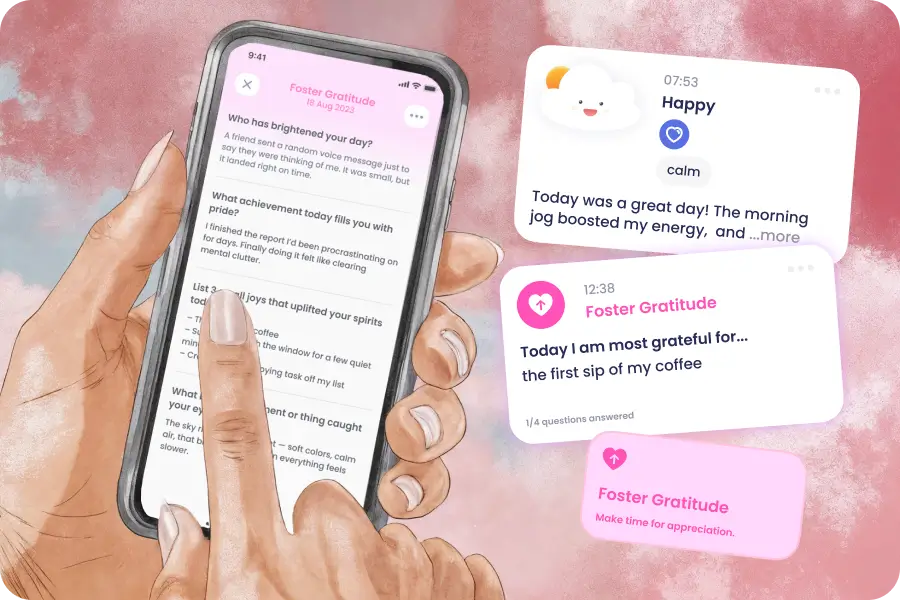
- Journaling, which is very comfortable to do in the Breeze app, where you can also track your mood and triggers.
- Working with a mental health professional.
- Practicing mindfulness exercises to observe your thoughts and feelings.
- Asking someone you trust for direct feedback about how you impact them.
Self-reflection is also beneficial for your well-being because when you write down your thoughts, you basically assess them for whether they make sense at all. This soothes anxiety and strengthens your confidence in your own abilities.
2. Take Responsibility for Something
Taking responsibility is uncomfortable at first because it requires accepting that you won’t always get things right. However, responsibility is also one of the fastest ways to build confidence and stop doubting yourself for no reason.
Many people think confidence comes from success. In reality, confidence comes from failure: learning that you can handle mistakes and recover from them.
Stop underestimating and blaming yourself. You’re much stronger than you think you are. Here are some ideas where you can start taking responsibility:
- Get plants
- Start a blog
- Organize a local book club
- Participate in community cleanup
- Help your small local business
Every time you take responsibility for your actions, you strengthen your sense of agency. You begin to see yourself as someone who can influence outcomes rather than someone who is constantly at the mercy of circumstances.
3. Practice Healthy Communication
You need to stop believing that other people owe you something in the same way that you don’t owe them anything. You can’t be responsible for their needs and desires unless they express them to you directly. Similarly, other people can’t read your mind.
A few simple rules that will drastically change the way you communicate with others are:
- Speak up if you don’t like something.
- Express your needs with words, not with hints.
- Don’t guess or suppose something. Clarify things directly with a person.
- Return your loved ones’ responsibility for their thoughts and intentions.
- Don’t attack the character of a person you’re talking to if they start to judge or mistreat you.
Expert Insight
If you never practiced open communication, I would encourage you to start small and focus on sharing your thoughts and feelings honestly in low-risk situations. Open communication is a skill that develops with practice, not something people are simply born knowing. Learning to express needs directly and tolerate the discomfort that can come with being seen and understood can gradually build confidence.

Rychel Johnson
Mental health professional
4. Work on Changing Your Mindset
You think that “I’m a problem” because deep down you have “evidence” that it’s true. Maybe you never solved that conflict with your parents, or you made a big mistake that cost you the love of your life.
But here’s another perspective: Your mistakes aren’t proof that you are a failure. They only prove that you tried something and it didn’t work out (this time). This is a main requirement of personal growth. An amazing tool for restructuring old, harmful self-beliefs is cognitive behavioral exercises.
You cannot change what you’ve done, but you can influence what you do next. Remember that accountability and self-compassion can coexist. You can admit that you handled something poorly while still believing you are capable of growth.
Are You a Bad Person for Always Being the “Problem”?
No, having unhealthy behaviors does not make you a “bad person.” What’s known as “problematic” behaviors develops as coping mechanisms in response to what the brain interprets as danger, such as emotional abuse, neglect, deep senses of fear, etc.
People rarely wake up and say, “Today, I’m going to be a problem for everyone.” But, hurt people hurt people.
In fact, the very act of asking, “Why do I feel like a problem?” means that a person is self-aware. Manipulative people with narcissistic traits (aka “toxic” traits) don’t spend time reflecting on how their behavior affects others because they’re too busy protecting their ego.
If your anxiety about being a “bad person” doesn’t fade away, you need to learn what your self-worth is and what your temporary states are:
| What you aren’t | What you are |
| What others think of you | Your potential |
| Temporary negative emotions | Your dreams |
| Past mistakes | Your visualization of success |
| What society tells you you are | Your awareness and observation of life |
Sources
- Bruce G. Link, Elmer L. Struening, Sheree Neese-Todd, Sara Asmussen, Jo C. Phelan. Stigma as a Barrier to Recovery: The Consequences of Stigma for the Self-Esteem of People With Mental Illnesses. Psychiatric Services. December 2001.
- Guerrero Castillo M, Martinez Gonzalez MF, Escalera Jasso AA, Alvarez Lozada LA, Torres Pérez AL, Quiroga Garza A, Guzman Avilan RI, Escamilla Magaña D, Bravo Garcia R, Pérez Sosa ML, Márquez González YM, Elizondo Omaña RE, Jacobo Baca G. Locus of Control and Its Association with Depression, Anxiety, and Stress Among Mexican University Students: A Cross-Sectional Study. January 2026.
- Jakob Linnet. Neurobiological underpinnings of reward anticipation and outcome evaluation in gambling disorder. March 2014.
Disclaimer
This article is for general informative and self-discovery purposes only. It should not replace expert guidance from professionals.
Any action you take in response to the information in this article, whether directly or indirectly, is solely your responsibility and is done at your own risk. Breeze content team and its mental health experts disclaim any liability, loss, or risk, personal, professional, or otherwise, which may result from the use and/or application of any content.
Always consult your doctor or other certified health practitioner with any medical questions or concerns
Breeze articles exclusively cite trusted sources, such as academic research institutions and medical associations, including research and studies from PubMed, ResearchGate, or similar databases. Examine our subject-matter editors and editorial process to see how we verify facts and maintain the accuracy, reliability, and trustworthiness of our material.
Was this article helpful?