


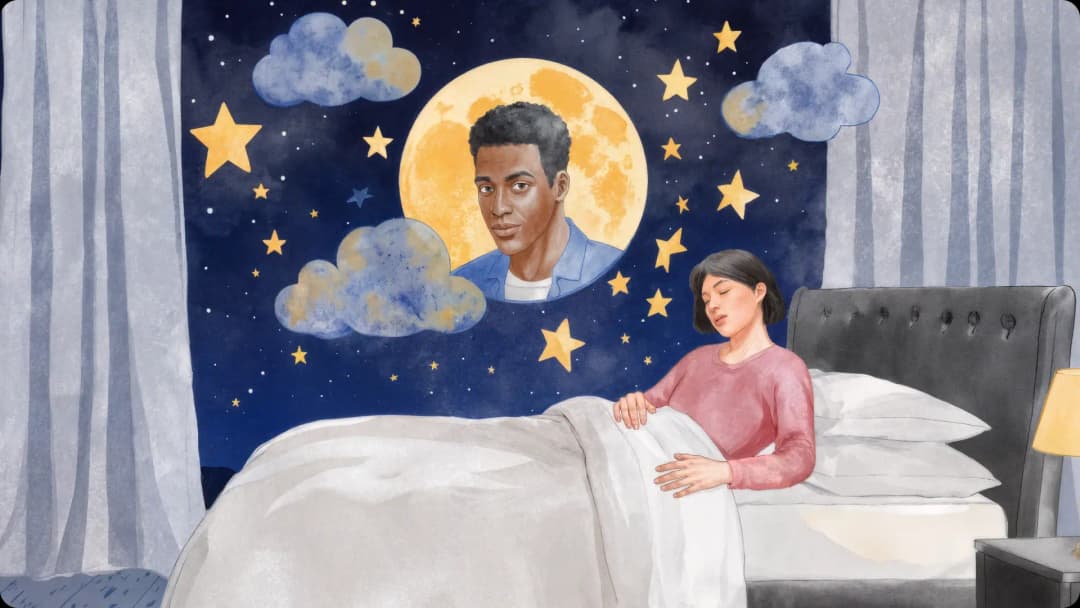
Have you ever woken up after dreaming about someone and wondered why they appeared in your mind? Maybe it was your ex, a close friend, someone you haven’t seen in years, or even a person you barely know.
Let’s explore why certain people appear in your subconscious mind and how to understand such dreams without overanalyzing them.

Why Do You Dream About Someone?
Dreaming about someone doesn’t necessarily mean you have romantic feelings for them or secretly want them back in your life. During sleep, your brain continues processing memories, emotions, and experiences [1] Michael Koslowski, Max-Pelgrom de Haas, Tamara Fischmann. “Converging theories on dreaming: Between Freud, predictive processing, and psychedelic research.” February 2023 . Dreams may draw on these processes, combining familiar people and situations in unexpected ways.
Several factors may influence who appears in your dreams:
- Recent interactions. Someone you talked to, saw online, or thought about during the day may appear in your dream.
- Emotional significance. People associated with strong emotions may be more memorable and more likely to feature in dreams.
- Past experiences. Your brain may associate people with important memories or earlier life stages.
- Current concerns. Stress, relationship difficulties, or major decisions may influence dream content.
- Random associations. Sometimes, a person appears without an obvious emotional reason.
Wondering what your dreams reveal about your unmet emotional needs? Take a personality type test to gain insights and reflect on your emotional patterns and what you may be focusing on in your waking life.

10 Dream Interpretations
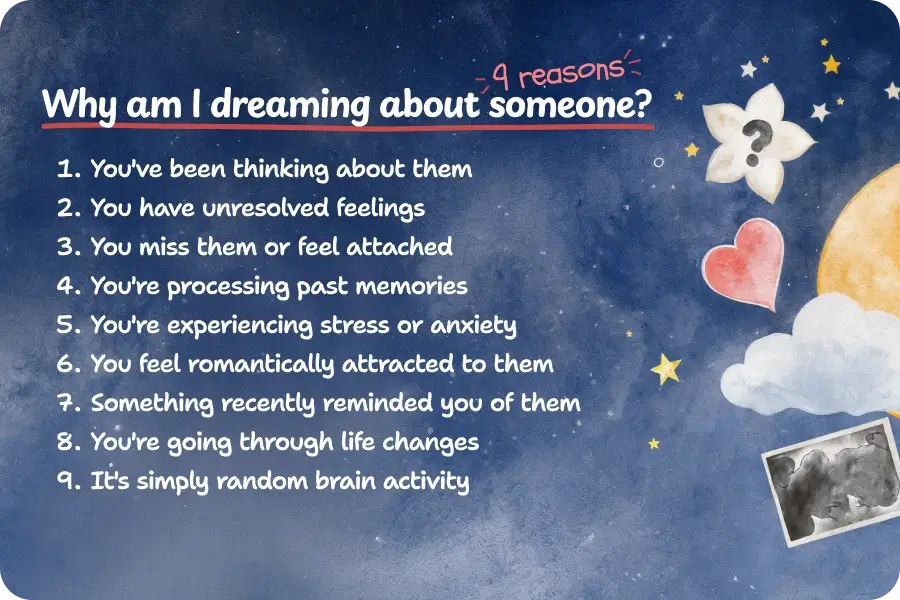
Sometimes, these dreams feel so real that you can’t stop thinking about them the next morning. You might wonder whether they reveal hidden feelings, unfinished business, or something deeper about your relationship with that person. Here are ten possible explanations to consider.
1. You’ve Been Thinking About Them Recently
One of the simplest explanations is that the person has been on your mind. Perhaps you recently had a conversation with them, saw their social media profile, or heard something that reminded you of them.
Even brief interactions can become part of your dreams. For example, you might dream about an old classmate after seeing their name online, even if you haven’t consciously thought about them in years.
2. You Have Strong Feelings Associated With Them
People who evoke strong emotions may appear in your dreams, especially when those feelings are relevant to your current life.
These emotions don’t have to be romantic. They might include:
- Anger. Remembering an unresolved conflict or feeling frustrated with them.
- Guilt. Wishing you had handled a past situation differently.
- Sadness. Missing someone or grieving a relationship.
- Anxiety. Worrying about someone’s opinion.
3. They Remind You of Something in Your Current Life
Sometimes, a person in your dream may be connected to a broader memory, experience, or emotional association.
Imagine dreaming about a former teacher while feeling nervous about a job interview. The dream doesn’t necessarily mean you’re thinking about that actual person. They may be associated in your memory with evaluation, expectations, or pressure to succeed.
Similarly, someone from your childhood might appear during a major life transition because they remind you of an earlier period of your life.
Expert Insight
An unexpected dream usually reflects a passing association: a song, a face in a crowd, or a feeling that resembles one connected to that person, even if you didn’t consciously notice the reminder. A repeated dream is more worth paying attention to, but the meaning is usually about you, not the other person. The same person often returns when an emotional theme they represent is still active, such as rejection, guilt, or a stage of life you’re adjusting to. Notice the feeling the dream leaves you with and ask where that feeling appears in your current life. If repeated dreams are distressing or tied to a traumatic experience, that’s worth discussing with a therapist.

Grady Shumway
Mental health professional
4. You’re Processing Memories
Sleep plays an important role in memory processing, and some researchers suggest that dreaming may be connected to how the brain organizes and integrates experiences [1] Michael Koslowski, Max-Pelgrom de Haas, Tamara Fischmann. “Converging theories on dreaming: Between Freud, predictive processing, and psychedelic research.” February 2023 . This may help explain why people from different periods of your life sometimes appear together in dreams.
You might dream about:
- A childhood friend you haven’t seen in years.
- A former coworker from an old job.
- Someone you met briefly during a vacation.
- A family member associated with an important memory.
5. You’re Experiencing Stress or Anxiety
Stress can influence how often you remember dreams and what happens in them. When you’re dealing with emotional pressure, your dreams may include situations involving conflict, rejection, embarrassment, or uncertainty.
For example, you might dream about:
- Arguing with your partner during a stressful period.
- Being criticized by your boss before an important presentation.
- Losing contact with a friend when you’re feeling lonely.
- Running into someone associated with a difficult experience.
6. You Miss Them or Want to Reconnect
Sometimes, dreaming about someone may be related to missing their presence in your life. This might happen after a breakup, a friendship ending, a move, or a period of separation.
You may miss:
- The emotional connection you shared.
- A sense of familiarity or comfort.
- Activities you used to enjoy together.
- A particular stage of your life.
However, missing someone doesn’t automatically mean reconnecting is the right decision. You can value a past relationship while recognizing that it may no longer be healthy or appropriate for your current life.
Expert Insight
Signs you may be seeking closure include replaying conversations, wishing you’d said something differently, wanting an explanation you never received, or feeling a pull to check on the person. Dreams that rewrite the ending, such as a reconciliation or a final conversation, often reflect that unfinished feeling. Closure usually comes from within rather than from the other person, through journaling, an unsent letter, grieving what was lost, or talking it through with a therapist. If the dreams fade as you work through those feelings, that’s often a sign the process is working.
Grady Shumway
Mental health professional
7. You’re Exploring Your Relationship Expectations
Dreams sometimes involve romantic, social, or emotional situations that don’t match your waking-life intentions. For example, you might dream about dating a friend, arguing with a partner, or becoming close to someone you barely know.
Rather than interpreting the dream literally, consider whether the situation connects to your current relationship concerns.
You might be thinking about:
- Trust and vulnerability.
- Emotional intimacy.
- Relationship boundaries or jealousy.
- The desire for companionship.
- Fear of rejection or abandonment.
8. You’re Going Through a Major Life Change
Significant transitions can bring old memories and relationships back into focus. Starting a new job, moving to another city, ending a relationship, or becoming a parent may lead you to reflect on earlier experiences. During these periods, you might dream about people associated with previous chapters of your life.
For example, dreaming about college friends after changing careers may reflect memories of another time when you were experiencing uncertainty. The connection isn’t always obvious, and you don’t need to find a deeper meaning in every dream.
9. You Have Unresolved Questions About the Relationship
If a relationship ended unexpectedly or involved conflict, you may occasionally dream about the person involved. Perhaps you never received an explanation for their behavior or didn’t have the opportunity to express your feelings.
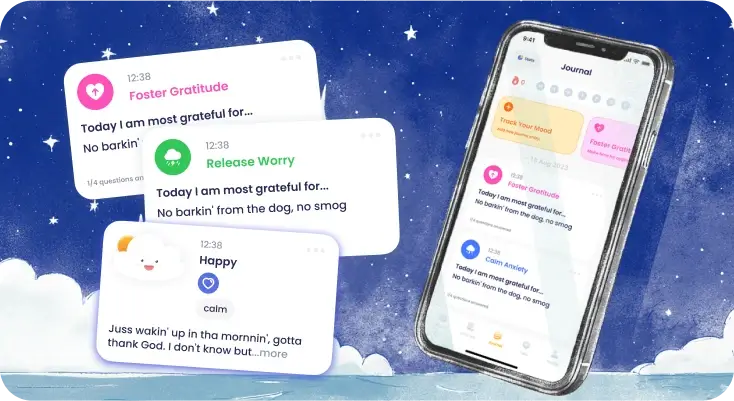
Instead, it may be useful to ask yourself whether there are unresolved issues you’d like to process independently. Breeze guided journaling may help you reflect without reopening a relationship and provide insights about your internal conflict.
10. The Dream May Not Have a Specific Meaning
Not every dream has a clear psychological explanation. Dreams can combine fragments of memories, emotions, familiar faces, and imagined situations in unusual ways.
You might dream about someone you haven’t thought about in years simply because your brain activated a related memory during sleep. It’s okay to have a dream about someone without assigning it a deeper meaning. Trying to interpret every detail can sometimes create anxiety.
What Does It Mean When You Dream About Different People?
Dreams can reflect your emotions, memories, recent experiences, personal concerns, or imagined situations.
1. Dreaming About Your Crush
Dreaming about someone you have a crush on may reflect your attraction, curiosity, or hopes about getting closer to them. However, dreaming about your crush doesn’t mean they share your feelings or that a relationship will develop.
2. Dreaming About Your Ex Partner
Dream analysts found that between 3.37% and 8% of people’s dreams can involve their ex-partners [2, 3]. Dreaming about an ex can feel confusing, especially if you’re currently in a happy relationship.
Possible explanations include:
- Remembering a significant period of your life.
- Processing emotions connected to the breakup.
- Encountering something that reminded you of them.
- Reflecting on past relationship experiences.
3. Dreaming About Someone You Don’t Talk to Anymore
If you dream about someone you’ve lost contact with, you may be remembering the relationship or a period of your life associated with them. Perhaps you recently experienced something that reminded you of your friendship. You might also miss certain aspects of the connection without wanting to restore it.
4. Dreaming About Someone You Barely Know
Dreaming about an acquaintance, coworker, or stranger you’ve briefly encountered can feel unexpected. However, your brain can incorporate familiar faces into dreams without any strong emotional attachment. You don’t need to assume that a brief dream appearance indicates hidden attraction or special significance.
5. Dreaming About Someone Who Has Died
Dreams about deceased loved ones can occur during grief and long after a loss. These dreams may bring comfort, sadness, or a mixture of emotions. Some people experience them as a meaningful way of remembering their loved ones.
Although these experiences can feel powerful, science hasn’t established that dreams provide communication with people who have died. You can still find personal comfort in the dream without needing to interpret it as a literal message.
6. Dreaming About Someone You Dislike
Dreaming about someone you dislike doesn’t mean you secretly admire them. The person may be associated with stress, conflict, frustration, or an unpleasant memory. Alternatively, their appearance may have no obvious connection to your current emotions.
5 Tips to Understand Your Dreams About Someone
If a dream stays on your mind, reflecting on it can help you explore your emotions without assuming that every detail has a hidden message.
1. Focus on How You Felt
The emotions you experienced during the dream may be more useful to reflect on than the specific events. For example, a dream involving rejection might remind you of current insecurities, even if the person in the dream isn’t directly connected to them.
2. Consider Recent Experiences
Think about whether something recently reminded you of the person. It could be a conversation, photograph, song, social media post, or familiar location. Sometimes, an ordinary reminder is enough to explain why someone appeared in your dream.
3. Look for Patterns Without Overinterpreting Them
If you frequently remember your dreams, keeping a dream journal may help you notice recurring themes and support self-reflection.
4. Avoid Making Major Decisions Based on Dreams Alone
A vivid dream might make you want to contact an ex, confess feelings to a friend, or reconsider a relationship. Dreams can inspire reflection, but they shouldn’t be treated as instructions.
Before acting, consider what you genuinely want while awake. Ask yourself whether the decision aligns with your values, current circumstances, and emotional well-being.
5. Seek Support from a Mental Health Professional if Dreams Become Distressing
Occasional unusual or emotional dreams are common. However, frequent nightmares or disturbing dreams may deserve attention if they:
- Regularly interrupt your sleep.
- Cause anxiety about going to bed.
- Involve repeated memories of traumatic experiences.
- Affect your mood or daily functioning.
Final Thoughts
Dreaming about someone can have many possible explanations. The person might be connected to recent experiences, strong emotions, meaningful memories, unresolved trauma, or current concerns. Sometimes, their appearance may simply result from the unpredictable way dreams combine information.
Dreaming about someone doesn’t automatically mean you miss them, have hidden feelings for them, or share a special connection. And remember, not every dream needs to mean something.
Frequently asked questions
1. Is it true that if you dream about someone, they're thinking about you?
No. There’s no scientific evidence that dreaming about someone means they’re thinking about you. Dreams reflect processes occurring in your own brain rather than providing reliable information about another person’s thoughts.
2. Why do I dream about someone I haven't seen in years?
Your brain stores memories of people from different stages of your life. These memories may appear in dreams after an unexpected reminder or without an obvious trigger. Dreaming about someone from your past doesn’t necessarily mean you want to reconnect.
3. Does dreaming about someone mean you miss them?
Sometimes, but not always. If you’ve been missing someone, those feelings may influence your dreams. However, people can also appear in dreams because of memories, recent experiences, or unrelated associations.
4. Why do I keep dreaming about my ex even though I've moved on?
Dreaming about an ex doesn’t necessarily mean you still love them. Past relationships can leave meaningful memories that occasionally appear during sleep. You can be emotionally over a relationship and still dream about your former partner.
5. Does dreaming about someone mean you have feelings for them?
Not necessarily. Romantic dreams can involve people you’re attracted to, but they can also include friends, coworkers, strangers, or people you don’t find romantically interesting. Dream content doesn’t always reflect your waking-life preferences.
For example, dreaming about kissing a friend doesn’t automatically mean you have hidden feelings or want to pursue a romantic relationship with them. Your conscious preferences, boundaries, and relationship choices provide more reliable information than a single dream.
6. What does it mean when you have recurring dreams about the same person?
The frequency of a dream doesn’t prove that the person has a special connection with you. Possible explanations include repeated emotional concerns, strong memories about significant relationships, and recent reminders.
Sources
- Michael Koslowski, Max-Pelgrom de Haas, Tamara Fischmann. “Converging theories on dreaming: Between Freud, predictive processing, and psychedelic research.” February 2023
- Schredl, Michael. “Reminiscences of love: Former romantic partners in dreams.” International Journal of Dream Research. April 2018
- Schredl M., Cadiñanos Echevarria N., Saint Macary L., Weiss A.F. “Partners and ex-partners in dreams: An online survey.” October 2020
Disclaimer
This article is for general informative and self-discovery purposes only. It should not replace expert guidance from professionals.
Any action you take in response to the information in this article, whether directly or indirectly, is solely your responsibility and is done at your own risk. Breeze content team and its mental health experts disclaim any liability, loss, or risk, personal, professional, or otherwise, which may result from the use and/or application of any content.
Always consult your doctor or other certified health practitioner with any medical questions or concerns
Breeze articles exclusively cite trusted sources, such as academic research institutions and medical associations, including research and studies from PubMed, ResearchGate, or similar databases. Examine our subject-matter editors and editorial process to see how we verify facts and maintain the accuracy, reliability, and trustworthiness of our material.
Was this article helpful?